The best automobile GPS system of 2026 depends on one core decision: whether you need turn-by-turn navigation or real-time vehicle tracking. This roundup compares 9 top products across both categories, matching each to a specific buyer profile, so you can reach a sound decision quickly. We cover traditional navigators like the Garmin DriveSmart 76, subscription-based trackers like the Trak-4 12v, and hybrid smart screens like the 11.5-inch CarPlay display, plus budget and no-monthly-fee options. For accessory buyers, see our Garmin GPS suction mount review to pair with your new device.
The central trade-off is subscription fatigue versus reliability. Navigators offer lifetime maps with no monthly fee but cannot recover a stolen vehicle, while LTE trackers deliver real-time theft alerts but require a recurring subscription. Smart screens add CarPlay and dash cam features but depend on your smartphone. Below, each product is ranked and matched to the driver who will actually benefit from it.

Pros
- Two-wire installation targets vehicles, trailers, and equipment with 12v power
- Trickle-charging design reduces the need for regular charging attention
- Long stated backup duration may help monitor assets after a power interruption
- Multiple alert types support location and tamper-awareness use cases
- Waterproof housing and a lifetime warranty while subscribed are stated for outdoor use
Cons
- A paid subscription is required, which affects buyers seeking a one-time purchase
- Installation requires access to a suitable 12v power connection and wiring work
- Worldwide coverage, indoor positioning, accuracy, and backup duration are manufacturer-stated and not independently confirmed
Trak-4 12v Hardwired GPS Tracker is best for owners who want persistent monitoring of a trailer, vehicle, construction machine, or other 12v asset without routinely recharging the tracker. Its strongest reason to consider it is the always-on hardwired design with a stated internal-battery backup, but the required subscription is a continuing cost and coverage depends on the relevant network conditions.
The two-wire harness connects to a 12v vehicle, trailer, or equipment power source, while the listing says the device trickle-charges its internal battery during normal operation. If external power is disconnected, the battery is claimed to continue tracking for up to 12 to 18 months with daily pings. This combination is useful for assets that may sit unattended, although the duration and tracking behavior are manufacturer claims rather than independently verified results.
Monitoring features are broad on paper. Reporting can be selected from every 30 seconds while moving down to hourly, with an automatic daily check-in when parked. SMS and email alerts are listed for geofence crossings, speed, motion, power disconnection, and low battery. The tracker is described as working with iOS, Android, and web browsers, so a dedicated viewing device is not required. The housing is also described as waterproof and commercial grade for outdoor use.
The subscription requirement is the clearest limitation. The product data says plans start at a stated monthly rate when billed annually, but buyers should confirm current plan terms and total cost. The claims about global 4G LTE, 2G fallback, Wi-Fi positioning, GPS plus GLONASS, and indoor accuracy are not independently tested in the supplied information. Installation also requires a suitable 12v connection, and wiring complexity is not explained.
Buy it if you need persistent asset tracking, configurable alerts, and backup operation after power loss. Hesitate if you want subscription-free tracking or cannot install wiring safely. Verify network availability, plan terms, installation requirements, and warranty conditions before purchase.
The Good:
- Hardwired 12v design is intended for continuous operation
- Internal battery has a stated backup duration of up to 12 to 18 months with daily pings
- Offers configurable movement reporting and multiple SMS or email alerts
- Works with iOS, Android, and web browsers
- Waterproof housing and lifetime warranty while subscribed are stated
The Bad:
- Ongoing subscription is required
- Installation requires access to 12v power and a two-wire harness
- Coverage, indoor positioning, accuracy, and backup claims are not independently confirmed
Bottom Line: Trak-4 12v Hardwired GPS Tracker is well suited to continuously monitored 12v assets, but its subscription and installation requirements deserve careful consideration.
Buy It If:
- You need tracking for a trailer, vehicle, equipment, or other 12v asset
- You prefer hardwired power over frequent manual charging
- You want geofence, motion, speed, and power-disconnection alerts
- You can accept an ongoing subscription for cellular tracking
Skip It If:
- You need a tracker with no recurring service fee
- Your asset lacks a suitable 12v power connection or safe installation access
- You require independently verified worldwide coverage or indoor accuracy
Our Take: Trak-4 12v Hardwired GPS Tracker is a compelling fit for subscription-tolerant asset owners who want always-on alerts, provided network coverage and installation are verified.

Pros
- No subscription requirement benefits buyers who want occasional tracking without recurring charges.
- Magnetic shell makes placement on a metal vehicle surface straightforward, though fit depends on an appropriate mounting area.
- Waterproof construction is useful for outdoor placement and rainy conditions, though the supplied data does not specify testing depth or duration.
- Replaceable CR2032 battery avoids replacing the whole tracker when the battery is depleted.
- Separation alerts can help iPhone users notice when keys, bags, or wallets have been left behind.
Cons
- Works with Find My on iOS only, so Android users need another product type.
- It is described as using the Find My network rather than an independent cellular connection, so live location availability may depend on nearby participating devices.
- No dimensions, range, or independently verified battery results are supplied, which may matter for buyers planning hidden installation.
ZFSJTAG GPS Tracker for Vehicles suits iPhone owners who want an inexpensive way to locate a car, motorcycle, bicycle, or personal item without a monthly bill, because it connects through the Find My app and includes an installed CR2032 battery. The qualification is important: iOS-only compatibility rules out Android phones and other ecosystems.
The main appeal is low-maintenance ownership. The supplied description says no SIM card, subscription, or recurring fee is required, while the Find My connection lets users view the tracker's reported location. A built-in speaker can play a sound when locating a vehicle in a parking lot, though the product data does not establish independent cellular real-time tracking or guaranteed updates everywhere.
The tracker comes in a magnetic, waterproof shell intended for a vehicle underside or another steel surface. That can simplify placement without describing a permanent installation, while the removable tracker can also be attached to keys, backpacks, wallets, luggage, or bicycles. The advertised CR2032 battery life exceeds one year and the cell is replaceable, but actual runtime will depend on use and network conditions.
Limitations center on compatibility and scope. Find My is an Apple platform, and the supplied information does not provide dimensions, mounting force, sound level, operating range, or a water-resistance test depth. Buyers seeking continuous cellular tracking, fleet dashboards, or Android support should consider a different tracker type.
ZFSJTAG GPS Tracker for Vehicles is most compelling for an iPhone owner who wants simple item or parked-vehicle finding with no subscription. The main reason to hesitate is that it is not presented as a standalone cellular GPS service. Choose another product type if independent network coverage, precise fleet monitoring, or Android compatibility is essential.
Find My Compatibility: The tracker is designed for Apple's Find My app, which gives iPhone users a familiar place to check an item's reported location. That reduces the need for a separate tracking platform, though the iOS-only design means Android owners cannot use it as described.
No Subscription: No SIM card, monthly fee, or subscription is required according to the supplied data. This helps occasional users avoid recurring service costs, though buyers should not expect the product to provide the same independently described cellular service as a subscription tracker.
Magnetic Waterproof Shell: The included shell is intended to attach to steel surfaces on a vehicle and tolerate rainy conditions. That is useful for discreet outdoor placement, though the data does not specify the shell's dimensions, magnetic holding force, or formal immersion limits.
Replaceable Battery: An installed CR2032 battery is advertised to last over one year and can be replaced. This supports long intervals between maintenance, though battery life is a product claim and can vary with use and connection conditions.
Sound and Separation Alerts: The built-in speaker can help locate a parked vehicle, while a notification can appear when a tagged item becomes separated from the phone. These features are useful for everyday finding, though they depend on the Apple app and compatible phone workflow.

Pros
- Dedicated navigation can suit drivers who prefer a separate screen over phone navigation.
- A 5-inch display gives route information a defined viewing area.
- Spoken directions and landmark references may reduce screen dependence.
- Road alerts and travel-point information provide additional route context.
- Tripadvisor ratings and a national-park directory may help road-trip planning, though data availability is unverified.
Cons
- No specifications are supplied for connectivity, mounting, battery, dimensions, or map-update policy.
- Navigation accuracy, rerouting speed, alert reliability, and map freshness are not independently established.
- No customer review excerpts are supplied, so the displayed rating cannot support a usage pattern.
Garmin Drive 53 GPS Navigator is best suited to drivers seeking a dedicated route screen and spoken guidance, because the supplied data identifies a 5-inch glass capacitive display, turn-by-turn directions, landmark guidance, alerts, and North America maps, though no independent navigation testing or detailed specifications are provided.
The 5-inch touchscreen is intended to make route viewing straightforward, while spoken directions can provide guidance without continuous screen attention. Garmin Real Directions landmark guidance is also listed. These features may appeal to drivers who prefer a standalone navigator, though screen visibility in direct sun, speaker volume, interface speed, and routing accuracy are not established.
Alerts for school zones, speed changes, and sharp curves add information beyond a basic route line. The device also lists upcoming cities, milestones, food, fuel, and rest areas. These tools could help on longer drives, though the supplied data does not explain alert coverage, customization, data freshness, or whether any features require a connected phone.
Tripadvisor traveler ratings and a U.S. national-park directory are positioned as trip-planning aids, and detailed North America map updates are included in the description. The wording does not specify the update schedule, map coverage boundaries, update method, or ongoing support. No customer excerpts are supplied, so the displayed rating cannot establish a pattern about usability or reliability.
Garmin Drive 53 is worth considering for buyers who value dedicated hardware and voice guidance. Phone navigation or a more fully specified Garmin model may be safer for buyers needing confirmed connectivity, current map policy, or documented performance.
Verified Product Facts: Garmin Drive 53 GPS Navigator is described with a 5-inch glass capacitive touchscreen, spoken turn-by-turn directions, Garmin Real Directions landmark guidance, alerts for selected road conditions, travel-point information, Tripadvisor ratings, a national-park directory, and North America map updates, though these are supplied product claims.
Customer Signals: No top reviews or customer excerpts are supplied for Garmin Drive 53 GPS Navigator, so the displayed rating cannot establish recurring experiences about routing, screen visibility, setup, or reliability.
Not Verified: Map-update schedule and method, connectivity requirements, battery or power details, mounting hardware, routing accuracy, alert coverage, screen visibility, and long-term software support are not established.
Evidence-Aware Verdict: The evidence supports considering Garmin Drive 53 for dedicated navigation and voice guidance, though it cannot establish superior accuracy or complete ownership requirements.
Display: Garmin Drive 53 GPS Navigator lists a 5-inch glass capacitive touchscreen, which provides a dedicated route-viewing surface, though outdoor readability and interface responsiveness are unverified.
Guidance: Spoken turn-by-turn directions and landmark guidance may reduce screen checking, though speaker performance and instruction accuracy are not supplied.
Alerts: School-zone, speed-change, and sharp-curve alerts add route context, though coverage, timing, and customization remain unknown.
Maps: North America map updates and a national-park directory are listed, which may suit road trips, though update frequency and geographic detail are unspecified.
Connectivity: The supplied data does not state whether traffic, ratings, updates, or other functions require a phone or internet connection, so buyers should verify operating requirements.
},{Unverified Claims:
- Claims about easy route viewing, situational awareness, useful landmark guidance, and detailed map updates are not independently confirmed.
Missing Specifications:
- Power source, battery details, dimensions, weight, mount contents, connectivity, update process, update duration, and map coverage details are missing.
Customer Signal Limitations:
- No customer reviews or excerpts are supplied, so the displayed rating cannot support a pattern about navigation accuracy, setup, or reliability.
What to Verify Before Buying: Confirm the map-update policy, power and mounting requirements, and whether desired traffic or travel features need a connected phone.

Pros
- Portable wireless smartphone integration may benefit older cars without built-in infotainment, though vehicle and phone compatibility is not fully documented.
- A large 11.5-inch display may improve map and media visibility, though fit and line-of-sight effects vary by dashboard.
- Front and rear camera coverage may help drivers seeking recording and reversing assistance, though independent image testing is absent.
- Four audio-output options may help adapt the screen to different vehicle audio setups, though installation requirements are not specified.
- Android and iOS app support may simplify viewing and sharing footage, though the app's long-term support is unknown.
Cons
- Android 16 users may encounter frequent Android Auto disconnections and must follow the supplied EVELink workaround.
- The screen is portable rather than factory integrated, so mounting, wiring, and dashboard fit details are not supplied.
- The description says to insert an SD card for recording while also citing 64GB storage, leaving the storage setup unclear.
11.5-inch Wireless CarPlay Screen for Car is aimed at drivers with older vehicles who want smartphone-based navigation, music, and messaging without replacing the factory system, because it supports wireless Apple CarPlay and Android Auto. The unit also adds a stated 4K front dash cam and 1080p rear camera. The qualification is that vehicle, mounting, wiring, and phone compatibility details are not fully supplied.
The large display can present maps and connected-phone functions in a more visible format, while Siri and Google Assistant provide voice-based navigation, calls, messages, and music control. A portable design may help retrofit vehicles without built-in infotainment, though dashboard fit and sightline impact depend on the car. Phone mirroring is also listed for supported content, though the description does not define all compatible devices.
For recording, the front camera is rated at 4K and the waterproof rear camera at 1080p, with simultaneous recording stated. Loop recording is designed to overwrite older files when storage fills. The description cites 64GB storage and separately instructs users to insert an SD card, so buyers should clarify the exact storage arrangement. A free Android and iOS app can preview, download, and share footage over stated 5GHz Wi-Fi. Audio can use built-in speakers, CarPlay or Android Auto, FM, or AUX.
This screen is a flexible upgrade for buyers prioritizing portable connectivity and camera coverage. Factory-integrated systems may be better for shoppers who want a cleaner installation. Android 16 owners should expect possible Android Auto disconnections and review the listed EVELink workaround before buying.
Best For: Drivers of older vehicles who want portable wireless smartphone integration and added camera recording.
Why It Fits: 11.5-inch Wireless CarPlay Screen for Car lists wireless Apple CarPlay, Android Auto, a 4K front camera, and a 1080p rear camera, though installation details are missing.
Think Twice If: You use Android 16 or require factory-style integration, because the supplied data warns of possible disconnections and does not describe a built-in installation.
Bottom Line: Consider this screen for retrofit connectivity and recording, after confirming fit, audio setup, and storage requirements.
Buy It If: You need portable navigation and dash-camera functions and wireless CarPlay or Android Auto matters to you.
Skip It If: You need a fully integrated factory system that this portable screen cannot provide based on supplied data.
Phone Platforms: 11.5-inch Wireless CarPlay Screen for Car supports Apple CarPlay, Android Auto, and a companion app for Android or iOS, though exact device requirements are not listed.
Android 16: The supplied notice warns of frequent Android Auto disconnections and provides an EVELink and SuperLink workaround, though successful resolution is not independently verified.
Audio: The screen offers built-in speakers, CarPlay or Android Auto, FM, and AUX output, though vehicle-specific connection steps are not supplied.
Camera System: The product lists a 4K front camera and 1080p waterproof rear camera with simultaneous recording, though mounting and cable requirements are not detailed.
Storage: The description cites 64GB storage and instructs users to insert an SD card for recording, though it does not clearly distinguish internal from removable storage.
Pros
- Vehicle owners can avoid frequent charging because the tracker is designed to use the car battery.
- Selectable refresh intervals let users balance update frequency with their monitoring needs.
- A mobile app provides access to tracking and mapping information.
- Geofencing and anti-theft notifications may support a defined vehicle-monitoring workflow.
- Fleet operators may use stated driving-behavior and route insights, though outcomes are not independently established.
Cons
- A paid subscription is required for operation, creating an ongoing ownership cost.
- The listing does not specify installation wiring, vehicle compatibility, battery draw, or cellular coverage.
- Cleaning, storage, replacement, warranty, and offline behavior details are not supplied.
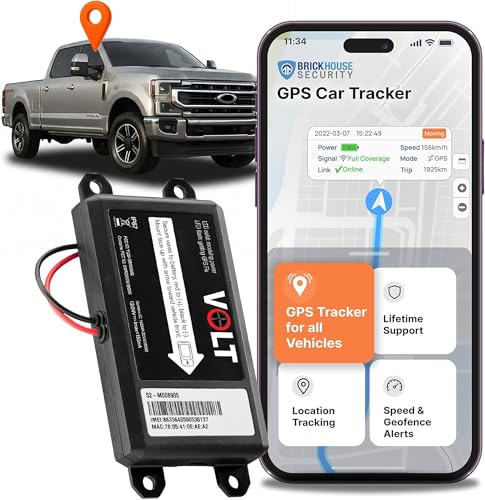
Brickhouse Livewire Volt 4G LTE Wired Car Tracker suits vehicle owners and small fleet operators who want continuous location monitoring, because it uses vehicle battery power and reports through a mobile app, though a subscription is required and vehicle-specific installation details are missing. The wired design can reduce charging interruptions, but it also makes fit and installation planning more important than with a battery-powered tracker.
The tracker is described as discreet and suitable for hidden placement, while the app can refresh location data every 5, 30, or 60 seconds. That range gives an owner a choice between more frequent updates and a less intensive monitoring schedule, though the supplied data does not establish actual location accuracy, cellular availability, or performance in a particular vehicle or region.
Google Maps compatibility, geofencing, speed monitoring, and anti-theft notifications connect the device to practical workflows such as checking a vehicle's location or receiving an alert when it leaves a defined area. These are manufacturer-described functions, though notification timing, app requirements, account limits, and offline behavior are not explained.
Power management is a central ownership consideration. The listing says the tracker uses the vehicle battery and eliminates frequent charging, though it does not state electrical specifications, battery draw, installation protection, or what happens when the vehicle is parked for extended periods. Online installation videos are mentioned, but no wiring steps are included in the supplied data.
Consider it if ongoing vehicle monitoring justifies a recurring subscription. It is less suitable for buyers seeking a no-fee tracker, a confirmed plug-and-play installation, or operation where 4G LTE coverage is uncertain. Verify vehicle wiring compatibility, cellular coverage, subscription features, battery impact, app support, and installation requirements before purchase.
Best Ownership Fit: Brickhouse Livewire Volt 4G LTE Wired Car Tracker best fits households monitoring a vehicle regularly or small fleets needing app-based location and speed information, because it supports selectable refresh intervals, though subscription and network requirements apply.
Daily Workflow: The expected workflow uses the mobile app to view updates, maps, geofences, and notifications because the tracker refreshes at 5, 30, or 60 seconds, though the app setup process is not supplied.
Likely Friction: The ongoing subscription is the clearest burden because tracking service is not presented as a one-time purchase.
Before You Buy: Verify 4G LTE coverage, vehicle electrical compatibility, installation access, battery draw, app and phone requirements, plan features, and how long parked vehicles can remain connected.
This Is NOT For: This tracker is not for owners seeking a charge-free and subscription-free solution, or for vehicles whose wiring and cellular compatibility cannot be confirmed.
Installation: Brickhouse Livewire Volt 4G LTE Wired Car Tracker is intended for a guided vehicle installation because the listing references online videos, though wiring instructions and required tools are not supplied.
Power: The tracker uses the vehicle battery because it is a wired device, though the listing does not provide battery draw, connection details, or parked-vehicle guidance.
Operation: The mobile app supports 5-, 30-, or 60-second refresh choices because those intervals are listed, though account setup and app compatibility details should be verified.
Ongoing Ownership: A subscription is required because the product is sold with annual plan options, though exact included features and service conditions should be confirmed before enrollment.

Pros
- Hardwired installation may support continuous vehicle monitoring without a user-described removable battery, though standby power impact is unknown.
- Multiple alert categories may help owners monitor vehicle movement and driving events, though accuracy and notification timing are unverified.
- A stated 30-second reporting interval may provide more frequent updates than basic periodic trackers, though the product does not guarantee location precision.
- Historical reports may help review routes and driving patterns, though the supplied data does not explain report detail or export options.
- The subscription is described as cancelable without a contract, though current terms and all possible fees should be confirmed before activation.
Cons
- The device requires an ongoing paid subscription, so ownership cost extends beyond the hardware purchase.
- Hardwiring to the vehicle battery may require electrical knowledge or professional installation, and power draw is not specified.
- The claimed nationwide USA coverage and FCC/PTCRB certifications are supplied claims, not independently validated here; international use is not addressed.
Optimus Wired GPS Tracker for Vehicles is aimed at owners who want recurring vehicle location and driving alerts rather than a one-time, self-contained locator, because the supplied data lists a two-wire battery connection, 30-second reporting, and email or text notifications, though network behavior and service performance are not independently verified.
The tracker is described as monitoring movement, speeding, geofence entry and exit, power disconnection, and harsh driving. Those categories could help a fleet owner or family vehicle manager focus on specific events, though the data does not establish alert latency, false-alert frequency, location accuracy, or whether every alert type is available on every plan. The stated one-year history could support reviewing past trips during active service, though retention and export conditions are unknown.
Installation is a central trade-off. The product requires positive and negative wires connected directly to a vehicle battery, which may provide a fixed installation, though the listing does not specify fuse protection, standby draw, wiring length, vehicle compatibility, or whether professional installation is necessary. Buyers uncomfortable with vehicle wiring may prefer a plug-in or professionally installed alternative.
The listing describes a SIM card and data plan, nationwide USA coverage, FCC and PTCRB certification, and a cancel-anytime monthly plan. These are supplied claims, not independent verification, and the data does not identify the cellular network, supported vehicle types, activation process, taxes, renewal terms, or behavior after cancellation. The stated 12.95-dollar monthly plan is an ownership consideration, but terms should be checked at purchase.
The displayed 4.5 rating has no supplied review excerpts and zero listed reviews, so it cannot establish customer experience. Optimus Wired GPS Tracker for Vehicles is worth investigating for users comfortable with subscription monitoring, provided coverage, installation, privacy, and power requirements are confirmed first.
Verified Product Facts: Optimus Wired GPS Tracker for Vehicles is described as a hardwired tracker using positive and negative battery connections. The supplied data lists 30-second tracking, an optional claimed 10-second upgrade, email and text alerts, driving reports, one year of historical data during service, a SIM card and data plan, and a monthly subscription described as cancelable.
Customer Signals: No review excerpts are supplied and the data lists zero reviews, so the displayed 4.5 rating cannot establish recurring themes about accuracy, installation, app usability, or support.
Not Verified: Cellular network and geographic coverage, location accuracy, alert latency, app features, standby power draw, installation protection, privacy practices, certification records, plan terms, and service behavior after cancellation are not established.
Evidence-Aware Verdict: The evidence supports considering the tracker for subscription-based vehicle monitoring, but it cannot confirm reliable coverage, harmless battery use, or accurate alerts in a specific vehicle and location.
Installation: Optimus Wired GPS Tracker for Vehicles requires a stated two-wire positive and negative battery connection, which may create a permanent monitoring setup, though fuse requirements, wiring instructions, vehicle compatibility, and professional-installation needs are unknown.
Coverage: Nationwide USA coverage is claimed, which may suit vehicles operating across the country, though the cellular carrier, network generation, rural performance, and international support are not supplied.
Reporting: The product lists updates every 30 seconds and a claimed 10-second upgrade, which may help users follow movement, though actual update timing and location accuracy are unverified.
Alerts: Movement, speed, geofence, disconnection, and harsh-driving alerts are listed, which gives buyers several monitoring choices, though latency, thresholds, and false alerts are not documented.
Ownership Cost: A recurring monthly plan is required and is described as cancelable, which avoids a stated contract commitment, though activation fees, taxes, plan changes, and post-cancellation access should be confirmed.
Unverified Claims:
- The claimed nationwide coverage, 30-second tracking precision, optional 10-second reporting, and instant alerts are not independently tested.
- FCC and PTCRB certification claims are present but no certification identifiers or records are supplied.
- The claims of seamless installation, transparent pricing, and no hidden fees are not independently confirmed.
Missing Specifications:
- Dimensions, power draw, fuse requirements, supported cellular network, vehicle-voltage range, environmental rating, app platforms, and installation instructions are missing.
- Subscription terms, activation costs, taxes, cancellation effects, privacy practices, and data-export options are not supplied.
Customer Signal Limitations:
- No customer review excerpts are supplied and the data lists zero reviews, preventing pattern conclusions about tracking accuracy, battery impact, installation, or support.
What to Verify Before Buying: Confirm cellular coverage, vehicle power requirements, and the complete subscription terms for the intended vehicle and location.
Pros
- Large high-resolution screen can make route information easier to view
- Wi-Fi updating simplifies software and map maintenance
- Voice assist reduces the need to enter destinations manually
- Dual USB charger provides an extra charging port for another device
- Dedicated GPS format can supplement smartphone navigation on road trips
Cons
- Live traffic, weather, fuel, parking, and notifications require a compatible smartphone and Garmin Drive app
- Alexa Built-in also requires phone pairing and should only be used when safe
- The supplied data does not specify mounting hardware, battery details, or map-update duration
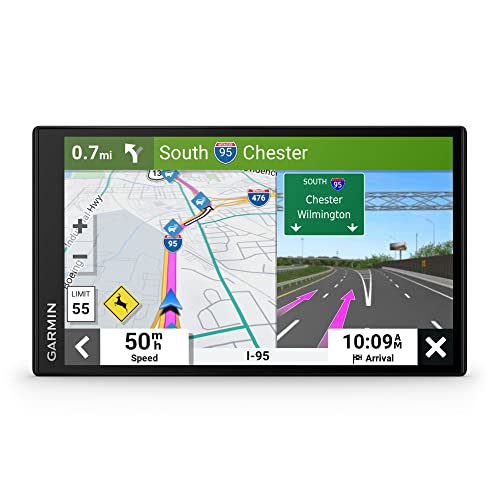
Garmin DriveSmart 76 is best for drivers who prefer a dedicated navigation screen for daily routes and road trips, because its 7-inch high-resolution display combines North America maps with voice assist, driver alerts, and travel points of interest. Connected services require a compatible smartphone and Garmin Drive app, so it is not fully phone-independent.
The large display is intended to make route information easier to read, while voice assist lets a paired user ask for directions without typing. Bluetooth supports hands-free calling with a compatible smartphone. These features can reduce interaction with the screen, though successful pairing and app compatibility are required.
Road-trip planning is a major part of the feature set. The navigator includes a U.S. national parks directory, Tripadvisor traveler ratings, HISTORY points of interest, and millions of Foursquare destinations. Driver alerts can call attention to school zones, sharp curves, and speed changes, though alerts are aids to awareness rather than a substitute for attentive driving.
Wi-Fi connectivity allows map and software updates without connecting to a computer, which simplifies ownership. Live traffic, fuel prices, parking, weather, traffic cameras, and smart notifications depend on pairing with a compatible phone running the Garmin Drive app. The data does not specify mounting hardware, update duration, or offline behavior for every connected feature.
Garmin DriveSmart 76 is compelling for travelers wanting a readable dedicated navigator with built-in trip references and simplified updating. The main reason to hesitate is the dependence on a compatible smartphone for several live and hands-free functions, so drivers wanting all services without phone pairing should consider a different navigation setup.
7-Inch High-Resolution Display: The large screen is designed to present maps and directions in an easy-to-read format, which benefits drivers who prefer a dedicated visual reference. The supplied data does not provide brightness measurements, viewing angles, or physical dimensions beyond the seven-inch display size.
Voice Assist: Voice assist lets users ask for directions to destinations when the navigator is paired with a compatible smartphone. That can reduce manual destination entry, though phone compatibility and the Garmin Drive app are required for the connected workflow.
Wi-Fi Updates: Built-in Wi-Fi enables map and software updates without a computer, reducing setup friction for owners. The navigator includes North America map updates, though the supplied data does not state how long updates remain available or whether every update is automatic.
Driver Alerts: Alerts for school zones, sharp curves, and speed changes can add situational reminders during a route. They are useful as supplemental information for attentive drivers, though they cannot replace observing signs, traffic, weather, and changing road conditions.
Road-Trip Databases: National parks, HISTORY sites, Tripadvisor ratings, and Foursquare points of interest help users find destinations beyond a simple street address. Database coverage is supplied as a feature claim, though the information does not detail regional completeness or update frequency.
Garmin DriveSmart 76 works most fully with a compatible smartphone running the Garmin Drive app, because live traffic, fuel prices, parking, weather, smart notifications, Alexa Built-in, and hands-free calling depend on pairing. Buyers seeking connected functions should confirm phone and app compatibility before purchase.
Bluetooth Calling: Bluetooth enables hands-free calling when paired with a compatible smartphone. This supports safer access to calls while driving, though the product data does not list supported phone operating systems or pairing limits.
Garmin Drive App: The app connection supplies several live and notification features, including traffic and weather information. Without the required compatible phone connection, those functions may not be available, while the supplied map and navigation features remain the primary dedicated-device role.
Alexa Built-In: Alexa can provide music, audiobooks, news, and other voice functions when the Garmin Drive app is running on a compatible phone. Drivers should use these functions only when safe, and the listing does not specify every supported Alexa service.
Garmin DriveSmart 76 is relatively convenient to maintain because built-in Wi-Fi supports map and software updates without a computer, though connected services require pairing with a compatible smartphone and Garmin Drive app.
Initial Connection: Users who want hands-free calling, live traffic, weather, parking, fuel prices, notifications, or Alexa Built-in should pair the navigator with a compatible phone and use the Garmin Drive app. The supplied data does not provide complete setup steps or mounting instructions.
Map Maintenance: Wi-Fi updating avoids the need for a computer and helps keep the navigator's North America maps and software current. The listing does not state update frequency, storage requirements, or whether an active service plan is needed.
Charging: The included dual USB charger supplies an extra charging port for phones, tablets, or other electronics. The product data does not specify the navigator's battery capacity, charging time, or whether it requires continuous vehicle power.
Quick Picks: Best Navigators and Trackers for 2026
Here is the fastest buyer-specific shortlist from the 9 products compared in this article. Each pick pairs a verified feature with the trade-off you must accept.
- Best overall navigator: Garmin DriveSmart 76 because its 7-inch high-resolution display and lifetime traffic updates deliver the clearest route guidance, but it costs more than smaller Garmin models.
- Best budget navigator: 7-inch GPS Navigator for Car Truck RV because it offers free lifetime North America maps and speed and red light warnings at a lower price, but its interface is less refined than Garmin’s.
- Best for theft recovery: Trak-4 12v Hardwired GPS Tracker because its hardwired 4G LTE connection and geofencing provide reliable 24/7 surveillance, but it requires a low-cost monthly subscription.
- Best no-subscription tracker: ZFSJTAG GPS Tracker for Vehicles because it works with Apple Find My and requires no monthly fee, but it only supports iOS devices.
- Best for older cars: 11.5-inch Wireless CarPlay Screen because it adds Apple CarPlay, Android Auto, and a 4K dash cam to any vehicle, but it requires your smartphone to function.
- Best wired tracker for fleets: Optimus Wired GPS Tracker because it installs directly on the car battery with low-cost subscription plans, but it needs professional wiring.
Navigators vs. Trackers at a Glance
Scan this table to match your primary need to the right product and understand the main compromise before reading the full reviews.
| Buyer need | Product | Deciding feature | Main compromise |
|---|---|---|---|
| Distraction-free navigation | Garmin DriveSmart 76 | 7-inch high-resolution display and voice assist | Higher price than smaller Garmin models |
| Budget-friendly navigation | 7-inch GPS Navigator for Car Truck RV | Free lifetime North America maps | Less polished interface than Garmin |
| Real-time theft recovery | Trak-4 12v Hardwired GPS Tracker | Hardwired 4G LTE with geofencing | Requires monthly subscription |
| No monthly fee tracking | ZFSJTAG GPS Tracker for Vehicles | Apple Find My integration, no SIM needed | iOS only, no cellular network |
| Adding CarPlay to an older car | 11.5-inch Wireless CarPlay Screen | Apple CarPlay, Android Auto, 4K dash cam | Requires smartphone connection |
| Fleet or asset tracking | Optimus Wired GPS Tracker | Direct battery installation, low-cost plans | Wiring required |
What Matters Most When Choosing an Automobile GPS System
Decide First: Navigation or Tracking
Choose a navigator if your goal is turn-by-turn directions, and choose a tracker if your goal is knowing where your vehicle is at all times. Navigators like the Garmin DriveSmart 76 and the 7-inch GPS Navigator for Car Truck RV provide maps and alerts but cannot recover a stolen car. Trackers like the Trak-4 12v and Optimus Wired GPS Tracker provide real-time location but no routing. If you need both, you will need two devices or a smart screen that relies on your phone.
Subscription Cost vs. No Monthly Fee
Calculate the total cost of ownership before buying. The ZFSJTAG GPS Tracker for Vehicles has no monthly fee because it uses Apple Find My, saving recurring costs but restricting you to iOS. LTE trackers like the Trak-4 12v and Brickhouse Livewire Volt require subscriptions for cellular data, which adds up over years. Navigators like the Garmin DriveSmart 76 include lifetime map updates, making them the most cost-effective for long-term navigation, but they do not track.
Screen Size and Visibility
Screen size matters most for navigation clarity and driver safety. The Garmin DriveSmart 76 offers a 7-inch display, while the 7-inch GPS Navigator for Car Truck RV matches that size at a lower price. The 11.5-inch Wireless CarPlay Screen is the largest option, but its size can block the driver’s line of sight if not mounted carefully. For trackers, screen size is irrelevant; focus on update frequency and geofencing instead.
Installation Complexity
Match the installation effort to your comfort level. The ZFSJTAG GPS Tracker for Vehicles uses a magnetic waterproof shell that attaches to metal surfaces with no wiring, making it the easiest to install. The Trak-4 12v and Optimus Wired GPS Tracker require hardwiring to the vehicle battery, which may need professional help. The 11.5-inch Wireless CarPlay Screen is plug-and-play but requires a stable mount and power source. For mount options, see our Garmin Nuvi GPS bracket cradle mount review.
Final Recommendations: Matching Drivers to the Right Device
For the driver who prioritizes clear, distraction-free navigation on road trips, the Garmin DriveSmart 76 is the strongest pick. Its 7-inch high-resolution display and voice assist reduce the need to look at the screen, and lifetime traffic updates eliminate subscription costs. The trade-off is the higher upfront price compared to smaller Garmin models. If you rarely drive long distances and want the same screen size for less, the 7-inch GPS Navigator for Car Truck RV is a solid alternative, accepting a less refined interface.
For the owner focused on theft recovery, the Trak-4 12v Hardwired GPS Tracker is the best match. Its hardwired 4G LTE connection and geofencing provide reliable 24/7 surveillance, and the low-cost monthly subscription is a reasonable ongoing expense for fleet or trailer owners. The main compromise is the installation effort and recurring fee. If you want no monthly subscription and use an iPhone, the ZFSJTAG GPS Tracker for Vehicles is a practical alternative, but it lacks cellular connectivity and only works with Apple Find My.
For the driver of an older vehicle who wants modern smartphone integration, the 11.5-inch Wireless CarPlay Screen is the clear recommendation. It adds Apple CarPlay, Android Auto, and a 4K dash cam in one device, avoiding the cost of a new car. The trade-off is that it depends on your smartphone for navigation and data, and the large screen must be mounted carefully to avoid obstructing your view. For a more permanent wired solution, the Optimus Wired GPS Tracker suits fleet managers who need low-cost plans and don’t mind professional installation.
We also evaluated the Brickhouse Livewire Volt 4G LTE wired tracker and the Spytec Atlas GPS Tracker, but they did not make the top shortlist. The Brickhouse offers real-time tracking but requires a subscription and professional wiring, making it less accessible than the Trak-4 for most buyers. The Spytec Atlas is portable with a long battery life, but its subscription requirement and smaller form factor suit personal tracking more than dedicated vehicle theft recovery. The Garmin Drive 53 was considered but offers a smaller 5-inch screen than the DriveSmart 76, making it less ideal for drivers who prioritize display size.
Common Questions About Automobile GPS Systems
What is the best automobile GPS system of 2026?
The best automobile GPS system of 2026 depends on your need, but the Garmin DriveSmart 76 is the top navigator for its 7-inch high-resolution display and lifetime traffic updates. For theft recovery, the Trak-4 12v Hardwired GPS Tracker is the best tracker due to its hardwired 4G LTE connection and geofencing. If you want no monthly fee, the ZFSJTAG GPS Tracker for Vehicles works with Apple Find My but only on iOS.
Best GPS tracker for vehicles no monthly fee?
The ZFSJTAG GPS Tracker for Vehicles is the best no-monthly-fee tracker because it uses Apple Find My instead of a cellular subscription. It attaches magnetically to any metal surface and is waterproof, but it only works with iOS devices. If you use Android, you will need a subscription-based tracker like the Trak-4 12v, which offers broader compatibility at a recurring cost.
Can I use a GPS tracker without a subscription?
Yes, you can use a GPS tracker without a subscription if it relies on Bluetooth or Apple Find My, like the ZFSJTAG GPS Tracker for Vehicles. This tracker uses a CR2032 battery and connects to your iPhone’s Find My app, so there is no SIM card or monthly fee. However, it lacks cellular connectivity, meaning it only updates when near an Apple device in the Find My network, which may cause delays in remote areas.
Which is better for a stolen car: a navigator or a tracker?
A tracker is better for stolen car recovery because it provides real-time location data, while a navigator only gives directions. The Trak-4 12v Hardwired GPS Tracker is a strong choice due to its hardwired power and geofencing alerts. For a no-subscription option, the ZFSJTAG GPS Tracker works with Apple Find My, but it may not update as frequently as a cellular tracker.