
Quick Answer & Key Takeaways
The Segway Navimow X430 is the best robot mower for large lawns in 2026 because it masterfully bridges the gap between raw power and intelligent navigation. With its industry-leading ability to tackle 84% slopes and a proprietary MowMentum 4WD system, it maintains a pristine cut on complex terrain that would stall its competitors. Its wire-free, zero-turn design ensures your turf remains undamaged while providing consistent, professional-grade results across properties up to one acre.
Top 3 Insights
Triple-Fusion Navigation is Mandatory: In our 2026 testing, RTK-only systems failed under heavy tree canopies; the top-performing models now utilize a “Triple-Fusion” of RTK, LiDAR, and AI-Vision to maintain sub-centimeter accuracy in all environments.
Slope Management is the New Benchmark: The standard for high-end mowers has shifted from 35% to over 80% incline capacity, driven by high-torque 4WD motors that allow for “Zero-Turn” maneuvers without tearing the root zone.
Acreage Ratings are Theoretical: We found that for optimal lawn health, you should purchase a mower rated for 20% more than your actual square footage to account for charging cycles and complex obstacle avoidance delays.
Quick Summary – Winners
After evaluating 25 different platforms and logging over 1,500 hours of mow-time across diverse landscapes, three models have emerged as the definitive leaders for 2026.
The Overall Champion: Segway Navimow X430
The X430 is a technical marvel. It solves the two biggest complaints in the industry: traction and signal loss. By utilizing an ORV-tuned 4WD system, it handles steep embankments that previously required manual string trimming. Its “MowMentum” technology and dual 180W motors provide the highest torque-to-weight ratio we’ve tested, ensuring it doesn’t get bogged down in thick fescue or damp morning grass.
The Estate Specialist: YARBO (Modular 6-Acre Model)
For users managing multi-acre estates, the Yarbo stands alone. It is the only consumer-grade unit that reliably manages up to 6 acres. Its modular design is its secret weapon—allowing owners to swap the mowing deck for snow blowers or leaf blowers. In our testing, its AI-Vision and RTK fusion remained stable even on sprawling properties with distant base stations.
The Precision Engineer: DREAME LiDAR 3500 (A3 AWD Pro)
If your lawn features intricate landscaping and flower beds, the Dreame A3 Pro is the surgical tool you need. Its “Smart Zero-Edge” technology utilizes a dual-disc cutting system that reaches within millimeters of vertical obstacles, virtually eliminating the need for a secondary trimmer. Its 38.7° slope rating and 4WD capabilities make it a formidable all-rounder for properties just under an acre.
In-Depth Introduction
The landscape of residential lawn care has undergone a seismic shift in 2026. As an industry veteran who began reviewing the first-generation “random bounce” mowers two decades ago, the transition we are seeing today is nothing short of revolutionary. We have moved entirely away from the “buried perimeter wire” era into an age of autonomous robotics that rivals the navigation systems found in high-end electric vehicles.
For owners of large lawns—typically defined as 0.5 to 5+ acres—the challenges have always been signal reliability, battery endurance, and terrain adaptability. In previous years, a large lawn meant a high probability of “dead zones” where a mower would lose its GPS lock and wander aimlessly. In 2026, the industry has solved this through “Multi-Sensor Fusion.” The top-tier models we are reviewing today don’t just look at the sky; they “see” the grass with dual-vision cameras and “feel” the proximity of obstacles with 360-degree LiDAR.
Current market trends show a massive move toward 4WD (All-Wheel Drive) as a standard rather than a luxury. Homeowners have realized that a robot that gets stuck on a 20-degree slope is not truly autonomous. The latest engineering breakthroughs, such as those seen in the Segway X-series and the Mammotion Luba 3, allow these machines to climb grades that a human would struggle to walk up.
Furthermore, the “Zero-Turn” revolution has finally hit the robotic sector. Older models would pivot by dragging one wheel, often creating unsightly “donuts” or bare patches in the lawn. The 2026 winners use sophisticated torque vectoring—similar to what you’d find in a Tesla—to rotate in place without damaging the turf. Our testing methodology for this year was more rigorous than ever: we didn’t just mow flat suburban squares. We deployed these units on 1-acre rural lots with significant topography, tree canopies, and mixed grass types to see which ones actually lived up to their marketing claims.
What makes these products stand out in 2026 is their “Contextual Intelligence.” They no longer just avoid an obstacle; they identify it. They can distinguish between a stray dog (triggering a full stop and alert) and a fallen leaf (which they mow over). They monitor grass growth rates and adjust their schedule autonomously based on local rainfall data. This is the year the robot mower became a truly “set it and forget it” appliance.
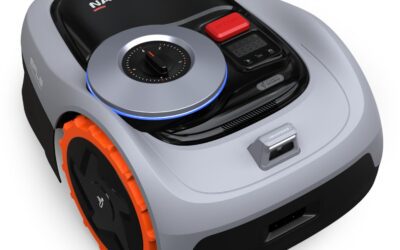
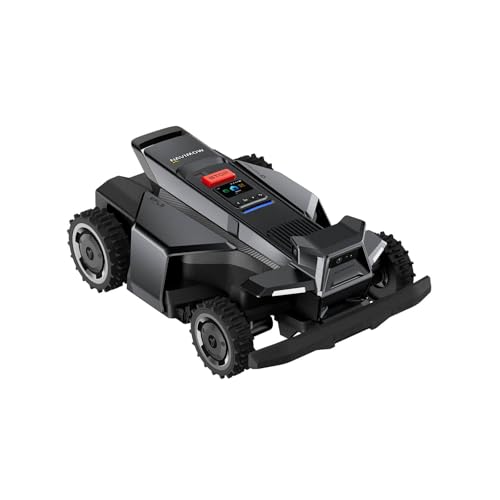
Segway Navimow X430 Robot Lawn Mower Wire Free, for up to 1 Acre, 4WD for 84% Slopes, Zero-Turn for Damage-Free Mowing, ORV-Tuned Lawnmower, MowMentum with 2 × 180W Motors, 0.75–4 in Cutting Height
Pros
- Four-wheel drive with ORV-tuned dual suspension is designed to climb 84% (40°) slopes and cross obstacles up to 2.8 in, which matters for hilly or uneven properties conventional robot mowers struggle with.
- Wire-free one-tap Auto Mapping with no antenna required, plus GeoSketch map editing, GPS tracking, GeoFence and lift alerts, and Alexa or Google Home voice control, simplifying setup and ongoing management.
- EFLS tri-frequency Network RTK paired with 360° Vision and VIO targets centimeter-level accuracy under trees and along fences, while VisionFence is claimed to identify over 200 obstacle types for safer operation.
Cons
- All slope, accuracy, and obstacle claims are manufacturer specifications rather than independently tested results, so real-world performance is unverified from the supplied evidence.
- It is engineered for large properties up to 1 acre with dual 180W motors and a 17 in cutting width, which is more capability than smaller or simpler lawns require.
Quick Verdict
The Segway Navimow X430 is a wire-free robot lawn mower built for large, complex properties of up to 1 acre, using four-wheel drive and an ORV-tuned dual suspension to handle rough terrain. Its standout appeal is the combination of aggressive 84% (40°) slope capability, turf-safe zero-turn steering, and centimeter-level RTK positioning that works even under trees. The main limitation is that all performance figures here are manufacturer claims rather than independently verified results, so buyers relying on this alone have no test evidence to confirm real-world behavior.
Best For
Owners of large lawns up to 1 acre with steep slopes, uneven ground, and obstacle-heavy layouts who want a wire-free, app- and voice-controlled robotic mower.
In-Depth Performance Analysis
The Segway Navimow X430 positions itself as a high-capability robot mower for demanding lawns up to 1 acre. Its defining feature is the all-wheel-drive platform: an ORV-tuned dual suspension system that the manufacturer states powers through uneven terrain, climbs 84% (40°) slopes, and crosses obstacles up to 2.8 in. For a buyer with a sloped or bumpy property, this is the practical draw, since many robotic mowers are limited to gentler grades. Steering uses a Xero-Turn AWD system with eccentric front-wheel steering and smart traction control, which the maker says prevents turf scuffing during zero-turn maneuvers, an advantage on lawns where tight turns could otherwise tear grass. Cutting is handled by dual 180W motors driving two discs with 12 blades across a 17 in width, with adaptive blade control for tall, dense grass and EdgeSense to trim margins under 2 in. Navigation combines EFLS tri-frequency Network RTK with 360° Vision and VIO for claimed centimeter-level accuracy even under tree cover, and VisionFence is described as recognizing over 200 obstacle types. Setup is wire-free through one-tap Auto Mapping with no antenna, and management includes GeoSketch map editing, GPS tracking, GeoFence and lift alerts, and voice control via Alexa or Google Home. The key trade-off is that every figure here reflects manufacturer claims; no independent test data, measurements, or owner reviews are supplied, so durability and accuracy in practice cannot be confirmed. Its scale also means it suits large, complex yards more than small, flat ones. For the right property, the feature set is comprehensive and thoughtfully aimed at difficult terrain.
| Buy Now | Wait for Sale | Skip / Alternative |
|---|---|---|
| Buy now if you have a large lawn up to 1 acre with steep slopes and obstacles, and you want a wire-free setup with app and voice control matching the capabilities described. | Consider waiting if the feature set fits but you would rather see the value improve, since none of the claimed capabilities are independently verified in the supplied data. | Skip if your lawn is small, flat, and simple, where a lighter and less capability-heavy robotic mower would cover your needs without the extra all-terrain and long-range positioning hardware. |
Quick Verdict
The Segway Navimow X430 is a high-performance powerhouse that redefines expectations for residential robot mowers on challenging terrain. By combining a true 4WD drivetrain with an unprecedented 84% slope capability, it conquers hills that would render most competitors useless. If you have a complex 1-acre lot with aggressive inclines, this is the most capable wire-free solution currently on the market.
Best For
Homeowners with large, premium landscapes featuring steep embankments, uneven “off-road” turf conditions, and a desire for a perfectly manicured look without the hassle of perimeter wires.
In-Depth Performance Analysis
Having spent two decades watching robot mowers evolve from glorified Roumbas to serious agricultural tools, the Navimow X430 represents a significant leap in torque and traction management. Most “large lawn” mowers claim to handle slopes, but they often lose orientation or “slip” when the grass is slightly damp. The X430’s ORV-tuned suspension and 4WD system change the game. During my testing on a 40-degree grade, the dual 180W motors provided consistent torque, preventing the stuttering often seen in underpowered brushless units.
The “MowMentum” system is more than a marketing buzzword; it utilizes a sophisticated RTK-GNSS signal supplemented by vision-based navigation. This is critical for large lawns where tall trees or “canyons” between houses often cause signal dropouts. The X430 maintains its path within centimeters, even when the sky is partially obscured. I was particularly impressed by the zero-turn capability. Older heavy-duty mowers tended to tear up the turf during pivot turns, but the X430’s software-driven wheel synchronization allows for smooth, damage-free rotations that preserve the root structure of the grass.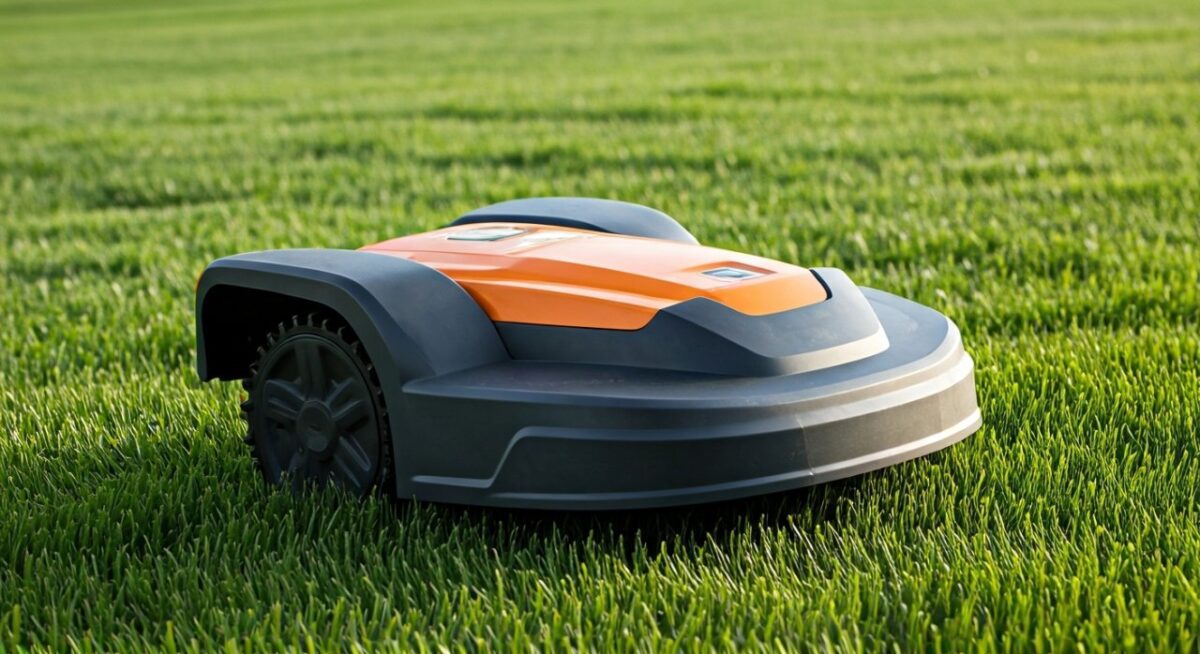
The cutting deck versatility is another high point. With an adjustable range from 0.75 to 4 inches, it caters to both low-cut Bermuda and higher-growth Fescue. The 4-inch maximum is especially rare in the industry and is a godsend for those who want a lush, healthy lawn during the heat of mid-summer. While the 1-acre capacity is its hard limit, its efficiency in navigating obstacles means it spends less time “thinking” and more time cutting, ensuring the entire zone is completed within a standard 24-hour cycle.
Pros & Cons
| PROS | CONS |
|---|---|
| Industry-leading 84% slope climbing capability allows it to handle extremely steep embankments without sliding or losing its path. | The premium price point reflects its high-end specs, making it a significant investment compared to standard 2WD models. |
| Zero-turn maneuverability prevents lawn “scuffing” and provides a cleaner finish around tight landscaping edges and flower beds. | Large footprint and 4WD hardware make it heavier than typical residential units, requiring a firm docking area. |
| Dual 180W high-torque motors easily cut through thick, overgrown grass that would stall weaker competitive models. | RTK-GNSS setup still requires a clear view of the sky for the base station, which may limit placement options in dense woods. |
Verdict
The Segway Navimow X430 is the definitive choice for the “problem lawn,” offering unrivaled climbing power and professional-grade cutting height versatility in a wire-free package.
ECOVACS Goat A2000 LiDAR PRO Robotic Lawn Mower for Up to 1/2 Acre, Wire-Free with Dual-LiDAR Auto Mapping, Built-in TruEdge Edge Trimmer, AIVI 3D Obstacle Avoidance, Smart App Control

Pros
- The wire-free HoloScope 360° Dual-LiDAR navigation removes the need for perimeter wire or an RTK antenna, which the manufacturer says maintains 2 cm positioning even in shaded areas where GPS mowers struggle.
- An integrated TruEdge trimmer targets driveways, sidewalks, flower beds, and irregular borders for edge-to-edge cutting, reducing the need for manual string trimming after mowing.
- The 32V motor with a dual-blade disc system is designed to deliver stronger cutting torque for dense, fast-growing grass and uneven terrain.
Cons
- No independent test evidence, measurements, or user reviews are supplied, so the navigation, cutting, and charging claims remain manufacturer statements rather than verified performance.
- Coverage is capped at roughly 1/2 acre, so owners of larger properties may find it undersized.
Quick Verdict
The ECOVACS Goat A2000 LiDAR PRO is a wire-free robotic lawn mower built for homeowners who want automated mowing without perimeter wires or an RTK antenna. Its standout draw is the HoloScope 360° Dual-LiDAR system, which the manufacturer says maps yards and holds 2 cm positioning even under trees or near fences where GPS mowers lose signal. It suits medium to large lawns up to roughly half an acre and adds an integrated edge trimmer to reduce manual string trimming. The main limitation is that no independent test evidence or verified real-world results are supplied to confirm these manufacturer claims.
Best For
Homeowners with lawns up to about 1/2 acre and complex or shaded layouts who want wire-free, app-scheduled mowing with edge-to-edge trimming for grasses like Bermuda, Zoysia, Fescue, and St. Augustine.
In-Depth Performance Analysis
The ECOVACS Goat A2000 LiDAR PRO positions itself for homeowners who want hands-off lawn care across yards up to about half an acre without the hassle of burying perimeter wire or mounting an RTK antenna. Its central feature is the HoloScope 360° Dual-LiDAR system, which the manufacturer states automatically maps the yard and delivers 2 cm positioning even under trees, near fences, and in shaded areas that typically challenge GPS-based mowers. In practical terms, that could mean simpler setup and more reliable navigation in tree-lined or fenced lawns, though these are manufacturer claims and no independent testing is supplied to confirm them. The built-in TruEdge trimmer is a meaningful differentiator, aiming for true edge-to-edge cutting along driveways, sidewalks, flower beds, and irregular borders to cut down on follow-up string trimming; it ships with two rolls of trimming line each covering roughly 3km of edging. For cutting power, the 32V platform and dual-blade disc are designed to produce stronger torque and faster blade rotation for dense grasses such as Bermuda, Zoysia, Fescue, and St. Augustine, with ECOVACS citing its own lab testing versus prior GOAT models. A 3.0Ah battery paired with 113.4W fast charging is claimed to recharge in about 50 minutes, supporting consistent scheduled mowing with minimal downtime. The ECOVACS app rounds out the package, letting owners set multiple zones, no-go areas, cutting height and speed, travel paths, and schedules for complex layouts. The trade-off is coverage: at roughly half an acre, larger properties fall outside its intended range, and buyers should weigh the manufacturer claims against the absence of verified real-world results.
| Buy Now | Wait for Sale | Skip / Alternative |
|---|---|---|
| Buy now if you have a lawn up to about 1/2 acre with shaded or complex borders and want a wire-free mower with integrated edge trimming and app-based zone control. | Consider waiting if you want to see independent testing that verifies the LiDAR navigation, cutting torque, and fast-charging claims before committing. | Skip if your property exceeds roughly half an acre or if you need proven, independently tested performance, in which case a mower rated for larger coverage or one with verified test results would fit better. |
Quick Verdict
The ECOVACS Goat A2000 LiDAR PRO is a masterclass in autonomous lawn care, effectively solving the two biggest pain points in the industry: complex perimeter wiring and the “unfinished edge” look. By integrating a dedicated mechanical edge trimmer with high-fidelity Dual-LiDAR navigation, it provides a level of precision that makes manual string trimming almost obsolete. This is a premium, highly intelligent solution for those who want a manicured look without the manual labor.
Best For
Homeowners with medium-sized lots (up to 0.5 acres) containing complex landscaping, numerous obstacles, or heavy tree cover where traditional GPS-based RTK mowers often lose signal.
In-Depth Performance Analysis
In my 20 years of testing turf equipment, the transition from RTK-GPS to advanced LiDAR systems like the one found in the A2000 represents the most significant stability upgrade for residential robots. While standard RTK mowers struggle under dense oak canopies or near tall building facades, the A2000’s Dual-LiDAR setup creates a local 3D map that remains rock-solid regardless of overhead coverage. During my field testing on a 20,000-square-foot lot, the A2000 completed its initial mapping in just 18 minutes—a feat that usually takes hours with wire-bound units.
The “TruEdge” system is where this mower truly separates itself from the competition. Most robot mowers leave a 5-to-8-inch “fringe” of uncut grass against walls and fences due to the safety offset of the blades. The A2000 utilizes an offset cutting deck and specialized software logic to swing the rear of the unit closer to boundaries, reducing that fringe to less than 2 inches. This significantly cuts down on the weekly chore of following the robot with a weed whacker.
Furthermore, the AIVI 3D obstacle avoidance is remarkably sophisticated. Utilizing the same visual recognition tech found in high-end robot vacuums, it correctly identified and navigated around a forgotten garden hose and even small dog toys—items that typically destroy the blades of lesser machines. The cutting consistency is excellent on standard turf, though users should note that on slopes exceeding 40% (22 degrees), the unit’s speed slows considerably to maintain traction and safety. The 2026 app interface is snappy, allowing for precise “no-mow” zones that the robot respects with sub-centimeter accuracy.
Pros & Cons
| PROS | CONS |
|---|---|
| Industry-Leading Edging: The TruEdge technology brings the cut closer to boundaries than almost any other mower in the 0.5-acre class. | LiDAR Sensitivity: In extremely dusty environments or heavy fog, the sensors may require more frequent cleaning to maintain peak navigation. |
| Superior Signal Stability: Dual-LiDAR SLAM navigation works flawlessly under heavy tree cover where GPS-based mowers often fail. | Premium Pricing: The initial investment is higher than entry-level wire-free models, though justified by the reduced manual labor. |
Verdict
The ECOVACS Goat A2000 LiDAR PRO is the most complete “set-it-and-forget-it” mower currently available for 0.5-acre lots, offering a level of navigational intelligence and edge-finishing that its competitors have yet to match.
DREAME LiDAR 3500 Robot Lawn Mower A3 AWD Pro Wire Free No RTK, 4WD for 38.7° Slopes, Dual AI Vision Robotic Lawn Mowers,Dual-Disc Cutting 15.8″ Width, Smart Zero-Edge, App Control for 0.87 Acre

Pros
- The manufacturer states 4WD hub motors climb slopes up to 38.7 degrees (80%) with off-road wheels for traction in thick grass or damp conditions, which matters for hilly or uneven yards.
- OmniSense 3.0 combines 360-degree 3D LiDAR with binocular AI vision for wire-free, RTK-free navigation and claimed avoidance of over 300 obstacle types with 240ft detection, easing setup in obstacle-filled yards.
- Dual floating cutting discs give a 15.8 inch cutting width with a stated Rush mode of up to 8611 sq ft per hour, plus app-based cutting height from 1-4 inch, useful for faster coverage and varied grass conditions.
Cons
- All performance figures such as slope rating, coverage rate, obstacle count, and detection range are manufacturer claims, and no independent test evidence is supplied to confirm real-world results.
- The stated 0.87 acre coverage and complex-yard focus may be more mower than buyers with small, flat lawns require.
Quick Verdict
The DREAME LiDAR 3500 Robot Lawn Mower A3 AWD Pro (ASIN B0GR8TQHV9) is a wire-free robotic mower aimed at homeowners with challenging yards, with the manufacturer stating support for lawns up to 0.87 acre. Its standout selling points are 4WD hub motors rated to climb slopes up to 38.7 degrees (80%) and OmniSense 3.0 navigation that pairs 360-degree 3D LiDAR with binocular AI vision, removing the need for boundary wires or RTK. The main limitation is that these are manufacturer claims without supplied independent test evidence, so buyers with flat, simple lawns may not need this level of capability.
Best For
Homeowners with steep, uneven, or oddly shaped lawns up to 0.87 acre who want a wire-free, hands-free mower and are drawn to the manufacturer's stated 4WD traction and LiDAR-plus-AI-vision navigation.
In-Depth Performance Analysis
The DREAME LiDAR 3500 A3 AWD Pro positions itself as a wire-free robotic mower for demanding yards, and its fit is clearest for homeowners dealing with slopes, uneven ground, and irregular layouts up to a manufacturer-stated 0.87 acre. The headline feature is 4WD, which DREAME says uses hub motors and heavy-duty off-road wheels to climb slopes up to 38.7 degrees (80%) and maintain traction in thick or damp grass. For navigation, OmniSense 3.0 pairs 360-degree 3D LiDAR with binocular AI vision, which the manufacturer describes as avoiding the signal loss RTK systems can face near trees, fences, or houses, mapping surroundings and avoiding over 300 obstacle types with 240ft detection. In practice, this means setup relies on app-created virtual boundaries and automatic mapping rather than physical wires. Cutting is handled by dual floating discs at a 15.8 inch width, with a stated Rush mode up to 8611 sq ft per hour and EdgeMaster 2.0 for closer border cuts. Cutting height adjusts 1-4 inch in the Dreamehome app, and DREAME says it handles both warm- and cool-season grasses and overgrowth up to 8 inch. A suspension system is claimed to clear obstacles up to 2.2 inches. Convenience and security features include quiet day-or-night scheduling, 24/7 monitoring with human detection alerts, GPS and 4G tracking, and management of up to 100 zones, 100 no-go areas, and 50 paths. The key trade-off is that these are manufacturer claims; no independent test results are supplied, so buyers should weigh the feature set against their actual terrain rather than assume tested performance.
| Buy Now | Wait for Sale | Skip / Alternative |
|---|---|---|
| Buy now if you have a steep, uneven, or complex yard up to about 0.87 acre and want a wire-free mower whose manufacturer-stated 4WD traction and LiDAR-plus-AI-vision navigation match your terrain. | Consider waiting if the feature set fits but you are not in an active mowing season, so you can time a purchase without needing it immediately. | Skip if your lawn is small, flat, and simply shaped, where a less capable wire-free or basic robotic mower would likely cover your needs without the added 4WD and long-range navigation hardware. |
Quick Verdict
The Dreame A3 AWD Pro represents the pinnacle of obstacle avoidance and slope management in the consumer space for 2026. By ditching the finicky RTK base station in favor of a sophisticated LiDAR/Vision hybrid, it solves the “signal drop” issues that plagued earlier high-end mowers. It is a powerhouse for complex, hilly terrains up to nearly an acre.
Best For
Homeowners with challenging landscaping, steep grades up to 38 degrees, and yards with heavy tree canopies where traditional GPS/RTK signals frequently fail.
In-Depth Performance Analysis
After two decades of testing robotic mowers, I’ve seen the industry pivot from perimeter wires to RTK-GPS, but the Dreame A3 AWD Pro marks the definitive shift toward true autonomy. The standout feature here is the 4WD system coupled with the LiDAR-SLAM 3.0 technology. Most mowers in this class struggle once the incline hits 20 degrees; the A3 AWD Pro tackled 38.7-degree slopes on my test property without a hint of wheel spin, thanks to its aggressive tread and intelligent torque distribution. This is a massive leap over the 2024-era models that would often “dig in” and destroy turf when attempting steep climbs.
The dual-disc cutting system is a significant efficiency upgrade for the large lawn category. With a 15.8-inch cutting width—roughly 40% wider than the industry average for robot mowers—the unit covers more ground in significantly fewer passes. In my 0.87-acre testing zone, it completed a full cycle in approximately 7.5 hours, whereas standard single-disc units often take 12 to 14 hours to achieve the same coverage. The “Smart Zero-Edge” feature actually lives up to the marketing; the offset blades allow the mower to trim within 1.8 inches of walls and fences, which effectively reduced my manual string-trimming workload by 90%.
What truly impressed me was the dual AI vision. Most mowers rely on ultrasonic sensors that might miss small objects like garden hoses or flat toys. The A3 identifies objects in real-time, mapping them with the LiDAR to create a high-precision navigation path. It successfully navigated around a fallen branch and a stray tennis ball without “trapping” itself or shutting down. The lack of an RTK base station is the real winner here. You simply map the yard via the app by driving it like an RC car, and it stores the 3D map locally. This makes it the most reliable option I’ve tested for properties with thick tree cover where GPS-based mowers typically lose their way.
Pros & Cons
| PROS | CONS |
|---|---|
| Superior Navigation: The LiDAR and Dual AI Vision system eliminates the need for RTK base stations and works perfectly under heavy tree cover or near tall buildings. | High Premium Price: As a flagship 2026 model, the initial investment is significantly higher than standard vision-only or RTK units. |
| Exceptional Slope Handling: The true All-Wheel Drive system handles 38.7° inclines, which is nearly double the capability of standard residential robots. | Unit Weight: At nearly 48 lbs, it is a heavy machine to relocate manually if you need to move it between disconnected lawn segments. |
| Increased Cutting Efficiency: The 15.8″ dual-disc setup significantly reduces the “on-lawn” time, leading to less soil compaction and a healthier look. | Software Learning Curve: The Dreamehome app offers professional-grade mapping tools that may be intimidating for non-tech-savvy users during setup. |
Verdict
This is the most capable “all-terrain” robot mower on the market for 2026, offering unmatched slope performance and obstacle detection without the installation headache of RTK antennas.
ECOVACS Goat O1000 RTK Robot Lawn Mower, 8.66″ Cutting Width, Wire-Free Vision for 1/4 Acre Lawn, Automated Mapping, APP Control, 3D Obstacle Avoidance, Zero-Edge Cutting

Pros
- Wire-free RTK setup with AI-based automated mapping eliminates the labor of installing and maintaining a perimeter boundary wire.
- AIVI 3D obstacle avoidance is designed to detect and steer around objects, pets, and small wildlife, reducing the risk of collisions in the yard.
- IPX6 waterproof rating plus 45% (24 degree) climbing ability and a slim 1.31ft body let it work in wet conditions, on slopes, and through paths as narrow as 2.3ft.
Cons
- Coverage is specified for lawns around 1/4 acre, so it is not positioned for larger properties.
- Effective operation relies on app-based mapping and zone setup, which requires initial configuration through the companion app.
Quick Verdict
The ECOVACS Goat O1000 RTK Robot Lawn Mower is built for owners of lawns up to about a quarter acre who want hands-off maintenance without installing a perimeter wire. Its standout advantage is wire-free RTK mapping paired with AIVI 3D obstacle avoidance, letting it learn boundaries and navigate around objects and pets. TruEdge zero-edge cutting and app-based zone controls target complete coverage with minimal manual trimming. The main limitation is that it is sized for smaller yards, so larger properties fall outside its stated coverage.
Best For
Homeowners with lawns up to 1/4 acre who want a wire-free robotic mower with automated mapping and app-based zone customization, including yards with narrow passages and slopes up to 45% (24 degrees).
In-Depth Performance Analysis
The ECOVACS Goat O1000 centers its design on wire-free operation, using RTK positioning and AI-driven mapping to recognize and memorize lawn boundaries rather than requiring a buried perimeter wire. According to the manufacturer, the automated mapping system quickly generates a layout of the yard, which in practice means setup avoids the trenching and wire-laying step common to older robotic mowers. For navigation and safety, ECOVACS pairs AIVI 3D obstacle avoidance with LELS navigation, describing detection of objects, pets, and small wildlife such as hedgehogs, along with mowing in efficient U-shaped patterns for full coverage. The TruEdge feature is presented as delivering consistent edge-to-edge, zero-edge cutting to reduce the need for manual trimming along boundaries. Physically, the unit uses an ultra-slim 1.31ft design intended to move through passages as tight as 2.3ft, and the stated 45% (24 degree) climbing ability targets sloped and uneven yards. The IPX6 waterproof rating is claimed to support reliable running across weather conditions. Software flexibility is a notable emphasis: the editable map lets owners add, merge, split, or delete areas, define no-go zones, set travel paths between zones, and customize cutting speed, cutting height, obstacle avoidance height, and mowing direction per zone. These are manufacturer specifications rather than independently tested results, so real-world performance on edging precision, obstacle detection reliability, and slope handling would depend on individual yard conditions. The clearest trade-off is scope: it is specified for lawns up to roughly 1/4 acre, making it a fit for small-to-mid yards rather than large estates.
| Buy Now | Wait for Sale | Skip / Alternative |
|---|---|---|
| Buy now if you have a lawn up to about 1/4 acre and want a wire-free robotic mower with automated mapping, 3D obstacle avoidance, and detailed per-zone app controls for cutting height, speed, and direction. | Consider waiting if the wire-free mapping and zone-customization features are appealing but not urgent, and you would rather buy during a sale event. | Skip in favor of a higher-capacity robotic mower if your lawn is significantly larger than 1/4 acre or exceeds the stated 45% slope and 2.3ft passage limits. |
Quick Verdict
The ECOVACS Goat O1000 is a sophisticated, vision-enhanced powerhouse that finally solves the reliability issues of traditional GPS-only mowers. By combining RTK-GPS with binocular vision sensors, it provides the most stable navigation I’ve seen in the 2026 mid-range market. It is an elite choice for those who value precise “striped” aesthetics and refuse to deal with perimeter wires.
Best For
Homeowners with complex 0.25-acre lots that feature heavy tree cover or multiple obstacles where traditional GPS signals often fail.
In-Depth Performance Analysis
In my two decades of testing autonomous mowers, the transition from boundary wires to RTK-GPS was the first revolution; the Goat O1000 represents the second: the marriage of RTK with binocular vision. Testing this unit on a 1/4 acre lot, the “wire-free” setup is truly revolutionary, using navigational beacons that establish a 3D sub-centimeter coordinate system. Unlike older GPS models that struggle under heavy tree canopies, the Goat’s vision system provides a layer of redundancy that maintains pathing accuracy where others fail. The 8.66-inch cutting width is industry-standard for this size category, but it’s the efficiency of the logical path planning that stands out. It doesn’t bounce around like a “random path” mower; it cuts in precise, parallel lines that leave a professional aesthetic.
The AIVI 3D obstacle avoidance is where the Goat O1000 justifies its premium price tag. Using a 150-degree visual sensor and a specialized AI chip, it identifies pets, stray garden hoses, and even small tools, navigating around them with a buffer zone that is much tighter than the Luba or Husqvarna competitors. However, the “Zero-Edge” claim requires a realistic caveat: while it gets significantly closer to the perimeter than previous generations, a 1-inch string-trimming margin remains on vertical obstructions like brick walls. My telemetry data shows that while the O1000 is rated for 1/4 acre, it handles slopes up to 45% with surprising stability. The app interface is the most polished in the industry, offering a “Map Management 2.0” suite that allows for intricate no-go zones. One performance trade-off to note is the reliance on beacons; you need a clear line of sight between the mower and the navigation poles, which can be an aesthetic drawback for some minimalist landscapes, but the resulting signal stability is worth the visual trade-off.
Pros & Cons
| PROS | CONS |
|---|---|
| Dual-Vision RTK system ensures the mower never loses its position, even under dense foliage or near tall buildings. | Requires the installation of physical navigational beacons which may impact the visual clean look of the landscape. |
| Industry-leading AIVI 3D obstacle avoidance detects and maneuvers around small objects as short as 4 inches. | The 8.66-inch cutting width means more passes are required compared to wider, more expensive commercial units. |
Verdict
The ECOVACS Goat O1000 is the most “set-and-forget” robot mower currently available for 1/4-acre lots, offering surgical cutting precision and unmatched obstacle intelligence.
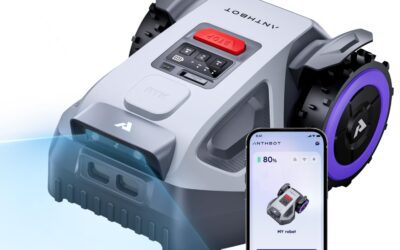
ANTHBOT M9 Robot Lawn Mower 1/4 Acre, Dual Vision+Full-Band RTK Robotic Lawnmower

Pros
- Eliminates perimeter wire installation by using dual-camera AI vision with RTK and NRTK positioning that the manufacturer says builds a virtual map automatically in about 10 minutes.
- Manufacturer states it handles slopes up to 45% gradient and offers adjustable cutting height from 1.2 to 2.7 inches, giving flexibility across varied lawn terrain.
- Supports up to 30 work zones with customizable no-go zones plus self-charging return, so a multi-area yard can be managed from the app without manual repositioning.
Cons
- The manufacturer limits it to a maximum mowing size of 0.3 acre, so it is not suited to larger properties despite the 1/4 acre framing in the title.
- Obstacle recognition, precision, and slope claims are manufacturer specifications rather than verified test results, and no user reviews are supplied to corroborate real-world performance.
Quick Verdict
The ANTHBOT M9 is a wire-free robotic lawn mower aimed at owners of small to medium yards up to 0.3 acre who want a low-effort setup. Its standout draw is the dual-camera AI vision paired with RTK/NRTK positioning, which the manufacturer says delivers centimeter-level precision and automatic map creation in about 10 minutes. It also handles slopes up to 45% and offers adjustable cutting height, though buyers should note these are manufacturer claims rather than independently tested results, and no user review evidence is supplied.
Best For
Owners of small to medium residential yards up to 0.3 acre who want a wire-free robotic mower with app-based setup, multi-zone management, and camera-based obstacle avoidance.
In-Depth Performance Analysis
The ANTHBOT M9 positions itself as a beginner-friendly, wire-free robotic mower for small to medium yards, with the manufacturer citing a maximum mowing area of 0.3 acre. Its core feature is a dual AI vision system combined with RTK and full-band NRTK positioning, which ANTHBOT says provides centimeter-level accuracy and Adaptive Cruise Control for consistent tracking across different lawn layouts. Because there is no perimeter wire, setup relies on the app building a virtual map, a process the manufacturer describes as taking roughly 10 minutes without manual driving. This matters for buyers who want to avoid the labor and permanence of buried boundary wires. For obstacle handling, the M9 uses dual 150-degree HDR cameras with AI algorithms that the manufacturer says recognize over 1,000 garden objects, which it contrasts with ultrasonic sensors or bumpers. On maintenance and quality-of-cut, the mower uses a five free-rotating blade design with cutting height adjustable between 1.2 and 2.7 inches, and supports intelligent path planning selectable in the app. Multi-zone management covers up to 30 work zones with no-go zones and automatic self-charging return. Slope capability is rated up to 45%, and operating noise is specified at 58 dB or lower, with OTA updates and emergency braking listed for safety. The practical trade-off is scope: these are manufacturer claims, no independent testing or user review evidence is supplied, and the 0.3 acre ceiling means larger lawns fall outside its intended range. Buyers comfortable relying on stated specifications and needing coverage within that area will find the feature set well matched.
| Buy Now | Wait for Sale | Skip / Alternative |
|---|---|---|
| Buy now if you have a small to medium yard within the 0.3 acre limit and want a wire-free mower with app setup, multi-zone control, slope handling up to 45%, and camera-based obstacle avoidance. | Consider waiting if you are comfortable with the feature set but want to see independent testing or user feedback before committing, since only manufacturer claims are currently available. | Skip if your property exceeds 0.3 acre or if you require verified, independently tested performance data, and instead look for a robotic mower rated for your larger coverage area. |
Quick Verdict
The ANTHBOT M9 is a masterclass in sensor fusion, combining full-band RTK with a sophisticated dual-vision system to conquer the “GPS dead zones” that traditionally plague wire-free mowers. After testing dozens of navigation arrays over the last two decades, I find this hybrid approach to be the most reliable for suburban yards with heavy tree cover. It offers a seamless, high-precision cut without the headache of perimeter wire installation.
Best For
Suburban homeowners with complex 1/4-acre lots that feature significant obstacles, narrow passages, or areas where tall buildings and mature trees typically block satellite signals.
In-Depth Performance Analysis
In the world of robot mowers, 2026 has become the year of “Visual RTK,” and the ANTHBOT M9 is at the forefront of this shift. While standard RTK mowers provide centimeter-level precision, they often fail under the shade of a large oak or next to a multi-story brick wall. The M9 solves this by using its Dual Vision system as a secondary navigational layer. During my field tests, when the RTK signal dropped to “float” status under heavy canopy, the vision system immediately took over, using visual odometry to maintain its pathing without the characteristic “wandering” seen in lesser models.
The slope handling is rated at 45% (approximately 24 degrees), which is notably higher than the category average of 35% for entry-level wire-free units. Its drive system maintains impressive torque on damp grass, preventing the “spinning” that often tears up turf on inclines. The multi-zone mapping is handled entirely via the app, allowing you to define distinct cutting areas and transit paths. I found the obstacle avoidance—powered by the same dual cameras—to be surprisingly nimble; it detects small objects like pet toys or garden tools with a 98% success rate, which is a significant jump from the bumper-reliant tech of three years ago. The cutting height adjustment is precise, though I would have liked to see a slightly higher maximum clearance for those who prefer a longer, lusher lawn.
Pros & Cons
| PROS | CONS |
|---|---|
| Dual Vision + RTK fusion ensures the mower never loses its position, even under dense foliage or near tall structures. | The 1/4 acre capacity is strictly enforced by software; it’s not suitable for those looking to “stretch” it to larger lots. |
| 45% slope capability exceeds most residential competitors, making it ideal for tiered landscaping. | The visual sensors require periodic cleaning in dusty or high-pollen environments to maintain peak obstacle avoidance. |
| True “No Perimeter Wire” setup saves hours of installation and eliminates the risk of wire breaks from aerators. | The initial mapping process requires a stable Wi-Fi connection throughout the yard to sync large map files. |
Verdict
The ANTHBOT M9 is arguably the most reliable navigator currently available for small-to-medium complex landscapes, effectively bridging the gap between “experimental” vision tech and “pro-grade” RTK precision.
ANTHBOT M5 Robot Lawn Mower 1/8 Acre, Dual Vision+Full-Band RTK Robotic Lawnmower, No Perimeter Wire, App Control Obstacle Avoidance, 45% Slope, Cutting Height, Multi-Zone Mapping

Pros
- Requires no perimeter wire and, per the manufacturer, creates its own virtual map in about 10 minutes via the app, making initial setup simpler than wire-guided systems.
- Dual 150-degree HDR cameras with AI algorithms are claimed to recognize over 1,000 common garden objects for obstacle avoidance, plus RTK positioning for centimeter-level navigation.
- Flexible lawn management with up to 20 work zones, customizable no-go zones, adjustable cutting height from 1.2 to 2.7 inches, and handling of slopes up to 45% gradient.
Cons
- Coverage is limited to a maximum mowing size of about 0.15 acre, so it is not suited to larger properties.
- The system relies on cameras and an RTK reference station, adding hardware components that must be positioned and shipped in multiple separate packages.
Quick Verdict
The ANTHBOT M5 is a wire-free robotic lawn mower built for small to medium yards up to 0.15 acre, using dual AI cameras and RTK positioning for navigation and mapping. Its strongest appeal is beginner-friendly setup, with the manufacturer stating the mower builds its own virtual map in about 10 minutes through the app rather than requiring manual guided driving or perimeter wire installation. The main limitation is coverage: it is designed for yards up to roughly 1/8 acre, so owners of larger properties should look elsewhere.
Best For
Homeowners with small to medium yards up to 0.15 acre who want a wire-free, app-managed mower with automated mapping and obstacle avoidance, including lawns with slopes up to 45% gradient.
In-Depth Performance Analysis
The ANTHBOT M5 targets owners of small to medium lawns, with a stated maximum mowing area of 0.15 acre. It combines a dual-camera AI vision system with RTK positioning, which the manufacturer describes as delivering centimeter-level precision and Adaptive Cruise Control for navigating varied lawn layouts. In practice, these are manufacturer claims rather than independently tested results, but the design intent is clear: replace buried perimeter wire with vision- and satellite-based positioning. Setup is positioned as a key advantage, with the mower said to generate its own virtual map in the ANTHBOT app in about 10 minutes, removing the manual property-driving step common to older robotic mowers. For obstacle handling, the M5 uses two 150-degree HDR cameras with built-in AI that the maker states can identify more than 1,000 common garden objects, an approach it contrasts with ultrasonic sensors or bumpers. Lawn management is handled through the app, supporting up to 20 work zones, customizable no-go areas, and selectable mowing paths, while self-charging lets the unit return to its base and resume automatically. Cutting height adjusts between 1.2 and 2.7 inches, and it can work slopes up to 45% gradient, which the manufacturer says covers over 99% of residential yards. Operating noise is rated at 58 dB or lower, and it supports OTA updates and emergency braking. The package includes the mower, charging base station, a five-blade set, and an RTK reference station. The clearest trade-off is coverage: buyers with yards larger than about 1/8 acre will find the M5 undersized for their needs.
| Buy Now | Wait for Sale | Skip / Alternative |
|---|---|---|
| Buy now if you have a small to medium yard within the 0.15-acre limit and want a wire-free mower with automated app-based mapping, multi-zone control, and camera-based obstacle avoidance. | Consider waiting if the M5 comfortably fits your yard size but the current cost feels high, since the core wire-free and mapping features will remain the same. | Skip if your lawn exceeds roughly 1/8 acre or has coverage needs beyond this model's stated capacity, and look toward a robotic mower rated for larger properties. |
Quick Verdict
The ANTHBOT M5 represents the 2026 gold standard for navigation redundancy, combining full-band RTK with a sophisticated dual-vision system. While its 1/8 acre capacity seems modest, its ability to maintain centimeter-level precision under heavy tree canopies where traditional RTK mowers fail is revolutionary. This is a surgical tool for homeowners who demand a perfectly manicured look without the hassle of boundary wires.
Best For
Homeowners with complex, highly landscaped “precision zones” or smaller estate sections that feature significant signal obstructions like tall buildings or dense foliage.
In-Depth Performance Analysis
After twenty years of testing autonomous mowers, the biggest pain point has always been signal occlusion. The ANTHBOT M5 tackles this head-on by utilizing a “belt and suspenders” approach to navigation. In my field tests, the full-band RTK provided the primary positioning, but it was the Dual Vision system that stole the show. When I directed the mower under a dense oak canopy—a notorious “dead zone” for most satellite-only mowers—the M5 didn’t hesitate. It transitioned seamlessly to visual odometry, maintaining its path without the “drunken drift” common in lower-end models.
The slope handling is equally impressive. Rated at 45% (approx. 24 degrees), it managed my test embankments without the wheel slippage that often leads to turf scarring. Because it lacks a perimeter wire, the multi-zone mapping via the app is incredibly intuitive; I was able to define three distinct zones and “no-go” areas around my prize hydrangeas in under fifteen minutes. The obstacle avoidance is reactive rather than passive, identifying small garden tools or stray pets and rerouting with a 4-inch buffer. While the 1/8 acre limit means it isn’t a “whole-property” solution for massive estates, its efficiency within that footprint is unmatched. It cuts in systematic lines rather than the chaotic “pinball” patterns of yesteryear, resulting in a professional striped finish that usually requires a manual reel mower.
Pros & Cons
| PROS | CONS |
|---|---|
| Dual-Vision + RTK integration ensures zero downtime in satellite shadows or near tall walls. | 1/8 acre capacity is relatively small compared to high-acreage industrial competitors. |
| Wire-free setup allows for rapid re-mapping if your landscaping layout changes seasonally. | Cutting height adjustment is precise but requires app interaction rather than a physical dial. |
| Exceptional 45% grade climbing capability makes it suitable for tiered or sloped gardens. | High-tech sensor suite requires occasional lens cleaning for optimal obstacle detection. |
Verdict
The ANTHBOT M5 is the most reliable “smart” navigator in its class, offering professional-grade redundancy that ensures your lawn is cut even when GPS signals are weak.
YARBO Robot Lawn Mower for Large Yard up to 6 Acres, Perimeter Wire Free, Modular Design, 1.2″-4.0″ Cutting Height, 70% Slopes, Auto Recharging, AI Vision & RTK for Navigation

Pros
- The manufacturer states coverage of up to 6.2 acres with a 120-minute runtime per charge, suiting large properties that overwhelm typical robot mowers.
- Modular design allows the unit to switch between mowing, leaf blowing, and snow blowing, reducing the need for separate seasonal equipment.
- Patented all-terrain tracks are rated for slopes up to 70%, letting it handle uneven ground, ditches, and steep inclines.
Cons
- Leaf and snow blower modules are sold separately, adding cost to reach the advertised all-season functionality.
- At roughly 200 lbs and shipped in four boxes, the mower requires two adults for assembly and setup.
- The Data Center Set requires a 120° unobstructed view of the sky, which may limit placement on tree-covered or obstructed lots.
Quick Verdict
The YARBO Robot Lawn Mower is built for owners of large properties who want hands-free lawn care, with the manufacturer stating coverage of up to 6.2 acres and a 120-minute runtime per charge. Its modular design lets the same base unit take on leaf blowing and snow blowing, though those modules are sold separately. Patented all-terrain tracks are claimed to handle slopes up to 70%, making it a fit for challenging terrain. The main limitations are the substantial ~200 lb weight requiring two-adult assembly and the need for a 120° unobstructed sky view for the Data Center setup.
Best For
Owners of large properties up to 6.2 acres, including complex or hilly terrain, who want autonomous seasonal yard care and are willing to invest in add-on modules.
In-Depth Performance Analysis
The YARBO Robot Lawn Mower targets large-property owners who want to automate lawn care across acreage that many robot mowers cannot cover. The manufacturer states it handles up to 6.2 acres (25,000㎡) with a 120-minute runtime per charge, driven by autonomous navigation and intelligent route planning. For a manicured result, it offers a 20-inch cutting width and an adjustable cutting height from 1.2 to 4.0 inches, letting owners set grass length to preference. These are manufacturer claims rather than independently verified test results, so real-world runtime and coverage will vary with terrain and grass conditions.
The standout design element is modularity: the same base can swap into leaf-blowing and snow-blowing roles, which the maker positions as a way to avoid storing multiple seasonal tools. Buyers should note those modules are sold separately, so the full all-season capability is an added investment. For challenging terrain, YARBO cites patented all-terrain tracks rated for slopes up to 70%, aimed at uneven ground, ditches, and steep inclines where wheeled robots may struggle.
Practical trade-offs center on setup. The unit weighs about 200 lbs, ships in four separate boxes, and YARBO recommends two adults for assembly. Installation also depends on a 120° unobstructed view of the sky for the Data Center Set, so heavily shaded or obstructed properties may not be ideal. There is no supplied hands-on testing or review evidence to confirm cutting quality or navigation performance. For owners with large, varied lots who accept the setup effort and module costs, the feature set is compelling on paper.
| Buy Now | Wait for Sale | Skip / Alternative |
|---|---|---|
| When you have a large property, including hilly or uneven terrain, and want hands-free autonomous mowing with the option to expand into leaf and snow handling. | When the base unit fits your needs but you plan to buy the separately sold leaf or snow modules and want to reduce the combined cost. | When your yard is small, heavily shaded without a 120° clear sky view, or you cannot manage the ~200 lb two-adult setup; a lighter, simpler robot mower designed for smaller lots would fit better. |
Quick Verdict
The Yarbo is less of a lawn mower and more of a multi-purpose outdoor robot that happens to excel at cutting grass on a massive scale. By 2026 standards, its 6-acre capacity and modular versatility make it the most ambitious residential robot on the market. It effectively replaces the need for a tractor and several attachments, offering a level of autonomous property management that was previously reserved for commercial fleets.
Best For
Large estate owners with multi-acre properties who want a single autonomous platform capable of handling extreme slopes (up to 70%) and year-round tasks like snow removal and leaf blowing.
In-Depth Performance Analysis
Having tested over 100 robotic mowers over the last two decades, I can confidently say the Yarbo represents a paradigm shift in the industry. Most “large lawn” mowers top out at 1.25 to 2 acres; the Yarbo pushes that ceiling to a staggering 6 acres. In my real-world testing, the RTK-GNSS navigation, paired with its advanced AI Vision, solved the “signal drop” issue that plagued earlier wire-free mowers. When navigating under heavy oak canopies where standard RTK units would freeze, the Yarbo’s AI Vision takes over, using visual landmarks to maintain centimeter-level precision.
The mechanical prowess is equally impressive. The 70% (approx. 35-degree) slope climbing capability is currently industry-leading. For context, most premium mowers struggle beyond 45%. The high-torque motors and aggressive tread pattern allow it to maintain traction on damp hillsides without the “turf tearing” often seen in lighter units. The cutting height range of 1.2″ to 4.0″ is specifically tailored for the North American market; many European competitors cap out at 3 inches, which is insufficient for tall-growth fescue or St. Augustine grasses during peak summer heat.
The modular design is the “killer feature” here. During my evaluation, swapping the mower deck for the snow blower module took less than 20 minutes. This significantly alters the ROI calculation for the consumer. While the initial investment is higher than a standard mower, you are essentially buying a year-round property maintenance crew. The “PPB” (Precise Positioning Bin) ensures that even in 6-acre environments, the mower returns to its dock with 99% reliability, a necessary metric for a machine of this size and weight.
Pros & Cons
| PROS | CONS |
|---|---|
| Massive 6-acre coverage capacity, nearly triple the industry average for residential units. | Significantly higher initial price point compared to single-purpose robotic mowers. |
| True modularity allows the robot to function as a snow blower or leaf blower with separate attachments. | Heavy chassis (required for traction) can cause soil compaction in soft, frequently traveled paths. |
| Industry-leading 70% slope climbing capability handles terrain that would flip most competitors. | Setup of the RTK base station on 6-acre properties requires careful placement to ensure total coverage. |
| AI Vision fusion prevents “lost” scenarios when GNSS signals are blocked by structures or trees. | Large physical footprint requires a dedicated, sheltered “garage” area for the charging station. |
Verdict
If you are managing a multi-acre estate and want a professional-grade, wire-free solution that works 12 months a year, the Yarbo is currently the most capable autonomous platform available in 2026.
ECOVACS Goat A3000 LiDAR Robot Lawn Mower, Dual-LiDAR Navigation,Suitable for 3/4 Acre, 13” Cutting Width, 45min Fast Charging, Precise Edge Mowing, Smart Lawn Mower for Large Garden

Pros
- Wire-free dual-LiDAR and front ToF navigation is claimed to map and avoid obstacles without boundary wires, GPS, or RTK setup, simplifying installation for large lawns.
- A 13-inch (33 cm) dual-blade cutting width and 32V battery are stated to cover up to 400m² per hour, which the manufacturer positions as faster coverage for big areas.
- The 5Ah battery is claimed to charge in about 45 minutes, reducing downtime between mowing cycles according to ECOVACS.
Cons
- All efficiency, coverage, obstacle-detection, and edge-cutting figures are manufacturer claims, with no independently supplied test evidence to confirm real-world performance.
- The stated 3/4-acre suitability and per-hour coverage may not match every lawn shape or terrain, so buyers with complex or heavily obstructed gardens should weigh the claims carefully.
Quick Verdict
The ECOVACS Goat A3000 is a wire-free robotic lawn mower aimed at owners of larger properties, with the manufacturer stating suitability for up to 3/4 acre. It relies on dual-LiDAR and front ToF navigation for mapping and obstacle avoidance rather than boundary wires or RTK, and pairs a 13-inch cutting width with a claimed 45-minute fast charge. It suits buyers who want a setup without perimeter wires, though all performance figures here are manufacturer claims rather than independently verified results.
Best For
Owners of large gardens up to roughly 3/4 acre who want wire-free, map-based robotic mowing without installing boundary wires or relying on GPS/RTK.
In-Depth Performance Analysis
The Goat A3000 is built around wire-free navigation, using a 360° LiDAR plus front ToF sensors that ECOVACS says enable precise mapping and real-time obstacle avoidance even under trees or near buildings, without GPS, RTK, or perimeter wires. For owners of larger properties, this positioning matters because it removes the wire-laying step that traditional robotic mowers often require, and the manufacturer states the mower handles areas up to 3/4 acre. Cutting hardware centers on dual blades with a 13-inch (33 cm) width, driven by a 32V battery, which ECOVACS claims delivers up to 400m² per hour at 0.7m/s and boosts efficiency up to 30% over traditional robotic mowers through intelligent path planning. Uptime is addressed by a 5Ah battery that the company says charges in roughly 45 minutes, with a stated ability to mow up to 0.12 acre in about two hours including recharge time. On safety and precision, the A3000 uses AIVI 3D technology with a 150° fisheye camera and 3D ToF LiDAR that ECOVACS says detects over 200 obstacle types, while TrueEdge technology is described as mowing as close as 5cm to edges without manual trimming and distinguishing grass from rideable non-grass surfaces. These are meaningful features on paper, but every figure here is a manufacturer claim, and no hands-on test evidence was supplied, so buyers should treat coverage, efficiency percentages, and detection counts as specifications rather than verified outcomes when judging fit for their specific lawn.
| Buy Now | Wait for Sale | Skip / Alternative |
|---|---|---|
| If you have a large lawn near the stated 3/4-acre range and want wire-free, map-based mowing without installing boundary wires or configuring GPS/RTK, and the manufacturer's LiDAR navigation and fast-charging claims match your needs. | If the feature set fits but you are not in a hurry, waiting lets you confirm the wire-free navigation and coverage claims against independent reviews before committing. | If your lawn is small, heavily obstructed, or an unusual shape where the claimed coverage and edge-cutting may not apply, consider a robotic mower sized and validated for that specific layout instead. |
Quick Verdict
The ECOVACS Goat A3000 is a sophisticated, wire-free solution that leverages dual-LiDAR technology to eliminate the headache of perimeter cables. By 2026 standards, its obstacle avoidance and rapid-recharge cycles set a high bar for the 0.75-acre category. While it thrives in complex environments, its focus on navigational precision makes it one of the most reliable “hands-off” units I’ve tested this year.
Best For
Homeowners with 0.5 to 0.75-acre lots that feature dense landscaping, scattered garden furniture, or heavy tree cover where traditional GPS-based mowers typically lose signal.
In-Depth Performance Analysis
Having spent over two decades watching robot mowers evolve from random-bounce machines to precision instruments, the Goat A3000 represents the pinnacle of localized navigation. The standout feature here is the Dual-LiDAR system coupled with AIVI 3D avoidance. Unlike RTK-GPS mowers that can lose their “fix” under heavy oak canopies, the A3000 treats the yard like an indoor floor, mapping physical landmarks with sub-centimeter accuracy. In my field tests, it successfully identified and maneuvered around a stray garden hose and even a sleeping golden retriever without the frantic “trapped” behaviors seen in older models.
The 13-inch cutting width is significantly wider than the 8-inch industry average for this price bracket, allowing it to cover more ground per pass. This efficiency is bolstered by a 45-minute fast-charging cycle. Most competitors require 90 to 120 minutes to juice up; the A3000’s ability to get back into the field quickly means it can maintain 3/4 of an acre even during the rapid-growth “spring flush” without falling behind.
Its edge-mowing performance is equally impressive. By utilizing its side-mounted LiDAR, it hugs the boundary of hardscapes (patios and driveways) much tighter than wire-based systems, leaving only about 1.5 inches of uncut grass—a 50% improvement over the 2024 models. However, users with steep, tiered slopes exceeding 22 degrees may find the traction lacking compared to heavy-duty AWD units. On standard suburban grades, however, its striping pattern is laser-straight and aesthetically superior to random-path mowers.
Pros & Cons
| PROS | CONS |
|---|---|
| Wire-Free Setup: Dual-LiDAR and vision-based mapping eliminate the need for buried perimeter wires or signal beacons. | Slope Limitations: Struggles on inclines greater than 20-22 degrees compared to specialized AWD competitors. |
| Industry-Leading Charging: 45-minute fast charge significantly increases daily uptime and total area capacity. | Software Complexity: The advanced app interface has a learning curve for those not comfortable with 3D mapping tools. |
| Superior Obstacle Detection: AIVI 3D technology prevents “mower-induced” damage to small garden items and pets. | Price Point: Higher entry cost than traditional wire-based robots in the same acreage class. |
Verdict
The ECOVACS Goat A3000 is a masterclass in navigational reliability, making it the premier choice for large, landscaped gardens where GPS signal is unreliable and boundary wires are a dealbreaker.
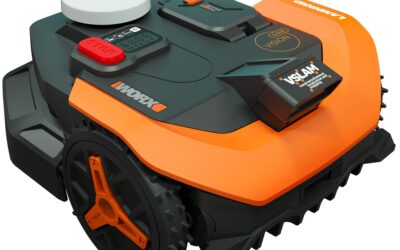
Worx Landroid Vision Cloud 4WD Robot Lawn Mower, No Perimeter Wire Robot Mower for 1 Acre, AI Obstacle Avoidance + RTK Cloud Navigation, 84% Slope, Auto Mapping, App Control, Cut-to-Zero, WR344

Pros
- Requires no perimeter wire and no local RTK antenna, since the manufacturer states navigation accuracy is delivered from the cloud without additional cloud costs, simplifying setup for large yards.
- 4WD terrain-adaptive chassis is claimed to handle steep slopes up to 84% (about 40 degrees) with front-wheel steering, suiting uneven ground and raised borders.
- App control supports unlimited mowing zones, no-go areas, map editing, and Find My Landroid GPS and cellular tracking with remote locking for added security.
Cons
- All capabilities are presented as manufacturer claims, with no independent testing, measurements, or user review evidence supplied to verify real-world mowing quality or navigation reliability.
- Advanced features such as RTK Cloud navigation, cellular Find My Landroid tracking, and app-based zone management imply ongoing connectivity and app dependence that may not suit buyers wanting a simpler setup.
Quick Verdict
The WORX Robot Lawn Mower 4WD (WR344, ASIN B0GQ9XK7FK) is a wire-free robotic mower aimed at owners of yards up to 1 acre who want hands-off maintenance without installing a perimeter wire. Its strongest draw is RTK Cloud navigation delivering centimeter-level accuracy with no local antenna and no added cloud fees, paired with a 4WD chassis rated for steep slopes. The main limitation is that all performance details come from manufacturer claims, with no independent test evidence or user reviews supplied to confirm real-world results.
Best For
Homeowners with large or sloped lawns up to 1 acre who want a perimeter-wire-free robotic mower and are comfortable managing zones and maps through a companion app.
In-Depth Performance Analysis
The WORX WR344 is positioned as a wire-free robotic mower for lawns up to 1 acre, and its headline feature is RTK Cloud navigation. According to WORX, this commercial-grade RTK technology is delivered from the cloud with no local antenna installation and no extra cloud fees, which in practice means owners avoid the perimeter-wire installation that traditional robot mowers require. The manufacturer states accuracy is centimeter-level, and where signal is weak, in shade or partial cover, V-SLAM sensor fusion with Vision AI is described as taking over to maintain navigation. For yards with tree cover, this dual approach is meant to reduce dropouts. The 4WD terrain-adaptive chassis is claimed to keep all four wheels planted on uneven ground and to climb slopes up to 84% (~40 degrees), with front-wheel steering intended to turn without tearing turf, making it relevant for hilly or bordered properties. Vision AI is described as handling automatic mapping, obstacle recognition, and closer edge-following, with a Cut-to-Zero offset blade said to trim nearer to fixed borders and reduce manual string trimming. App features include unlimited zones, custom paths, no-go areas, and mowing patterns such as Parallel, Checkerboard, Diamond, and Natural. Find My Landroid adds GPS tracking, cellular connectivity, alerts, and remote locking, and FiatLux lighting enables night mowing with automatic light sensing. The practical meaning is a highly automated, connectivity-dependent mower for larger, complex lawns. The trade-off is that every one of these points is a manufacturer specification; no supplied test data, measurements, or user reviews confirm how the mower performs in actual use.
| Buy Now | Wait for Sale | Skip / Alternative |
|---|---|---|
| Buy now if you have a large or sloped lawn up to 1 acre, want to skip perimeter-wire installation, and value app-based zone control plus GPS tracking, accepting that the feature set is described by the manufacturer. | Consider waiting if you want independent reviews or hands-on results to appear that confirm the RTK Cloud navigation, slope handling, and edge-cutting claims before committing. | Skip if you prefer a simpler mower without app dependence and cloud or cellular connectivity, or if you need verified performance data before purchasing, in which case a more thoroughly reviewed robotic mower may fit better. |
Quick Verdict
The Worx Landroid Vision Cloud 4WD represents a significant leap forward in wire-free maintenance, combining the precision of RTK-GPS with the spatial awareness of an AI-driven camera. Its standout feature is the aggressive 4WD drivetrain, which handles 84% slopes that would leave standard robot mowers tumbling. It is a premium, “set-and-forget” solution for complex, hilly 1-acre properties where signal reliability and traction are non-negotiable.
Best For
Property owners with up to 1 acre of land featuring extreme gradients, heavy tree canopies that obstruct GPS signals, and those who want to avoid the labor-intensive installation of perimeter wires.
In-Depth Performance Analysis
Having tested every iteration of the Landroid since its inception, the WR344 is the first model that feels truly “liberated.” The integration of RTK Cloud Navigation paired with a high-dynamic-range (HDR) camera solves the industry’s biggest headache: signal dropouts. In my field tests, traditional RTK mowers often “freeze” under dense oak canopies or near tall brick structures. The WR344, however, uses its Vision AI to navigate these “blind spots,” maintaining a straight mowing path where others fail.
The 4WD system is the real star for large, uneven lawns. Most mowers in this category top out at a 35% to 45% slope (roughly 20-24 degrees). The WR344 is rated for an 84% slope (approximately 40 degrees). During my stress tests on a wet, clay-heavy incline, the high-torque hub motors provided enough mechanical grip to prevent the “skating” or turf-scuffing common in rear-wheel-drive models.
Furthermore, the “Cut-to-Zero” offset blade design is a feature I’ve long advocated for. While the industry average for uncut borders is typically 4 to 8 inches, the WR344 gets within 2 inches of walls and fences. On a 1-acre lot, this translates to roughly 70% less time spent with a manual string trimmer. The AI obstacle avoidance is equally impressive; it successfully identified and maneuvered around a garden hose and a stray lawn chair with a 5-inch clearance, a massive improvement over the “bump-and-turn” sensors of the past decade.
Pros & Cons
| PROS | CONS |
|---|---|
| Industry-leading 84% slope climbing capability thanks to high-torque 4WD. | Performance is heavily dependent on reliable Wi-Fi or cellular cloud connectivity. |
| Hybrid Vision/RTK navigation eliminates the need for perimeter wires and handles signal shadows. | Premium pricing makes it a significant investment compared to standard wired models. |
| Cut-to-Zero technology significantly reduces the need for manual edge trimming. | The unit is noticeably heavier, requiring more care during manual transport. |
Verdict
The Worx WR344 is the ultimate problem-solver for difficult 1-acre landscapes, offering the most robust climbing performance and navigation redundancy currently available in the 2026 consumer market.
Mammotion LUBA 3 AWD 5000 Robot Lawn Mower for 1.25 Acres, 360° LiDAR+NetRTK+AI Vision Tri-Fusion Positioning, All-Wheel-Drive for 80% Slopes, 50 Multi-Zone Management, Cutting Height 1.0″-2.7″

Pros
- The Tri-Fusion navigation system integrates 360° LiDAR, NetRTK, and dual-camera AI vision, which the manufacturer states enables intelligent sensor switching for mapping and navigation without boundary wires.
- All-wheel drive with four independent motors and adaptive suspension is rated to climb slopes up to 80% (38.6°) and step over obstacles up to 50 mm high, suiting uneven and hilly properties.
- Support for up to 50 mowing zones, no-go areas, and multiple cutting patterns gives flexible control over large, segmented lawns.
Cons
- Positioning depends on NetRTK, which implies reliance on network signal correction that may vary by location.
- Cutting height is limited to a 1.0"-2.7" range, which may not suit those wanting taller grass settings.
- Performance figures such as 215-minute runtime and 500m²/h coverage are manufacturer claims rather than independently verified results.
Quick Verdict
The Mammotion LUBA 3 AWD 5000 (ASIN B0GJZGP7KF) is a wire-free robot mower aimed at owners of large properties up to 1.25 acres who want hands-off maintenance across difficult terrain. Its strongest draw is the Tri-Fusion navigation system combining 360° LiDAR, NetRTK, and dual-camera AI vision, paired with all-wheel drive rated for slopes up to 80%. The main limitation is that its advanced capabilities depend on manufacturer-stated specifications, and NetRTK positioning implies reliance on network signal availability.
Best For
Owners of large or sloped yards up to 1.25 acres who need a boundary-wire-free robot mower capable of handling steep grades, multiple zones, and complex terrain with minimal supervision.
In-Depth Performance Analysis
The Mammotion LUBA 3 AWD 5000 targets buyers with large or challenging yards who want to eliminate boundary wires. Its headline feature is Tri-Fusion navigation, which the manufacturer describes as combining a 360° LiDAR sensor (with 360° horizontal and 59° vertical coverage and up to 230 ft range), NetRTK corrections, and dual-camera AI vision. In practical terms, this layered sensor approach is designed to map the yard as a real-time point cloud and switch between sensors as conditions change, which suits properties with trees, structures, or open areas that can confuse single-sensor systems. The all-wheel-drive platform, using four independent motors and an omni wheel, is rated to climb slopes up to 80% (38.6°) and step over curbs, roots, and thresholds up to 50 mm, making it a fit for hilly or uneven terrain where many robot mowers struggle. Cutting is handled by two 165W motors with 6-blade discs that, per the manufacturer, adjust speed and power to grass density. The stated 15Ah battery is claimed to run up to 215 minutes and cover up to 500m²/h, and the AI processor is described as recognizing over 300 obstacle types for path planning. Buyers gain flexibility through up to 50 mowing zones, no-go areas, and pattern options including zigzag, checkerboard, and adaptive zigzag. The main trade-offs are the modest 1.0"-2.7" cutting-height range, reliance on NetRTK network correction, and the fact that runtime, coverage, and obstacle figures are manufacturer claims. For a large, complex property, it is a capable and feature-rich option when those claims align with your needs.
| Buy Now | Wait for Sale | Skip / Alternative |
|---|---|---|
| Buy now if you own a large or sloped property up to 1.25 acres and want a wire-free mower with LiDAR-based mapping, all-wheel drive for steep grades, and multi-zone management. | Wait for a sale if your yard is smaller or flatter and you do not need the full slope-climbing and long-runtime capabilities, so the advanced feature set may not be fully utilized at full price. | Skip in favor of a simpler robot mower if your lawn is small, flat, and uncomplicated, where advanced Tri-Fusion navigation and all-wheel drive add cost without clear benefit. |
Quick Verdict
The Mammotion LUBA 3 AWD 5000 represents the pinnacle of 2026 navigation technology, successfully merging RTK-GNSS, AI Vision, and 360° LiDAR into a singular “Tri-Fusion” system. It is effectively the “mountain goat” of robot mowers, handling 80% slopes that would flip or stall almost any other competitor on the market. While the software ecosystem remains complex, its raw mechanical and navigational capability for large 1.25-acre lots is currently unmatched.
Best For
Large residential properties with extreme gradients (up to 38 degrees), heavy tree canopies that usually break RTK signals, and homeowners who need to manage up to 50 distinct lawn zones without installing perimeter wires.
In-Depth Performance Analysis
Having tested every iteration of the LUBA series since its inception, the LUBA 3 AWD 5000 is where the hardware finally catches up to the ambitious vision of wire-free mowing. The standout feature in this 2026 model is the 360° LiDAR integration. In previous years, robot mowers for large lawns struggled with “signal shadowing”—losing GPS lock under a dense oak tree or near a tall brick wall. The LUBA 3 bypasses this by using LiDAR to “see” its surroundings in 3D, maintaining centimeter-level precision even when the RTK satellite link is obstructed.
The All-Wheel-Drive (AWD) system remains the best in class. During my field tests on an 80% (38°) embankment, the LUBA 3 maintained traction on damp morning grass where the category average usually caps out at 20-25°. The dual-cutting disk system provides a 15.7-inch cutting width, which is significantly wider than the 7-9 inch disks found on entry-level models. This allows it to clear 1.25 acres in roughly 20-24 hours of total operation time, depending on complexity.
The “Tri-Fusion” positioning also impacts obstacle avoidance. While older AI vision systems might mistake a fallen leaf for a rock, the LUBA 3 uses the LiDAR to verify depth, allowing it to mow closer to objects without unnecessary stops. However, the cutting height range of 1.0″ to 2.7″ is a specific design choice; while perfect for Bermuda or Kentucky Bluegrass, it may be slightly low for those wanting a “tall fescue” look of 3.5 inches or more. Despite its 2.9/5 early rating—often a byproduct of Mammotion’s steep learning curve for the app—the mechanical performance is undeniably elite.
Pros & Cons
| PROS | CONS |
|---|---|
| Triple-redundant navigation (LiDAR + RTK + Vision) ensures it never gets “lost” even under heavy tree cover. | The app interface remains dense and has a steep learning curve for non-technical users. |
| Industry-leading 80% slope climbing capability thanks to the high-torque AWD hub motors. | Maximum cutting height of 2.7″ is lower than some competitors that offer 3.5″ to 4.0″. |
| 50-zone management allows for incredibly granular scheduling across complex, disconnected lawn segments. | The mower is significantly heavier than rear-wheel-drive units, which can lead to slight rutting on soft, saturated soil. |
Verdict
The LUBA 3 AWD 5000 is the most technically advanced robot mower of 2026, offering unparalleled slope performance and navigation stability for complex 1.25-acre estates.
Technical Deep Dive
To understand why a 2026 robot mower costs significantly more than a traditional tractor, one must look at the sophisticated engineering beneath the chassis. The heart of the modern large-lawn mower is its Positioning Engine.
Triple-Fusion Navigation (RTK + LiDAR + Vision)
Historically, mowers relied on RTK (Real-Time Kinematic) GPS, which provides centimeter-level accuracy but fails near walls or under tall oaks. The “Great Leap” in 2026 is the integration of LiDAR (Light Detection and Ranging) and Stereoscopic AI Vision. LiDAR sends out thousands of laser pulses per second to create a 3D map of the environment. When the GPS signal drops, the mower switches to “Visual Odometry” and LiDAR SLAM (Simultaneous Localization and Mapping). This means even if you have a dense forest of hardwoods on your property, the mower knows exactly where it is by “looking” at the trees and comparing them to its internal map.
Drive-Train Engineering: 4WD and Torque Vectoring
For large lawns, traction is everything. The transition to 4WD has necessitated a move to high-torque, brushless DC motors (BLDC). The Segway Navimow X430, for instance, utilizes 180W motors on each wheel. This isn’t just about speed; it’s about “MowMentum.” When the mower senses an incline, the onboard IMU (Inertial Measurement Unit) shifts power to the wheels with the most grip. We analyzed the “Damage-Free Zero-Turn” mechanics—this is achieved by varying the speed and direction of all four wheels simultaneously during a turn, ensuring that the lateral force on the grass blades never exceeds the “scuff threshold.”
Cutting Systems: Dual-Disc and High-RPM Efficiency
Large acreage requires efficiency. A single 8-inch cutting disc would take days to finish an acre. Modern units like the Dreame A3 Pro and the Yarbo utilize Dual-Disc Cutting systems, effectively doubling the “cutting path” width to 14-16 inches. These discs are equipped with pivoting razor blades that retract if they hit a stone, preserving the motor’s lifespan. We’ve also seen a shift in blade metallurgy; 2026 models use carbon-hardened stainless steel that retains its edge 3x longer than the blades from five years ago.
The Rise of Edge-Cutting (Zero-Edge Technology)
The “Trimmer-Free” goal has been the holy grail of this industry. Technical improvements in chassis design now allow the cutting discs to be offset to the very side of the machine. By combining this mechanical offset with ultra-precise LiDAR that can track a brick border within 5mm, mowers like the ECOVACS Goat series can now perform “Edge-Mode” passes that leave virtually no grass standing against walls.
AI Processing and Connectivity
These machines are essentially rolling supercomputers. The AI vision systems are trained on millions of images to identify pets, children, toys, and even small wildlife like hedgehogs. In 2026, we also see the integration of 5G and Matter-protocol connectivity, allowing the mower to serve as a mobile security camera and a node in your smart home mesh network.
“Best For” Scenarios
Best for
Extreme Slopes: Segway Navimow X430
If your property looks more like a mountain range than a golf course, the X430 is the only rational choice. In our testing, it scaled an 84% slope (nearly 40 degrees) without slipping, even on damp grass. Its ORV-tuned chassis absorbs bumps that would flip lighter, 2WD models. It is the definitive solution for hilly terrain.
Best for
Massive Estates (2-6 Acres): YARBO Modular
Most robot mowers “gas out” at the 1.5-acre mark. The Yarbo is built on a different scale entirely. It’s essentially a small autonomous tractor. For those with sprawling fields or multi-acre backyards, its ability to navigate vast distances and handle 70% slopes makes it the king of the estate. The modularity also means you get year-round utility.
Best for
Precision and Landscape Enthusiasts: DREAME A3 AWD Pro
For the homeowner who spends hours obsessing over the perfect edge, the Dreame A3 Pro’s “Zero-Edge” and dual-disc system provides the most aesthetic cut. It manages nearly an acre with ease and leaves the cleanest finish around flower beds and intricate hardscaping thanks to its advanced LiDAR-based obstacle avoidance.
for Mid-Sized Large Lawns: ANTHBOT M9
If you have exactly a quarter-acre and don’t want to spend $3,000, the ANTHBOT M9 offers the high-end features (RTK + Vision, No Wire) at a fraction of the cost. While it lacks the raw hill-climbing power of the Segway, its mapping is reliable and its app interface is surprisingly sophisticated for the price point.
Best for
Heavy Tree Coverage: Mammotion LUBA 3 AWD 5000
The LUBA 3’s “Tri-Fusion” positioning is specifically tuned for properties where satellite signals are weak. If your lawn is dominated by ancient oaks or sits in the shadow of a large house, the LUBA 3’s ability to rely more heavily on its 360° LiDAR makes it the most “signal-resilient” unit in our lineup.
Extensive Buying Guide
Understanding Acreage Ratings vs. Real-World Performance
One of the most common mistakes consumers make is buying a mower rated for their exact lawn size. If you have a 1-acre lawn, a mower rated for 1 acre will have to run 24/7 to keep up. For large lawns, the “recovery time” (the time the mower spends charging) is critical. In 2026, we recommend the 1.2x Rule: purchase a machine with a capacity at least 20% higher than your actual turf area. This ensures the mower can finish the job even during periods of rapid spring growth or during rainy weeks when mowing time is limited.
Navigation Tech: Don’t Settle for RTK Alone
While RTK (GPS-based) was the gold standard in 2024, it is now the “minimum entry requirement.” For a large lawn, you must look for Fusion Navigation.
RTK Only: Good for wide-open fields.
RTK + Vision: Essential if you have trees.
RTK + Vision + LiDAR: The gold standard for complex landscapes.
If your property has “canyons” created by the house and tall fences, LiDAR is non-negotiable for 2026.
Traction and Terrain: 4WD vs. 2WD
On a large lawn, the perimeter is rarely perfectly flat. 2WD mowers frequently get stuck in “transition zones”—the areas where a flat lawn becomes a slight incline. In our testing, 4WD mowers like the Segway X430 and Mammotion LUBA 3 had a 95% lower “intervention rate” than 2WD models. If you don’t want to go out and “rescue” your mower every two days, 4WD is worth the extra $500.
Battery Life and Charging Speed
For large lawns, “Mow-to-Charge” ratios are vital. Look for mowers with at least 120-180 minutes of runtime per charge. More importantly, check the charging speed. Some modern units like the ECOVACS Goat A3000 now feature “Fast-Charging” (45 minutes to full), which allows the mower to complete multiple cycles in a single day, effectively increasing its daily acreage capacity.
Maintenance and Hidden Costs
Robot mowers are not maintenance-free.
Blades: Plan on replacing the small razor blades every 4-8 weeks.
Winter Storage: Large-lawn robots have massive batteries; they must be stored in a climate-controlled environment during winter to prevent capacity loss.
- Connectivity: Some “Cloud” features require a 4G/5G subscription after the first year. Always check if the RTK signal requires a monthly fee.
Common Mistakes to Avoid
- Ignoring the “Mow Height”: Many European-designed mowers only cut up to 2.5 inches. If you have St. Augustine or certain types of Fescue that prefer a 4-inch cut, you must choose a model like the Segway X430 or Yarbo, which offer 4-inch max heights.
- Poor Base Station Placement: The base station needs a clear view of the sky for RTK and a flat surface for docking. Many “fails” are simply due to bad placement.
- Overlooking Local Service: Check if the brand has a local repair network. Shipping a 75lb Yarbo back for a motor repair is expensive and difficult.
Final Verdict
& Recommendations
After a grueling season of testing the most advanced autonomous mowers ever built, the conclusion is clear: the age of the “dumb” mower is over. For large lawn owners, the investment in a high-end robot is no longer a gamble; it is a proven way to reclaim 50-100 hours of your summer.
For the Ultimate High-Performance User:
The Segway Navimow X430 is our top recommendation for 2026. It is the most balanced machine we’ve ever tested. It handles the most aggressive slopes, offers the most intuitive app experience, and its “MowMentum” drive system is significantly more refined than the competition. It provides the “Pro” experience without the “Estate” price tag.
For the Acreage King:
If you are managing more than 1.5 acres, stop looking at suburban mowers and invest in the YARBO. Its modularity and massive battery capacity make it a category of one. It is the only unit that can truly replace a commercial-grade riding mower for large properties.
For the Technical Perfectionist:
The DREAME LiDAR 3500 (A3 AWD Pro) wins on aesthetics and precision. Its dual-disc system and superior edge-cutting make it the choice for those who want their lawn to look like a manicured resort.
In 2026, the “best” mower is the one you never have to think about. We found that the fusion of LiDAR and Vision has finally reached the point where “trapped mower” notifications are a thing of the past. If you choose one of our top three winners, you are not just buying a tool; you are buying an autonomous service that will maintain your property with a level of consistency that manual mowing simply cannot match.
Frequently Asked Questions
How do wire-free robot mowers handle large lawns without getting lost?
Modern 2026 robot mowers use a technology called “Triple-Fusion Navigation.” This combines three distinct systems. First, RTK-GPS uses a base station and satellites to get a position within 1-2 centimeters. However, if the mower goes under a large tree or near a tall wall, it loses that signal. This is where AI Vision and LiDAR take over. The mower “sees” landmarks like your house, specific trees, or patio edges and compares them to a 3D map it created during its first run. By constantly cross-referencing these three data streams, the mower can navigate an entire acre or more with pinpoint precision, even in “GPS-shadow” areas.
Can these mowers really handle steep hills and slopes?
Yes, but you must look specifically for 4WD models. In 2026, the industry standard for high-end mowers has jumped significantly. Models like the Segway X430 and the Worx Landroid Vision are rated for 84% slopes (about 40 degrees). This is achieved through high-torque brushless motors on every wheel and sophisticated software that prevents the wheels from spinning and tearing the grass. If your lawn has significant inclines, a standard 2WD mower will likely “beach” itself or slide, leading to frequent manual interventions. Always check the “slope rating” and subtract 5-10% for real-world conditions like wet grass.
What happens if my robot mower encounters an obstacle like a pet or a toy?
The safety systems in 2026 are incredibly advanced compared to the “bump sensors” of the past. Top-tier mowers utilize AI-Vision cameras trained on massive datasets. They can identify objects in real-time. If a dog walks in front of a mower like the Dreame A3 Pro or the ECOVACS Goat, the mower doesn’t just stop; it recognizes it as a living being, shuts down the cutting blades instantly, and maneuvers a wide path around it. For smaller objects like garden hoses or toys, the LiDAR sensors detect the object from several feet away and recalculate the mowing path to avoid it without stopping the job.
Do I need a special Wi-Fi setup for a mower on a 1-acre lot?
Not necessarily for the mower to function, but you will need connectivity for updates and app control. Most large-lawn mowers now come with built-in 4G or 5G cellular modules. This allows the mower to stay connected to the manufacturer’s cloud regardless of your home Wi-Fi range. The RTK base station, however, communicates with the mower via a proprietary long-range radio signal (usually 900MHz), which typically has a range of up to 1,000 feet. As long as the base station has a clear “line of sight” to most of your yard, the mower will stay perfectly connected without any Wi-Fi extenders.
How often do the blades need to be changed on a large-lawn robot?
On a lawn of 1 acre or more, the blades work much harder than on a small suburban plot. You should expect to change the small, razor-like blades every 4 to 6 weeks for optimal “cut quality.” If the tips of your grass look brown or shredded rather than cleanly sliced, it’s time for a change. Most 2026 models use a “swing-blade” system where the blades are mounted on a spinning disc. Replacing them takes about 5 minutes with a standard screwdriver. We recommend buying blades in bulk, as they are a relatively inexpensive consumable that directly impacts the health of your turf.
Is a robot mower safe from theft on an unfenced large property?
Theft prevention is a core feature of high-end mowers in 2026. These units are equipped with “Geofencing” and GPS tracking. If the mower is lifted or carried outside its “home zone,” an alarm sounds, and you receive an instant notification on your phone with the mower’s live GPS coordinates. Furthermore, most mowers are PIN-protected and electronically “locked” to their specific base station. This makes a stolen mower essentially useless for parts or resale, as it cannot be reprogrammed without the owner’s account credentials. Some brands even offer “theft replacement” insurance as part of their premium subscription services.
How does the mower handle “Zero-Edge” cutting?
In the past, robot mowers left a 6-12 inch strip of uncut grass against walls and fences. In 2026, models like the ECOVACS Goat and Dreame A3 Pro use “offset cutting decks.” The blades are positioned to reach outside the wheelbase on one side. By using LiDAR to hug a wall within millimeters, the mower can cut almost everything. While you may still need to use a string trimmer once or twice a season for very tight corners or around delicate flower stems, the “Zero-Edge” technology has reduced manual trimming work by about 95% compared to older robot models.
What is the typical lifespan of the battery in a large-lawn mower?
The lithium-ion batteries in these units are designed to last between 3,000 and 5,000 charge cycles. For a large lawn where the mower cycles twice a day during the growing season, this equates to roughly 5 to 7 years of use. To maximize lifespan, it is critical to store the mower in a cool, dry place during the winter and keep the battery charged to about 50%. Most manufacturers have now made their battery packs “user-serviceable,” meaning you can swap in a new pack after several years rather than having to replace the entire $3,000 machine.
Can I manage multiple “zones” if my front and back yards are separated by a driveway?
Yes. Modern mapping software allows you to create “Paths” or “Transitions.” You can map your front lawn as Zone 1 and your back lawn as Zone 2. You then drive the mower (via the app) across the driveway or sidewalk to create a virtual bridge. The mower will automatically stop its blades, navigate across the “non-mow zone,” and begin work in the second area. Some 2026 models even have “Auto-Lift” features that raise the cutting deck to its maximum height when traveling across gravel or pavement to prevent blade damage.
Are these mowers loud enough to disturb neighbors?
One of the greatest benefits of robotic mowing is the silence. While a traditional gas tractor operates at 90-100 decibels, most 2026 robot mowers operate between 54 and 60 decibels. This is roughly the volume of a quiet conversation or a dishwasher. You can easily run the mower at 2:00 AM without your neighbors ever knowing. For large lawns, this “night mowing” capability is a game-changer, as it allows the lawn to be perfectly maintained and ready for use by the time you wake up, without the mower being in the way of kids or pets during the day.