
The Quick Answer: Can You Plug Headphones Into a Guitar?
No, you cannot plug standard headphones directly into an electric guitar and expect to hear anything usable. Electric guitars produce a low-level, high-impedance (Hi-Z) signal that is far too weak to drive the tiny speakers inside your headphones. Furthermore, the output jack on a guitar is mono (TS), while most headphones use a stereo (TRS) plug, meaning even if you had an adapter, you would likely only hear sound in one ear at an extremely faint, distorted volume.
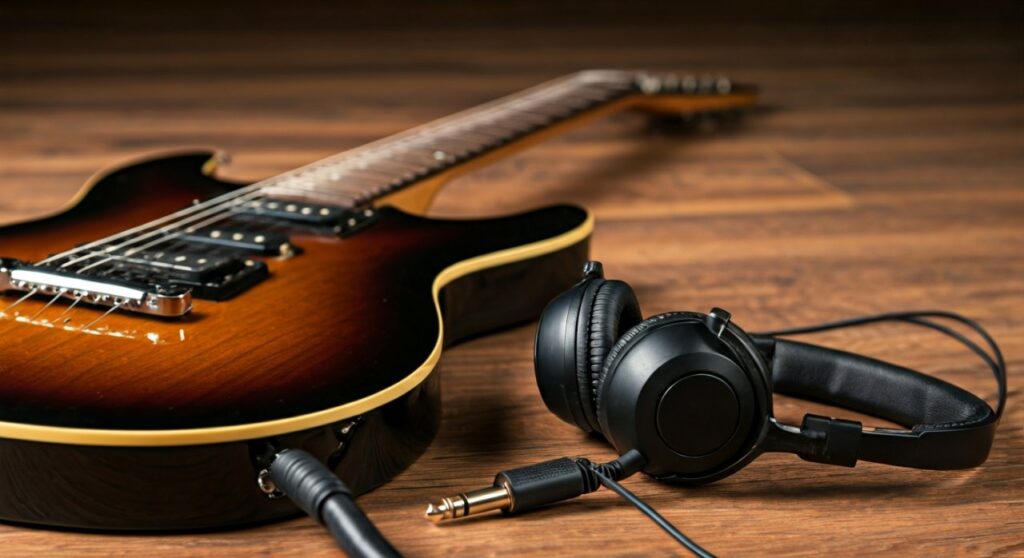
To successfully plug headphones into an electric guitar, you must use an intermediary device that amplifies the signal to “headphone level.” This is typically achieved using a headphone amplifier, a multi-effects pedal, or an audio interface connected to a computer or smartphone.
Key Takeaways for Silent Guitar Practice
If you are in a rush to get your silent practice session started, here is the essential breakdown of how to connect your gear properly.
| Method | Equipment Needed | Portability | Sound Quality |
|---|---|---|---|
| Micro Headphone Amp | Vox amPlug, Fender Mustang Micro | Extremely High | Good |
| Traditional Amp | Guitar Amp with a Phones/Rec Out jack | Low | Variable |
| Multi-FX Pedal | Line 6 HX Stomp, Boss GT-1000 | Medium | Professional |
| Audio Interface | Focusrite Scarlett, PreSonus AudioBox | Low (Needs PC) | Studio Grade |
| Smartphone/Tablet | iRig 2, Positive Grid RIFF | High | Excellent |
Why You Can’t Simply Plug Headphones into a Guitar
To understand why a direct connection fails, we have to look at the physics of sound and the electronics of your instrument. As a long-time guitarist who has experimented with countless “silent” rigs, I can tell you that skipping the preamp stage is the fastest way to get frustrated.
Signal Strength and Impedance
An electric guitar uses passive pickups (usually) that generate a very small voltage. This is called an instrument-level signal. Headphones require a much stronger line-level or power-amplified signal to move their internal drivers. Without a preamp, there isn’t enough energy to create audible sound waves.
Mono vs. Stereo Mismatch
Standard electric guitars use a 1/4-inch Mono (TS) jack. Headphones use a 3.5mm or 1/4-inch Stereo (TRS) plug. If you use a simple physical adapter to plug headphones into an electric guitar, you are sending a mono signal into a stereo circuit. This results in the “one-ear” phenomenon that many beginners encounter.
The Lack of “Cab Simulation”
Even if you could boost the volume, a raw electric guitar signal sounds harsh, thin, and “fizzy.” A real guitar speaker naturally filters out unpleasant high frequencies. When you use a device designed to plug electric guitar into headphones, it usually includes Cabinet Simulation (Cab Sim) or Impulse Responses (IRs) to make the headphones sound like a real wooden speaker cabinet.
Method 1: Using a Dedicated Headphone Guitar Amp
This is the most popular solution for players who want a “plug-and-play” experience. These devices are roughly the size of a matchbox and plug directly into your guitar’s output jack.
Top Recommended Devices
- Fender Mustang Micro: Currently the gold standard. It features 12 amp models and 12 effect combinations.
- Vox amPlug 2 Series: Affordable and specialized (e.g., “AC30,” “Metal,” or “Blues” versions).
- NUX Mighty Plug Pro: Offers app integration for deep tone editing.
How to set it up:
- Plug the Headphone Amp directly into your guitar’s output.
- Plug your 3.5mm headphones into the jack on the side of the device.
- Turn on the power and adjust the Gain, Tone, and Volume dials.
- (Optional) Many of these units, like the Fender Mustang Micro, allow Bluetooth audio streaming so you can jam along to Spotify tracks.
Method 2: Can You Plug Headphones Into a Guitar Amp?
Most modern practice amplifiers come with a dedicated headphone output. This is the easiest way to transition from loud playing to silent practice without buying new gear.
Identifying the Right Port
Look for a jack labeled “Phones,” “Headphones,” or “Rec Out.”
- Large Jack (1/4″): Common on professional amps like the Boss Katana 100 or Orange Crush 35RT. You will likely need a 3.5mm to 1/4″ adapter.
- Small Jack (3.5mm): Found on desktop amps like the Yamaha THR30II or the Positive Grid Spark.
Pro-Tip: The Speaker Mute Function
In my experience, you should always check if the amp automatically mutes the internal speaker when you plug in headphones. Most solid-state amps do this. However, some older tube amps require the speaker to remain connected to a “load” to prevent damaging the transformer. Never unplug a tube amp’s speaker to “play silently” unless it has a dedicated “Silent Recording” mode or a built-in Load Box.
Method 3: Connecting via Audio Interface and PC/Mac
If you are a home producer or someone who spends a lot of time at a desk, using an audio interface is the most versatile way to plug headphones into an electric guitar.
Hardware Requirements:
- Audio Interface: Examples include the Focusrite Scarlett 2i2, Universal Audio Volt, or Motu M2.
- DAW or Standalone Software: You need software like Neural DSP, AmpliTube 5, or Guitar Rig 7 to process the sound.
Setup Steps:
- Connect the interface to your computer via USB.
- Plug your guitar into the Instrument Input (often labeled with a guitar icon or “Hi-Z”).
- Set the gain on the interface so the light stays green and doesn’t “clip” (turn red).
- Open your software and select the interface as the Input/Output device.
- Plug your studio monitor headphones (like the Audio-Technica ATH-M50x) into the interface’s headphone jack.
Method 4: Multi-FX Pedals and Modelers
For those who want professional-grade tones without a computer, a Multi-FX unit is the ultimate tool. Devices like the Line 6 Helix, Quad Cortex, or even the budget-friendly Cuvave Cube Baby have high-quality headphone amps built-in.
Why this is better than a standard amp:
- Stereo Effects: You can hear delays and reverbs in “true stereo,” which provides an immersive 3D soundscape in your headphones.
- Custom IRs: You can upload “Impulse Responses” which are digital fingerprints of world-class speaker cabinets (like a Marshall 1960B or a Vox V212).
- Portability: A pedal like the HX Stomp fits in a gig bag but sounds like a $5,000 studio rig.
Best Headphones for Guitar Playing
Not all headphones are created equal. If you are going to plug an electric guitar into headphones, the quality of the “cans” matters immensely.
| Type | Recommended Model | Best For |
|---|---|---|
| Closed-Back | Sennheiser HD280 Pro | Total isolation; no sound leaks out to others. |
| Open-Back | Beyerdynamic DT 990 Pro | Natural, “airy” sound; feels like the amp is in the room. |
| In-Ear (IEMs) | Shure SE215 | Stage use and extreme portability. |
| Semi-Open | AKG K240 | A balance of comfort and soundstage. |
A Note on Impedance (Ohms)
If you buy high-impedance headphones (e.g., 250 Ohms), a small battery-powered headphone amp might not be strong enough to drive them. For most guitarists, headphones between 32 Ohms and 80 Ohms are the “sweet spot” for compatibility across all devices.
How to Avoid the “Boxy” Sound in Headphones
One of the biggest complaints when people plug headphones into an electric guitar is that it sounds “fake” or “boxy.” This happens because headphones sit directly against your ears, removing the “room acoustics.”
Expert Tips for Better Tone:
- Add Room Reverb: A tiny amount of “Room” or “Chamber” reverb can simulate the sound of air moving in a physical space.
- Use IRs (Impulse Responses): If your device supports it, move away from the stock “Cab Sims” and use high-quality IRs from companies like OwnHammer or York Audio.
- Watch the Volume: Excessive volume in headphones causes “ear fatigue” much faster than a real amp. Keep it at a moderate level to preserve your hearing and maintain tonal clarity.
Troubleshooting Common Issues
Why is there a buzzing noise?
- Interference: Your guitar pickups might be catching signals from your computer monitor or fluorescent lights.
- Ground Loops: If your gear is plugged into different wall outlets, you might get a hum.
- Cheap Adapters: A low-quality 1/4″ to 3.5mm adapter is the most common culprit for noise.
Why is there a delay (Latency)?
If you are using a computer to plug electric guitar into headphones, you might notice a split-second delay between hitting a string and hearing the sound.
- Fix: Lower your Buffer Size in your DAW settings (ideally to 128 or 64 samples). Ensure you are using ASIO drivers on Windows.
Why is the sound only in one ear?
As mentioned earlier, this is a TS vs. TRS issue. Ensure your adapter is a Stereo (TRS) adapter. If you are using a mono output from a pedal, you may need a “Y-splitter” to send that mono signal to both the left and right channels of your headphones.
Step-by-Step Guide: Setting Up Silent Practice
- Assess Your Gear: Do you already have an amp with a headphone jack? If not, purchase a Fender Mustang Micro or an iRig.
- Check Your Connectors: Ensure you have the right adapter. Most headphones are 3.5mm (1/8″), but many guitar devices use 6.35mm (1/4″).
- Power On Sequence: Always turn your volume to zero before putting your headphones on. This prevents accidental “pops” from damaging your hearing.
- Dial in the Gain: Start with a clean sound to ensure the signal is clear, then gradually add distortion/overdrive.
- Enjoy Silent Shredding: You are now ready to play at 3:00 AM without waking up the neighbors!
Frequently Asked Questions (FAQs)
Can I plug headphones directly into an acoustic-electric guitar?
No. Even though acoustic-electric guitars have a preamp and a battery, they are designed to send a signal to an amp or PA system, not to drive headphones. You still need a headphone amp or a mixer.
Can I use Bluetooth headphones with my guitar?
It is not recommended. Standard Bluetooth has significant latency (delay). You will hit a note, and you won’t hear it for 100-200 milliseconds, which makes playing in time impossible. If you must use wireless, look for dedicated UHF/2.4GHz wireless guitar headphone systems like the Boss Waza-Air.
Will plugging headphones into my guitar damage it?
No, it will not damage your guitar. However, using the wrong power supply for a headphone amp or using a “non-load” rated tube amp without a speaker can damage your amplification gear. The guitar itself is safe.
Do I need a special cable to plug headphones into a guitar amp?
You usually just need a standard headphone adapter (3.5mm female to 1/4″ male). These are inexpensive and can be found at any electronics or music store.
Can I use my smartphone as a guitar amp for headphones?
Yes! By using an interface like the iRig HD 2 or BandLab Link Analog, you can connect your guitar to your iPhone or Android and use apps like GarageBand or Tonebridge to play through your headphones.
![What Headphones Does TenZ Use? [2024/2025 Pro Setup]](https://bestcustomerreviews.net/wp-content/uploads/2026/03/what-headphones-does-tenz-use-2024-2025-pro-setup-1774879842-400x250.jpg "What Headphones Does TenZ Use? [2024/2025 Pro Setup]")