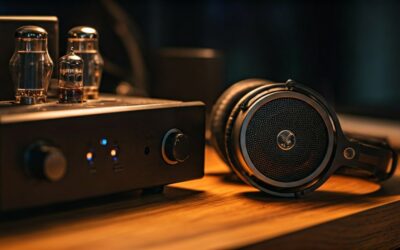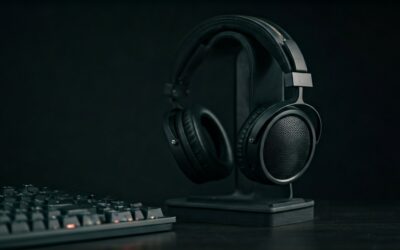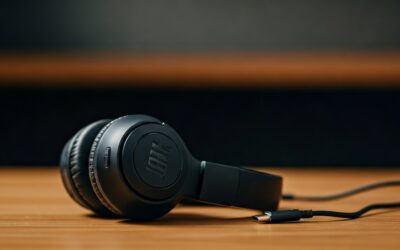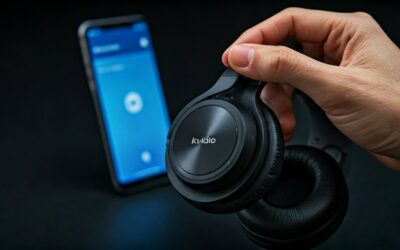

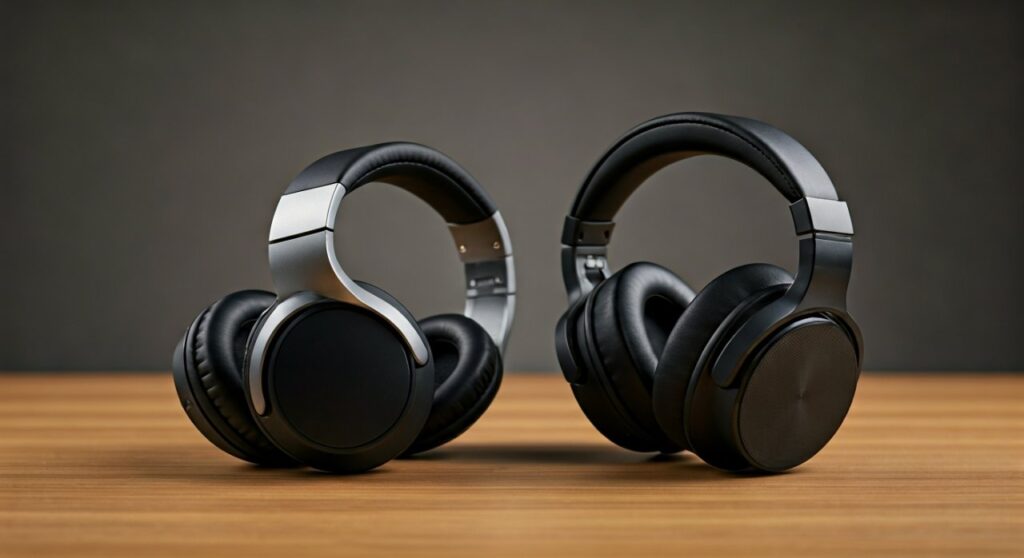
The primary difference between on-ear and over-ear headphones lies in the design of the ear cup and how it interacts with your anatomy: on-ear headphones (supra-aural) rest directly on your ear lobes, while over-ear headphones (circumaural) feature larger cups that fully encircle the ear without touching it. This distinction fundamentally changes your experience regarding noise isolation, long-term comfort, and audio fidelity.
Choosing between these two styles isn’t just about aesthetics; it’s about how you intend to live with your music. Are you a frequent traveler needing something compact, or an audiophile seeking a wide soundstage for home listening? Over the years, I have tested hundreds of models, from the Sony WH-1000XM5 to the Marshall Major series, and I’ve learned that the “best” choice depends entirely on your ear shape and daily environment.
Key Takeaways: On-Ear vs. Over-Ear Headphones
Before we dive into the technical details, here is a quick summary to help you decide which style fits your lifestyle.
| Feature | On-Ear Headphones | Over-Ear Headphones |
|---|---|---|
| Fit Style | Rests on the ear cartilage | Surrounds the entire ear |
| Portability | High (often foldable/compact) | Lower (bulkier frames) |
| Noise Isolation | Moderate (allows ambient sound) | Excellent (passive seal) |
| Heat Buildup | Low (ears can breathe) | High (ears may get sweaty) |
| Soundstage | Narrower/Intimate | Wide/Immersive |
| Best For | Commuting, Office, Exercise | Gaming, Studio, Critical Listening |
What is On-Ear and Over-Ear Headphones? Understanding the Anatomy
To understand the core difference between on-ear and over-ear headphones, we must look at their mechanical design. The industry terms for these are supra-aural (on-ear) and circumaural (over-ear).
On-ear headphones are designed with smaller pads. Because they sit on the “pinna” (the outer part of your ear), they rely on a specific clamping force to stay in place. This makes them inherently lighter but also puts direct pressure on the ear’s cartilage.
Over-ear headphones utilize a large cavity inside the ear cup. The cushions create a seal against the side of your skull, rather than the ear itself. This design allows for larger dynamic drivers (often 40mm to 50mm) and better acoustic resonance.
What are On-Ear Headphones? A Deep Dive into Supra-aural Design
When asking what is an on ear headphone, you are looking at a device built for mobility. These are the middle ground between tiny earbuds and massive studio cans.
The Benefits of On-Ear Models
- Compact Form Factor: Most on-ear headphones feature collapsible hinges. They fit easily into laptop bags or even jacket pockets.
- Situational Awareness: Because they don’t form a perfect vacuum seal, you can often hear high-frequency external sounds like car horns or office announcements.
- Weight Distribution: Models like the Beats Solo3 or Jabra Elite 45h are incredibly lightweight, making them less likely to cause “headband fatigue” on the crown of your head.
The Drawbacks to Consider
- Cartilage Pain: After 2-3 hours of use, the pressure on the ears can become uncomfortable for users with sensitive ears or those wearing glasses.
- Sound Leakage: Your music is more likely to be heard by the person sitting next to you on the bus.
What’s the Difference Between Over-Ear and On-Ear Headphones in Sound Quality?
The difference between on-ear and over-ear headphones is most noticeable in the “soundstage.” Soundstage refers to the perceived 3D space of the audio.
The Over-Ear Advantage (Circumaural)
Over-ear headphones generally offer the best audio quality for two reasons:
- Driver Size: Larger cups accommodate larger drivers, which can move more air and produce deeper, more controlled bass.
- Natural Acoustics: By surrounding the ear, the sound waves interact with your outer ear similarly to how they would with live speakers, creating a sense of “space.”
The On-Ear Sound Profile (Supra-aural)
On-ear headphones tend to sound more “forward” or “in your head.” While brands like Grado have mastered the art of the high-end on-ear experience, most consumer models prioritize a punchy, energetic sound that works well for pop and podcasts but lacks the orchestral depth of over-ear counterparts.
Comfort and Ergonomics: The Real-World Experience
If you plan on wearing your headset for an 8-hour workday, comfort is the ultimate difference between on-ear and over-ear headphones.
Heat and Breathability
One major expert insight I’ve gathered from long-term testing is the “sweat factor.” Over-ear headphones create a closed chamber. In warm climates, this leads to heat buildup around the ears.
Conversely, what on ear headphones offer is ventilation. Since they don’t seal against the skin of your head, air can circulate, keeping your ears cooler during summer commutes.
Clamping Force vs. Seal
- On-ear needs a tighter clamp to prevent falling off during movement.
- Over-ear relies on the surface area of the pads. If you have a larger head, you might find over-ear models like the Sennheiser HD 600 series more comfortable because they distribute pressure across the temporal bone rather than the ear itself.
Noise Cancellation and Isolation Capabilities
When discussing what is difference between on ear and over ear headphones, we cannot ignore Passive Noise Isolation (PNI) and Active Noise Cancellation (ANC).
- Passive Isolation: Over-ear wins. The physical barrier created by the cup encircling the ear blocks out high-frequency noise (like chatter or wind) much more effectively.
- Active Noise Cancellation: While both styles can have ANC, it is far more effective on over-ear models. The Bose QuietComfort Ultra, for example, uses its over-ear seal to ensure the ANC microphones can accurately cancel out external frequencies without interference.
If you work in a loud open-office plan, what are on ear headphones going to do for you? Unfortunately, they will likely struggle to block out the low hum of the AC or the clicking of nearby keyboards compared to a dedicated over-ear model.
Choosing Based on Your Lifestyle
To decide what’s the difference between on ear and over ear headphones for your specific needs, look at your daily routine.
For the Gym and Fitness
I generally recommend on-ear headphones for light exercise. They are less bulky and won’t get as “swampy” as over-ear pads. However, ensure they have a high IP rating for sweat resistance, such as the Adidas RPT-01.
For Gaming and Home Cinema
Over-ear headphones are the gold standard here. The immersion provided by a closed-back over-ear design allows you to hear footsteps in games or subtle cinematic scores without distraction.
For Commuting and Travel
If space is at a premium, on-ear is the way to go. If silence is your priority on a plane, over-ear with ANC is the mandatory choice.
Technical Comparison: Driver Dynamics and Impedance
For those who want to know what is an on ear headphone from a technical standpoint, let’s look at the specs.
- Impedance: Most consumer on-ear models have low impedance (32 ohms or less), meaning they are easily powered by a smartphone.
- Frequency Response: Over-ear models often have a wider range, reaching down to 5Hz or 10Hz for sub-bass, whereas on-ears might roll off around 20Hz.
- Materials: High-end over-ears often use memory foam and protein leather to ensure the seal remains airtight, whereas on-ears may use simpler foam pads.
How to Choose: Step-by-Step Guide
Follow these steps to determine the right fit for you:
- Measure your tolerance: Do you find pressure on your ears painful after 30 minutes? If yes, go Over-Ear.
- Evaluate your environment: Is it loud? Go Over-Ear. Is it quiet and you need to hear your boss calling you? Go On-Ear.
- Check your gear: Do you wear glasses? Over-ear models with soft pads (like Sony or Bose) usually play better with glasses frames than on-ear models which press the ear against the frame.
- Consider Portability: Do you carry a small bag? Look at what on ear headphones are available in a folding design.
Frequently Asked Questions (FAQs)
Is there a big difference in sound quality between on-ear and over-ear?
Yes. Over-ear headphones typically provide a more immersive soundstage and better bass response due to their larger drivers and the physical seal they create around the ear. On-ear headphones tend to sound more direct and “closed-in.”
Which is better for your ears, on-ear or over-ear?
In terms of hearing health, over-ear headphones are often better because their superior noise isolation allows you to listen at lower volumes. In terms of physical comfort, over-ear avoids the direct pressure on the ear cartilage that causes soreness in on-ear users.
Are over-ear headphones always more expensive?
Not necessarily. While many high-end audiophile headphones are over-ear, you can find budget-friendly over-ear models. Price is usually determined by brand, driver quality, and features like Active Noise Cancellation, rather than just the cup size.
Can I use on-ear headphones for gaming?
You can, but it is not ideal. Gaming requires long sessions where on-ear pressure might become uncomfortable. Furthermore, the limited soundstage of on-ear headphones makes it harder to pinpoint directional audio cues (like footsteps) compared to over-ear models.

![What Headphones Does TenZ Use? [2024/2025 Pro Setup]](https://bestcustomerreviews.net/wp-content/uploads/2026/03/what-headphones-does-tenz-use-2024-2025-pro-setup-1774879842-400x250.jpg "What Headphones Does TenZ Use? [2024/2025 Pro Setup]")