
Best DIY Projector Ceiling Mount Solutions: Top Picks and Expert Tips
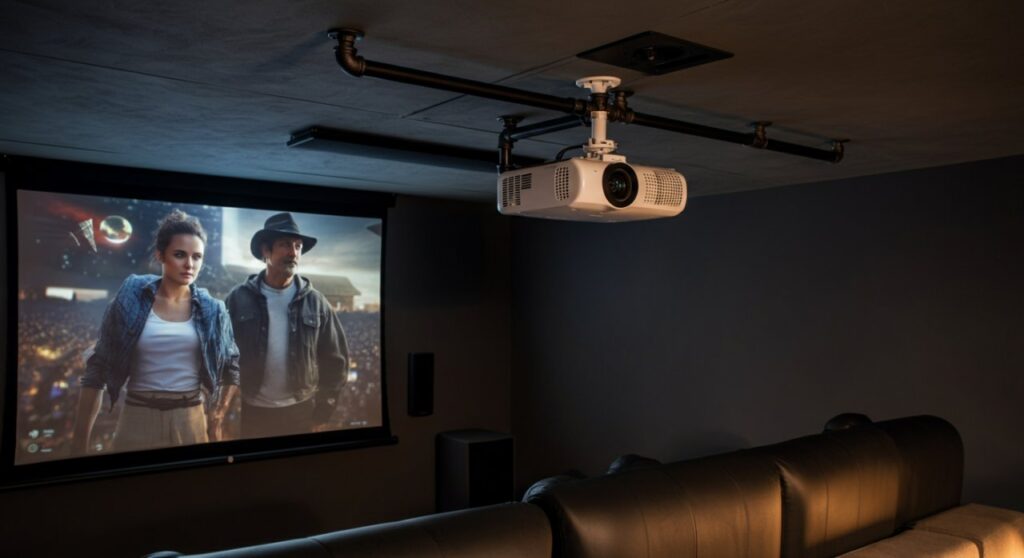
Building a do it yourself projector ceiling mount is the most cost-effective way to achieve a professional home theater look without spending hundreds on branded hardware. By using readily available materials like threaded steel pipes, heavy-duty mounting plates, and mending plates, you can create a secure, custom-fit solution for your specific room layout. This guide explores the best components and techniques for crafting a robust, adjustable, and visually clean mount that ensures your projector stays level and secure for years.
Key Takeaways: Why Go DIY?
- Cost Savings: A do it yourself projector ceiling mount typically costs between $20 and $40, compared to $100+ for premium commercial mounts.
- Customization: DIY allows for exact drop lengths tailored to your specific ceiling height, avoiding the “one-size-fits-all” limitation of retail products.
- Safety First: Using industrial-grade hardware ensures your projector—often an expensive piece of equipment—remains safely anchored to your ceiling joists.
Essential Components for Your DIY Build
To construct a reliable mount, you need to focus on stability and compatibility. I have personally used 3/4-inch black iron pipe in several installations; it provides excellent rigidity and an industrial aesthetic that fits modern home theater setups.
- Floor Flange: This is the base that anchors to the ceiling. Ensure you bolt this directly into a ceiling joist, not just drywall.
- Threaded Pipe (Nipple): Available in various lengths, these allow you to set the precise throw distance from the ceiling.
- Projector Plate/Mending Plate: This connects the pipe to the projector. Many users find that a universal mounting bracket or a drilled steel mending plate works perfectly here.
- Leveling Mechanisms: Incorporating a swivel joint or using shims allows for fine-tuning the projector’s angle once installed.
Comparison of Mount Approaches
| Approach | Difficulty | Material Cost | Adjustability |
|---|---|---|---|
| Black Iron Pipe | Moderate | Low ($25-$35) | Fixed (by pipe length) |
| Aluminum Extrusion | High | Medium ($50+) | High |
| Universal Retail Kit | Low | High ($80+) | Very High |
| Wood/Steel Hybrid | Moderate | Very Low ($15) | Low |
Step-by-Step: Constructing Your Mount
The biggest mistake people make is underestimating the weight of the projector combined with the vibration of the fan. Always use zinc-plated lag bolts (at least 2.5 inches) to secure your flange into the wooden ceiling joist.
- Locate the Joists: Use a high-quality stud finder to locate the exact center of the joist. Never rely on drywall anchors for a ceiling mount.
- Prepare the Projector Plate: If you are using a universal projector mount plate, attach it to your projector first. If using a steel mending plate, align it with your projector’s mounting holes.
- Assemble the Pipe System: Screw your pipe into the flange and the projector interface. Use thread locker (like Loctite) if you are concerned about long-term vibration loosening the joints.
- Final Installation: Lift the assembly, align the flange holes with your pilot holes in the joists, and drive your lag bolts home.
Expert Tips for Stability and Aesthetics
To make your do it yourself projector ceiling mount look professional, focus on cable management. A dangling HDMI cable can ruin the effect of a clean installation.
- Hide the Cables: Run your power and HDMI cables through the center of your hollow pipe if possible, or use cable raceways painted to match your ceiling color.
- Verify Levelness: Use a digital torpedo level to ensure the projector is perfectly parallel to the screen. A slightly tilted projector will cause the keystone correction to work overtime, which degrades image quality.
- Paint Choice: Spray paint your iron pipes with a matte black or ceiling-white finish to help them blend into the background.
Frequently Asked Questions (FAQs)
Is a do it yourself projector ceiling mount safe for heavy projectors?
Yes, provided you mount the flange directly into a solid wood ceiling joist using heavy-duty lag bolts. If you are mounting to a concrete ceiling, you must use concrete wedge anchors instead.
How do I adjust the image if my DIY mount is slightly off?
Most projectors have a lens shift feature. If yours does not, you can use thin metal washers as shims between the projector and the mounting plate to micro-adjust the angle.
Can I create a mount that allows for tilt and rotation?
Yes, you can purchase a universal ball-joint adapter online and screw it between your pipe and the projector plate. This provides 360-degree rotation and significant tilt capabilities.
What is the best way to determine the correct drop distance?
Measure the distance from your ceiling to the top of your screen. Most manufacturers recommend that the lens center aligns with the top (or bottom, depending on orientation) of the screen; check your projector’s throw distance calculator online.