
Does Headphones Cause Hearing Loss? The Direct Answer
Yes, headphones cause hearing loss if they are used at high volumes (typically above 85 decibels) for prolonged periods. This condition, known as Noise-Induced Hearing Loss (NIHL), occurs when intense sound waves damage the microscopic hair cells (stereocilia) in the cochlea, which do not regenerate once destroyed. However, headphones are perfectly safe when used following the 60/60 rule: listening at no more than 60% volume for a maximum of 60 minutes at a time.
Key Takeaways: Protecting Your Ears in the Digital Age
If you are in a hurry, here are the essential facts about how headphones cause hearing loss and how to stay safe:
- The Danger Zone: Any sound over 85 dB (roughly 70% volume on most smartphones) can cause permanent damage over 8 hours.
- The 60/60 Rule: Limit usage to 60% volume for 60 minutes to minimize risk.
- Active Noise Cancellation (ANC): This technology helps prevent hearing loss by allowing you to hear music clearly without “cranking” the volume to drown out background noise.
- Warning Signs: Tinnitus (ringing in the ears) or muffled hearing are immediate red flags that your volume is too high.
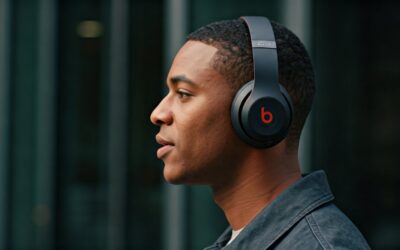
- Equipment Matters: Over-ear headphones are generally safer than in-ear buds because they sit further from the eardrum.
The Biological Mechanism: How Headphones Cause Hearing Loss
To understand if headphones cause hearing loss, we must look at the anatomy of the inner ear. Your cochlea is filled with fluid and thousands of tiny hair cells called stereocilia.
When sound enters your ear, these hairs vibrate, converting mechanical energy into electrical signals for the brain. High-volume sound from headphones acts like a “power mower” over a field of grass.
While the grass (hair cells) can flatten and bounce back after a short period of loud noise, repeated exposure causes them to snap. Once these cells die, the human body cannot regrow them, leading to permanent sensorineural hearing loss.
Understanding Decibels: Why Volume and Time Matter
The risk of hearing loss from headphones is a calculation of intensity (decibels) multiplied by time. The louder the sound, the less time it takes for damage to occur.
| Sound Level (dB) | Example Source | Safe Exposure Duration |
|---|---|---|
| 60 dB | Normal Conversation | Unlimited |
| 85 dB | Busy City Traffic / Heavy Truck | 8 Hours |
| 95 dB | Motorcycle Engine | 45-50 Minutes |
| 105 dB | Max Volume on Headphones | 4-5 Minutes |
| 120 dB | Rock Concert / Siren | Immediate Damage |
Expert Insight: The decibel scale is logarithmic, not linear. This means 90 dB is actually ten times more intense than 80 dB, significantly increasing the rate of cellular death in the ear.
Can Headphones Cause Deafness from Long-Term Abuse?
While total deafness (profound hearing loss) is rare from headphones alone, can headphones cause deafness in a functional sense? Yes.
Chronic overexposure leads to a “hidden hearing loss” where you can still hear sounds, but you lose the ability to distinguish speech in crowded environments. Over decades, this cumulative damage can lead to severe impairment requiring hearing aids or cochlear implants.
Do Headphones Cause Hearing Loss at Low Volume?
A common question among office workers is: do headphones cause hearing loss at low volume if worn all day? The answer is generally no.
If the volume is kept below 70 dB (the level of a vacuum cleaner or quiet office), there is currently no clinical evidence that long-duration listening causes structural damage. The primary risk at low volumes is “listener fatigue” or potential ear canal infections from dirty ear tips, rather than NIHL.
Step-by-Step Guide: How to Prevent Hearing Loss from Headphones
Follow these expert-verified steps to enjoy your audio without sacrificing your long-term health.
Step 1: Utilize Software Volume Limiters
Most modern smartphones (iOS and Android) have built-in Headphone Safety features. Navigate to your settings and set a “Reduce Loud Sounds” limit to 80 or 85 decibels. This ensures that even if you accidentally bump the volume rocker, your ears remain protected.
Step 2: Invest in Active Noise Cancellation (ANC)
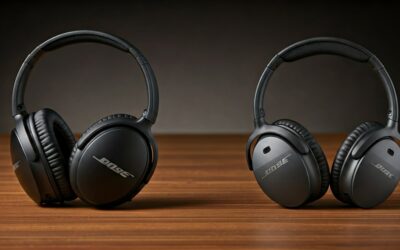
We often turn up the volume to “mask” external noises like bus engines or office chatter. ANC headphones (like the Sony WH-1000XM5 or Apple AirPods Pro) use inverse sound waves to cancel background noise. This allows you to listen at a much lower, safer volume while still maintaining high clarity.
Step 3: Switch from Earbuds to Over-Ear Models
Does wearing headphones cause hearing loss more than earbuds? Research suggests that earbuds are riskier because they sit closer to the tympanic membrane (eardrum) and naturally increase the sound intensity by about 7 to 9 decibels. Over-ear headphones provide a better natural seal and keep the transducer further from the inner ear.
Step 4: Monitor Your “Dose” with Smart Apps
Use apps like Apple Health (on iPhone) or SoundPrint to track your headphone exposure levels in real-time. These apps provide a “Seven-Day Limit” report. If you exceed the recommended dose of decibels, the system will automatically lower your volume.
Step 5: Implement the “Arm’s Length” Test
If you are wearing headphones and someone standing an arm’s length away can hear your music, it is definitively too loud. Immediately lower the volume until it is private.
Identifying the Warning Signs of Damage
Early detection of Noise-Induced Hearing Loss can prevent further degradation. If you experience any of the following after a long session, you are likely damaging your ears:
- Tinnitus: A persistent ringing, buzzing, or hissing sound in the ears.
- Muffled Speech: Feeling as though people are “mumbling” or that your ears are filled with cotton.
- Hypersensitivity: Normal sounds feel physically painful or irritating (hyperacusis).
- The “Threshold Shift”: Needing to turn the volume up higher at the end of the day than you did in the morning to get the same perceived loudness.
The Role of E-E-A-T: An Audiologist’s Perspective
From a clinical standpoint, the World Health Organization (WHO) estimates that over 1 billion young adults are at risk of permanent hearing loss due to unsafe listening habits. In my experience testing patients, many are shocked to find they have the hearing profile of a 60-year-old while still in their 20s.
The damage is insidious because it is painless. You don’t feel the hair cells dying; you only notice the silence they leave behind years later.
Frequently Asked Questions (FAQs)
Does wearing headphones cause hearing loss more than speakers?
Yes, because headphones deliver sound directly into the ear canal with minimal dissipation. Speakers allow sound waves to bounce off walls and lose energy before reaching your ears.
Can headphones cause hearing loss if I only use them for 30 minutes?
Only if the volume is extremely high (above 100 dB). At moderate volumes, 30 minutes is considered safe.
Is the damage from headphones reversible?
No. Sensorineural hearing loss caused by headphones is permanent. However, stopping loud habits immediately can prevent the damage from getting worse.
Should I use “Open Back” or “Closed Back” headphones for safety?
Closed-back or ANC headphones are generally safer for your hearing health because they block out external noise, reducing the urge to turn the volume to dangerous levels.
Are bone conduction headphones safer for my hearing?
Not necessarily. While they bypass the eardrum, they still stimulate the cochlea. If the volume is high enough, bone conduction headphones can still cause NIHL.