
Why DIY Headphones are the Future of Personal Audio
Building your own do it yourself headphones is the ultimate way to achieve audiophile-grade sound without paying the “brand premium” associated with high-end manufacturers. By sourcing your own drivers, designing the acoustic chambers, and selecting premium cabling, you can create a listening experience tailored specifically to your frequency preferences.
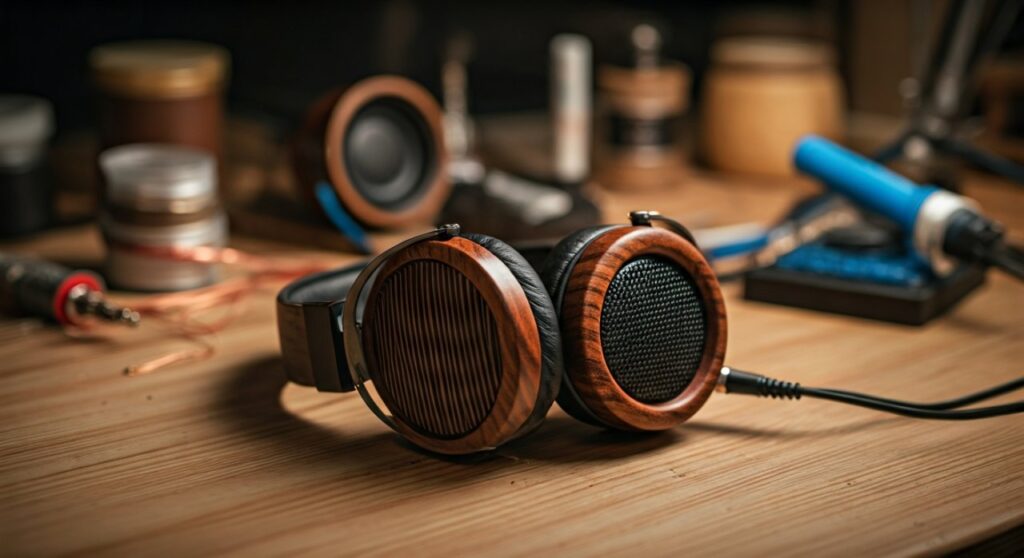
Whether you are a budget-conscious music lover or a dedicated hobbyist, the DIY route offers total repairability and the freedom to experiment with exotic materials like wood, carbon fiber, or 3D-printed resins. This guide will walk you through the technical nuances of headphone assembly, from soldering delicate voice coils to fine-tuning the damping for the perfect bass response.
Key Takeaways: DIY Headphone Essentials
| Feature | Description | Importance |
|---|---|---|
| Driver Selection | The “engine” of your headphones (e.g., Dynamic, Planar, or Electrostatic). | High |
| Baffle Design | The structure holding the driver; dictates air seal and soundstage. | Medium-High |
| Soldering Skills | Critical for securing copper wiring to the driver terminals without heat damage. | Essential |
| Damping Materials | Using felt, cotton, or foam to eliminate unwanted resonance. | Critical for Tuning |
| Measurement | Using tools like a MiniDSP EARS to verify frequency response. | Recommended |
Understanding the Anatomy of DIY Headphones
Before you start soldering, you must understand the four pillars of headphone construction. Each component significantly impacts the Sound Pressure Level (SPL) and the overall tonal balance.
The Drivers (The Heart)
The driver is the transducer that converts electrical signals into sound waves. For most do it yourself headphones projects, Dynamic Drivers are the gold standard due to their durability and ease of use.
Expert builders often source 40mm to 50mm drivers from reputable suppliers like Peerless by Tymphany or salvage them from legendary budget sets like the Koss KSC75. If you want a faster transient response, consider Planar Magnetic drivers, though these require much more powerful amplification.
The Enclosure (The Body)
The “cups” or enclosures define whether your headphones are Open-Back or Closed-Back.
- Open-Back: Offers a wider soundstage and natural airiness but leaks sound.
- Closed-Back: Provides superior noise isolation and often a more pronounced bass punch.
The Headband and Yokes (The Skeleton)
Comfort is just as important as sound. Many DIYers use replacement headbands from brands like Sennheiser or Hifiman because they are ergonomically proven. Alternatively, 3D printing allows for custom-sized yokes that fit your head shape perfectly.
The Cable and Connector (The Nervous System)
A high-quality Oxygen-Free Copper (OFC) cable ensures signal integrity. You will typically use a 3.5mm or 6.35mm TRS (Tip-Ring-Sleeve) jack for the termination.
Essential Tools and Materials Checklist
To succeed in building do it yourself headphones, you need a dedicated workspace and the following specialized tools.
Required Tools
- Soldering Iron: A temperature-controlled station is best to avoid melting driver plastics.
- Lead-Free Solder: 60/40 or silver-bearing solder for high conductivity.
- Wire Strippers: Capable of handling thin 24-28 AWG wires.
- Multimeter: To check for continuity and ensure the impedance (Ohms) is matched between left and right channels.
- Hot Glue Gun or Epoxy: For securing drivers within the baffle.
Core Materials
- Headphone Drivers: (e.g., 40mm Titanium-plated).
- Ear Pads: Memory foam with Protein Leather or Velour covers.
- Acoustic Damping: Poly-fil, dense felt, or dynamat.
- Chassis: Can be CNC-machined wood, 3D-printed PETG, or repurposed vintage headphone shells.
Step-by-Step Guide to Building Your DIY Headphones
Follow these steps carefully. Precision in the early stages prevents technical failures during the final “burn-in” period.
Step 1: Design and Baffle Preparation
The baffle is the plate where the driver sits. If you are 3D printing your parts, ensure the baffle is printed with a high infill percentage (at least 40%) to prevent vibrations.
- Measure the diameter of your driver.
- Create a friction-fit or screw-down mounting system.
- Ensure there are no air gaps between the driver and the baffle, as this will destroy your sub-bass extension.
Step 2: Wiring and Soldering
This is the most delicate part of the do it yourself headphones process.
- Tin your wires: Apply a small amount of solder to the ends of your copper leads.
- Identify Terminals: Most drivers have a small red dot or “+” sign for the positive terminal.
- Quick Heat: Touch the iron to the terminal for no more than 1-2 seconds. Excessive heat can decenter the voice coil or melt the diaphragm.
- Test: Use your multimeter to ensure you have a solid connection and no shorts.
Step 3: Assembly of the Earcups
Once the drivers are wired, mount them into the enclosures.
- If building Closed-Back headphones, line the interior of the cup with acoustic foam to prevent “cuppy” reflections.
- If building Open-Back headphones, ensure the rear grill is structurally sound but allows maximum airflow.
Step 4: Installing the Headband and Pads
Attach your cups to the headband assembly. Ensure the pivot points (yokes) allow the cups to sit flush against your ears.
Pro Tip: The “seal” of the ear pads is responsible for nearly 50% of the perceived bass. If your DIY project sounds “thin,” try swapping to thicker sheepskin pads.
Advanced Tuning: Mastering the Sound Signature
Creating do it yourself headphones doesn’t end with assembly; it ends with tuning. This is where you transform a “good” headphone into a “world-class” one.
Managing Internal Reflections
Raw drivers in a plastic shell often sound harsh in the treble frequencies. To fix this:
- Place a small disc of craft felt over the rear vent of the driver to “tame” the high end.
- Use mass loading (like small pieces of Blu-tack) on the baffle to lower the resonant frequency.
Impedance Matching
Ensure your DIY creation is compatible with your gear.
- Low Impedance (16-32 Ohms): Great for smartphones and laptops.
- High Impedance (150-600 Ohms): Requires a dedicated Headphone Amplifier but offers better control over the driver movement.
Troubleshooting Common DIY Issues
| Problem | Likely Cause | Solution |
|---|---|---|
| No Sound in One Ear | Broken solder joint or wire. | Re-solder the connection at the jack or driver. |
| Thin, Tinny Bass | Air leak in the baffle/pad seal. | Use silicone sealant or better-fitting ear pads. |
| Crackling Sound | Hair or dust on the diaphragm. | Carefully blow air (not compressed air) onto the driver. |
| Channel Imbalance | Drivers are not matched. | Measure drivers with a multimeter to ensure Ohms are within 1-2% of each other. |
The Ethics of DIY: Repairability and Sustainability
One of the biggest advantages of do it yourself headphones is the rejection of “planned obsolescence.” If a cable breaks, you simply solder a new one. If a driver fails after five years of heavy use, you can replace the individual part for $20 rather than buying a new $300 headset.
By using sustainable materials like reclaimed wood or biodegradable filaments, you also reduce the e-waste associated with mass-produced consumer electronics.
Frequently Asked Questions (FAQs)
Can DIY headphones really sound as good as Sennheiser or Sony?
Yes, and in many cases, they can sound better in terms of detail retrieval and tonal balance. Commercial brands spend millions on marketing and distribution; in a DIY project, 100% of your budget goes into the drivers and acoustics.
Do I need an engineering degree to build these?
No. If you can use a soldering iron and follow a wiring diagram, you can build a functional pair of headphones. Most beginners start with a “mod” (modifying existing headphones) before moving to a full “from-scratch” build.
How much does it cost to build DIY headphones?
A basic high-quality build costs between $50 and $150. This usually results in a product that competes with commercial headphones in the $300-$500 range.
Where can I find 3D files for headphone shells?
Websites like Thingiverse and Printables have extensive libraries of open-source designs, such as the Symmetric or Vector headphone projects, which are specifically designed for the DIY community.
Is soldering dangerous for the drivers?
It can be. The key is to “pre-tin” your wires and use a high-quality flux. Never hold the soldering iron against the driver terminal for more than three seconds, as the heat can travel and warp the delicate plastic housing of the driver.