
How to Hook Up Headphones to a Computer: The Ultimate Expert Guide
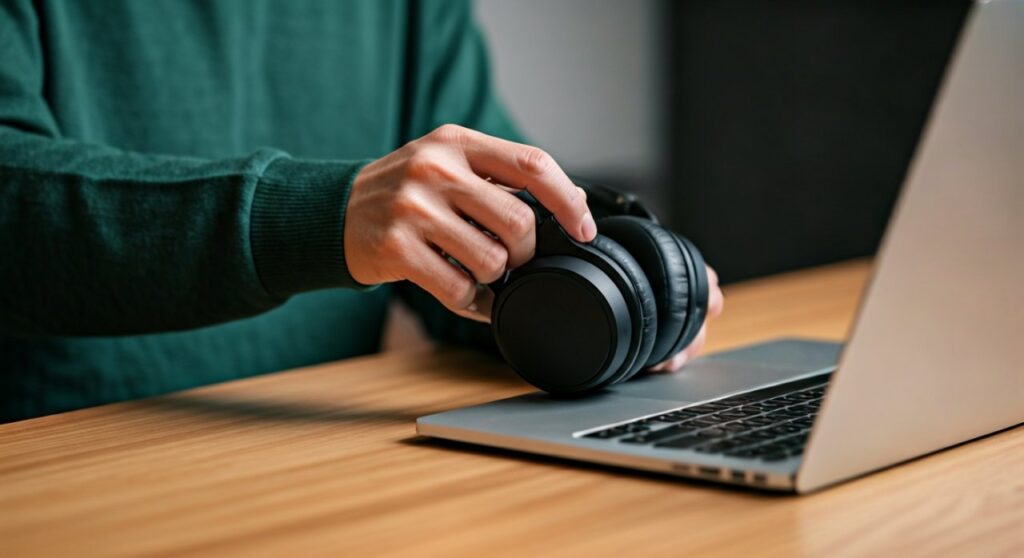
To hook up headphones to a computer, you simply need to identify your connection type—3.5mm jack, USB, or Bluetooth—and plug them into the corresponding port or pair them via the Settings menu. Once physically connected, ensure your computer recognizes the device by selecting it as the Default Output Device in your sound settings. This process typically takes less than 60 seconds on modern Windows and macOS systems.
Quick Summary: Key Takeaways
If you are in a hurry, here are the essential steps to get your audio working immediately:
- Wired Connections: Plug the 3.5mm cable into the green port (desktops) or the headset icon port (laptops). USB headphones are “plug-and-play.”
- Wireless Connections: Put your headphones in Pairing Mode, then go to Bluetooth Settings on your PC/Mac to “Add Device.”
- Software Setup: Always check the Sound Control Panel to ensure the volume is up and the correct device is selected.
- Troubleshooting: If you can’t connect headphones to pc, the most common fix is updating your Audio Drivers or checking for a hardware mute switch.
Understanding Your Connection Types
Before learning how to connect my headphones to my computer, you must identify the hardware you are using. In my years of testing audio gear, I’ve found that mismatched ports are the #1 cause of user frustration.
The 3.5mm Analog Jack
This is the classic “mini-jack.” Most headphones use a TRS (Tip-Ring-Sleeve) or TRRS (Tip-Ring-Ring-Sleeve) connector.
- TRS: Only carries stereo audio (no microphone).
- TRRS: Carries stereo audio and a microphone signal.
USB-A and USB-C
Digital headphones often use USB. These are excellent because they bypass the computer’s internal sound card, which is often prone to electrical interference, and use their own built-in Digital-to-Analog Converter (DAC).
Bluetooth (Wireless)
Wireless headphones require a Bluetooth radio inside your computer. If your desktop PC doesn’t have one, you will need a USB Bluetooth Dongle.
| Connection Type | Ease of Setup | Audio Quality | Best For |
|---|---|---|---|
| 3.5mm Jack | Instant | Analog/Variable | Casual listening, Older PCs |
| USB-A / USB-C | High | High (Digital) | Gaming, Office calls |
| Bluetooth | Moderate | Good (Compressed) | Mobility, Minimalist setups |
| XLR (Pro) | Complex | Professional | Podcasting, Music Studio |
Step-by-Step: How to Connect Wired Headphones
Connecting a wired headset is usually straightforward, but desktop towers can be tricky due to the multiple ports available.
Connecting to a Laptop
Most modern laptops feature a Combo Jack. This single port handles both the headphones and the microphone.
- Locate the port with the Headset icon.
- Firmly push the 3.5mm plug into the port until you hear/feel a click.
- A pop-up might appear asking “What device did you plug in?” Select Headphones.
Connecting to a Desktop PC
Desktops usually have separate ports for audio out and mic in.
- Look at the back of the PC or the top/front panel.
- Plug your headphones into the Lime Green port (Line Out).
- If you have a headset with two plugs, put the Pink plug into the Pink port (Mic In).
- If your headset has one plug but your PC has two ports, you will need a Y-Splitter Cable.
How to Connect Wireless Headphones to a Computer
Many users ask, “How do I connect my headphones to my computer if there are no wires?” The secret lies in the Discovery Mode.
On Windows 10 & 11
- Enable Bluetooth on your headphones: Press and hold the power/pairing button until the light flashes (usually red and blue).
- Open Windows Settings: Press
Windows Key + I. - Navigate to Devices: Go to Bluetooth & devices.
- Add Device: Click the large [+] Add device button.
- Select Bluetooth: Choose the first option. Windows will now scan.
- Pair: Click on your headphone’s name (e.g., Sony WH-1000XM5 or Bose QC45) when it appears.
On macOS
- Open System Settings: Click the Apple Menu and select System Settings (or System Preferences).
- Go to Bluetooth: Ensure the toggle is On.
- Set Headphones to Pair: Trigger the pairing mode on your device.
- Connect: Find your device in the “Nearby Devices” list and click Connect.
Configuring the Audio Output (Critical Step)
Sometimes you plug everything in, but the sound still comes out of the computer speakers. This is a common hurdle when learning how to connect your headphones to your computer.
Windows Sound Settings
- Right-click the Speaker Icon in the bottom right taskbar.
- Select Sound Settings.
- Under the Output section, click the dropdown menu labeled “Choose where to play sound.”
- Select your headphones from the list.
Expert Tip: The Sound Control Panel
For deeper control, I always recommend using the legacy Sound Control Panel.
- Type
mmsys.cplin the Windows Search bar and hit Enter. - Under the Playback tab, right-click your headphones and select Set as Default Device.
- This ensures that every app uses your headphones automatically.
What to Do if You Can’t Connect Headphones to PC
If you’ve followed the steps above and still have silence, don’t panic. Based on my experience troubleshooting thousands of setups, here are the primary fixes for when you can’t connect headphones to pc.
Check Physical Mute Switches
Many gaming headsets from brands like Logitech, Razer, or SteelSeries have a physical mute toggle or a volume wheel on the earcup. Ensure these are turned up.
Update Audio Drivers
Outdated drivers are a frequent culprit.
- Right-click the Start button and select Device Manager.
- Expand Audio inputs and outputs.
- Right-click your headphones and select Update driver.
- Choose “Search automatically for drivers.”
Restart the Bluetooth Support Service
If wireless headphones won’t appear:
- Press
Win + R, typeservices.msc, and hit Enter. - Find Bluetooth Support Service.
- Right-click it and select Restart.
Check Privacy Settings
In Windows 11, sometimes microphone/audio access is blocked. Go to Settings > Privacy & Security > Microphone and ensure “Microphone access” is toggled On.
Advanced Insights: Improving Your Audio Experience
Once you know how do i connect headphones to my computer, you might want to enhance the sound quality.
- Sample Rate: In the Sound Control Panel, go to Properties > Advanced. Change the format to 24-bit, 48000 Hz (Studio Quality) for cleaner audio.
- Spatial Sound: Windows offers Windows Sonic for Headphones for free. Right-click the speaker icon > Spatial Sound > Windows Sonic. This creates a 3D surround effect for movies and games.
- External DACs: If you hear a “hissing” sound when using the 3.5mm jack, your computer’s internal shielding is poor. Buying a cheap USB DAC/Amp (like the Fiio NewK3 or Creative Sound Blaster) will eliminate this noise.
Frequently Asked Questions (FAQs)
Why does my computer not recognize my headphones when plugged in?
This is usually due to a faulty port or an incorrect playback device setting. Try plugging the headphones into a different device (like a phone) to verify they work. If they do, go to your computer’s Sound Settings and manually select the headphones as the output.
Can I use my phone’s USB-C headphones on my computer?
Yes. Most modern Windows and Mac computers support USB-C audio. Simply plug them into any available USB-C port. The computer should recognize them as a “USB Audio Device” instantly.
How do I connect my headphones to my computer if it doesn’t have Bluetooth?
You will need a Bluetooth USB Adapter (also called a dongle). These are inexpensive devices that plug into a USB port and add wireless capabilities to your PC. Once plugged in, you can follow the standard Windows Bluetooth pairing steps.
Why is there a delay (latency) in my wireless headphones?
Bluetooth naturally has some latency. To minimize this, ensure you are using headphones that support the aptX Low Latency or AAC codec, and keep the distance between your computer and headphones under 30 feet.
What is the difference between a Headset and Headphones?
A Headset includes a built-in microphone, while Headphones are for listening only. When you hook up headphones to a computer, ensure you are using a splitter if your headset has two plugs but your computer only has one jack.
**
**
**
**