
Why Headphone Cords Curl and How to Fix Them Fast
To uncurl headphone cords, the most effective method is to use gravity by hanging the headphones from a high point and letting the weight of the earcups naturally untwist the cable. For stubborn curls caused by “plastic memory,” you can apply gentle heat with a hair dryer on a low setting while pulling the cord straight to reset the internal polymers.
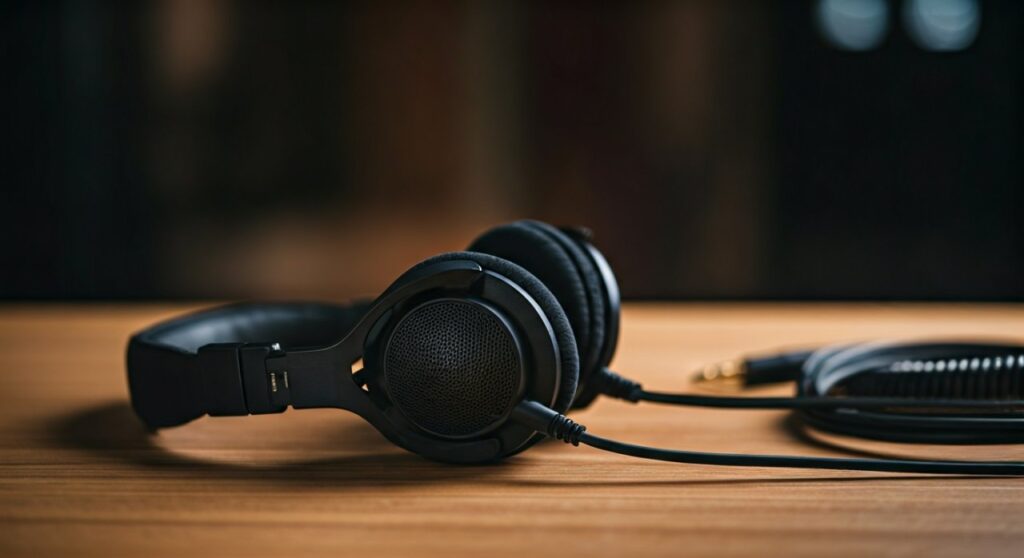
If you are in a hurry, simply hold one end of the cord and run your thumb and forefinger down the entire length while applying moderate pressure. This manual “straightening” helps redistribute the tension in the PVC or TPE jacketing. For long-term prevention, always use the “Over-Under” coiling technique rather than wrapping the cord around your phone or hand.
Key Takeaways for Straightening Headphone Cables
| Method | Best For | Risk Level | Time Required |
|---|---|---|---|
| Gravity Hang | Minor twists and daily maintenance | Zero | 12 – 24 Hours |
| Manual Stretching | Quick fixes before a commute | Low | 1 – 2 Minutes |
| Blow Dryer Heat | Severe “permanent” curls/kinks | Medium | 5 – 10 Minutes |
| Warm Water Soak | High-end studio monitor cables | Medium | 15 Minutes |
| Over-Under Re-coiling | Long-term prevention | Zero | 30 Seconds |
Understanding “Cable Memory”: Why Your Cords Keep Tangling
The primary reason you need to know how to uncurl headphone cords is a phenomenon known as plastic memory. Most headphone manufacturers, including Sony, Sennheiser, and Audio-Technica, use Polyvinyl Chloride (PVC) or Thermoplastic Elastomer (TPE) for their cable jackets.
When these materials are held in a specific position for a long time—such as being tightly wound in the original packaging—the molecules “settle” into that shape. This is why a brand-new pair of headphones often has zig-zag kinks right out of the box.
Internal copper wiring also plays a role. If you frequently rotate your headphones when putting them on, you are introducing torsional strain. Over time, this internal twisting forces the outer jacket to loop and curl to relieve the pressure.
Method 1: The Gravity Hang (The Safest Expert Choice)
In my experience as an audio technician, the Gravity Hang is the most reliable way to fix a cord without risking damage to the delicate internal copper strands. This method relies on the weight of the headphones to provide constant, gentle tension.
- Find a high anchor point: A door frame, a command hook, or a tall bookshelf works perfectly.
- Secure the jack end: Tape the 3.5mm or USB-C connector to the top of the anchor point. Ensure the connection is secure so it doesn’t fall.
- Let it dangle: Allow the earcups to hang freely. Do not let them touch the floor.
- Wait: Leave the headphones in this position for at least 12 hours. The natural weight will slowly pull the curls out of the TPE jacket.
Pro Tip: If your headphones are very lightweight (like Apple EarPods), you can attach a small, lightweight binder clip to the bottom of the wire to add a tiny amount of extra tension.
Method 2: The Blow Dryer Technique (Advanced Heat Reset)
When gravity isn’t enough, you need to use heat to “reset” the plastic’s memory. This is the fastest way to uncurl headphone cords, but it requires a careful hand to avoid melting the insulation.
Step-by-Step Heat Straightening:
- Straighten the cord: Lay the cable flat on a wooden or heat-resistant table.
- Set the heat: Turn your hair dryer to the Low or Medium heat setting. Never use the “High” or “Max” setting as this can deform the plastic.
- Apply heat evenly: Hold the dryer about 6 inches away from the cord. Move it back and forth along the curled sections for 30–60 seconds.
- Manual Tension: While the cord is warm and soft, pull it straight and hold it in that position for another minute as it cools.
- Cool Down: The “memory” resets during the cooling phase, so keeping it straight while it drops back to room temperature is critical.
Warning: Do not apply heat directly to the earcups or the connector housing, as this can damage the drivers or solder joints.
Method 3: The Manual “Thumb and Finger” Slide
This is the most common technique used by professional roadies and stagehands. It works by using the heat from your skin and mechanical pressure to realign the outer casing.
- Grasp the end: Hold the cable near the headphone earcup.
- Pinch and Slide: Using your thumb and index finger, pinch the wire firmly (but not so hard that you break the internal copper).
- Run the length: Slowly slide your hand down to the jack. You will likely feel the cord trying to rotate in your fingers—let it rotate.
- Repeat: Do this 5–10 times. You are essentially “massaging” the twists out of the jacket.
Method 4: The Warm Water Soak (For Detachable Cables Only)
If you have high-end headphones with detachable cables (like the Sennheiser HD600 series), you can use the warm water method. This provides the most even heat distribution possible.
- Remove the cable: Unplug the cable from both the headphones and the source.
- Prepare the water: Fill a bowl with warm (not boiling) water. Aim for about 50°C to 60°C (122°F – 140°F).
- Submerge: Place the cable in the water for 10 minutes. Keep the metal connectors out of the water to prevent corrosion.
- Dry and Stretch: Pull the cable out, wipe it dry with a microfiber cloth, and immediately pull it straight until it cools.
How to Prevent Future Curls: The “Over-Under” Technique
Knowing how to uncurl headphone cords is helpful, but preventing the curls is better for the lifespan of your gear. Most people wrap cords around their hand, which introduces a 360-degree twist with every loop.
The Professional “Over-Under” Method:
- The First Loop: Create a standard loop (The “Over”).
- The Second Loop: Flip your hand upside down to grab the cord, then bring it up to create the next loop (The “Under”).
- The Result: This cancels out the internal tension. When you throw the cord out, it will fall perfectly straight without any “pig-tail” curls.
Material Matters: Braided vs. Rubber Cables
The effectiveness of these methods depends on the material of your cord.
- Braided Nylon: These are much harder to uncurl once they kink because the fabric weave “locks” the shape. The Gravity Hang is usually the only safe option here.
- Standard PVC: Responds very well to the Blow Dryer method.
- Silicone-Coated: These are the most flexible and rarely curl, but they can stretch if you pull too hard.
Expert Perspective: Why You Shouldn’t Ignore Curls
As a long-time audiophile, I have seen many people ignore curled cords until they lead to a short circuit. When a cable is perpetually twisted, the internal copper strands rub against each other.
Over time, this friction breaks the strands, leading to:
- Intermittent sound.
- Static or crackling noises.
- Complete failure of one earcup.
Taking 10 minutes to uncurl headphone cords today can save you $200 on a replacement pair tomorrow.
Frequently Asked Questions (FAQs)
Can I use a flat iron/hair straightener to fix my cord?
No. Avoid using a flat iron. Flat irons operate at temperatures (often above 300°F) that will instantly melt PVC and TPE insulation, permanently ruining your headphones and potentially causing a fire hazard.
Why does my cord always curl in one specific direction?
This usually happens because of the way you put on and take off your headphones. If you always rotate the headphones clockwise when putting them on, you are adding one twist every single day. Try to be conscious of how you handle them.
Will uncurling my cord improve the sound quality?
Not directly. However, uncurling the cord removes the physical stress on the internal copper wires. This prevents “micro-fractures” in the wire that eventually cause static and signal loss.
Is it safe to use steam to uncurl cables?
Yes, steam is a very safe way to apply moist heat. You can hold the cord over a pot of boiling water (carefully) to soften the plastic before stretching it straight.
Does the “Freezer Method” work for uncurling cords?
Some users suggest freezing a straightened cord to “lock” the shape. While it can work, the extreme cold can make some plastic jackets brittle, leading to cracks. It is generally safer to use the Gravity Hang or Gentle Heat methods.

![What Headphones Does TenZ Use? [2024/2025 Pro Setup]](https://bestcustomerreviews.net/wp-content/uploads/2026/03/what-headphones-does-tenz-use-2024-2025-pro-setup-1774879842-400x250.jpg "What Headphones Does TenZ Use? [2024/2025 Pro Setup]")