
What Headphones Support Lossless Audio: The Quick Answer
To experience true lossless audio, you generally need wired headphones or specific wireless models that support Qualcomm’s aptX Lossless technology. While most Bluetooth headphones use compression that discards data, any high-quality wired pair connected to a Digital-to-Analog Converter (DAC) can reproduce bit-for-bit identical sound from the source.
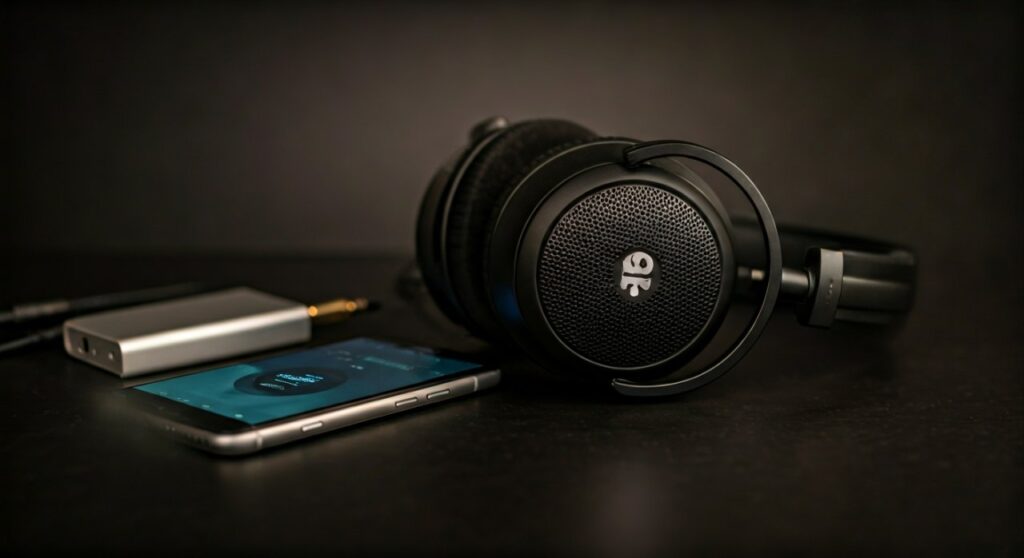
Key Takeaways: Lossless Audio Compatibility
If you are in a hurry, here is the essential information regarding what headphones support lossless audio:
- Wired is King: All high-quality wired headphones (like the Sennheiser HD 600 or Beyerdynamic DT 770 Pro) support lossless audio by default.
- Bluetooth Limitations: Standard Bluetooth (AAC/SBC) does not support lossless audio. It compresses the signal to fit through a narrow wireless “pipe.”
- The aptX Lossless Exception: Only headphones featuring Snapdragon Sound with aptX Lossless (e.g., Sennheiser Momentum 4, Denon PerL Pro) can achieve CD-quality lossless audio wirelessly.
- Apple’s Limitation: Currently, no AirPods model (including AirPods Pro 2 and AirPods Max) supports fully lossless audio over Bluetooth.
- USB-C Connection: Many modern wireless headphones (like the Bowers & Wilkins Px8) support lossless audio when connected via a USB-C cable.
Understanding Lossless Audio and the “Bluetooth Bottleneck”
To understand what headphones have lossless audio capabilities, we must first define what we are looking for. Lossless audio is a form of file compression that preserves every bit of data from the original studio recording. Common formats include FLAC, ALAC (Apple Lossless), and WAV.
The “bottleneck” occurs during wireless transmission. Standard Bluetooth codecs like SBC and AAC are “lossy,” meaning they strip away fine details to ensure a stable connection. Even “Hi-Res” codecs like Sony’s LDAC or aptX HD are technically “near-lossless”—they offer higher bitrates but still involve some level of data compression.
To hear lossless audio, your signal chain must maintain the data integrity from the streaming service (like Tidal or Apple Music) all the way to the headphone drivers.
Top Wired Headphones for True Lossless Listening
Wired headphones remain the gold standard for audiophiles. Because they do not rely on wireless compression, they can handle the high data rates required for 24-bit/192kHz Hi-Res lossless audio.
| Headphone Model | Type | Best For | Lossless Support |
|---|---|---|---|
| Sennheiser HD 600 | Open-Back | Critical Listening | Full (Wired) |
| Beyerdynamic DT 1990 Pro | Open-Back | Studio Production | Full (Wired) |
| Focal Utopia (2022) | Open-Back | Ultimate Luxury | Full (Wired) |
| HiFiMAN Edition XS | Planar Magnetic | Soundstage Depth | Full (Wired) |
| Audio-Technica M50x | Closed-Back | Monitoring/Budget | Full (Wired) |
Why Wired Headphones Always Support Lossless
When you plug a pair of Sennheiser HD 660S2 or Focal Clear Mg headphones into a source, the audio travels as an electrical analog signal. There is no digital compression happening between the amplifier and your ears. However, to get the best results, you need a high-quality DAC to convert the lossless digital file into that analog signal without adding noise.
Can Wireless Headphones Play Lossless Audio?
For years, the answer was a flat “No.” However, 2023 and 2024 have seen a breakthrough with Qualcomm’s Snapdragon Sound platform.
The Rise of aptX Lossless
aptX Lossless is a new technology that can deliver 16-bit/44.1kHz (CD-quality) audio over Bluetooth without losing a single bit of data. To use this, you need both a compatible smartphone (usually high-end Android phones with Snapdragon 8 Gen 2 or newer) and compatible headphones.
Headphones supporting aptX Lossless include:
- Sennheiser Momentum 4 Wireless (via firmware updates and compatible hardware).
- Denon PerL Pro: Currently one of the few earbuds that explicitly markets bit-perfect CD quality.
- Bose QuietComfort Ultra: While it supports Snapdragon Sound, it often uses adaptive bitrates that may vary based on connection strength.
The USB-C Bypass
Many high-end wireless headphones now feature an internal DAC that allows for USB-C to USB-C connections. When you plug the Bowers & Wilkins Px7 S2e or Px8 directly into your phone or laptop via USB, the digital signal bypasses Bluetooth entirely. This allows the headphones to play 24-bit lossless audio directly from the cable.
The Apple Ecosystem: Lossless on AirPods and Beats
One of the most common questions is: Do AirPods Max support lossless audio?
The answer is complex. Even the AirPods Max cannot play lossless audio over Bluetooth because they use the AAC codec. Furthermore, if you use the Lightning-to-3.5mm cable with AirPods Max, the audio undergoes an Analog-to-Digital conversion inside the cable and then a Digital-to-Analog conversion inside the headphones. Apple explicitly states this is not “pure” lossless.
Current Apple Status:
- AirPods Pro (2nd Gen) with MagSafe (USB-C): These support 20-bit/48kHz lossless audio only when paired with the Apple Vision Pro using a proprietary 5GHz protocol. They do not support lossless on iPhones.
- Beats Studio Pro: These are a surprise winner in the Apple family. They support 24-bit/48kHz lossless audio when connected via the included USB-C cable using their built-in “DAC mode.”
Required Hardware for a Complete Lossless Setup
Buying the right headphones is only half the battle. To ensure you are actually hearing lossless audio, you need to evaluate your entire signal chain.
The Source (Streaming Service)
Not all streaming platforms are created equal. You must use a service that provides lossless files:
- Apple Music: Offers ALAC up to 24-bit/192kHz at no extra cost.
- Tidal: Offers “Max” quality (FLAC) which has largely replaced their MQA format.
- Qobuz: Widely considered the best for purists, offering high-bitrate FLAC files.
- Amazon Music HD: Provides a solid library of “Ultra HD” tracks.
The External DAC/Amp
If you are using high-impedance wired headphones like the Sennheiser HD 800 S, your phone’s internal hardware (or a cheap dongle) won’t suffice. You need an external DAC (Digital-to-Analog Converter).
- Portable Options: The AudioQuest DragonFly Cobalt or iFi Go Link are excellent for mobile use.
- Desktop Options: The Schiit Magni/Modi stack or FiiO K7 provide the power needed for demanding lossless setups.
The Cable
For wired setups, ensure your cables are well-shielded. While you don’t need to spend thousands on “boutique” cables, a damaged or poorly made 3.5mm cable can introduce interference that ruins the lossless experience.
Expert Tips for Verifying Lossless Playback
In my years of testing audio gear, I’ve found that many users think they are listening to lossless when they aren’t. Here is how to verify:
- Check App Settings: In Apple Music or Tidal, you must manually go into Settings > Audio Quality and enable “Lossless” or “Hi-Res Lossless” for both Wi-Fi and Cellular.
- Look at the Sample Rate: If you use an external DAC like the Chord Mojo 2, the LED lights will change color based on the sample rate. If the light indicates 44.1kHz but your file is 192kHz, your device is “downsampling” the audio.
- Avoid Windows “Exclusive Mode” Issues: On a PC, Windows often forces audio through its internal mixer, which can degrade quality. Use the Tidal or Qobuz desktop app in “Exclusive Mode” to bypass the Windows mixer and send the bitstream directly to your DAC.
Frequently Asked Questions (FAQs)
Do Sony WH-1000XM5 headphones support lossless?
Over Bluetooth, no. They use LDAC, which is high-resolution but technically “lossy.” However, if you use the included 3.5mm audio cable, they can playback lossless audio as a passive pair of wired headphones.
Is there a noticeable difference between 320kbps and Lossless?
For most people using entry-level gear, the difference is subtle. However, on high-end headphones like the Hifiman Sundara, lossless audio provides a clearer “instrument separation,” more realistic “texture” in vocals, and a wider “soundstage.”
Does Spotify support lossless audio?
As of early 2024, Spotify HiFi (or “Supremium”) has not been widely rolled out. Currently, Spotify’s maximum quality is 320kbps Ogg Vorbis, which is a lossy format.
Can I get lossless audio on my iPhone without a dongle?
Since the iPhone removed the headphone jack, you cannot get wired lossless audio without a Lightning-to-3.5mm adapter (which contains a small DAC) or a USB-C to 3.5mm adapter for iPhone 15/16 models.
Do Bose QuietComfort Ultra support lossless?
They support aptX Adaptive, which includes a “Lossless” mode if paired with a compatible Snapdragon Sound Android device. They do not support lossless on iPhones or Macs via Bluetooth.
![What Headphones Does TenZ Use? [2024/2025 Pro Setup]](https://bestcustomerreviews.net/wp-content/uploads/2026/03/what-headphones-does-tenz-use-2024-2025-pro-setup-1774879842-400x250.jpg "What Headphones Does TenZ Use? [2024/2025 Pro Setup]")