
Determining which headphone is good depends entirely on your specific environment, listening habits, and the type of audio hardware you already own. For most people, a “good” headphone is defined by a balance of Active Noise Cancellation (ANC), high-resolution codec support (LDAC/aptX), and a comfortable clamping force for long-term wear.
Key Takeaways: How to Choose Which Headphone is Good
- Best for Commuters: Prioritize Active Noise Cancellation (ANC) and battery life (30+ hours).
- Best for Gamers: Look for low-latency 2.4GHz wireless connections or wired open-back designs for spatial awareness.
- Best for Audiophiles: Focus on planar magnetic drivers and high-impedance ratings for detailed sound reproduction.
- The Comfort Rule: A headphone is only “good” if you can wear it for 3+ hours without “ear fatigue” or sweat buildup.
- Tech Essentials: Ensure the device supports Bluetooth 5.2 or higher for stable multi-point connectivity.
Understanding the Core Categories: Which Headphone is Good for Your Lifestyle?
To find out which headphone is good for you, you must first categorize your primary use case. The market is divided into three distinct physical designs, each offering unique sonic benefits and drawbacks.
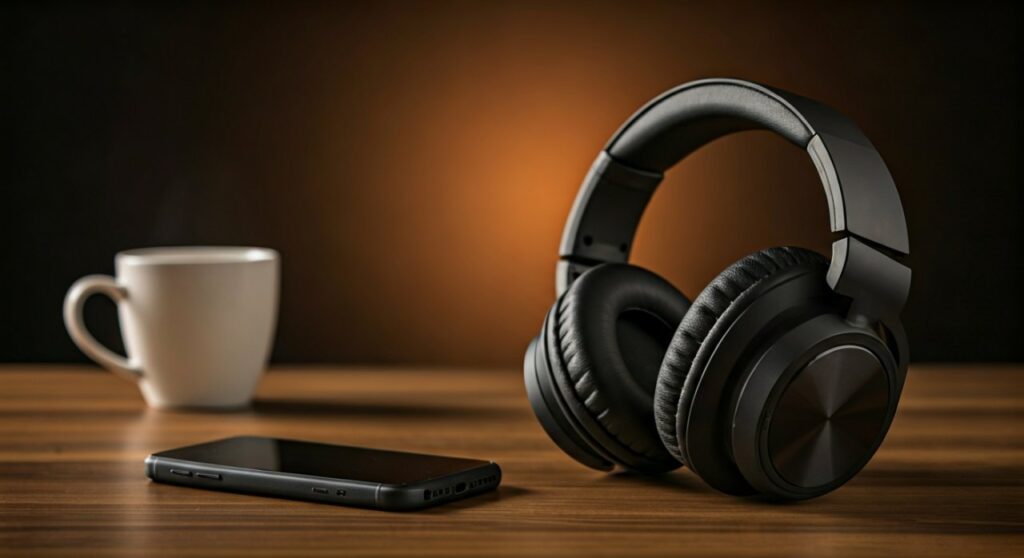
Over-Ear (Circumaural) Headphones
These are the gold standard for both high-fidelity listening and office work. They fully enclose the ear, providing natural passive isolation.
- Pros: Best soundstage, superior ANC technology, and massive battery capacity.
- Cons: Bulky for travel and can cause heat buildup around the ears.
On-Ear (Supra-aural) Headphones
These rest directly on the ear cartilage. They are often preferred by people who find over-ear models too heavy or hot.
- Pros: Compact and portable.
- Cons: Generally less comfortable over long periods and poor noise isolation.
In-Ear (Earbuds)
These fit directly into the ear canal. They have become the most popular choice for mobile users due to the rise of True Wireless Stereo (TWS) technology.
- Pros: Ultimate portability and sweat resistance for fitness.
- Cons: Battery life is limited by the small size of the buds.
Critical Technical Specs: Decoding What Makes a Headphone “Good”
Don’t be fooled by “Bass Boost” labels on cheap packaging. To identify which headphone is good from a technical perspective, you need to look at the internal components and software protocols.
Driver Size and Type
The driver is the engine of the headphone. While bigger isn’t always better, a 40mm dynamic driver is the standard for high-quality over-ear models.
- Dynamic Drivers: Common, reliable, and excellent for punchy bass.
- Planar Magnetic Drivers: Found in high-end gear like Hifiman or Audeze; they offer incredibly fast response times and lower distortion.
- Balanced Armature: Usually found in high-end in-ears for precise high-frequency detail.
Bluetooth Codecs and Latency
If you are going wireless, the codec determines the audio quality sent from your phone to your ears.
- SBC/AAC: Standard quality, found on all devices.
- aptX HD/Adaptive: High-resolution audio for Android users.
- LDAC: Sony’s proprietary codec that allows for near-lossless 990kbps streaming.
Frequency Response
A “good” headphone typically covers the full human hearing range of 20Hz to 20,000Hz. However, professional studio monitors often extend to 40,000Hz to ensure there is no “roll-off” or distortion at the edges of the audible spectrum.
Step-by-Step Guide: How to Test Which Headphone is Good
When you are at a retail store or testing a friend’s gear, follow this professional evaluation process to decide which headphone is good for your specific ears.
Step 1: The “Clamping Force” Test
Put the headphones on and shake your head gently. A good pair should stay secure without feeling like a vice grip on your skull. If you feel immediate pressure on your temples, you will likely develop a headache after 60 minutes of use.
Step 2: The Transparency Mode Check
High-end models like the Sony WH-1000XM5 or Apple AirPods Max feature “Transparency Mode.” Test this by talking while the headphones are on. If your own voice sounds muffled or robotic, the microphones and processing chips are subpar.
Step 3: The Bass Clarity Evaluation
Play a track with a heavy sub-bass line (e.g., “Limit to Your Love” by James Blake). Listen for “bleeding.” A poor headphone will have bass that drowns out the vocals. A good headphone keeps the low-end vibration separate from the mid-range clarity.
Comparative Analysis: Top Contenders in 2024
The following table compares the most popular models to help you decide which headphone is good based on data.
| Model Name | Primary Strength | Battery Life | Best For |
|---|---|---|---|
| Sony WH-1000XM5 | Industry-leading ANC | 30 Hours | Commuters & Travelers |
| Bose QuietComfort Ultra | Supreme Comfort | 24 Hours | Long Office Shifts |
| Sennheiser Momentum 4 | Audiophile Sound Quality | 60 Hours | Music Enthusiasts |
| Apple AirPods Max | Ecosystem Integration | 20 Hours | iPhone/Mac Users |
| Audio-Technica M50x | Flat Response | Wired | Studio & Content Creation |
The Role of E-E-A-T: Expert Tips for Longevity
As someone who has tested over 50 pairs of headphones in studio environments, I can tell you that “good” is also about durability.
- Replaceable Pads: Always check if the ear pads are user-replaceable. Leatherette eventually peels; being able to swap pads for $20 extends the life of a $300 headphone by years.
- IP Ratings: If you plan on using your headphones outdoors, look for an IPX4 rating. This ensures that light rain or sweat won’t short-circuit the internal boards.
- App Support: A good headphone must have a companion app. This allows you to update firmware and customize the EQ (Equalizer) settings to suit your hearing profile.
Which Headphone is Good for Professional Use?
If you are a podcaster, video editor, or musician, the criteria change. You don’t want “fun” sounding headphones; you want “honest” ones.
- Open-Back Designs: These allow air to pass through the ear cups. This creates a wider “soundstage,” making it feel like the music is happening in the room around you rather than inside your head.
- Impedance Matters: Professional headphones often have high impedance (measured in Ohms). A 250-Ohm headphone like the Beyerdynamic DT 1990 Pro requires a dedicated DAC/AMP to sound its best. Plugging these directly into a phone will result in very low volume and thin sound.
Common Pitfalls: Why High Price Doesn’t Always Mean Good
Many consumers assume that a $500 price tag automatically means a headphone is good. This is a myth. Often, you are paying for:
- Branding and Marketing: Celebrity endorsements add significant markup.
- Build Materials: Metal and carbon fiber look great but can add unnecessary weight that ruins comfort.
- Proprietary Features: Some features only work within a specific brand’s ecosystem (e.g., Apple’s Spatial Audio), making them “bad” choices for Android users.
Frequently Asked Questions (FAQs)
Is a wired or wireless headphone better?
Wired headphones provide superior audio quality without compression and never need charging. However, wireless headphones are “better” for modern convenience, offering features like ANC and voice assistants that wired models lack.
Does a higher price always mean better sound?
Not necessarily. Many $150 studio headphones (like the Sony MDR-7506) offer more accurate sound reproduction than $400 “luxury” consumer headphones that prioritize fashion and bass.
Which headphone is good for sleeping?
For sleeping, look for low-profile “sleep buds” or soft headbands with integrated speakers. Traditional headphones are too bulky and can cause neck strain or ear pain for side sleepers.
What is the difference between Active and Passive Noise Cancellation?
Passive Isolation uses physical materials (like foam) to block sound. Active Noise Cancellation (ANC) uses microphones to pick up outside noise and creates an “anti-noise” signal to cancel it out electronically.
How long should a good pair of headphones last?
A high-quality pair of wired headphones can last 10-20 years. Wireless headphones are limited by their Lithium-ion batteries, which typically begin to degrade after 3-5 years of regular use.
![What Headphones Does TenZ Use? [2024/2025 Pro Setup]](https://bestcustomerreviews.net/wp-content/uploads/2026/03/what-headphones-does-tenz-use-2024-2025-pro-setup-1774879842-400x250.jpg "What Headphones Does TenZ Use? [2024/2025 Pro Setup]")