
The Real Reason Why Drummers Have That Headphone
Drummers wear headphones, commonly referred to as isolation headphones or in-ear monitors, primarily to hear a click track (metronome) and a custom audio mix of the band while simultaneously protecting their ears from the high-decibel sound of the drums. By using these headphones, drummers can maintain a steady tempo and hear subtle musical cues that would otherwise be drowned out by the acoustic volume of the kit.
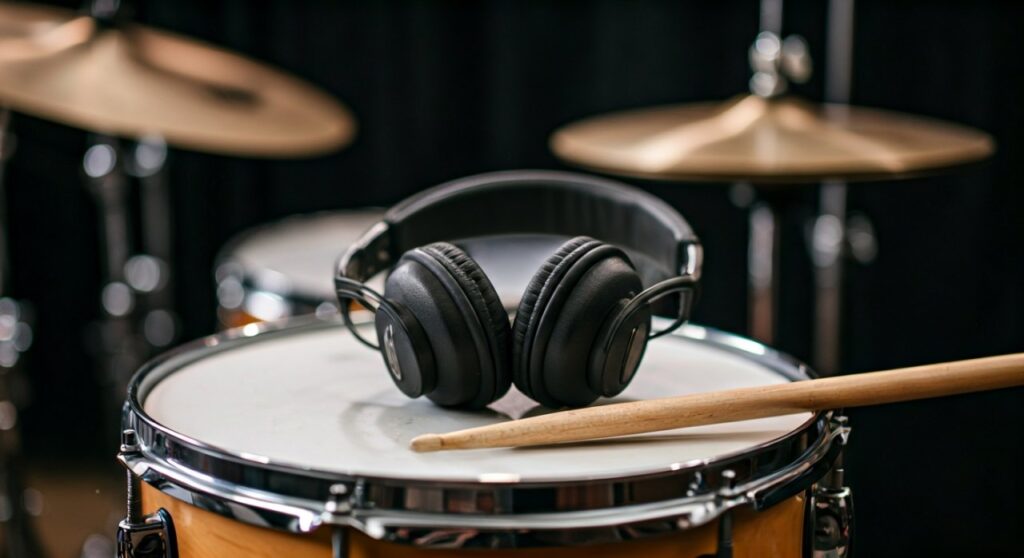
If you have ever watched a professional concert or a studio recording session, you have likely seen the drummer wearing large, earmuff-style headphones or tiny, wired earbuds. It might look like they are listening to a podcast, but in reality, that “headphone” is the most critical piece of equipment for keeping the entire band synchronized. Without this direct audio feed, the drummer is essentially “flying blind” in a sea of loud noise.
Key Takeaways: Why Do Drummers Wear Headphones?
- Timing Precision: Most modern songs are recorded to a click track. Drummers use headphones to hear this pulse so they don’t speed up or slow down.
- Hearing Protection: A standard drum kit can hit 110–120 decibels. Headphones provide passive or active isolation to prevent permanent hearing loss and tinnitus.
- Audio Monitoring: Drummers need to hear the vocals, guitars, and keyboards clearly to know where they are in the song’s structure.
- Backing Tracks: Many modern bands use pre-recorded electronic elements. The drummer must hear these to stay “locked in” with the digital playback.
- Studio Communication: In a recording environment, the producer uses the headphones to talk to the drummer from the control room.
The Science of Sound: Protecting the Drummer’s Ears
The most immediate reason why do drummers have that headphone is simple: drums are incredibly loud. A single snare drum hit can exceed 120 dB, which is equivalent to a jet engine taking off nearby. Prolonged exposure to these levels causes immediate ear fatigue and long-term damage.
Professional drummers use isolation headphones that act like high-tech earplugs. These devices are designed to reduce the ambient noise level by 20 to 30 decibels. This reduction allows the drummer to hear their own drums at a safe volume while the “monitor mix” (the music they need to hear) is pumped directly into their ears at a controlled level.
Without these headphones, drummers often experience a phenomenon called “temporary threshold shift.” This is that ringing sensation or muffled hearing you get after a loud concert. For a professional who plays 200 nights a year, this would lead to total deafness without proper isolation.
The “Click Track”: The Secret to a Perfect Performance
In the world of professional music, timing is everything. Most people wonder why do drummers wear headphones when they seem to be the ones setting the beat anyway. The truth is that even the best drummers in the world can have slight fluctuations in tempo due to adrenaline or fatigue.
The headphones provide a click track, which is essentially a digital metronome. This “click” acts as the heartbeat of the performance.
- Syncing with Visuals: In large arena shows, lights and video screens are often synced to a computer. The drummer must stay perfectly on the click for the pyrotechnics and visuals to hit at the right moment.
- Layered Productions: If a song has strings, synthesizers, or backing vocals that aren’t played live, the drummer must follow the click to stay aligned with those pre-recorded tracks.
- Studio Consistency: When recording an album, the click ensures that different takes can be edited together seamlessly later.
Types of Headphones Used by Drummers
Not all headphones are created equal. Depending on the setting—whether it’s a basement practice or a stadium tour—drummers choose between several specific styles.
| Headphone Type | Best For | Noise Isolation | Mobility |
|---|---|---|---|
| Isolation Headphones | Studio Recording | Very High (25dB+) | Moderate (Bulky) |
| In-Ear Monitors (IEMs) | Live Performances | High (Custom fit) | Very High (Low profile) |
| Open-Back Headphones | Mixing/Reference | Low | Low |
| Closed-Back Studio | General Practice | Medium | Moderate |
High-Isolation Over-Ear Headphones
Brands like Vic Firth and Sennheiser produce headphones specifically for drummers. These look like the hearing protection worn by airport ground crews. They have thick padding to seal around the ear, blocking out the raw “crack” of the snare drum.
Custom In-Ear Monitors (IEMs)
If you see a drummer wearing what looks like clear plastic molded into their ear, those are Custom IEMs. These are created from a physical mold of the drummer’s ear canal. They offer the best isolation and allow the drummer to move their head freely without the headphones falling off during an intense solo.
How to Set Up a Drumming Monitor System (Step-by-Step)
If you are a beginner wondering how to start using headphones while playing, follow this professional setup guide. This process ensures you get the “studio sound” while protecting your ears.
Step 1: Choose Your Audio Source
You need a device that can provide both your music and a metronome. Most drummers use a Laptop with a DAW (Digital Audio Workstation), a Drum Module (Brain) if playing electric drums, or a simple Mixer.
Step 2: Connect to a Headphone Amplifier
The signal from a phone or laptop is often too weak to be heard over the sound of acoustic drums. Using a headphone amp (like those from Behringer or PreSonus) gives you a volume boost and a dedicated knob to control your levels quickly.
Step 3: Establish the Monitor Mix
If you are playing with a band, you need a “send” from the main mixing board. You want to hear:
- The Click: Set this loud enough to feel the pulse.
- Vocals: Critical for knowing where you are in the song (Verse vs. Chorus).
- Bass Guitar: To ensure your kick drum is “locked in” with the bass player.
Step 4: Adjust for Hearing Safety
Start with the volume at zero. Put your isolation headphones on first. Play your drums for a minute to see how much “natural” sound leaks through. Then, slowly turn up the headphone volume until the music is just slightly louder than the drum kit’s muffled sound.
The E-E-A-T Perspective: Expert Tips for Drummer Headphones
As someone who has spent over a decade behind a drum kit in both damp basements and professional studios, I can tell you that the “feel” of the headphones is just as important as the sound.
- Avoid Consumer Earbuds: Standard earbuds (like non-pro AirPods) offer almost zero noise isolation. If you use them, you will end up cranking the volume to dangerous levels just to hear the music over the drums.
- The “Sweat Factor”: Over-ear isolation headphones can get extremely hot. If you play long sets, look for models with replaceable velvet or cooling gel pads.
- Cable Management: Always run your headphone cable down your back. If the cable hangs in front of you, it will eventually get caught in your drumsticks, leading to a disastrous (and expensive) mid-song rip.
Monitoring in the Studio vs. Live Stage
The answer to why do drummers have that headphone changes slightly depending on the environment.
In the Studio
In the recording studio, the headphones are a communication tool. The producer needs to talk to the drummer (“Let’s try that bridge again!”). Furthermore, “Bleed” is a major concern. If the drummer uses open-back headphones, the sound of the click track can leak out and be picked up by the sensitive drum microphones, ruining the recording. This is why closed-back, high-isolation models are mandatory.
On the Live Stage
Live drumming is about physical energy. Drummers use In-Ear Monitors because they don’t want a heavy pair of headphones shifting around while they move. Additionally, using IEMs removes the need for “Wedge Monitors” (the big speakers on the floor). This makes the stage much quieter, allowing the sound engineer to create a better mix for the audience.
Common Myths About Drummers and Headphones
Myth 1: They are listening to the original song to cheat.
Actually, most drummers are listening to a “stems” mix or just a click. They know the song by heart; the headphones just keep the timing rigid.
Myth 2: Headphones make you a worse drummer.
Some purists argue that you lose “soul” when playing to a click. However, in the modern industry, the ability to play with a click track is a requirement for 95% of professional gigs.
Myth 3: Any noise-canceling headphone works.
Active Noise Canceling (ANC) like the Bose QuietComfort is designed for low, steady hums (like planes). They do not react fast enough to the sharp “transients” of a drum hit. You need passive isolation, not electronic cancellation.
Frequently Asked Questions
Can I use regular noise-canceling headphones for drumming?
No, active noise-canceling (ANC) headphones are not designed for the high-pressure sound of drums. They can actually create “artifacts” or digital distortion when hit with a loud snare crack. Stick to passive isolation headphones or IEMs.
Why do some drummers only wear one headphone?
This is an old-school technique. Some drummers keep one ear “open” to hear the natural acoustics of the room and the kit, while the other ear hears the click. However, this is generally discouraged by audiologists because it leads to turning the headphone ear up much louder, increasing the risk of damage.
Do drummers hear the rest of the band in their headphones?
Yes. This is called a Monitor Mix. Through a mixing console, a drummer can request specific levels—for example, “more bass, less guitar”—to help them play better.
What is the best brand of headphones for drummers?
For over-ear protection, Vic Firth Stereo Isolation Headphones are the industry standard. For in-ear monitors, Shure (SE series) and JH Audio are highly respected by professionals.
How loud should the click track be?
The click should be loud enough to be a clear reference but not so loud that it causes pain. If you find yourself “burying the click” (playing so perfectly in time that you can’t hear it), you have found the perfect volume balance.
**
**
**
**
![What Headphones Does TenZ Use? [2024/2025 Pro Setup]](https://bestcustomerreviews.net/wp-content/uploads/2026/03/what-headphones-does-tenz-use-2024-2025-pro-setup-1774879842-400x250.jpg "What Headphones Does TenZ Use? [2024/2025 Pro Setup]")