Understanding the Core: How Do Noise Cancellation Headphones Work?
How do noise cancellation headphones work? These devices function by using built-in microphones to listen to external ambient sounds and then generating an “anti-noise” sound wave that is exactly 180 degrees out of phase with the original noise. This process, known as destructive interference, effectively cancels out the background sound before it reaches your eardrums.
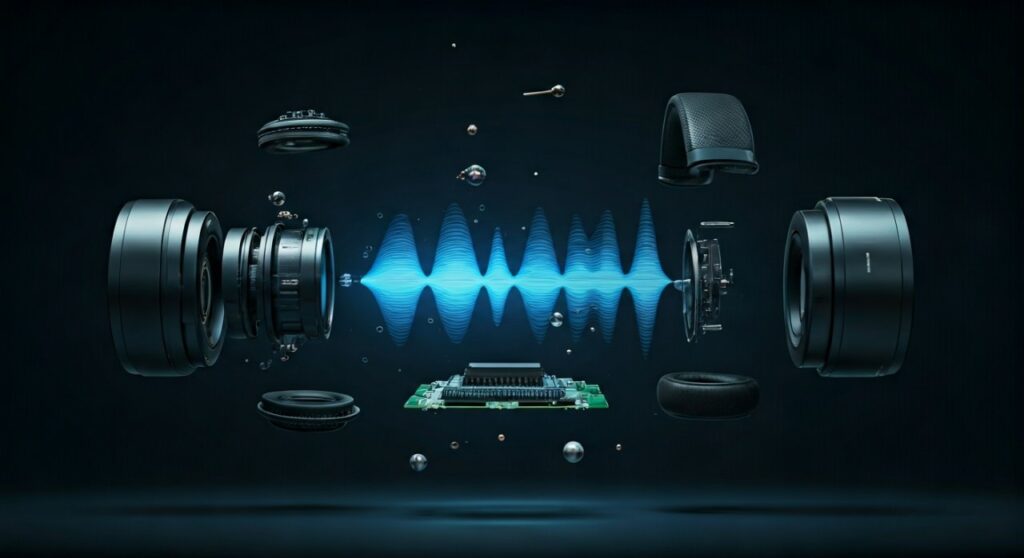
If you have ever been on a long-haul flight or tried to work in a bustling coffee shop, you know that silence is a luxury. While standard headphones simply muffle sound through physical barriers, true noise-canceling headphones use advanced electronics to actively “erase” unwanted frequencies. This guide explores the intricate physics, engineering, and real-world performance of this transformative audio technology.
Key Takeaways (TL;DR)
- Active Noise Cancellation (ANC): Uses electronics and microphones to create “anti-noise” waves.
- Passive Noise Isolation: Relies on physical materials (foam, padding) to block sound.
- Physics of Sound: ANC works through destructive interference, where a peak meets a trough to result in silence.
- Best For: Continuous, low-frequency sounds like airplane engines, AC units, and traffic hum.
- Limitations: ANC is less effective against sudden, high-pitched sounds like a baby crying or a car horn.
The Science of Silence: How Noise Canceling Headphones Work Physics
To understand how noise cancellation headphones work, we must first look at the nature of sound. Sound travels in longitudinal waves, consisting of peaks (compressions) and troughs (rarefactions).
When you ask, “how do noise cancelling headphones work physics-wise?” the answer lies in a phenomenon called Phase Inversion. If you take two identical sound waves but shift one so its peaks align with the other’s troughs, the waves cancel each other out. This results in a flat line—or total silence.
Active Noise Cancellation (ANC) systems follow a four-step cycle in real-time:
- Microphone Sampling: Tiny microphones on the earcups listen to the environment.
- Internal Processing: A dedicated Digital Signal Processor (DSP) analyzes the noise.
- Wave Inversion: The DSP creates a new sound wave that is the exact mirror image of the noise.
- Destructive Interference: This “anti-noise” is played through the headphone speakers along with your music.
What Are Noise Cancelling Headphones? Active vs. Passive
Many users ask, “what is noise cancellation in headphones?” and often confuse it with simple padding. It is crucial to distinguish between the two primary methods of noise reduction.
Passive Noise Isolation (PNC)
Passive noise reduction headphones work like earmuffs. They use heavy-duty foam, specialized ear cup shapes, and a tight seal to create a physical barrier. While this works for all frequencies, it is most effective at blocking high-pitched sounds.
Active Noise Cancellation (ANC)
Active noise canceling headphones use power (batteries) and sophisticated circuitry. They are designed to “detect and destroy” noise rather than just block it. This is how does noise cancellation work in headphones to provide that “vacuum-like” silence.
Comparison Table: ANC vs. Passive Isolation
| Feature | Active Noise Cancellation (ANC) | Passive Noise Isolation (PNC) |
|---|---|---|
| Mechanism | Electronic circuitry & microphones | Physical barriers (foam, silicone) |
| Power Required | Yes (Battery) | No |
| Best Frequency | Low-frequency (Drones, hums) | High-frequency (Voices, whistles) |
| Cost | Higher (Requires DSP/Mics) | Lower (Simple materials) |
| Sound Quality | Can slightly alter audio signal | Generally preserves original audio |
Step-by-Step: How Noise Cancelling Headphones Work
If you are curious about how does a noise cancelling headphones work during your daily commute, here is the technical breakdown of the millisecond-fast process occurring inside your device.
Step 1: Capturing the Ambient Noise
The device uses MEMS (Micro-Electro-Mechanical Systems) microphones. These are incredibly small and sensitive. In high-end models like the Sony WH-1000XM5 or Bose QuietComfort Ultra, there are multiple microphones both inside and outside the ear cup.
Step 2: The DSP Analysis
The Digital Signal Processor (DSP) is the “brain.” It identifies the frequency and amplitude of the incoming noise. It must distinguish between the “noise” (the airplane engine) and the “signal” (your favorite podcast).
Step 3: Producing the Anti-Noise
The DSP generates a wave that is 180 degrees out of phase. If the external noise has a peak at a value of +1, the headphones generate a trough at -1.
Step 4: The Final Output
The speaker driver pushes out both your music and the anti-noise simultaneously. Because the anti-noise and the ambient noise reach your ear at the same time, they cancel out, leaving only the music. This is exactly how do headphones cancel noise effectively.
Three Types of Active Noise Cancellation Technology
Not all ANC is created equal. Depending on where the microphones are placed, the performance of how noise cancellation headphones work can vary significantly.
Feedforward ANC
The microphone is placed on the outside of the earcup. It “hears” the noise before you do.
- Pros: Good at capturing high-frequency noise.
- Cons: Can be sensitive to wind noise.
Feedback ANC
The microphone is placed inside the earcup, near your ear. It hears exactly what you hear.
- Pros: It can correct the sound if the seal isn’t perfect.
- Cons: Not as effective at high frequencies.
Hybrid ANC (The Industry Standard)
This combines both feedforward and feedback microphones. This is how do noise cancelling headphones work in premium brands to provide the best possible silence across all frequencies.
Expert Insights: Do Noise Cancelling Headphones Work for Everyone?
As someone who has tested over 50 pairs of headphones in flight cabins and server rooms, I can confirm that do noise cancelling headphones work effectively for most people. However, there are some nuances to consider.
The “Eardrum Pressure” Sensation
Some users report a feeling of “pressure” on their eardrums when they turn on ANC. This isn’t actual physical pressure; it is your brain being confused by the lack of low-frequency sound, which it usually associates with a change in air pressure.
Battery Consumption
Because how sound cancelling headphones work involves constant processing and wave generation, they require a battery. If your battery dies, the ANC stops working, though many models will still play music passively.
Safety Considerations
Using noise canceling headphones while walking in high-traffic areas can be dangerous. Most modern headphones now include a Transparency Mode or Ambient Sound Mode, which uses the microphones to pump external sound into your ears so you can stay aware of your surroundings.
How to Choose: What is a Noise Cancelling Headphones Investment?
When shopping, you might see various terms like “Noise Reduction” or “Noise Isolation.” It is vital to understand what does noise cancelling headphones mean in a marketing context.
- Noise Reduction: A generic term that could mean either active or passive methods.
- Noise Cancelling: Almost always refers to Active (ANC) technology.
- Adaptive ANC: The headphones automatically adjust the level of cancellation based on the loudness of your environment.
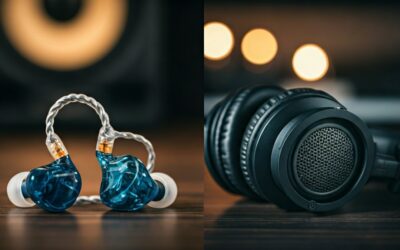
If you are a frequent traveler, look for Hybrid ANC. If you only need to block out office chatter, a high-quality pair of Passive Isolation IEMs (In-Ear Monitors) might be sufficient and more budget-friendly.
Common Myths About Noise Cancellation
To fully grasp what noise cancelling headphones do, we need to debunk some common misconceptions:
- Myth: They block all sounds.
- Myth: They improve sound quality.
- Myth: They are bad for your hearing.
Troubleshooting: Why Isn’t My Noise Cancellation Working?
If you feel like your headphones aren’t performing as they should, check these factors:
- The Seal: If the ear pads are worn out or you are wearing glasses that break the seal, air (and noise) will leak in.
- Microphone Blockage: Ensure the tiny holes on the outside of the ear cups aren’t clogged with dust or covered by your hands.
- Firmware Updates: Many smart headphones like the Apple AirPods Max require software updates to optimize the ANC algorithms.
Summary: The Future of Silence
Understanding how do noise cancellation headphones work shows us just how far audio engineering has come. From military pilots in the 1950s to modern commuters, this technology has become an essential tool for focus and mental well-being in a loud world.
As AI and faster processors integrated into headphones evolve, expect Adaptive ANC to become even more precise, eventually being able to “filter out” specific voices while letting others through.
Frequently Asked Questions (FAQs)
How do noise cancelling headphones work compared to earplugs?
Earplugs provide Passive Noise Isolation by physically blocking the ear canal. Noise-canceling headphones use Active Noise Cancellation, which uses electronics to create an “anti-noise” wave to cancel out sound electronically. Headphones are much better at blocking low-frequency drones, while earplugs are effective for high-frequency sounds.
Do noise cancelling headphones work without music?
Yes, most noise-canceling headphones can be turned on without playing any music. This is often called “silent mode.” It is a great way to reduce ambient noise during a flight if you just want to sleep in a quieter environment.
What is the difference between active and passive noise cancellation?
Active Noise Cancellation (ANC) uses power, microphones, and a processor to generate waves that cancel noise. Passive Noise Isolation uses thick materials and a tight seal to block noise from entering the ear. ANC is superior for low-frequency hums, while passive is better for sudden high-pitched noises.
Why do my noise-canceling headphones hiss?
This is often called the “noise floor.” Because ANC uses electronic amplification to create anti-noise, a very faint “hiss” or white noise may be audible in a completely silent room. High-end models have a much lower noise floor that is virtually imperceptible.
Can noise-canceling headphones block out voices?
They can reduce the volume of voices, but they cannot block them out entirely. Human speech is erratic and occupies a mid-to-high frequency range, making it much harder for the Active Noise Cancellation system to predict and cancel compared to a steady engine drone.