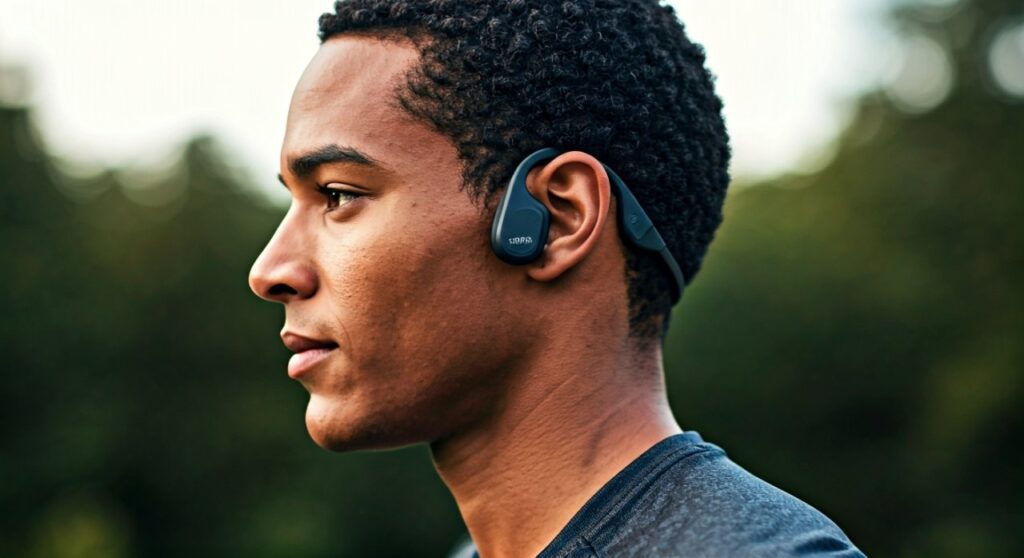
To wear Shokz headphones correctly, wrap the titanium frame behind your neck and position the bone conduction transducers on your cheekbones directly in front of your ears. The ear hooks should rest comfortably over the top of your ears, leaving your ear canals completely open and unobstructed.
Unlike traditional over ear headphones that cover your ears, Shokz utilize bone conduction technology to send vibrations through your facial bones. If you feel the transducers inside your ear canal or sitting on the soft part of your ear, the fit is incorrect.
As an endurance athlete who has logged over 2,000 miles wearing the Shokz OpenRun Pro, I can confirm that a precise fit is the difference between premium audio and annoying vibrations. Whether you are a cyclist, a remote worker, or a casual walker, mastering the “wrap-and-set” technique ensures the device stays secure during high-impact movement.
Key Takeaways: How to Wear Shokz Headphones
- Placement: Transducers must sit on the cheekbone, not inside or over the ear opening.
- The Band: The back titanium band should wrap around the back of the head without touching the neck or collar.
- Compatibility: Always put your Shokz on before your sunglasses or helmet straps for the most stable fit.
- Model Matters: OpenFit models use a different “ear hook” design compared to the classic OpenRun wraparound style.
- Maintenance: Ensure the charging contact points are dry before wearing them for a workout to prevent skin irritation.
Step-by-Step Guide: How to Wear Shokz Headphones Properly
Wearing open ear headphones for the first time can feel counterintuitive. Because we are conditioned to put things in our ears, the “floating” sensation of Shokz might feel “loose” at first. Follow these steps for a perfect fit:
- Hold the Device: Grip your Shokz by the hook sections near the transducers.
- The Wrap: Bring the headphones behind your head, sliding the band over your hair and resting it near the base of your skull.
- The Hook: Lift the hooks over the top of your ears. The curve of the hook should follow the natural contour where your ear meets your head.
- The Set: Position the square/oval transducers on your cheekbones. There should be a small gap between the transducer and your ear canal.
- The Shake Test: Gently shake your head. If the headphones shift significantly, adjust the angle of the ear hooks.
How to Wear Glasses and Headphones Simultaneously
One of the most common questions users ask is how to wear glasses with headphones without causing pressure points. As someone who wears prescription frames daily, I recommend the “sandwich” method.
First, put your Shokz headphones on and ensure the hooks are flush against your skin. Then, slide your glasses on so the temples (the arms of the glasses) rest slightly on top of the Shokz hooks.
This prevents the headphones from being pushed outward, which would ruin the sound quality. Because Shokz use a slim titanium wire, they are much more comfortable for glasses-wearers than bulky over ear headphones.
Pro-Tips for Wearing Headphones with Glasses:
- Order of Operations: Headphones first, glasses second.
- Frame Choice: Thin, flat temples on glasses work best with bone conduction devices.
- Adjusting the Band: If the band hits your glasses’ arms, tilt the back of the Shokz band slightly downward toward your neck.
Understanding the Fit Across Different Shokz Models
Not all Shokz are built the same. Depending on whether you have the OpenRun, OpenMove, or the newer OpenFit, the way you wear headphones will vary.
| Model Series | Primary Wearing Style | Best For |
|---|---|---|
| OpenRun / Pro | Wraparound Titanium Band | High-impact running and cycling |
| OpenMove | Rigid Wraparound Band | Entry-level use, commuting, and office |
| OpenFit / Air | Individual Ear Hooks (No Band) | All-day comfort and casual listening |
| OpenSwim | Tight Wraparound Band | Laps in the pool (no Bluetooth) |
The OpenFit series is a significant departure from the classic design. These are true open ear headphones that do not have a connecting neckband. To wear these, you simply “hook” each bud over your ear. They use DirectPitch™ technology rather than bone conduction, so the speaker sits just above the ear canal without entering it.
How to Style Headphones for Comfort and Performance
Learning how to style headphones isn’t just about aesthetics; it’s about optimizing the hardware for your specific activity.
Long Hair and Shokz
If you have long hair, the neckband can sometimes get tangled or pushed down. To avoid this, I recommend putting your hair in a high ponytail or bun. Slide the Shokz band underneath your ponytail so it rests directly against the back of your head. This prevents the hair from muffling the vibrations or pushing the transducers off your cheekbones.
Wearing with Winter Gear
When the temperature drops, you might wonder how to wear headphones with beanies or headbands. Always place the Shokz on your head first, then pull the beanie over them. Because they don’t cover your ears, you can still keep your ears warm with a hat while enjoying your music.
Why the Correct Fit Impacts Sound Quality
If you’ve ever felt that your Shokz sound “tinny” or lack bass, it’s almost always a fit issue. Bone conduction relies on a solid point of contact with your temporal bone.
If the transducer is sitting on your earlobe or too far forward on your cheek, the sound waves won’t transfer efficiently. You should feel a slight, firm pressure. If you can fit more than a finger’s width between the transducer and your skin, the headphones are likely too large for your head.
Expert Insight: Shokz offers a “Mini” version for several models. If you find the back band bounces excessively against your neck while running, you likely need the OpenRun Mini, which features a shorter band for a more snug fit.
Safety and Situational Awareness
The primary reason to learn how to wear open ear headphones correctly is safety. By keeping the ear canal open, you maintain situational awareness.
According to safety data, pedestrians wearing traditional headphones are significantly more likely to be involved in traffic accidents because they cannot hear ambient sounds like sirens or car horns. Shokz allow you to hear your environment and your audio simultaneously, provided you don’t block the ear canal with the device.
Troubleshooting Common Fit Issues
Even after following a guide, you might encounter some discomfort. Here is how to fix common problems:
- Pressure Behind the Ears: This usually happens if the band is too tight or your glasses are underneath the hooks. Try moving the glasses to the outside.
- Tickling Sensation: At high volumes, bone conduction vibrates. If this is annoying, move the transducers slightly further away from the sensitive area directly in front of the ear hole.
- The Band Hits My Collar: This is common for people with shorter necks. Try tilting the band upward so it sits higher on the back of your head.
Frequently Asked Questions (FAQs)
Can I wear Shokz headphones if I have piercings?
Yes, Shokz are generally very piercing-friendly. Because they sit on the cheekbone and hook over the top of the ear, they usually avoid contact with lobe, helix, or tragus piercings. However, if you have a large “industrial” bar, you may need to adjust the hook slightly.
How do you wear headphones like Shokz with a bike helmet?
Put your Shokz on first, then put on your helmet. Ensure the helmet straps go over the headphones’ ear hooks. This keeps the headphones secure even if you’re riding over rough terrain or at high speeds.
Why does the band not touch the back of my head?
The band is designed to “float.” It should not be flush against the back of your neck or head. This gap allows for head movement and prevents the headphones from being pushed out of place when you turn your head or look up.
Are Shokz comfortable for people with large heads?
Yes, the titanium frame is highly flexible. It can stretch significantly without losing its shape. For those with larger head circumferences, the standard models (not the Mini) are designed to provide a “tension-fit” that is secure but not restrictive.
How to wear open ear headphones for the best bass response?
While open ear headphones naturally have less bass than over ear headphones, you can improve it by ensuring the transducers are flat against your skin. Any air gap between the transducer and your bone will result in a loss of lower frequencies. Using the included earplugs (in safe environments) will also “trick” the brain into hearing more bass.