Understanding Impedance: What is Ohm in Headphones?
What is ohm in headphones is a measurement of electrical resistance, technically known as impedance, which determines how much power your headphones require to produce high-quality sound. In short, ohms tell you whether your headphones can be powered by a smartphone (low ohms) or if they require a dedicated external amplifier (high ohms) to reach their full potential.
If you have ever plugged a premium pair of headphones into your laptop and found the sound to be “thin,” “quiet,” or lacking bass, you have likely encountered an impedance mismatch. Understanding this value is the secret to unlocking the true audio fidelity of your gear.
Key Takeaways: Ohm and Headphone Performance
Before diving into the technical mechanics, here is a quick summary of what you need to know about what are ohms for headphones:
- Low Impedance (16–32 Ohms): Designed for mobile devices, smartphones, and controllers. They deliver high volume with low voltage.
- High Impedance (80–600 Ohms): Designed for studio and audiophile use. These require more voltage from an Amplifier (AMP) or DAC to function correctly.
- Sound Quality: Higher ohms often allow for thinner, lighter voice coil wires, which can result in more precise sound and lower distortion, provided they are powered correctly.
- The 1/8th Rule: For the best sound, your source device’s output impedance should be at least eight times lower than your headphones’ impedance.
What Do Ohms Mean in Headphones? The Technical Basics
To understand what does ohm mean in headphones, we have to look at Ohm’s Law. In electronics, impedance is the opposition that a circuit presents to alternating current (AC) when voltage is applied.
In a headphone, the “circuit” consists of a voice coil and a magnet. When your device sends an electrical signal, the voice coil moves, vibrating the diaphragm to create sound waves.
The ohm rating tells you how much the headphone resists that electrical signal.
- Low resistance means the “gate” is wide open; a small amount of electricity (voltage) can easily create a lot of sound.
- High resistance means the “gate” is mostly closed; you need a much “stronger push” (higher voltage) to get the same amount of sound through.
Comparing Low Impedance vs. High Impedance Headphones
Choosing the right gear depends entirely on your playback source. Use the table below to identify where your equipment fits.
| Feature | Low Impedance (Portable) | High Impedance (Studio/Pro) |
|---|---|---|
| Ohm Range | 16Ω – 50Ω | 80Ω – 600Ω |
| Best Used With | Smartphones, Tablets, Laptops | Desktop Amps, Audio Interfaces |
| Power Efficiency | Very High | Low (Requires external power) |
| Voice Coil Mass | Heavier (Thicker wire) | Lighter (Thinner wire) |
| Risk of Blowout | High if used with high-power amps | Low |
| Common Examples | Apple EarPods, Audio-Technica M50x | Sennheiser HD600, Beyerdynamic DT 1990 Pro |
What are Ohms in Headphones for Sound Quality?
A common myth in the audiophile world is that “higher ohms always mean better sound.” While not strictly true, there is a technical reason why many high-end headphones like the Sennheiser HD800S (300 ohms) have high ratings.
Thinner Voice Coils
To achieve high impedance, manufacturers use more windings of incredibly thin copper wire on the voice coil. Because the wire is thinner, the coil has less moving mass. A lighter coil can move faster and stop more precisely, resulting in better transient response and higher detail in the treble.
Improved Damping Factor
When you use high-impedance headphones with a proper amplifier, you achieve a better damping factor. This is the ability of the amplifier to control the movement of the headphone driver. It prevents the driver from “ringing” or vibrating after the signal stops, leading to tighter, more accurate bass.
Reduced Background Hiss
Low-impedance headphones are extremely sensitive. If your source (like a cheap motherboard) has a “noisy” electrical floor, you will hear a faint hissing or static. High-impedance headphones naturally resist this low-level noise, providing a “blacker” or cleaner background.
How to Choose: What Ohm Headphones Do You Need?
Determining what ohm headphones to buy depends on your lifestyle and the equipment you already own.
When to Choose 32 Ohms or Lower
If you are a “plug-and-play” user who listens to music via a USB-C Dongle, a PlayStation Controller, or directly from a laptop, stick to 32 ohms. Popular models like the Sony WH-1000XM5 are optimized for this. You will get plenty of volume and decent battery life from your mobile devices.
When to Choose 80 to 250 Ohms
This is the “pro-sumer” sweet spot. Headphones like the Beyerdynamic DT 770 Pro (80 Ohm version) can often be driven by modern MacBook Pros or high-end motherboards, but they truly shine when paired with a basic Portable DAC/AMP like the Fiio BTR15.
When to Choose 300 to 600 Ohms
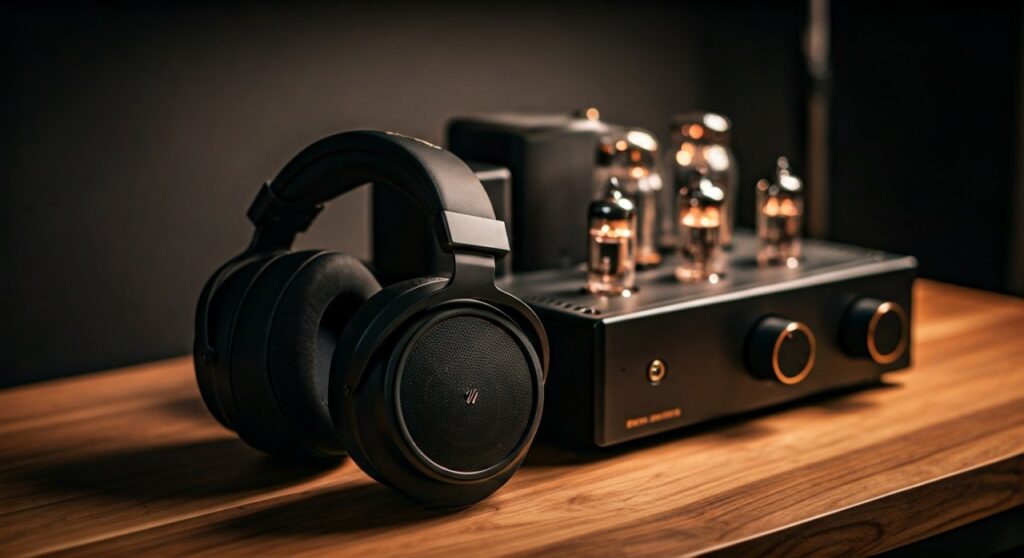
This is strictly for home or studio use. You must have a dedicated headphone amplifier. Without one, these headphones will sound quiet, muffled, and lose all their bass impact. This is the realm of legendary gear like the Beyerdynamic DT 880 (600 Ohm).
Step-by-Step Guide: Matching Headphones to Your Device
Follow these steps to ensure you are getting the most out of your audio setup.
Step 1: Check the Headphone Impedance
Look at the box or the manufacturer’s website. Find the value followed by the Ω (Omega) symbol.
Step 2: Identify Your Source Output
Most smartphones and standard laptops have an output impedance of less than 2 Ohms.
Step 3: Apply the 1/8th Rule
To maintain a flat frequency response and good damping, ensure your headphones have an impedance at least 8 times higher than your source’s output impedance.
Example:* If your source is 2 ohms, your headphones should be at least 16 ohms.
Step 4: Calculate Sensitivity vs. Impedance
Ohms aren’t the only factor. Check the Sensitivity (measured in dB/mW). If a headphone has high ohms and low sensitivity (e.g., 90dB/mW), it is exceptionally hard to drive and requires a powerful Balanced Amp.
Step 5: Test for Clipping or Hissing
Plug your headphones in. If you have to turn the volume to 100% just to hear “medium” levels, you need an amplifier. Conversely, if you hear a hiss at 10% volume, your headphones are too sensitive for that “dirty” source.
Real-World Examples of Ohm Mismatches
I once tested a pair of Sennheiser HD650 (300 ohms) directly into a standard smartphone. The result was disappointing. The vocals sounded distant, and the legendary “warmth” of the headphones was replaced by a tinny, shrill sound.
Later, I connected the same headphones to a Schiit Magni amplifier. The difference was night and day—the soundstage opened up, and the sub-bass became tactile. This is why understanding what is ohm headphones matters; it prevents you from wasting money on high-end gear that you aren’t actually powering correctly.
Common Myths About Headphone Ohms
- Myth: High ohms mean higher volume.
- Myth: 32-ohm headphones are “cheap.”
- Myth: You can’t use 250-ohm headphones on a phone.
Frequently Asked Questions (FAQs)
What is a good ohm for headphones?
For most people, 32 ohms is ideal because it is compatible with all devices. If you are an audiophile or studio professional looking for higher detail and have an amplifier, 250 to 300 ohms is the standard for high-fidelity listening.
Does higher ohm mean better sound?
Not directly. While high-impedance headphones often have lighter voice coils that allow for more detail, the “better” sound comes from the synergy between the headphones and a high-quality amplifier. A 300-ohm headphone powered by a weak source will sound worse than a 32-ohm headphone.
Can I use 250 ohm headphones without an amp?
Technically, yes, you will hear sound. However, the volume will be very low, and you will likely experience a loss of bass and dynamic range. To get the performance you paid for, an amplifier is highly recommended for anything over 80 ohms.
What happens if I use an amp with low-ohm headphones?
You must be careful. Because low-ohm headphones require very little power, a powerful desktop amp can easily “blow out” the drivers or cause permanent hearing damage if the volume is turned up too high.
What is the 1/8th rule in audio?
The 1/8th rule states that the impedance of your headphones should be at least eight times the output impedance of your amplifier. This ensures that the amplifier has enough control over the drivers (damping factor) to provide accurate sound reproduction.