
Understanding the Basics: How to Make Noise Cancelling Headphones at Home
To make noise cancelling headphones, you can either use passive isolation techniques by adding sound-dampening materials like acoustic foam to existing gear or build an Active Noise Cancellation (ANC) circuit that uses microphones to create “anti-noise” waves. While professional models from Bose or Sony use complex algorithms, a DIY approach allows you to achieve significant decibel reduction for a fraction of the cost.
Whether you are a student trying to study in a loud dorm or a maker interested in acoustic engineering, creating your own sound-blocking gear is a rewarding project. By following this guide, you will learn how to manipulate sound waves and physical barriers to create a silent sanctuary for your ears.
Key Takeaways: DIY Noise Cancellation at a Glance
| Method | Difficulty | Effectiveness | Primary Materials |
|---|---|---|---|
| Passive Isolation | Easy | 15-25 dB reduction | Memory foam, Earmuffs, Silicone |
| Electronic ANC Build | Hard | 10-15 dB (Low freq) | Op-amps, Microphones, Breadboard |
| Software Solutions | Medium | Variable | DSP Apps, Krisp, Equalizer APO |
| Hybrid Retrofitting | Medium | 20-30 dB reduction | Dynamat, Replacement Pads |
The Science of Silence: How Noise Cancellation Actually Works
Before diving into the build, you must understand the two primary ways to silence the world. Most people searching for how to make headphones noise cancelling are looking for a combination of these two methods.
Passive Noise Isolation (The Physical Barrier)
This is effectively how to make sound proof headphones. It relies on high-density materials to absorb or reflect sound waves before they reach your ear canal. It is most effective against high-frequency sounds like voices or glass clinking.
Active Noise Cancellation (The Phase Inversion)
This involves electronics. A microphone picks up ambient noise, and a processor creates an “anti-noise” signal (the same wave but inverted 180 degrees). When these two waves meet, they cancel each other out. This is the secret behind Bose QuietComfort and Sony WH-1000XM5 technology.
Step-by-Step Guide: How to Make Sound Proof Headphones (Passive Method)
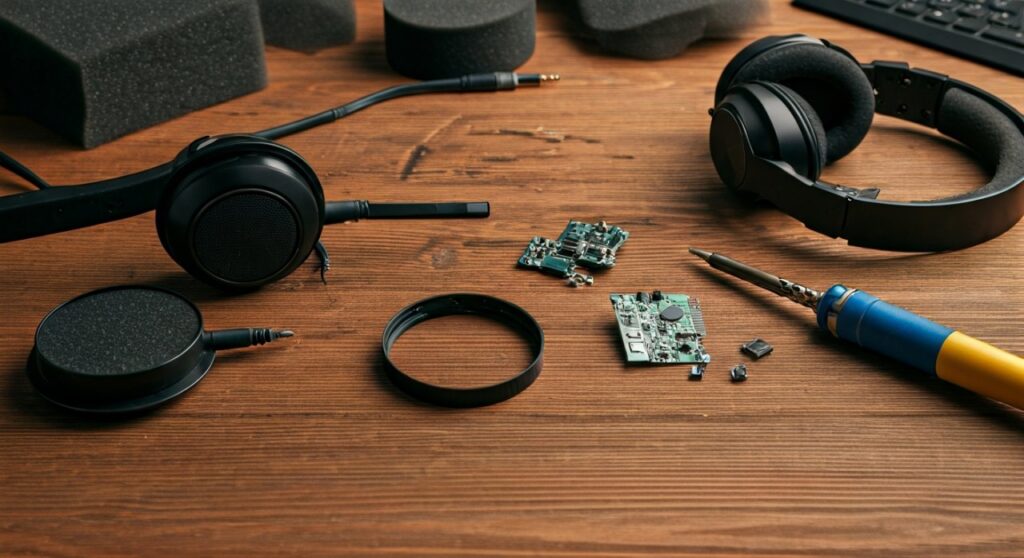
The easiest way to start is by modifying existing hardware. This method focuses on how to make sound canceling headphones by increasing the mass and seal of the ear cups.
Materials Needed:
- A pair of donor headphones (Over-ear works best).
- Acoustic memory foam or high-density cotton.
- Dynamat (butyl rubber sheets used in car audio).
- Silicone sealant or Hot glue.
- Replacement Protein Leather or Velour ear pads.
Step 1: Disassemble the Ear Cups
Carefully remove the ear pads from your headphones. Most are held on by clips or a small plastic ring. Once removed, you will see the plastic housing behind the driver (the speaker).
Step 2: Apply Mass Loading
Apply small strips of Dynamat to the inside of the plastic ear cup. This increases the mass of the plastic, preventing it from vibrating when external sound waves hit it. This is a pro-level trick used to make Sony headphones more noise cancelling by reducing “cup resonance.”
Step 3: Add Acoustic Dampening
Stuff the empty cavities of the ear cup with acoustic memory foam. Ensure you do not block the back of the driver if it is an “open-back” design, as this will ruin the sound quality. For “closed-back” models, packing this area tightly is how to make headphones noise cancelling for high-frequency drones.
Step 4: Upgrade the Seal
The “seal” is the most critical part of how to make sound proof headphones. If air can get in, sound can get in. Replace thin factory pads with extra-thick memory foam pads. Ensure the pads create a total seal around your glasses or jawline.
The Technical Build: How to Make Noise Cancelling Headphones Using Active Circuitry
If you want to go beyond simple padding, you can build an analog ANC circuit. This is a classic “Maker” project that demonstrates the physics of destructive interference.
Required Components:
- Two Electret Microphone elements.
- TL072 Dual Op-Amp (The heart of the phase inversion).
- 9V Battery and clip.
- 10k Ohm Resistors and 0.1uF Capacitors.
- A small Perforated Circuit Board.
Step 1: Positioning the Microphones
Mount one microphone on the outside of each ear cup. This microphone will “listen” to the environment. In professional Bose headphones, they often use multiple mics, but for a DIY build, one per side is sufficient.
Step 2: Wiring the Inverting Amplifier
You must wire the TL072 Op-Amp in an “inverting configuration.” The signal from the microphone enters the negative terminal, which flips the phase of the sound wave.
Step 3: Mixing the Signal
The inverted “anti-noise” signal is then mixed with your music signal. When the ambient noise from the room hits your ear at the same time the inverted signal plays through the speaker, the two sounds cancel out. This is the fundamental process of how to make bose headphones noise cancelling at a hardware level.
Step 4: Power and Testing
Connect the 9V battery. Wear the headphones in a room with a steady hum (like an air conditioner). You should hear a noticeable “drop” in the low-frequency drone when you toggle the circuit on.
Pro Tips: How to Make Sony Headphones More Noise Cancelling
Many users already own high-end gear but find it lacking. If you are looking for how to make Sony headphones more noise cancelling (specifically the WH-1000XM series), follow these optimization steps:
- Recalibrate the Optimizer: Sony headphones have a built-in atmospheric pressure sensor. Hold the “Custom” button to run the optimizer. This adjusts the ANC to your current head shape and hair length.
- Swap to Cooling Gel Pads: Brands like Dekoni make pads that are denser than the original Sony foam. A denser foam is the fastest way to make headphones noise cancelling without touching the software.
- Check the “Ambient Sound Control” settings: Ensure the Sony Headphones Connect App isn’t accidentally set to “Wind Noise Reduction,” which actually lowers the overall ANC strength.
How to Make Bose Headphones Noise Cancelling (Troubleshooting & Mods)
If you own a pair of Bose QuietComfort and they aren’t performing well, you don’t need to “make” them noise-cancelling—you need to restore them.
- Replace Worn Cushions: Bose tech relies heavily on the “acoustic seal.” If your cushions are cracked, the ANC will fail. Replacing them is how to make bose headphones noise canceling like they were on day one.
- Firmware Downgrades/Updates: Sometimes firmware updates can alter the ANC profile. Check community forums like Reddit (r/bose) to see if a specific version is recommended for your model.
- Internal Mic Cleaning: Use compressed air to carefully clean the tiny mesh grilles on the outside of the Bose ear cups. If these are clogged with dust, the microphones cannot “hear” the noise to cancel it.
Comparing DIY vs. Professional Noise Cancelling Options
| Feature | DIY Passive | DIY Active (ANC) | Professional (Bose/Sony) |
|---|---|---|---|
| Cost | $10 – $30 | $40 – $70 | $250 – $400 |
| Low Frequency Block | Poor | Good | Excellent |
| High Frequency Block | Excellent | Average | Excellent |
| Portability | High | Low (Bulky) | Very High |
| Battery Life | N/A | 10-15 Hours | 30+ Hours |
Advanced Techniques: Using Software as an ANC Tool
Sometimes the best way to make sound canceling headphones is to use your PC or Smartphone as the processor.
- Krisp.ai: This software uses AI to remove background noise from your microphone and your incoming audio. It is essentially “Digital ANC” for your computer.
- Equalizer APO: For Windows users, you can use this to create a “Negative Gain” profile for specific frequencies that annoy you (like a constant fan hum).
- Active Sound Isolation Apps: Some apps use your phone’s microphone to play “Pink Noise” or “White Noise” that is tuned to mask the specific frequencies of your environment.
Safety Considerations When Building DIY Headphones
When learning how to make noise cancelling headphones, safety should be your priority.
- Soldering Safety: Always work in a ventilated area. Lead-based solder fumes are toxic.
- Battery Safety: Do not short-circuit your 9V batteries. If the circuit feels hot, disconnect the power immediately.
- Volume Warning: When testing your ANC circuit, start with the volume at zero. A “feedback loop” in an ANC circuit can create a high-pitched squeal that could damage your hearing.
- Situational Awareness: Do not wear your DIY sound proof headphones while cycling or driving. The goal is to block noise, but you must remain aware of emergency sirens or horns.
Frequently Asked Questions (FAQs)
Can I turn any headphones into noise-cancelling ones?
Yes, you can improve any headphones’ isolation. However, how to make headphones noise cancelling effectively depends on the “seal.” Over-ear, closed-back headphones are the best candidates for modification because they provide more physical space for dampening materials and circuitry.
Does adding foam really work for soundproofing?
Absolutely. High-density acoustic foam converts sound energy into small amounts of heat through friction. While it won’t block 100% of noise, it is the most effective way to make sound proof headphones for high-pitched environmental sounds.
Why do my DIY ANC headphones have a “hissing” sound?
This is known as the “noise floor.” Cheap Op-amps and microphones often introduce electronic hiss. To fix this, use high-quality components like the Burr-Brown line of amplifiers, though these are more expensive.
How do I make my Bose headphones noise canceling again if the ANC is weak?
Most Bose issues are related to the ear pads. If air is leaking through the cushions, the pressure-based ANC system cannot calibrate. Buy high-quality third-party replacement pads if the originals are worn out.
Is it cheaper to build or buy noise-cancelling headphones?
Building a passive set is significantly cheaper (under $20). However, building an active electronic set that rivals the quality of Sony or Bose is difficult and may cost more in specialized tools and time than simply buying a mid-range pair on sale.