Yes, You Can Play an Electric Guitar with Headphones—Here’s How
Yes, you can absolutely play an electric guitar with headphones, but you cannot simply plug your headphones directly into the guitar’s output jack. Because an electric guitar produces a low-level high-impedance signal, you need an intermediary device—such as a guitar amplifier, a headphone amp, or an audio interface—to boost the signal and provide the necessary “cab simulation” for a professional sound.
Key Takeaways: How to Play Silently
If you are in a rush to start practicing without waking the neighbors, here is the essential information:
- Direct Connection Fails: Plugging headphones into a guitar produces almost no sound because the signal is too weak and the connectors don’t match (1/4″ mono vs. 3.5mm stereo).
- Best Portable Option: Use a micro headphone amplifier like the Fender Mustang Micro or Vox AmPlug.
- Best Home Studio Option: Connect your guitar to a computer/laptop via an audio interface (like the Focusrite Scarlett).
- Essential Gear: You will likely need a 3.5mm to 1/4″ adapter if your headphones have a small jack and your amp has a large one.
- Sound Quality Tip: Ensure your device has Cabinet Emulation (Cab Sim), or your guitar will sound thin and “fizzy.”
Why You Can’t Plug Headphones Directly Into a Guitar
It is a common mistake for beginners to try and plug their Sony or Sennheiser headphones directly into the guitar.
First, the physical jacks are different. A guitar uses a 1/4-inch (6.35mm) TS mono jack, while most headphones use a 3.5mm TRS stereo jack. Even if you use an adapter, the result will be disappointing.
The output from an electric guitar is a “Hi-Z” (high impedance) signal. This signal is far too weak to drive the speakers inside your headphones. Furthermore, without a preamp and a speaker simulator, the raw signal of an electric guitar sounds harsh and metallic. You need a device to act as the “brain” between your instrument and your ears.
Method 1: Using a Traditional Guitar Amplifier
The most common way to play electric guitar with headphones is by using the “Phones” or “Headphone Out” jack on your existing practice amp.
Most modern solid-state and modeling amplifiers, such as the Boss Katana or Positive Grid Spark, feature a dedicated headphone output. This is the simplest method because it requires no extra gear other than your standard guitar cable.
Steps to Connect:
- Turn the Master Volume on your amplifier all the way down.
- Plug your guitar into the Input jack using a standard instrument cable.
- Plug your headphones into the Phones jack.
- If your headphones have a small 3.5mm plug and the amp has a large hole, use a 1/4″ gold-plated adapter.
- Slowly increase the volume while playing to avoid damaging your hearing.
Pro Insight: Be aware that some older tube amps (valve amps) should never be turned on without a speaker connected unless they have a “Internal Load” or a specific “Silent Mode.” Running a tube amp without a load can blow your transformers.
Method 2: Micro Headphone Amplifiers (The Most Portable Way)
If you want to practice on the couch, in bed, or while traveling, a micro headphone amp is the gold standard. These are tiny devices that plug directly into your guitar’s output jack.
These devices have become incredibly sophisticated. The Fender Mustang Micro, for example, includes over 12 different amp models and effects like reverb and delay.
| Feature | Micro Headphone Amp | Traditional Amp |
|---|---|---|
| Portability | Fits in a pocket | Heavy/Stationary |
| Power Source | Rechargeable Battery | Wall Outlet |
| Silent Play | Primary Purpose | Optional Feature |
| Connectivity | Bluetooth (often included) | Rare in older models |
Recommended Micro Amps:
- Fender Mustang Micro: The most versatile, featuring USB-C recording and Bluetooth.
- Vox AmPlug 2 Series: Affordable and specific (e.g., “AC30” or “Metal” versions).
- NUX Mighty Plug Pro: Offers deep app integration and IR (Impulse Response) loading.
Method 3: Using an Audio Interface and PC/Mac
For guitarists who want to record their progress or play along with YouTube backing tracks, an audio interface is the professional choice. This setup allows you to use Plugin Suites (like Neural DSP or AmpliTube) that sound exactly like expensive studio gear.
What do I need to play electric guitar with headphones on a computer?
- An Audio Interface (e.g., Focusrite Scarlett 2i2 or PreSonus AudioBox).
- A DAW (Digital Audio Workstation) or standalone guitar software.
- A pair of Studio Monitor Headphones.
The Setup Process:
- Connect the interface to your computer via USB.
- Plug your guitar into the Hi-Z/Instrument Input on the interface.
- Plug your headphones into the interface’s headphone jack (not the computer’s jack to avoid latency).
- Open your software and select the interface as your input/output device.
Expert Tip: Latency is the delay between hitting a string and hearing the sound. To fix this, always use the dedicated ASIO drivers (on Windows) provided by the interface manufacturer.
Method 4: Multi-Effects Pedals and Modelers
Digital floorboards, often called Modelers, are essentially “studios in a box.” High-end units like the Line 6 Helix, Neural DSP Quad Cortex, or more affordable options like the Valeton GP-200 are designed with headphone jacks.
These devices use Impulse Responses (IRs). An IR is a digital snapshot of a real guitar cabinet. This is why playing through a modeler with headphones often sounds better than playing through a cheap physical amp; it mimics the sound of a professionally mic’d studio cabinet.
Choosing the Right Headphones for Electric Guitar
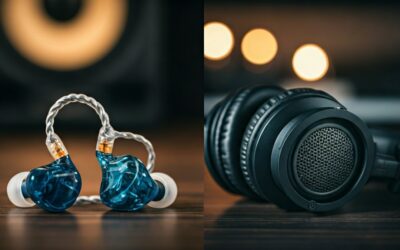
Not all headphones are created equal for guitar practice. While you can use your standard earbuds, you will lose a lot of the frequency range.
Open-Back vs. Closed-Back
- Closed-Back (Recommended): These provide the best isolation. They prevent sound from leaking out (so you don’t annoy others) and prevent outside noise from coming in. The Audio-Technica ATH-M50x is a industry standard here.
- Open-Back: These offer a more “airy” and natural soundstage, feeling like the amp is in the room with you. However, they leak sound. The Beyerdynamic DT 990 Pro is a top choice for comfort.
Avoid Bluetooth Headphones (The Latency Trap)
Do not use standard Bluetooth headphones (like AirPods) for live guitar practice. Bluetooth technology has a significant lag (latency). When you pluck a string, you won’t hear the note until 100-200 milliseconds later. This makes it impossible to stay in time.
If you must go wireless, you need a dedicated 2.4GHz Digital Wireless System designed for instruments, such as the Boss Waza-Air.
Step-by-Step Guide: How to Play Electric Guitar with Headphones (The Budget Setup)
If you are a beginner looking for the most cost-effective way to get started, follow this specific guide.
Step 1: Purchase a Budget Micro Amp
Buy a Vox AmPlug 2 (Blues or Rock version). It costs roughly $40-$50.
Step 2: Check Your Headphones
Ensure you have wired headphones. If your headphones have a built-in microphone (like phone earbuds), you may experience a “thin” sound or cutouts. Use a TRS (Tip-Ring-Sleeve) cable for best results.
Step 3: Connection
Plug the AmPlug directly into your guitar. If you have a Stratocaster, the recessed jack might be tight, but the AmPlug’s plug rotates 180 degrees to fit.
Step 4: Adjust the Gain and Tone
Start with the Gain low. Headphone amps can be quite “noisy” (hissing) if the gain is cranked too high. Use the Tone knob to roll off high-end “fizz.”
Technical Considerations: Impedance and Volume Safety
When you play electric guitar with headphones, you are placing speakers directly against your eardrums. Guitar signals have high dynamic peaks. A “clean” note might be quiet, but a “heavy” chord can spike the volume significantly.
- Impedance Matching: Most guitar gear is designed for headphones between 32 and 80 ohms. If you use high-impedance “Audiophile” headphones (like 250-600 ohm Sennheisers), the volume might be very low.
- Hearing Protection: Limit practice sessions to 60 minutes at moderate volumes. “Ear fatigue” happens faster with headphones than with an open-air amp.
Common Troubleshooting
Q: I hear a loud buzzing sound in my headphones.
- Solution: This is often “EM Interference.” Move away from your computer monitor or fluorescent lights. Ensure your guitar’s electronics are properly shielded.
Q: The sound is only coming out of one ear.
- Solution: You are likely using a mono adapter in a stereo jack or vice versa. Ensure your 1/4″ adapter is a Stereo (TRS) adapter (it will have two black rings on the tip).
Q: The sound is very distorted and “fuzzy.”
- Solution: Your device likely lacks Cabinet Emulation. Without a “Cab Sim,” you are hearing the raw, unpleasant high frequencies of the guitar. Consider upgrading to a device like the Fender Mustang Micro.
Frequently Asked Questions (FAQs)
Can I plug my headphones into my guitar pedals?
Usually, no. Most individual pedals (like a Boss DS-1) do not have enough power to drive headphones. However, some specific pedals, like the Strymon Iridium or Walrus Audio ACS1, are “Amp Modelers” and include a dedicated headphone jack for this exact purpose.
What do I need to play electric guitar with headphones if I have a Mac?
You need a USB Audio Interface. Once connected, you can open GarageBand (which is free), create a “Guitar Track,” and choose from dozens of virtual amplifiers. This is one of the highest-quality ways to play silently.
Do I need special headphones for electric guitar?
While not “special,” you should use Studio Monitor Headphones. Consumer headphones (like Beats) often have a “Bass Boost” that colors the sound, making your guitar sound muddy. Studio headphones provide a “flat” response, letting you hear your true tone.
Can I play my electric guitar through my phone?
Yes, but you need a mobile interface like the IK Multimedia iRig 2 or iRig HD 2. You plug your guitar into the iRig, the iRig into your phone, and your headphones into the iRig. You then use apps like AmpliTube or Tonebridge.