How Much Are Wired Headphones? The Ultimate Price Guide for 2026
How much are wired headphones usually costs between $20 and $200 for the average consumer, though prices can span from $5 for budget earbuds to over $5,000 for elite audiophile systems. Most high-quality wired headphones that provide professional-grade sound and durability fall within the $100 to $300 range, offering significantly better value per dollar than their wireless counterparts.
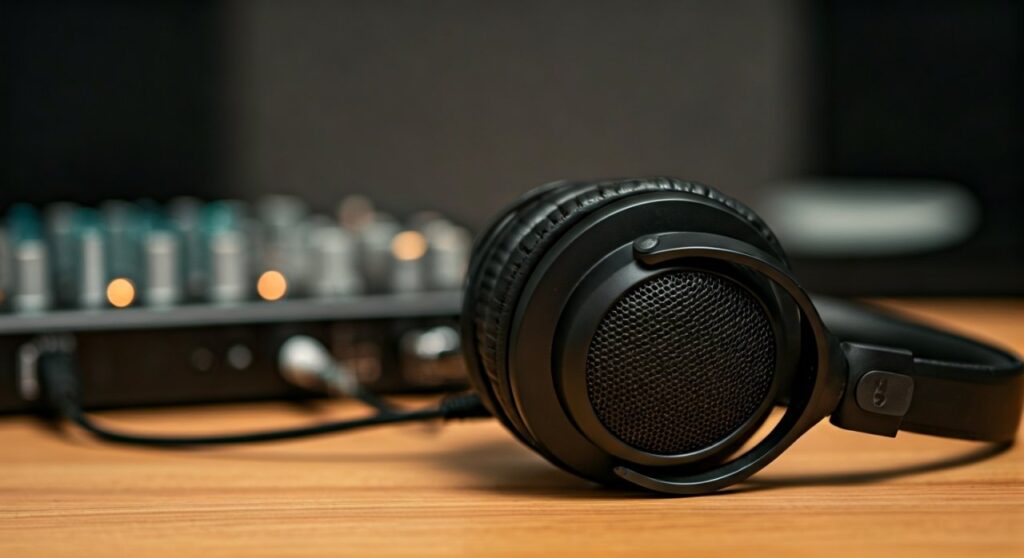
When you invest in wired audio, you are primarily paying for driver quality, build materials, and acoustic engineering rather than batteries or Bluetooth chips. Having tested hundreds of pairs in studio environments, I’ve found that a $150 wired headphone almost always outperforms a $300 wireless model in terms of raw audio fidelity and longevity.
Key Takeaways: Wired Headphone Pricing at a Glance
If you are in a hurry, here is the essential breakdown of what you can expect to pay for wired audio today:
- Budget Tier ($5 – $30): Best for casual listening or emergency replacements. Expect plastic builds and non-detachable cables.
- Value Tier ($30 – $100): The “sweet spot” for many. You start seeing studio-grade entry models and durable construction.
- Mid-Range/Prosumer ($100 – $300): This is where high-fidelity audio begins. Features include premium padding, detachable cables, and balanced sound signatures.
- High-End/Audiophile ($300 – $1,000+): Focuses on niche technologies like Planar Magnetic or Electrostatic drivers.
- Direct Comparison: While wondering how much is wireless headphones in comparison, expect to pay a 30-50% premium for wireless tech at the same audio quality level.
Understanding the Price Tiers: How Much Is Wired Headphones?
To understand how much is wired headphones in the current market, we must categorize them by their intended use and internal components. Pricing is rarely arbitrary; it reflects the complexity of the transducers (drivers) and the quality of the housing.
The Budget Entry Level ($5 – $49)
In this bracket, manufacturers focus on mass production. You will find brands like Skullcandy, Sony (basic models), and KZ.
- What you get: Basic dynamic drivers, mostly plastic construction, and integrated microphones.
- The Trade-off: The cables are usually thin and prone to breaking at the jack. Once the wire frays, the headphones are usually e-waste.
- Best for: Commuting, kids, or office workers who need a simple “plug and play” solution.
The Professional & Studio Standard ($50 – $199)
This is where the most iconic headphones live. Models like the Audio-Technica ATH-M50x or the Sennheiser HD 560S dominate this space.
- What you get: Reference-class sound, replaceable ear pads, and often a choice of coiled or straight detachable cables.
- Durability: These are built to survive a studio drop. Many engineers use the same pair for over a decade.
- Investment Value: This tier offers the highest “Return on Investment” (ROI) in the audio world.
The High-Fidelity & Audiophile Tier ($200 – $700)
As you move up, you stop paying for “features” and start paying for acoustic transparency.
- Driver Tech: You begin to see Planar Magnetic drivers (like those from Hifiman or Audeze) which use a thin film instead of a traditional cone to move air.
- Materials: Expect genuine leather, magnesium frames, and high-purity copper cables.
- Requirement: At this price point, you often need a dedicated DAC (Digital-to-Analog Converter) or Amplifier to get the full value out of the headphones.
The Ultra-High-End Luxury ($1,000 – $5,000+)
This tier is for enthusiasts and master engineers. Brands like Focal, Meze Audio, and Stax compete here.
- Innovation: These headphones often use exotic materials like Beryllium or Carbon Fiber.
- Soundstage: The goal is to make it sound like you are sitting in a room with a $100,000 speaker system.
Wired vs. Wireless: A Cost-Benefit Analysis
Many shoppers ask, “how much are wireless headphones” compared to wired ones? On average, wireless technology adds an “invisible tax” to your purchase.
| Feature | Wired Headphones | Wireless Headphones |
|---|---|---|
| Starting Price | ~$5 | ~$20 |
| Quality at $100 | Professional/Studio Grade | Entry-level Consumer |
| Lifespan | 10 – 20+ years | 2 – 5 years (Battery decay) |
| Hidden Costs | None (unless an Amp is needed) | Charging cables, Battery replacements |
| Latency | Zero (Perfect for gaming/editing) | Variable (Bluetooth lag) |
When asking how much is wireless headphones, remember that you are paying for the Qualcomm Bluetooth chip, the Lithium-ion battery, and the Internal DAC/Amp. In a wired headphone, 100% of your money goes toward the physical components that produce sound.
Step-by-Step: How to Determine Your Budget for Wired Headphones
Choosing how much are wired headphones worth for your specific needs requires a systematic approach. Follow these steps to avoid overspending:
Step 1: Identify Your Primary Use Case
- Gaming: Look for the $80 – $150 range. You need a wide “soundstage” to hear footsteps, but you don’t need $1,000 accuracy.
- Critical Listening/Mixing: Aim for $150 – $400. Accuracy is paramount here.
- Casual YouTube/Work: Stay under $50.
Step 2: Factor in “Life-Cycle” Costs
A $100 pair of headphones with a detachable cable is cheaper in the long run than a $40 pair with a fixed cable. Why? Because cables are the #1 failure point. Replacing a cable costs $15; replacing the whole headphone costs $40.
Step 3: Check Impedance Requirements
If you buy high-end wired headphones (usually over $200), check the Ohms (Ω).
- Low Impedance (Under 32Ω): Works with phones and laptops.
- High Impedance (Above 100Ω): Requires an external amplifier (adds $50 – $200 to your total cost).
Key Factors That Drive Up the Price of Wired Headphones
Why does one pair cost $20 while another costs $2,000? It comes down to four major variables:
- Driver Type: Dynamic drivers (common) are cheap to make. Planar magnetics require precision-etched circuits on thin films. Electrostatic drivers require a specialized power supply and are the most expensive.
- Acoustic Tuning: High-end companies spend years in R&D using Head and Torso Simulators (HATS) to tune the frequency response. You are paying for that engineering time.
- Country of Origin: Headphones hand-assembled in Germany (Sennheiser/Beyerdynamic) or France (Focal) carry higher labor costs than mass-produced units from large factories.
- Cable Quality: High-end wired headphones often include Silver-plated oxygen-free copper (OFC) cables. While controversial in terms of “sound improvement,” they are significantly more expensive to manufacture.
Realistic Expectations: What Does Your Money Buy?
- Under $20: You will get sound, but it might be “muddy.” Use these for audiobooks or podcasts where detail isn’t critical.
- $50 – $100: You get “The Legends.” The Sony MDR-7506 (approx. $99) has been the industry standard in TV and Film for 30 years.
- $200 – $500: You enter the world of “Diminishing Returns.” A $400 headphone sounds better than a $100 one, but it is not “4 times better.” It might be 20% better.
Frequently Asked Questions (FAQs)
Why are wired headphones sometimes more expensive than wireless ones?
While basic wired sets are cheap, high-end wired headphones use massive, high-quality drivers and premium materials that wireless sets cannot accommodate due to battery and weight constraints.
Is it worth paying more than $300 for wired headphones?
For the average listener, no. However, if you are a professional musician, audio engineer, or a dedicated audiophile seeking the most realistic sound reproduction possible, the difference between a $300 and $1,000 pair is noticeable in terms of “detail retrieval” and “imaging.”
Does the price of a wired headphone include a microphone?
Usually, “Audiophile” or “Studio” wired headphones (over $100) do not include a microphone. They focus entirely on output. “Gaming” wired headsets or “Mobile” wired earbuds usually include a mic.
How much should I spend on my first “good” pair of wired headphones?
A budget of $80 to $120 is the perfect entry point. This allows you to purchase “Industry Standard” models that will last for a decade and provide a massive jump in quality over generic earbuds.
Are expensive wired headphones more durable?
Generally, yes. Higher-priced models use metal gimbals, spring steel headbands, and replaceable parts. A $200 professional pair is often designed to be repaired, whereas a $20 pair is designed to be replaced.
**
**
**
**