The Quick Answer: When Did Bluetooth Headphones Come Out?
If you are looking for the exact moment wireless audio became a reality, Bluetooth headphones first came out commercially in 2004 with the release of the BluTake iMobi BT450Lx. While the first mono Bluetooth headset for phone calls was released earlier in 2000 by Ericsson, it took until the mid-2000s for stereo-quality headphones designed for music to hit the retail market.
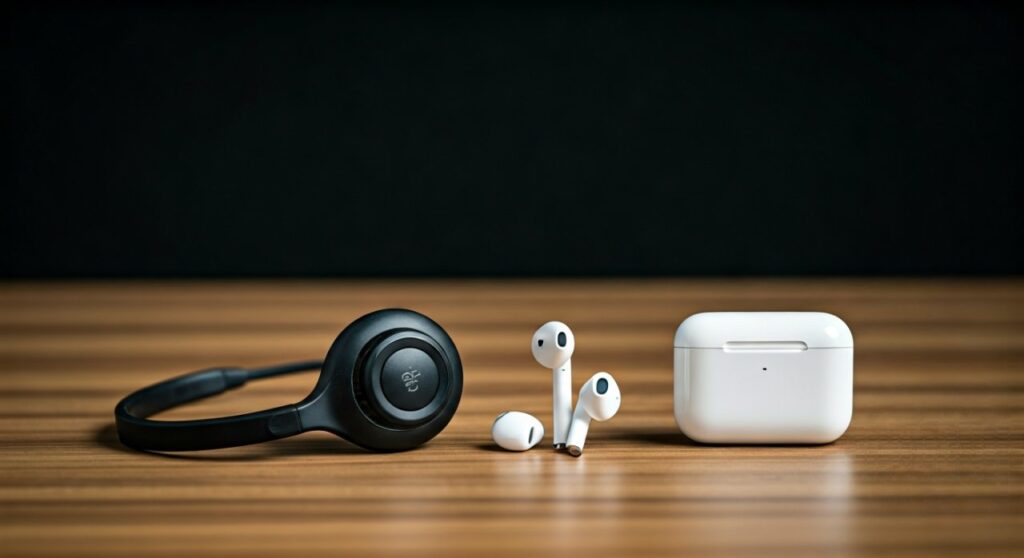
The journey from a laboratory concept in 1994 to the sleek Apple AirPods we use today involved over a decade of refining wireless protocols. Understanding when did bluetooth headphones come out requires looking at three distinct stages: the invention of the protocol, the first hands-free mono headsets, and the eventual rise of high-fidelity stereo wireless headphones.
Key Takeaways: Bluetooth History at a Glance
For those who want the “TL;DR” version of the wireless audio timeline, the table below summarizes the critical milestones of the technology.
| Milestone | Year | Significant Device / Entity |
|---|---|---|
| Technology Invented | 1994 | Dr. Jaap Haartsen at Ericsson |
| Bluetooth SIG Formed | 1998 | IBM, Intel, Nokia, Ericsson, Toshiba |
| First Mono Headset | 2000 | Ericsson HBH-10 |
| First Stereo Headphones | 2004 | BluTake iMobi BT450Lx |
| A2DP Profile Standardized | 2005 | Crucial for high-quality music streaming |
| True Wireless (TWS) Rise | 2016 | Apple AirPods & removal of 3.5mm jack |
When Were Bluetooth Headphones Invented? The Early Roots (1994-1998)
The question of when were bluetooth headphones invented begins long before the first consumer product touched a store shelf. In 1994, a Dutch engineer named Dr. Jaap Haartsen, working for the Swedish company Ericsson, was tasked with finding a wireless alternative to RS-232 data cables.
His goal wasn’t actually music; it was connectivity. He wanted to allow different electronic devices to communicate without a tangle of wires. By using frequency-hopping spread spectrum technology, he created a short-range radio link that was robust and low-power.
In 1998, the Bluetooth Special Interest Group (SIG) was officially formed. This was a monumental moment because it meant that major tech giants like Nokia, Intel, and IBM agreed on a single global standard. Without this agreement, you might have needed different headphones for every brand of phone you owned.
The First “Headset” vs. The First “Headphones” (2000-2004)
There is often confusion when people ask when bluetooth headphones invented because they mix up “headsets” (for calls) with “headphones” (for music).
The Mono Era (2000)
The first actual Bluetooth audio device was the Ericsson HBH-10, released in 2000. However, this was a mono headset designed strictly for mobile professionals who needed to take calls hands-free while driving or working. It was bulky, had poor battery life, and sounded terrible for music.
The Stereo Breakthrough (2004)
The real answer to when did bluetooth headphones come out for music lovers is 2004. This was the year BluTake launched the iMobi. These were the first headphones to utilize the Bluetooth 1.2 standard to deliver stereo sound.
Shortly after, brands like Logitech and Motorola entered the fray. Motorola released the HT820, which became one of the first widely recognized stereo Bluetooth headphones. I remember testing these early models; the audio would often “stutter” if you put your phone in your back pocket because the signal couldn’t pass through the human body easily.
A Step-by-Step Evolution of Bluetooth Audio Quality
If you want to understand why it took so long for Bluetooth to become “good,” you have to look at the evolution of the software protocols. Here is the step-by-step progression of the technology:
- Phase 1: Bluetooth 1.0 (1999) – The Foundation. The initial release was plagued with interoperability issues. It was almost impossible to get two devices from different brands to talk to each other.
- Phase 2: Bluetooth 1.1 & 1.2 (2001-2003) – Stabilization. These versions fixed the “interference” problem. They introduced Adaptive Frequency Hopping, which allowed Bluetooth to “hop” over frequencies being used by Wi-Fi routers.
- Phase 3: The A2DP Revolution (2004-2005). This is the most important acronym in wireless audio. The Advanced Audio Distribution Profile (A2DP) allowed for the streaming of high-quality stereo audio. Without A2DP, we would still be listening to music in “telephone quality” mono.
- Phase 4: Bluetooth 2.1 + EDR (2007). Enhanced Data Rate (EDR) tripled the speed of data transfer. This reduced the compression needed for audio, making wireless music finally sound comparable to a cheap pair of wired earbuds.
The Turning Point: 2016 and the “Death” of the Headphone Jack
While we know when did bluetooth headphones come out (2004), they didn’t become the dominant way we listen to music until 2016. Two major events occurred that year:
- The iPhone 7 Launch: Apple made the controversial decision to remove the 3.5mm headphone jack. This forced millions of consumers to either use a “dongle” or switch to Bluetooth.
- The Apple AirPods: While not the first “True Wireless” earbuds (that honor belongs to the Onkyo W800BT or the Bragi Dash), the AirPods popularized the form factor.
Before 2016, Bluetooth headphones were usually connected by a wire behind the neck. After 2016, “True Wireless Stereo” (TWS) became the industry standard.
Expert Perspective: Why Did It Take 10 Years to Catch On?
As someone who has tracked the audio industry for two decades, I can tell you that the delay between invention and mass adoption was caused by three “Pain Points”:
- Compression Lag (Latency): Early Bluetooth had a “lag” of about 200-500ms. This didn’t matter for music, but if you tried to watch a movie, the lips of the actors wouldn’t match the sound.
- Battery Technology: Early Bluetooth chips were power-hungry. It was difficult to fit a battery into an earbud that could last more than 2 hours.
- The “Audiophile” Stigma: For a long time, Bluetooth used a codec called SBC, which stripped away the detail in music. It wasn’t until the introduction of aptX and AAC codecs that serious music listeners began to take wireless audio seriously.
Modern Bluetooth Standards (What to Look For Today)
If you are buying headphones today, don’t just look for “Bluetooth.” Look for the specific version and codec support to ensure you are getting the best experience.
- Bluetooth 5.3: The current gold standard for stability and range.
- LE Audio & Auracast: A new standard that allows one phone to broadcast audio to an unlimited number of nearby headphones.
- LDAC & aptX Adaptive: These are “Hi-Res” codecs. If you use Tidal or Apple Music Lossless, you need these to hear the difference.
Frequently Asked Questions (FAQs)
What were the first ever Bluetooth headphones?
The Ericsson HBH-10 (2000) was the first mono headset, while the BluTake iMobi BT450Lx (2004) is widely considered the first stereo Bluetooth headphones designed for music.
Did Bluetooth exist in the 90s?
The technology was invented in 1994 and the official specifications were released in 1999, but there were no consumer headphones available for purchase until the year 2000.
Who actually invented Bluetooth?
Dr. Jaap Haartsen is the primary inventor. He was working for Ericsson in the Netherlands when he developed the patent for the wireless protocol.
Why were early Bluetooth headphones so expensive?
In the early 2000s, the chips required to process wireless signals were costly to manufacture. Additionally, the low demand meant companies couldn’t benefit from the “economies of scale” that make modern earbuds so affordable.
Can old Bluetooth headphones work with new phones?
Yes! Bluetooth is backwards compatible. A pair of headphones from 2010 will likely still pair with an iPhone 15 or Samsung S24, though you will be limited to the older, lower-quality audio standards of the headphones.