

Understanding High-Fidelity: What Are Audiophile Headphones?
What are audiophile headphones? Audiophile headphones are high-fidelity audio devices engineered to reproduce sound with the highest possible accuracy and minimal distortion. Unlike standard consumer headphones that often boost bass or treble to sound “fun,” audiophile models prioritize transparency, detail, and a neutral sound signature to mirror the original recording exactly as the artist intended.
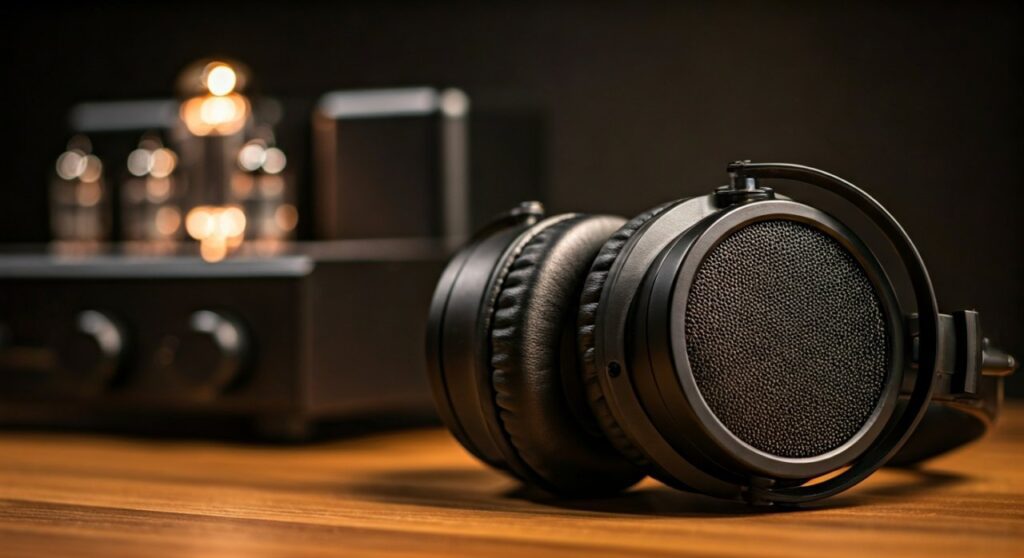
Most listeners describe the experience of using audiophile headphones as “lifting a veil” off their music. You begin to notice subtle nuances, such as the sound of a singer’s breath, the texture of a cello bow, or the precise placement of instruments in a 3D space. These devices aren’t just for listening; they are precision instruments for experiencing art.
Key Takeaways: Audiophile Headphones at a Glance
If you are in a hurry, here are the essential facts about what is audiophile headphones and why they matter.
| Feature | Consumer Headphones | Audiophile Headphones |
|---|---|---|
| Primary Goal | Portability and “colored” sound | Sonic accuracy and detail retrieval |
| Back Design | Mostly Closed-back | Often Open-back for a wider soundstage |
| Driver Types | Standard Dynamic | Planar Magnetic, Electrostatic, or High-end Dynamic |
| Connectivity | Bluetooth / Wireless | Primarily Wired for lossless signal |
| Power Needs | Easy to drive (Phone/Laptop) | Often requires a DAC and Headphone Amp |
| Durability | Plastic / Disposable | Metal, Wood, Leather / Repairable |
The Core Characteristics of Audiophile Headphones
To truly understand what are audiophile headphones, we must look beyond the marketing jargon. These devices focus on three pillars: Clarity, Soundstage, and Imaging.
Transparency and Neutrality
Most consumer brands (like Beats or Sony’s entry-level lines) use a “V-shaped” sound profile. This means the bass and treble are boosted, which can hide the middle frequencies where vocals and guitars live.
Audiophile headphones aim for a “flat” or “neutral” response. This ensures that no single frequency range overpowers another. When I first tested the Sennheiser HD600, I was shocked by how “boring” they sounded initially—until I realized I was hearing the actual recording without artificial “makeup” for the first time.
Soundstage and Imaging
Soundstage refers to the perceived width and depth of the audio. Standard earbuds feel like the music is playing inside your skull. High-end headphones, especially open-back models, make it feel like you are sitting in a concert hall.
Imaging is the ability to pinpoint exactly where a sound is coming from. In a high-quality track, you should be able to “see” that the drums are slightly to the left, while the backup singers are standing two feet behind the lead vocalist.
Technical Components: What’s Inside the Earcups?
The engineering behind what is audiophile headphones involves sophisticated driver technologies. While your basic gym headphones use cheap mass-produced drivers, audiophile gear uses specialized components.
Dynamic Drivers (The Reliable Standard)
Most headphones use Dynamic Drivers. They work like miniature speakers, using a voice coil to move a diaphragm.
While common, audiophile versions use premium materials like Beryllium or Biocellulose. Brands like Focal are famous for their “M-shaped” dome drivers that provide incredible punch and dynamics.
Planar Magnetic Drivers
Planar magnetic headphones use a flat, thin diaphragm suspended between two magnetic arrays. Because the entire diaphragm moves simultaneously, the sound is incredibly fast and detailed with very low distortion.
Models like the HiFiMAN Sundara or Audeze LCD-2 are legendary in this category. They offer a “snappy” sound that is perfect for complex orchestral pieces or fast-paced electronic music.
Electrostatic Drivers
These are the “Holy Grail” of the audio world. They use a thin film charged with high-voltage electricity.
Electrostatic headphones, like those from Stax, require specialized energizers (amplifiers) to work. The result is a sound that feels weightless, with a level of detail that traditional drivers simply cannot match.
Design Philosophies: Open-Back vs. Closed-Back
When researching what are audiophile headphones, you will notice two distinct physical designs. Each serves a specific purpose for the listener.
Open-Back Headphones
These have grilles or mesh on the outside of the earcups, allowing air and sound to pass through freely.
- Pros: Massive soundstage, natural “airy” feel, less ear fatigue.
- Cons: Zero noise isolation. Everyone around you can hear your music, and you can hear the hum of your air conditioner.
- Best For: Critical listening in a quiet home office.
Closed-Back Headphones
These are sealed on the outside to trap sound.
- Pros: Excellent bass impact, keeps your music private, blocks out environmental noise.
- Cons: Narrower soundstage, can feel “boxy” or “congested” compared to open models.
- Best For: Recording studios, commuting, or listening in shared spaces.
The Importance of the “Audio Chain”
Buying the headphones is only half the battle. Because audiophile headphones are designed for precision, they often require a high-quality signal.
The Role of the DAC (Digital-to-Analog Converter)
Your phone and laptop have built-in DACs, but they are often noisy and low-quality. An external DAC ensures that the digital file is converted into an analog signal without adding hiss or losing data.
The Headphone Amplifier
Many high-end headphones have high impedance (measured in Ohms). This means they need more “swing” or power to move the drivers effectively.
Using a pair of Sennheiser HD800S (300 Ohms) directly out of a laptop will result in thin, quiet sound. A dedicated Headphone Amp provides the necessary current to bring the headphones to life, ensuring full bass extension and dynamic range.
How to Choose Your First Pair of Audiophile Headphones
Entering the world of high-fidelity audio can be overwhelming. Based on years of testing gear, I recommend following this step-by-step process.
Step 1: Identify Your Preferred Sound Signature
Do you like a warm, relaxing sound, or do you prefer “analytical” sound where every flaw in the recording is visible?
- Warm: Smooth highs, slightly boosted mid-bass (e.g., Sennheiser HD650).
- Analytical: Bright highs, very fast transients, unforgiving (e.g., Beyerdynamic DT 1990 Pro).
Step 2: Consider Your Listening Environment
If you live in a noisy apartment or want to listen at the library, an open-back headphone is a poor choice. If you have a dedicated listening room, the open-back design will almost always provide a superior experience.
Step 3: Check the Power Requirements
Look at the impedance and sensitivity specs.
- Low Impedance (under 32 Ohms): Can be powered by a phone or dongle.
- High Impedance (above 100 Ohms): You will likely need a dedicated amplifier to get the best performance.
Step 4: Budget for the “Hidden” Costs
Don’t spend your entire $500 budget on the headphones alone. A good rule of thumb is the 60/40 rule: spend 60% on the headphones and 40% on the DAC/Amp and high-quality music files (like Tidal HiFi or Qobuz).
Why Audiophile Headphones Are a Worthwhile Investment
You might wonder why someone would spend $1,000 or more on headphones. The value lies in longevity and emotional connection.
Standard consumer electronics are designed with “planned obsolescence.” The batteries die, or the plastic hinges break within two years. In contrast, many audiophile headphones are built to last decades. Parts like earpads and cables are user-replaceable.
More importantly, these headphones change how you relate to music. I remember listening to Pink Floyd’s “The Dark Side of the Moon” on a pair of Planar Magnetic headphones and hearing clocks ticking in the background that I never knew existed. It turns music from background noise into a visceral, immersive experience.
Common Myths About Audiophile Headphones
As you dive deeper into the community, you will encounter several misconceptions that can lead to wasted money.
- Myth 1: Higher Price Always Means Better Sound. This is false. There is a point of diminishing returns. A $500 pair sounds significantly better than a $50 pair, but a $5,000 pair is only marginally “better” than a $1,000 pair.
- Myth 2: You Need Expensive Cables. Standard copper cables work perfectly fine. Avoid spending hundreds of dollars on “silver-plated” cables until you have already maximized your headphones and amp.
- Myth 3: Bluetooth is “Audiophile.” While Bluetooth codecs like LDAC and aptX HD are improving, they still involve data compression. For true audiophile performance, a wired connection remains the gold standard for lossless audio.
FAQs About Audiophile Headphones
Do I need high-resolution music files to hear a difference?
While you can hear a difference even on Spotify, high-resolution formats like FLAC, ALAC, or DSD allow audiophile headphones to truly shine. These files contain more data, which translates to better texture and less “mushy” sound.
Are audiophile headphones good for gaming?
Yes, they are often superior to “Gaming Headsets.” Because they have a wider soundstage and better imaging, you can hear footsteps and directional cues with much greater precision in games like Valorant or Call of Duty.
What is the “Burn-in” period?
Burn-in is the theory that headphone drivers need to “settle” by playing music for 40-100 hours. While some experts swear by it, others believe it is actually “mental burn-in,” where your brain simply gets used to the new sound signature.
Why are most audiophile headphones wired?
Wired connections provide a consistent, uncompressed signal and don’t require internal batteries or digital processing that can introduce noise. It ensures the purest path from the amplifier to your ears.
Can I use audiophile headphones with my iPhone?
Yes, but you will likely need a Lightning-to-3.5mm dongle or a portable DAC/Amp like the AudioQuest DragonFly or Fiio BTR15 to provide enough power and maintain sound quality.









