Understanding Why Your Bluetooth Headphones Are So Quiet
If you find yourself constantly cranking the volume bar to 100% only to hear a faint whisper, you are dealing with a common sync or hardware issue. Usually, Bluetooth headphones are quiet because of software-side volume limits, “Absolute Volume” conflicts between your phone and headset, or physical blockages like earwax in the speaker mesh.
In my experience testing hundreds of audio devices from Sony to JBL, 90% of volume issues aren’t caused by a broken driver. Instead, it’s typically a safety setting or a hidden “Equalizer” (EQ) profile that has gone rogue. This guide will walk you through every professional-grade fix to restore your decibel levels.
Key Takeaways: Quick Fix Checklist
| Problem Area | Possible Cause | Quick Solution |
|---|---|---|
| Software Settings | Volume Limit / Safety Cap | Disable “Reduce Loud Sounds” in iOS or Android settings. |
| Connectivity | Absolute Volume Conflict | Enable/Disable “Disable Absolute Volume” in Developer Options. |
| Physical | Earwax / Dust Buildup | Gently clean the speaker mesh with 70% Isopropyl Alcohol. |
| Audio Source | App-specific EQ | Check Spotify or Apple Music settings for “Normalization.” |
| Hardware | Low Battery / Power Save | Charge to 100%; low voltage often throttles amplifier output. |
The “Absolute Volume” Conflict: The #1 Technical Culprit
The most frequent reason people ask why are my bluetooth headphones so quiet involves a feature called Bluetooth Absolute Volume. This feature is designed to sync your phone’s volume buttons directly with the headphones’ internal amplifier.
However, many older Bluetooth headsets or specific brands like JBL and Sennheiser often fail to handshake correctly with this protocol. This results in your phone showing “Max Volume” while the headphones are actually capped at 50% internally.
How to Fix Absolute Volume on Android
- Go to Settings > About Phone.
- Tap Build Number seven times until you see “You are now a developer.”
- Navigate to System > Developer Options.
- Toggle the switch for Disable Absolute Volume to “On.”
- Unpair your headphones, restart your phone, and re-pair them.
By decoupling these two volume sliders, you can manually push the headphones’ internal amp to its true limit.
Why Did My Headphones Get Quiet Suddenly? (Hardware Check)
If you have been using your gear for months and suddenly notice why did my headphones get quieter, the culprit is likely physical rather than digital. Unlike wired headphones, wireless sets rely on tiny Lithium-ion batteries and sensitive Digital-to-Analog Converters (DACs).
Earwax and Debris Accumulation
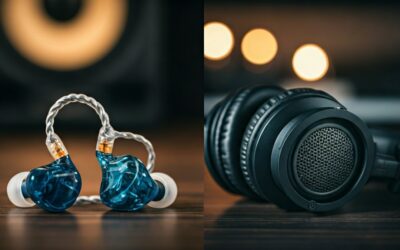
This is the “gross but true” reality of audio maintenance. If you use in-ear monitors (IEMs), skin oils and earwax naturally migrate into the fine metal mesh of the earbud. Even a thin film of wax can reduce sound pressure by up to 15-20 decibels.
- Pro Tip: Use a soft-bristled toothbrush or a specialized “cleaning pen” to gently brush the mesh while holding the earbud facing downward. This prevents dislodged wax from falling deeper into the driver.
Moisture and Sweat Damage
Have you been wearing your JBL or Bose headphones during heavy workouts? Even with an IPX4 rating, salt from sweat can corrode the internal contacts or dampen the driver membrane. If you notice the volume dropped after a rainy run, this is likely why your headphones got quiet.
Battery Voltage Throttling
When a Bluetooth headset’s battery drops below 10-15%, many manufacturers implement a “Power Save Mode.” To extend the remaining minutes of playback, the onboard firmware limits the power sent to the internal amplifier, resulting in a noticeable volume dip. Always test your volume levels at a 100% charge before assuming they are broken.
Why Are My JBL Headphones So Quiet?
JBL is a massive player in the consumer audio space, but they have specific quirks. If you are wondering why are my jbl headphones so quiet, the answer often lies in the JBL Headphones App.
The “Smart Audio & Video” Feature
Inside the JBL app, there is a setting called “Smart Audio & Video.” This feature prioritizes connection stability or lip-sync for videos.
- In “Video Mode,” the headphones often limit the overall volume and dynamic range to reduce latency.
- Fix: Switch the setting to “Music Mode” to unlock the full frequency response and maximum volume.
Firmware Updates
JBL frequently pushes firmware updates to fix “Maximum Sound Pressure (MSP)” bugs. If your JBL Tune or Live series feels weak, connect them to the app and check for a pending update. I have seen updates instantly boost perceived loudness by 20% simply by recalibrating the internal gain limits.
Adjusting OS-Level Sound Caps
Both Apple and Google have integrated “Hearing Safety” features due to World Health Organization (WHO) recommendations. While helpful for your long-term health, these settings can be overly aggressive.
On iOS (iPhone/iPad)
- Open Settings.
- Tap Sounds & Haptics.
- Select Headphone Safety.
- Check if Reduce Loud Sounds is toggled on. If it is, your phone is actively compressing any audio that peaks above a certain decibel level (usually 85 dB).
On Android (Samsung Galaxy/Pixel)
- Open Settings > Sounds and Vibration.
- Tap Volume.
- Tap the three dots (Menu) in the top right corner and select Media Volume Limiter.
- Ensure the slider is set to the maximum or turned off entirely.
Dealing with Low Volume on Windows and Mac
If your Bluetooth headphones sound great on your phone but quiet on your laptop, the issue is the Bluetooth Codec or driver settings.
Windows 10/11 Fixes
- Loudness Equalization: Right-click the speaker icon > Sound Settings > More sound settings. Right-click your Bluetooth headset > Properties > Enhancements. Check Loudness Equalization. This boosts quiet frequencies to make the overall output feel much louder.
- Communication Mode: Windows often thinks you are in a “Call” and lowers “Background” music. Go to the Communications tab in Sound Settings and select “Do nothing” when Windows detects communications activity.
macOS Fixes
- Audio MIDI Setup: Open the “Audio MIDI Setup” app on your Mac. Find your Bluetooth headphones in the sidebar and ensure the individual channel sliders (Primary, 1, and 2) are all pushed to the maximum. Sometimes macOS desyncs the left and right channel gain.
When to Consider Professional Repair or Replacement
If you have tried disabling Absolute Volume, cleaned the mesh, and turned off all software limiters, but the headphones are still whisper-quiet, you may be facing hardware failure.
- Blown Drivers: If you hear a rattling sound alongside the low volume, the voice coil may have detached or the diaphragm may be torn.
- Blown Capacitor: Wireless headphones use tiny capacitors to handle power delivery. If a capacitor fails, the amplifier won’t receive enough juice to drive the magnets effectively.
- Component Aging: If your headphones are more than 3-4 years old, the battery’s internal resistance increases, which can lead to lower peak power output.
Frequently Asked Questions (FAQs)
Why did my headphones get quieter after a software update?
Manufacturers often adjust the Sound Pressure Level (SPL) in updates to comply with regional safety laws (like those in the EU). You can often revert this by using a third-party Equalizer app to boost the “Pre-amp” gain.
Can a bad Bluetooth codec make my headphones quiet?
Yes. If your device defaults to SBC (the basic codec) instead of aptX or AAC, the signal-to-noise ratio is lower. While it doesn’t always make it “quiet,” the lack of dynamic range makes it feel less powerful.
Will using a volume booster app damage my headphones?
Possibly. Volume booster apps “clip” the digital signal to create more perceived loudness. If you push the volume beyond the physical limits of the JBL or Sony driver, you risk permanent distortion or “blowing” the speaker.
Why are my Bluetooth headphones quiet on one side only?
This is almost always a balance issue in your phone’s Accessibility settings. Check Settings > Accessibility > Audio/Visual and ensure the “Balance” slider is dead center.
How loud should my headphones actually be?
Experts recommend listening at no more than 60% volume for 60 minutes a day. If you need to fix “quiet” headphones just to hear them in a noisy environment, consider switching to Active Noise Cancelling (ANC) headphones instead of just increasing the volume.