Understanding What to Look for When Buying Headphones
To know what to look for when buying headphones, you must prioritize sound profile, comfort, connectivity, and your specific use case. Whether you are a professional producer needing flat frequency response or a commuter seeking Active Noise Cancellation (ANC), the right choice balances technical specs with ergonomic design. Start by identifying your primary environment—quiet office, noisy gym, or home studio—to narrow down the form factor and features that matter most.
Key Takeaways: What to Consider When Buying Headphones
If you are in a hurry, here are the non-negotiable factors to evaluate before making a purchase:
- Form Factor: Choose Over-ear for comfort and soundstage, In-ear for portability, or On-ear for a compact middle ground.
- Driver Type: Most use Dynamic drivers, but audiophiles may prefer the detail of Planar Magnetic drivers.
- Noise Isolation: Look for Active Noise Cancellation (ANC) if you travel frequently or work in loud environments.
- Connectivity: Check for Bluetooth 5.2+ for wireless stability and aptX or LDAC codecs for higher audio quality.
- Battery Life: Aim for at least 30 hours for over-ear wireless models and 6-8 hours per charge for true wireless earbuds.
- IP Rating: Ensure an IPX4 rating or higher if you plan on using them for exercise or in the rain.
Determining Your Ideal Form Factor: The Foundation of Choice
The first step in what to look for in headphones is deciding how the device will sit on or in your ears. This choice impacts everything from long-term comfort to the physical size of the soundstage.
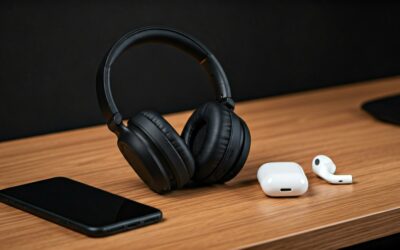
Over-Ear Headphones (Circumaural)
These feature large earcups that fully encompass the ears. They are widely regarded as the gold standard for sound quality and comfort. Because the drivers are larger, they often deliver a more “open” sound.
- Pros: Best bass response, superior passive isolation, and high comfort for long sessions.
- Cons: Bulky, can cause “ear heat,” and are less portable for travel.
- Best For: Home listening, gaming, and professional studio work.
On-Ear Headphones (Supra-aural)
These sit directly on the ear cartilage rather than around it. They are generally lighter and more breathable than over-ear models but can cause discomfort over time due to clamping force.
- Pros: More compact and portable than over-ear models; less heat buildup.
- Cons: Weaker noise isolation; can press painfully against glasses.
- Best For: Casual office use and people who dislike the “stuffed” feeling of earbuds.
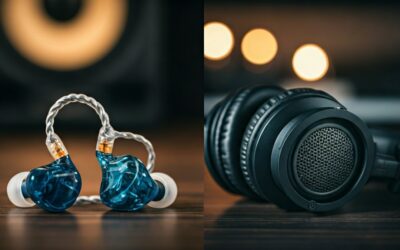
In-Ear Headphones (Earbuds and IEMs)
In-ear monitors (IEMs) or earbuds fit directly into the ear canal. Modern True Wireless Stereo (TWS) earbuds like the Apple AirPods Pro or Sony WF-1000XM5 have revolutionized this category with advanced tech in a tiny package.
- Pros: Maximum portability, excellent for fitness, and often feature the best ANC technology.
- Cons: Battery life is limited by size; some users find deep insertion uncomfortable.
- Best For: Commuting, gym-goers, and minimalists.
Assessing Sound Quality and Technical Specifications
When considering what to look for when buying headphones, don’t get distracted by marketing buzzwords like “3D Audio” or “Crystal Clear.” Focus on the underlying metrics that actually define performance.
Frequency Response
This range represents the low, mid, and high tones the headphones can reproduce. While the human ear typically hears from 20Hz to 20,000Hz, many high-end sets go wider.
- Bass-heavy: Look for a boost in the 20Hz – 250Hz range (popular in Beats or Skullcandy).
- Neutral/Flat: Preferred by pros for an accurate representation of the recording (Sennheiser HD600).
Impedance (Measured in Ohms)
Impedance dictates how much power is required to drive the headphones.
- Low Impedance (below 32 Ohms): Easy to drive with smartphones and laptops.
- High Impedance (above 100 Ohms): Requires a dedicated DAC/AMP to reach full volume and detail.
Sensitivity and Sound Pressure Level (SPL)
This tells you how loud the headphones will get at a certain power level. If you enjoy high-volume listening, look for a sensitivity rating of 100dB/mW or higher to ensure the drivers don’t distort at peak volumes.
| Feature | Consumer Standard | Audiophile Grade | Professional Studio |
|---|---|---|---|
| Frequency Range | 20Hz – 20kHz | 5Hz – 40kHz | 10Hz – 30kHz (Flat) |
| Impedance | 16 – 32 Ohms | 150 – 600 Ohms | 32 – 80 Ohms |
| Primary Connection | Bluetooth / USB-C | 6.35mm Balanced | 3.5mm / XLR |
| Sound Profile | V-Shaped (Fun) | Analytical / Detailed | Neutral / Flat |
The Critical Role of Active Noise Cancellation (ANC)
Active Noise Cancellation is no longer a luxury; it is a vital consideration for modern users. ANC works by using microphones to “listen” to external low-frequency sounds and generating an inverted sound wave to cancel them out.
When to Prioritize ANC
- The Frequent Flyer: ANC is essential for neutralizing the constant drone of jet engines.
- Open Office Workers: It helps eliminate the hum of air conditioning and distant chatter.
- Commuters: It allows you to listen at lower, safer volumes by removing traffic noise.
ANC vs. Passive Isolation
Passive isolation is simply the physical barrier of the earcup or ear tip blocking sound. ANC is electronic. For the best experience, look for headphones that offer both high-quality foam seals and multi-mic ANC arrays.
Connectivity: Bluetooth, Wired, and Hi-Res Codecs
In the current market, you must decide between the convenience of wireless or the reliability of wired. This is a major point in what to consider when buying headphones.
Bluetooth Version and Multipoint
Look for Bluetooth 5.2 or higher. This version offers better power efficiency and “Multipoint” connectivity, which allows you to stay connected to your laptop and smartphone simultaneously—switching between a Zoom call and a phone call seamlessly.
Understanding Audio Codecs
If you use high-quality streaming services like Tidal or Apple Music Lossless, your codec matters:
- SBC: The basic standard; found in all Bluetooth devices.
- AAC: Optimized for Apple devices.
- aptX / aptX HD: High-quality, low-latency audio for Android and PC.
- LDAC: Sony’s proprietary codec that supports the highest bitrates for near-lossless wireless audio.
The Case for Wired Headphones
Wired headphones are making a comeback. They offer zero latency (crucial for gaming and video editing) and do not suffer from battery degradation. A wired connection is still the only way to achieve true Hi-Res audio without compression.
Comfort, Build Quality, and Long-Term Ergonomics
You could buy the best-sounding headphones in the world, but if they hurt after 30 minutes, they are useless. Expert testers always check three specific ergonomic factors:
- Clamping Force: This is the pressure the headband exerts on your head. If it’s too tight, you get headaches. If it’s too loose, the bass leaks out.
- Earpad Material: Protein leather is common but can peel over time. Velour or Alcantara is more breathable and durable. Memory foam provides the best seal for ANC.
- Weight Distribution: A wide, padded headband is better for distributing weight than a thin plastic strip. Aim for headphones under 300 grams for maximum long-term comfort.
Battery Performance and Real-World Charging Speeds
For wireless models, battery anxiety is real. When researching what to look for when buying headphones, check the “Quick Charge” stats rather than just the total playtime.
- Standard Playtime: Modern over-ears should provide 30–50 hours. TWS earbuds should provide 6–8 hours per charge.
- Fast Charging: A high-quality pair should offer 3 to 5 hours of playback from a 10-minute charge.
- Passive Mode: Check if the headphones can work with a wire even when the battery is completely dead. This is a lifesaver on long flights.
Selecting the Right Headphones Based on Use Case
For the Fitness Enthusiast
Look for an IPX4 or IPX7 rating for sweat and water resistance. Stability is key; look for “wings” or ear hooks that prevent the buds from falling out during high-intensity intervals.
For the Remote Worker
Prioritize microphone quality and Transparency Mode. Transparency mode allows you to hear your own voice clearly during calls so you don’t end up shouting.
For the Audiophile
Look for Open-back designs. These have perforated earcups that allow air and sound to move freely. This creates a massive, realistic soundstage that feels like you are in the room with the band, though they leak sound to everyone around you.
Step-by-Step Guide: How to Buy Your Next Pair of Headphones
Follow this logic flow to ensure you don’t end up with buyer’s remorse:
- Define Your Budget: Decide if you are in the entry-level ($50-$100), mid-range ($150-$300), or premium ($400+) bracket.
- Choose Your Environment: Do you need ANC (Commuter) or Open-back (Home)?
- Check Device Compatibility: Ensure your phone supports the codecs the headphones use (e.g., don’t buy LDAC headphones if you only use an iPhone).
- Read Professional Frequency Response Graphs: Look for reviews on sites like RTINGS or SoundGuys to see if the bass or treble is too boosted for your taste.
- Test the Fit: If possible, visit a local electronics store to test the clamping force.
- Verify the Return Policy: Sound is subjective. Ensure you can return them if the “sound signature” doesn’t match your preference.
Frequently Asked Questions (FAQs)
Does “Hi-Res Audio” really make a difference?
Hi-Res Audio (24-bit/96kHz or higher) provides more detail and dynamic range than standard CDs. However, to hear the difference, you need a high-quality source (like Qobuz), a good DAC, and headphones capable of reproducing those frequencies. For most casual listeners, high-bitrate AAC or Ogg Vorbis (Spotify) is sufficient.
Are expensive headphones always better?
Not necessarily. Many $150 headphones (like the Audio-Technica ATH-M50x) outperform $400 lifestyle headphones in terms of pure audio accuracy. With premium models, you are often paying for brand prestige, ANC technology, and premium materials rather than just raw sound quality.
How long should a good pair of headphones last?
A well-maintained pair of wired headphones can last 10-20 years if the earpads are replaceable. Wireless headphones are limited by their internal lithium-ion batteries, which typically begin to degrade after 3-5 years of regular use.
Is it worth buying “Open-Back” headphones?
If you only listen to music at home in a quiet room, Open-back headphones offer the best possible audio experience. However, they provide zero noise isolation and leak sound loudly, making them completely unsuitable for offices, planes, or public transit.
What is the best IP rating for headphones?
For general exercise, IPX4 is the minimum to protect against sweat. If you plan on running in heavy rain or washing your earbuds under a tap, look for IPX7, which allows for full submersion in water for up to 30 minutes.