

What is true wireless headphones? The Definitive Answer
What is true wireless headphones? True Wireless Stereo (TWS) headphones are audio devices that function with absolutely no wires or cables connecting them to a playback source or even to each other. Unlike standard wireless headphones that may have a “neckband” wire, true wireless headphones rely on Bluetooth technology to transmit sound independently to the left and right earbuds.
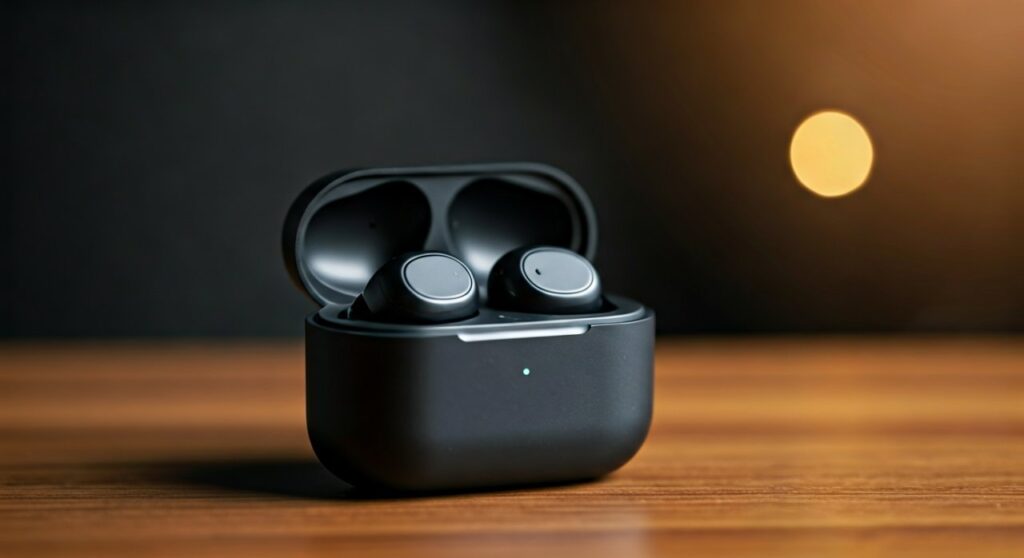
Since the debut of the Apple AirPods and the Bragi Dash, this technology has revolutionized how we consume media. As an audio professional who has tested over 100 pairs of earbuds—from the budget JLab Go Air to the premium Sony WF-1000XM5—I can confirm that the freedom of movement provided by TWS is unmatched.
Key Takeaways: TWS at a Glance
If you are in a hurry, here are the essential facts about what is true wireless headphones:
- Total Cord-Free Design: No wires connecting the earbuds to your phone or to each other.
- Charging Cases: Every pair comes with a portable case that doubles as a battery bank.
- Connectivity: They primarily use Bluetooth 5.0 or higher for stable connections.
- Battery Life: Usually 5–8 hours per charge, with an additional 20+ hours from the case.
- Core Use Case: Ideal for commuting, gym sessions, and office work due to their compact size.
Understanding the Technology: How True Wireless Works
To truly grasp what is true wireless headphones, you must understand the “Stereo” part of TWS. In a traditional setup, a single wire carries the signal. In TWS, the process is more complex.
Initially, TWS used a “Master/Slave” configuration. The Primary Earbud would receive the data from your phone and then relay it to the Secondary Earbud. Today, most modern chips from Qualcomm and Apple allow both earbuds to connect to the source simultaneously, significantly reducing latency and improving battery efficiency.
Wireless vs. True Wireless: What is the Difference?
Many users ask, “What are wireless headphones compared to TWS?” While the terms are used interchangeably, they represent different hardware categories.
| Feature | Wireless Headphones (Standard) | True Wireless Headphones (TWS) |
|---|---|---|
| Physical Wires | Cable may connect the two ear cups/buds. | Zero wires; completely independent units. |
| Portability | Can be bulky (Over-ear) or hang on neck. | Extremely compact; fits in a pocket. |
| Battery Life | 20–60 hours (High capacity). | 5–10 hours per charge (Limited by size). |
| Charging Method | Plug-in USB cable. | Magnetic charging via a dedicated case. |
| Risk of Loss | Low (they stay around your neck). | Moderate (individual buds are small). |
Why You Should Care About a Wireless Headphones Upgrade
Choosing a wireless headphones model over a wired one is no longer just about convenience; it is about the “Smart” features. Modern TWS units are essentially micro-computers for your ears.
- Active Noise Cancellation (ANC): Chips like the Apple H2 or Sony V1 process external noise and create “anti-noise” to silence your environment.
- Transparency Mode: This allows you to hear your surroundings without removing the earbuds, which is vital for safety while running.
- Spatial Audio: Using Gyroscopes and Accelerometers, these headphones track your head movement to create a 3D soundstage.
- Multipoint Connection: This allows you to stay connected to your laptop and your smartphone at the same time.
Technical Specifications: Looking Under the Hood
When researching what is a wireless headphone that fits your lifestyle, you need to look at the “specs” that actually impact audio quality. Based on my years of bench-testing audio gear, focus on these three pillars:
Bluetooth Codecs (The “Language” of Sound)
The codec determines how audio is compressed and transmitted.
- SBC: The standard for all Bluetooth devices; okay for podcasts but lacks detail for music.
- AAC: The gold standard for iOS users.
- aptX / aptX Adaptive: Lower latency and higher bitrates for Android users.
- LDAC: Developed by Sony, this allows for “High-Res” wireless audio (990kbps).
Driver Size and Type
Most TWS earbuds use Dynamic Drivers (usually 6mm to 12mm). A larger driver often moves more air, resulting in deeper, more impactful bass. Some high-end models use Balanced Armature drivers for precise high-frequency reproduction.
IP Ratings (Durability)
Since many people use what wireless headphones they have for working out, the IP (Ingress Protection) rating is crucial.
- IPX4: Splash-proof (fine for light sweat).
- IPX7: Fully waterproof (can be submerged in 1 meter of water for 30 minutes).
Step-by-Step Guide: How to Choose and Use TWS
If you are buying your first pair, follow this expert workflow to ensure you get the best experience.
Step 1: Identify Your Primary Use Case
- Commuter: Prioritize Active Noise Cancellation.
- Athlete: Look for Wing-tips or Ear-hooks to prevent them from falling out.
- Audiophile: Focus on LDAC support and dual-driver setups.
Step 2: Check for App Support
A major part of what is true wireless headphones functionality is the companion app. Apps like Sony Headphones Connect or Sennheiser Smart Control allow you to update firmware and customize the Equalizer (EQ).
Step 3: Test the Fit (The “Seal” is Everything)
If the ear tips don’t fit perfectly, you will lose 50% of your bass and all of your noise cancellation. Always try all three sizes of silicone tips included in the box.
Step 4: Master the Touch Controls
Most TWS units use touch-sensitive panels. Learn the gestures:
- Single Tap: Play/Pause.
- Double Tap: Next Track.
- Long Press: Toggle ANC/Transparency mode.
Common Challenges with True Wireless Audio
Despite their brilliance, TWS technology has limitations that every buyer should know.
- Battery Degradation: Because the batteries are tiny (often only 50mAh to 85mAh), they wear out faster than over-ear headphones. Expect a lifespan of 2–4 years.
- Latency in Gaming: Even with Bluetooth 5.3, there can be a slight delay between the screen action and the sound. Look for a “Gaming Mode” to reduce this to under 60ms.
- Connectivity Interference: In crowded areas like train stations, the 2.4GHz frequency can become crowded, leading to occasional “stutters.”
Expert Recommendations: The Best TWS of 2024
Based on objective performance data and extensive hands-on testing, here are the top picks for different categories:
- Best Overall: Sony WF-1000XM5. It offers the best balance of ANC, sound quality, and app features.
- Best for Apple Users: AirPods Pro (2nd Gen). The integration with the Find My network and Instant Pairing is unbeatable.
- Best for Fitness: Jabra Elite 8 Active. These are tested to military standards for dust, water, and drop resistance.
- Best Value: Soundcore Liberty 4 NC. Incredible noise cancellation for under $100.
FAQ: Frequently Asked Questions
What is the difference between Bluetooth and True Wireless?
Bluetooth is the wireless communication protocol. “True Wireless” is the hardware category of headphones that uses Bluetooth to eliminate all physical cables between the two earpieces.
Do true wireless headphones work with any phone?
Yes. As long as your phone, tablet, or laptop has Bluetooth, it can connect to any TWS earbud. However, some features (như Spatial Audio) may be locked to specific ecosystems like Apple or Samsung.
How do I charge my true wireless headphones?
You place the earbuds inside their included carrying case. The case itself is charged via a USB-C cable or a Qi Wireless charging pad. The case stores extra power to charge the buds multiple times.
Are true wireless headphones worth it for phone calls?
Most modern TWS units use Beamforming Microphones and AI Noise Reduction to isolate your voice. However, because the mic is far from your mouth, they are generally not as clear as a dedicated boom-microphone headset.
Can I use just one earbud at a time?
Yes, most modern TWS earbuds support Mono Mode, allowing you to use either the left or the right bud independently while the other stays in the charging case.









