What Are Good Studio Headphones? The Direct Answer
What are good studio headphones? Good studio headphones are professional-grade audio monitoring tools designed to deliver a flat frequency response, extreme durability, and high transparency. Unlike consumer headphones that “color” sound with heavy bass or crisp highs, studio models provide an unadulterated, “honest” representation of audio, which is essential for mixing, mastering, and critical listening.
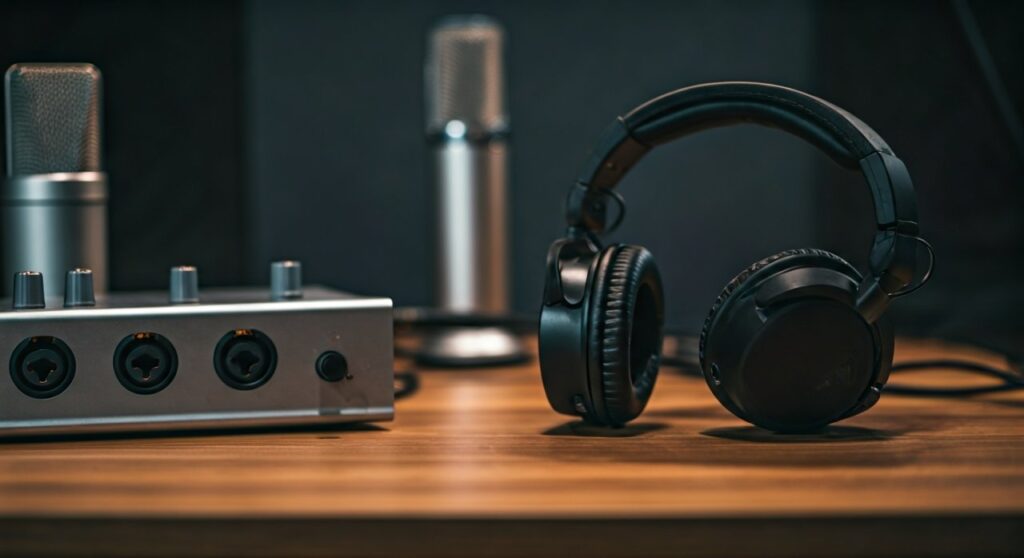
To be considered “good,” a pair of studio headphones must offer a balance of acoustic accuracy, long-term comfort for 8-hour sessions, and the correct impedance (ohms) to match your audio interface or mobile device.
Key Takeaways: How to Identify Quality Studio Gear
If you are in a rush, here is the “cheat sheet” for identifying what are good studio headphones before you buy:
- Frequency Response: Look for a “flat” or “neutral” profile (usually 5Hz to 35kHz or wider) so you hear the mix exactly as it is.
- Design Type: Choose Closed-back for recording (to prevent bleed) and Open-back for mixing (for a natural soundstage).
- Impedance (Ohms): Low impedance (32-80 ohms) works with laptops; high impedance (250+ ohms) requires a dedicated headphone amplifier.
- Replaceable Parts: Professional models like the Beyerdynamic DT 770 Pro or Sennheiser HD 600 allow you to replace ear pads and cables easily.
- Comfort: Look for velour or high-quality memory foam pads, as studio sessions often last several hours.
Understanding What Are Studio Headphones vs. Consumer Headphones
To truly understand what is a studio headphone, you must recognize the difference between “listening for pleasure” and “listening for work.” Most headphones sold at big-box stores are “tuned.” They boost the bass to make music feel powerful and the treble to make it sound “clear.”
In a professional environment, this “tuning” is a liability. If your headphones boost the bass, you will likely turn the bass down in your mix. When people listen to your song on other speakers, it will sound thin and weak.
What is studio headphones‘ primary purpose? It is to reveal flaws. Good studio headphones act like a sonic magnifying glass, exposing background noise, clipping, and frequency clashes that consumer gear hides.
The Three Pillars of Good Studio Headphones
When evaluating what are the best studio headphones for your specific needs, you must look at these three technical pillars:
Sound Signature and Neutrality
A “good” pair of headphones doesn’t make music sound “better”; it makes it sound “accurate.”
- Transparency: The ability to hear the separation between instruments.
- Transient Response: How quickly the headphone drivers react to sharp sounds (like a snare drum hit).
- Flatness: Ensuring no specific frequency range (Bass, Mids, Highs) is louder than it should be.
Build Quality and Serviceability
Professional gear takes a beating. I have seen Sony MDR-7506 units that are 20 years old and still functioning perfectly.
- Materials: Look for steel headbands and reinforced plastic.
- Repairability: Can you buy new ear pads for $20, or do you have to throw the whole unit away when the leather peels?
Acoustic Isolation
This depends on the physical housing of the earcups.
- Closed-back: Best for tracking (recording vocals). The sound doesn’t leak out into the microphone.
- Open-back: Best for mixing. The “breathable” design prevents pressure buildup, leading to a more natural “out of head” experience.
Comparison: Open-Back vs. Closed-Back Headphones
Selecting the right design is the most critical step in finding what are good studio headphones for your workflow.
| Feature | Closed-Back Headphones | Open-Back Headphones |
|---|---|---|
| Primary Use | Recording, Tracking, DJing | Mixing, Mastering, Editing |
| Sound Leakage | Minimal (Isolated) | High (People can hear your music) |
| Soundstage | “Inside your head” | Wide and natural |
| Bass Accuracy | Often punchy but can be “boxy” | Accurate and natural |
| Fatigue | Higher (due to air pressure) | Lower (more breathable) |
| Example Model | Audio-Technica ATH-M50x | Sennheiser HD 650 |
Step-by-Step Guide: How to Choose Your First Pair
Choosing what is a studio headphone that fits your life requires a systematic approach. Follow these steps to ensure you don’t waste money on gear that doesn’t fit your setup.
Step 1: Define Your Primary Use Case
Are you a singer recording vocals? You must get closed-back headphones to avoid “click track bleed” in your recording. Are you a bedroom producer mixing electronic music? Open-back headphones will provide a more accurate stereo image.
Step 2: Check Your Audio Interface
Look at the impedance rating of your equipment.
- If you plug directly into a MacBook or a small Focusrite Scarlett Solo, stick to headphones under 80 ohms.
- If you have a high-end Universal Audio interface or a dedicated amp, you can go up to 250 or 600 ohms for maximum detail.
Step 3: Prioritize “Reference” Over “Excitement”
When testing headphones, don’t look for the one that makes your favorite song sound “amazing.” Look for the one that makes a bad recording sound “bad.” That is the hallmark of a high-quality studio tool.
Step 4: Evaluate Ergonomics
Studio work involves sitting still for long periods.
- Check the clamping force: Does it squeeze your head too hard?
- Check the weight: Anything over 350 grams might cause neck strain after four hours.
Expert Recommendations: The Gold Standards
Based on decades of industry use, these models define what are the best studio headphones currently available on the market.
The Industry Standard: Sony MDR-7506
Used in almost every radio station and film set globally. It is prized for its clinical high-end and folding design. It is arguably the most famous example of what is studio headphones utility.
The Comfort King: Beyerdynamic DT 770 Pro
These feature the legendary “silver velour” pads. They are closed-back, making them perfect for tracking, but they have a “V-shaped” sound profile that is very fun to listen to while still being accurate enough for production.
The Mixing Master: Sennheiser HD 600
If you ask an engineer what are good studio headphones for critical mixing, they will likely point to the HD 600. Its open-back design is world-renowned for having the most natural midrange in the industry.
The Modern Classic: Audio-Technica ATH-M50x
Widely considered the best “all-arounder.” It is used by everyone from YouTubers to top-tier producers like Dr. Dre. It offers a collapsible design and multiple detachable cables.
Technical Deep Dive: Why Impedance Matters
A common mistake when buying what are good studio headphones is ignoring Impedance (measured in Ohms).
- Low Impedance (32-50 Ohms): These require little power. They are designed for mobile phones, laptops, and basic audio interfaces. They are convenient but can sometimes have higher distortion at very high volumes.
- High Impedance (250-600 Ohms): These require a powerful amplifier to “drive” the drivers. The benefit is a thinner, lighter voice coil that moves more precisely, resulting in better transient detail and less electronic noise.
Expert Tip: If you buy the Beyerdynamic DT 990 Pro (250 Ohm) and plug it into your phone, it will sound very quiet and thin. Always match your headphones to your power source!
How to Maintain Your Studio Headphones
Buying a “good” pair is an investment. To ensure they last a decade, follow these professional maintenance tips:
- Swap the Pads: Ear pads compress over time, which actually changes the sound. Replace them every 12-24 months to maintain the original frequency response.
- Cable Management: Avoid tightly wrapping the cable around the headphones. This causes internal wire fatigue. Use the “over-under” coiling method.
- Wipe the Headband: Sweat and hair oils can degrade synthetic leather. A quick wipe with a dry microfiber cloth after a long session prevents “flaking.”
Frequently Asked Questions (FAQs)
Can I use gaming headphones as studio headphones?
Generally, no. Gaming headphones are tuned for “spatial awareness” (hearing footsteps) and usually have a heavy bass boost and compressed audio signals. They lack the neutrality and frequency range required for professional audio work.
Why do studio headphones have curly cables?
The “coiled” cable is a staple of studio life. It allows a producer to move around a large mixing desk without the cable dragging on the floor or getting caught in chair wheels, yet it can stretch when needed.
Are expensive studio headphones always better?
Not necessarily. A $100 pair of Sony MDR-7506 is often more useful for tracking than a $1,000 pair of audiophile headphones. In the studio, accuracy and reliability are more important than luxury materials.
Do I need a DAC for my studio headphones?
If you are using a professional Audio Interface (like an Apollo, Focusrite, or Audient), you already have a high-quality DAC (Digital-to-Analog Converter) built-in. You do not need an external one unless you are listening via a standard computer headphone jack and hear “hiss” or static.
What is the “Burn-in” period for headphones?
Some experts believe that headphone drivers need 20-50 hours of playback to “loosen up” and reach their intended sound. While scientifically debated, many pros recommend playing pink noise through new headphones overnight before doing a serious mix.
**
**
**
**