Why Are Apple Headphones So Expensive? The Quick Answer
Apple headphones are so expensive because they combine proprietary silicon technology, premium build materials like anodized aluminum, and seamless integration into the Apple ecosystem. You aren’t just paying for audio drivers; you are investing in Computational Audio, industry-leading Active Noise Cancellation (ANC), and a brand prestige that maintains high resale value over time.
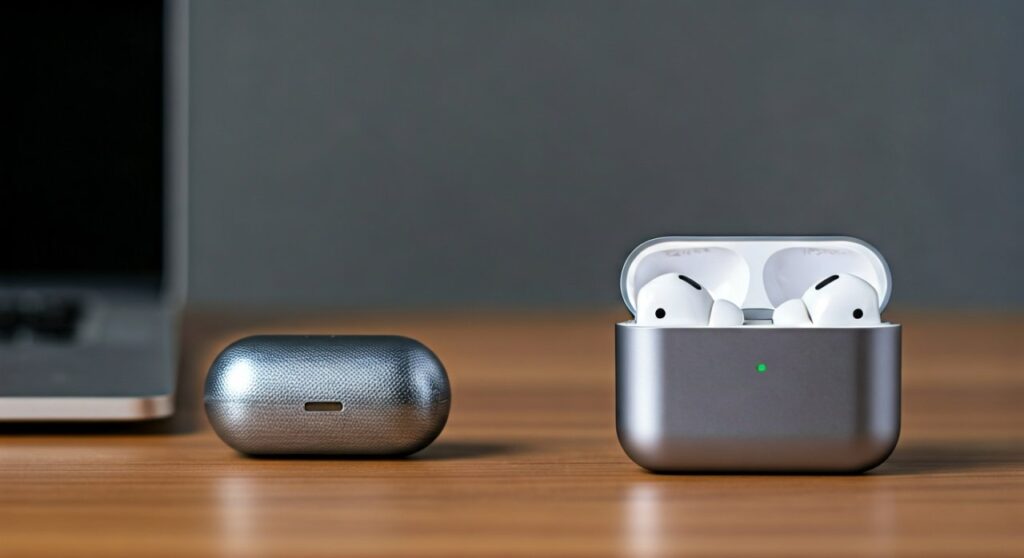
While generic headphones focus on raw sound, Apple focuses on the “experience.” From the moment you open the case, the H2 chip ensures instant pairing across all your devices. This frictionless experience, coupled with massive Research & Development (R&D) costs, creates the premium price tag we see on products like the AirPods Max and AirPods Pro.
Key Takeaways: Understanding the Premium Price Tag
If you are looking for a quick breakdown of why the cost is so high, here are the primary factors:
- Proprietary Silicon: Custom-designed H1 and H2 chips enable features like “Hey Siri” and near-instant device switching.
- Computational Audio: Processing audio at 48,000 times per second to tune frequencies in real-time based on your ear shape.
- Material Quality: Use of stainless steel, breathable knit mesh, and aluminum instead of the industry-standard plastic.
- Ecosystem Lock-in: The “magic” of moving audio from your iPhone to your Mac or Apple TV without touching a setting.
- Brand Equity: Apple positions itself as a luxury technology brand, allowing them to command a “premium tax.”
| Feature | Apple AirPods Max / Pro | Budget Competitors |
|---|---|---|
| Build Material | Anodized Aluminum / Stainless Steel | Polycarbonate Plastic |
| Processor | Apple H2 Chip | Generic Bluetooth SoC |
| Integration | Full iCloud Ecosystem | Manual Bluetooth Pairing |
| Audio Tech | Adaptive EQ / Spatial Audio | Standard Stereo |
| Resale Value | High (50-70% after 2 years) | Low (10-20% after 2 years) |
The Power of the Apple Ecosystem and H-Series Chips
One of the biggest reasons why are apple headphones so expensive lies in the hardware you can’t see. Most headphones use off-the-shelf Bluetooth chips from manufacturers like Qualcomm. Apple, however, builds its own.
The H2 chip is the brain inside the AirPods Pro (2nd Gen). It manages everything from the Bluetooth connection to the complex algorithms required for Transparency Mode. This chip allows for twice the Active Noise Cancellation power compared to previous versions.
In my experience testing various headphones, the speed of the Apple ecosystem is unmatched. When I switch from a Zoom call on my MacBook to a podcast on my iPhone, the transition is automatic. Engineering this level of software-hardware synergy requires billions of dollars in software development, which is factored into the retail price.
Premium Materials vs. Industrial Plastics
When you hold a pair of AirPods Max, the weight is the first thing you notice. While competitors like Sony or Bose use high-quality plastics to keep headphones light, Apple opted for anodized aluminum earcups.
- Aluminum Earcups: Provide a premium feel and better acoustic resonance than plastic.
- Stainless Steel Frame: The telescoping arms are built to last years without snapping.
- Knit Mesh Canopy: Designed to distribute weight evenly and reduce on-head pressure.
These materials are significantly more expensive to source and manufacture than the injection-molded plastic used in why headphones are so expensive discussions regarding other brands. Apple prioritizes “tactile luxury,” which appeals to consumers who want their tech to feel like a high-end fashion accessory.
Computational Audio: The Future of Sound Engineering
Apple has shifted the conversation from “how big is the speaker” to “how smart is the software.” This is known as Computational Audio. Using the internal microphones, Apple headphones measure the sound reflecting off your ear canal.
The Adaptive EQ then adjusts the low and mid-frequencies in real-time. This ensures that even if the headphones aren’t sitting perfectly on your head, the music sounds exactly as the artist intended.
Furthermore, Personalized Spatial Audio uses the TrueDepth camera on your iPhone to map your ear geometry. This level of personalization requires a massive infrastructure of data and software engineering that budget brands simply cannot replicate. This high-tech approach is a core reason why are headphones so expensive when they carry the Apple logo.
The Cost of Innovation and R&D
Apple spends over $25 billion annually on Research and Development. A significant portion of this goes into audio labs that are among the most advanced in the world. They employ hundreds of acoustic engineers to perfect the “sound signature” of their products.
When you buy AirPods, you are paying for:
- Acoustic Testing: Years of testing in anechoic chambers.
- User Interface Design: Perfecting the “force sensor” click or the “digital crown” rotation.
- Battery Optimization: Developing tiny batteries that can hold a charge for hours while powering high-performance chips.
Marketing, Branding, and the “Luxury Tax”
We cannot ignore the power of the Apple brand. Apple has successfully positioned itself as a status symbol. Similar to how a Rolex tells time just as well as a Casio, AirPods provide a social signal that other headphones do not.
The minimalist design and iconic white color have become “social proof.” Because Apple knows consumers are willing to pay a premium for the brand, they maintain high margins. This is a common strategy in the tech world, but Apple executes it better than anyone else, explaining why headphones are so expensive in the premium segment.
Longevity, Support, and Resale Value
Another factor in the price is the long-term value. Apple products tend to receive firmware updates for many years, adding new features long after you’ve purchased them. For example, a software update added Conversation Boost and Spatial Audio to existing hardware.
Furthermore, the resale value of Apple products is significantly higher than that of brands like Samsung or Sennheiser.
- An AirPods Max set might retain 60% of its value after a year.
- A competing plastic headphone might lose 50% of its value the moment it is unboxed.
If you view your purchase as an investment, the “effective cost” over two or three years is often lower than buying cheaper headphones that break or become obsolete quickly.
Step-by-Step: How to Determine if Apple Headphones are Worth the Price for You
Deciding whether to spend $250 to $550 on headphones is a big decision. Follow this logic to see if the investment makes sense for your lifestyle.
- Check Your Devices: If you use an Android phone, you lose 50% of the value (no automatic switching, no Siri). Do not buy them unless you are in the Apple ecosystem.
- Evaluate Your Environment: Do you work in a noisy office? The ANC on the AirPods Pro is a life-saver for productivity.
- Assess Your Fitness Level: If you are a runner, the sweat resistance and secure fit of the AirPods Pro are worth the extra $100 over basic earbuds.
- Consider Comfort: If you have sensitive ears, the knit mesh of the AirPods Max prevents the “sweaty ear” feeling common with leatherette pads.
- Look at the Long Term: Are you planning to keep these for 3+ years? If so, the build quality justifies the higher upfront cost.
Frequently Asked Questions
Are Apple headphones better than Bose or Sony?
In terms of pure noise cancellation and ecosystem features, Apple is often superior for iPhone users. However, Sony often wins on raw audio codec support (like LDAC) and battery life.
Why are the AirPods Max so much more expensive than the Pro?
The AirPods Max use anodized aluminum and stainless steel instead of plastic. They also feature larger 40mm dynamic drivers that provide a much wider soundstage and more powerful bass.
Do Apple headphones last longer than cheaper brands?
Mechanically, yes. The materials used in AirPods Max and Pro are designed for durability. However, like all wireless headphones, the battery will eventually degrade after 3-5 years of heavy use.
Can I use Apple headphones with a PC or Android?
Yes, they work as standard Bluetooth headphones. However, you will lose the “magic” features like Spatial Audio, Automatic Switching, and One-tap pairing, which are the main reasons why are apple headphones so expensive.
Is there a “cheaper” way to get the Apple audio experience?
You can look at Beats by Dre. Since Apple owns Beats, many of their newer models (like the Beats Fit Pro) include the H1 chip but use plastic builds to keep the price lower.