Singers wear headphones primarily to isolate the backing track from the vocal microphone and to monitor their own voice in real-time. This setup prevents “audio bleed,” where the music leaks into the vocal track, and allows the artist to stay perfectly in tune and on beat by hearing a balanced mix of their performance and the instrumental.
Key Takeaways for Studio Recording
- Audio Isolation: Prevents the instrumental track from being picked up by the sensitive condenser microphones.
- Pitch Accuracy: Allows the singer to hear themselves clearly over the music to maintain correct intonation.
- Timing: Provides a direct feed of the click track (metronome) to ensure the performance aligns with the project tempo.
- Real-time Feedback: Enables the use of studio effects like reverb in the singer’s ears, which can improve performance confidence.
- Communication: Facilitates clear dialogue between the artist in the booth and the audio engineer in the control room.
Why Do Singers Wear Headphones When Recording? Preventing Audio Bleed
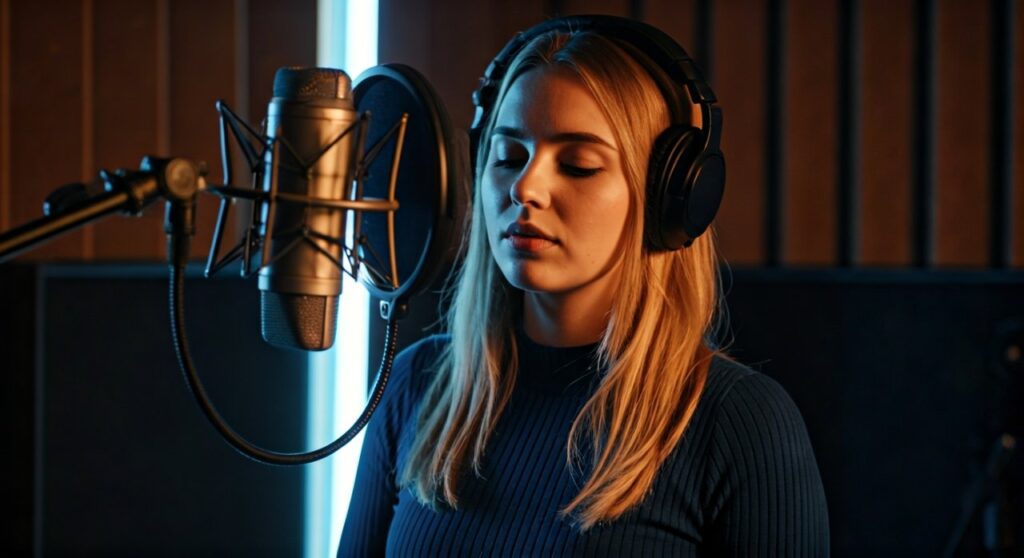
The most technical reason why do singers wear headphones when recording involves the concept of audio bleed (or leakage). In a professional studio, vocalists use highly sensitive large-diaphragm condenser microphones that capture every subtle nuance of the voice.
If the backing track were played through loud studio monitors (speakers) instead of headphones, the microphone would record both the singer’s voice and the music simultaneously. This makes the editing process nearly impossible.
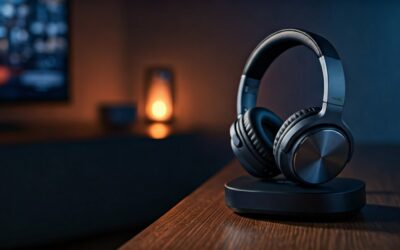
When the music “bleeds” into the vocal mic, engineers cannot apply auto-tune, compression, or EQ to the voice without also distorting the background music. By using closed-back headphones, the sound is trapped against the singer’s ears, ensuring the microphone captures a “dry,” isolated vocal signal.
The Importance of Real-Time Monitoring
Another critical answer to why do singers wear headphones while recording is the need for vocal monitoring. When we sing, we hear our voices through a combination of air conduction and bone conduction through the skull.
In a loud studio environment, the instrumental track can easily drown out the singer’s perception of their own pitch. Professional studio headphones provide a customized “cue mix” that balances the volume of the backing track with the live input of the singer’s microphone.
This allows the artist to hear exactly what the microphone is capturing. If they are slightly flat or sharp, they can make micro-adjustments to their vocal cords instantly. Without this feedback loop, even world-class vocalists struggle to maintain perfect pitch.
Hearing the Click Track and Cues
Professional recordings are almost always done to a click track (a digital metronome). This ensures that every instrument recorded—from the drums to the vocals—is perfectly synchronized to a specific BPM (Beats Per Minute).
- Staying on Beat: The click track is played only through the headphones so the singer knows exactly when to start and stop phrases.
- Guide Vocals: Sometimes a “scratch track” (a rough version of the song) is played in the headphones to help the singer remember the melody and structure.
- Engineer Instructions: The producer can speak directly into the singer’s headphones via a talkback mic to give directions without entering the recording booth.
Comparison: Types of Headphones for Recording
Not all headphones are suitable for the recording booth. Choosing the wrong type can ruin a vocal take by allowing sound to leak out into the microphone.
| Headphone Type | Best For | Pros | Cons |
|---|---|---|---|
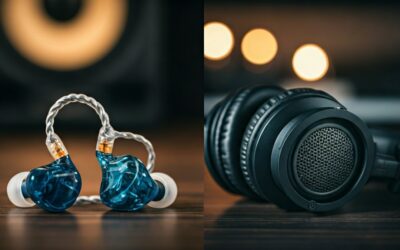
| Closed-Back | Vocal Recording | Maximum isolation; no sound leakage. | Can feel “boxed in” or hot during long sets. |
| Open-Back | Mixing/Mastering | Natural soundstage; very accurate. | High leakage; the mic will pick up the music. |
| In-Ear Monitors (IEMs) | Live Stage/Studio | Extremely portable; great isolation. | Can be uncomfortable; high cost for pro models. |
| Semi-Open | Drafting/Editing | Balanced airflow and sound. | Moderate leakage; risky for sensitive mics. |
The “One-Ear Off” Technique: Expert Insights
You may often see singers like Adele or Beyoncé wearing headphones with one ear cup pushed off. This is a deliberate technique used by many professionals to bridge the gap between their recorded sound and their natural acoustic sound.
By leaving one ear uncovered, the singer can hear their “natural” voice in the room while the other ear receives the backing track and pitch reference from the headphones. This helps some artists feel more “connected” to the space and improves their emotional delivery.
However, engineers often discourage this because the uncovered ear cup can leak the backing track into the microphone. To solve this, experts recommend either muting the unused channel in the DAW (Digital Audio Workstation) or using a specialized single-ear headphone.
Step-by-Step: How to Set Up Your Headphones for a Perfect Take
If you are setting up your own home studio, following these steps will ensure your headphone setup matches professional standards.
Select Closed-Back Headphones
Invest in industry standards like the Sony MDR-7506 or the Beyerdynamic DT 770 Pro. These are designed to minimize leakage while providing a flat frequency response.
Configure Your Buffer Size
In your recording software (like Logic Pro or Ableton), set your buffer size to 128 samples or lower. This reduces latency—the annoying delay between when you sing and when you hear yourself in the headphones.
Build a Custom Cue Mix
Don’t just listen to the master track. Increase the volume of the rhythmic elements (like drums or bass) and slightly boost your own vocal level. Adding a tiny bit of “comfort reverb” to your headphone mix can help you sing more confidently without affecting the dry recording.
Check for Leakage
Before you press record, put the headphones on and play the music at your preferred volume. Stand in front of the mic and check the levels. If the mic’s meters are jumping while you aren’t singing, turn the headphone volume down or adjust the fit.
Frequently Asked Questions
Why do singers wear headphones when recording instead of using speakers?
Using speakers causes acoustic feedback and “bleed.” The microphone would pick up the music from the speakers, creating a messy recording that cannot be professionally mixed or tuned.
Can I use AirPods or Bluetooth headphones for recording?
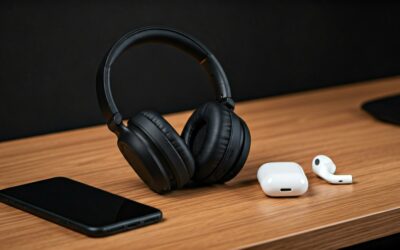
No. Bluetooth headphones have significant latency (delay), meaning you will hear your voice a fraction of a second after you sing. This makes it impossible to stay on beat. Always use a wired connection in the studio.
Why do some singers only wear one headphone?
This is called the one-ear technique. It allows the singer to hear their natural resonance in the room through their open ear while hearing the track through the other. It helps with pitch control and feeling “grounded.”
What happens if a singer doesn’t wear headphones?
Without headphones, a singer would have to sing in silence or to a very quiet room. They would likely lose the tempo and struggle to stay in the correct key relative to the instruments added later.
Are studio headphones different from regular headphones?
Yes. Regular headphones (like Beats or Bose) often “color” the sound by boosting the bass. Studio headphones are designed for “transparency,” meaning they provide an honest, unembellished representation of the audio.
**
**
**
**