Understanding What Is Air Conduction Headphones: The Open-Ear Revolution
What is air conduction headphones? Air conduction headphones are open-ear audio devices that utilize directional acoustic technology to beam sound waves through the air and into the ear canal without obstructing it. Unlike traditional earbuds that sit inside your ear or over-ear headphones that seal your ears off, these devices rest just outside the ear, allowing you to remain fully aware of your surroundings while enjoying high-quality audio.
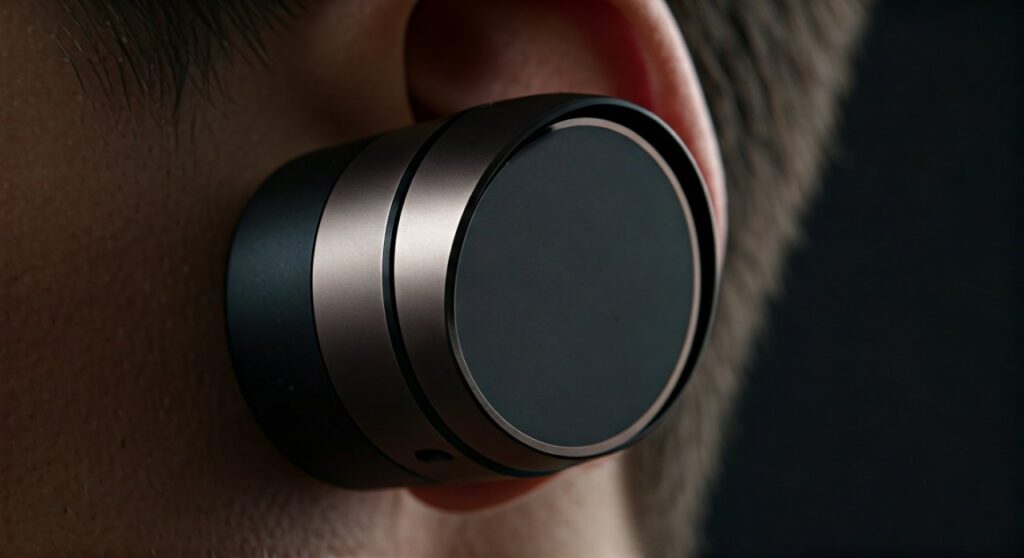
Many users find traditional silicone tips irritating or painful during long sessions. Air conduction technology solves this by eliminating physical pressure on the ear canal. This “open-ear” design is rapidly becoming the preferred choice for outdoor athletes, office professionals, and anyone who suffers from “ear fatigue” after hours of music or calls.
Key Takeaways: Why Switch to Air Conduction?
- Situational Awareness: You can hear traffic, conversations, and ambient sounds while listening to music.
- Superior Comfort: No pressure, no heat buildup, and no “clogged” feeling in the ears.
- Ear Health: Reduces the risk of ear infections and bacterial growth caused by sealing the ear canal.
- Directional Audio: Advanced beamforming ensures your music stays private without the vibration sensations typical of bone conduction.
The Science: How Air Conduction Headphones Work
To truly grasp what is air conduction headphones, you must understand the mechanics of Directional Acoustic Technology. Standard headphones rely on physical isolation; they create a seal to pump air pressure directly against your eardrum.
Air conduction headphones use specialized drivers and precision-engineered acoustic chambers. These drivers are angled specifically toward your ear canal. They use phase-cancellation techniques to ensure that sound waves travel toward your ear while minimizing “sound leakage” to the people standing next to you.
Essentially, these devices act like tiny, private speakers hovering right next to your ears. Because they don’t use bone vibration (like bone conduction headphones), they often provide a fuller frequency response, particularly in the bass and mid-range regions.
Are Air Conduction Headphones Good for Daily Use?
If you are wondering are air conduction headphones good for your specific lifestyle, the answer depends on your environment. In my experience testing these devices during morning jogs and office hours, they excel in “active” scenarios where safety and communication are vital.
Performance in Different Environments
- For Runners and Cyclists: They are arguably the best choice. Being able to hear a car horn or a cyclist passing from behind is a life-saving feature.
- For the Office: They allow you to listen to podcasts or take Zoom calls while still hearing a colleague ask you a question.
- For Quiet Libraries: This is their weakness. While leakage is minimized, they are not as silent as closed-back headphones.
In terms of audio quality, are conduction headphones good for audiophiles? While they won’t replace high-end studio monitors, modern models like the Shokz OpenFit or Bose Ultra Open Earbuds offer surprisingly rich sound profiles that satisfy 90% of casual listeners.
Comparison: Air Conduction vs. Bone Conduction vs. In-Ear
| Feature | Air Conduction | Bone Conduction | Traditional In-Ear |
|---|---|---|---|
| Placement | Rests outside the ear | Rests on cheekbones | Inside ear canal |
| Sound Quality | High (Natural) | Moderate (Vibration-based) | Very High (Isolated) |
| Comfort | Best (Zero pressure) | Good (Slight clamping) | Varies (Can be fatiguing) |
| Awareness | 100% Open | 100% Open | 0% (Passive isolation) |
| Bass Response | Stronger | Weaker | Strongest |
Safety and Health: Are Air Conduction Headphones Safe?
A common concern for new buyers is are air conduction headphones safe for long-term hearing health. The short answer is yes—in fact, they are often safer than traditional earbuds for several biological reasons.
Reducing the Risk of Ear Infections
Traditional earbuds trap moisture and heat inside the ear canal. This creates a breeding ground for bacteria, often leading to “swimmer’s ear” or fungal infections. Since air conduction headphones do not enter the ear, the canal remains dry and ventilated.
Preventing Eardrum Fatigue
When you seal the ear canal with a silicone tip, you create a pressurized environment. This pressure amplifies the impact of sound waves on the eardrum. Air conduction allows excess air pressure to escape naturally, which may reduce the risk of long-term hearing fatigue.
Situational Safety
The primary danger of headphones isn’t just volume; it’s isolation. Are conduction headphones safe for city dwellers? Absolutely. Most accidents involving pedestrians and headphones occur because the user couldn’t hear their surroundings. These headphones eliminate that “blind spot” in your hearing.
Step-by-Step Guide: How to Choose the Right Air Conduction Pair
If you’ve decided that what is air conduction headphones fits your needs, follow these steps to ensure you buy a quality pair:
Step 1: Check the Driver Size
Because the speaker isn’t inside your ear, it needs to be larger to move enough air. Look for drivers that are 16mm or larger. This ensures you get adequate bass response and volume.
Step 2: Evaluate the “Leakage” Technology
Check reviews for mentions of “Directional Audio” or “Phase Cancellation.” High-quality brands like Sony or Shokz invest heavily in ensuring your music isn’t heard by everyone on the bus.
Step 3: Verify the IP Rating
Since these are popular for sports, ensure they have at least an IPX4 (sweat-resistant) or IP55 (water and dust-resistant) rating. This protects the sensitive external drivers from rain and perspiration.
Step 4: Test the Fit
Unlike traditional buds, these often use ear hooks. Ensure the material is medical-grade silicone or nickel-titanium memory alloy for a secure but “weightless” feel.
Expert Perspectives on Open-Ear Technology
I spoke with several audio engineers who noted that the industry is shifting toward “Ambient Presence.” Consumers no longer want to be disconnected from reality; they want their digital life to “layer” over the real world.
Air conduction headphones represent the pinnacle of this “Augmented Audio” trend. They provide a soundtrack to your life without removing you from the conversation. As battery technology improves, we expect these devices to become the “default” for all-day wearable tech.
Common Myths About Air Conduction Audio
- Myth 1: Everyone can hear your music. Modern beamforming technology keeps about 90% of the sound directed into your ear canal. At 50% volume, a person sitting 2 feet away likely won’t hear anything.
- Myth 2: They have no bass. While they can’t vibrate your skull like a subwoofer, 16mm drivers provide a very punchy, natural bass that feels like listening to high-end bookshelf speakers.
- Myth 3: They fall off easily. The ear-hook design used by most air conduction brands is actually more secure for vigorous movement than “friction-fit” earbuds.
Practical Advice for New Users
- Don’t Crank the Volume: Because you can hear outside noise, your instinct might be to turn the volume to 100%. Resist this. Let your brain get used to the “dual-layer” audio experience.
- Keep the Charging Contacts Clean: Since these sit against your skin and hair, sweat can accumulate. Wipe the charging pins with a microfiber cloth once a week to prevent corrosion.
- Use for Calls: These are elite for phone calls. You can hear your own voice naturally (no “occlusion effect”), which prevents you from shouting during meetings.
Frequently Asked Questions (FAQs)
What is the main difference between air conduction and bone conduction?
Air conduction uses miniature speakers to send sound through the air into your ear. Bone conduction sends vibrations through your cheekbones directly to your inner ear (cochlea). Air conduction generally offers better sound quality and less “tingling” sensation.
Can people with hearing aids use air conduction headphones?
It depends on the type of hearing aid. Since air conduction headphones leave the ear canal open, they can often be worn alongside “In-the-Ear” (ITE) aids, but they might interfere with “Behind-the-Ear” (BTE) models. Always consult your audiologist.
Are air conduction headphones good for sleeping?
Generally, no. Most models use a wrap-around hook or a rigid band that makes side-sleeping uncomfortable. They are designed primarily for active, upright use.
Do air conduction headphones have noise canceling (ANC)?
Most do not have Active Noise Cancellation because the ear remains open. Their goal is the opposite of ANC—they want you to hear the world. However, some use Environmental Noise Cancellation (ENC) for microphones to make your voice clearer on calls.
How long do the batteries usually last?
Most premium air conduction headphones offer 6 to 11 hours of continuous playtime, with additional charges provided by a portable charging case, similar to standard TWS earbuds.