How to Fix Headphone Ear Pads: The Ultimate Restoration Guide
To fix headphone ear pads, the most effective methods are replacing the cushions entirely, applying a leather repair kit, or using stretchable fabric covers. If your pads are “shedding” black flakes, a full replacement is recommended to restore acoustic sealing and comfort, whereas small tears can be sealed with specialized vinyl adhesive.
Fixing your headphones doesn’t just save money; it restores the soundstage and Active Noise Cancellation (ANC) performance that degrades when pads lose their integrity. Whether you own high-end Sennheiser cans or want to know how to fix Skullcandy headphones ear pads, this guide covers every professional-grade solution available.
Key Takeaways for Ear Pad Repair
- Peeling/Flaking: Caused by moisture (sweat) breaking down PU leather (protein leather).
- Best Fix: Replacement is the gold standard for hygiene and sound quality.
- Temporary Fix: Use fabric covers or liquid electrical tape for minor cracks.
- Maintenance: Wiping pads with a microfiber cloth after use can double their lifespan.
- Sound Impact: Worn-out pads leak bass; new pads restore the original frequency response.
Why Do Headphone Ear Pads Fail?
Understanding why your pads are disintegrating helps you choose the right fix and prevent it from happening again. Most modern headphones, including Sony WH-1000XM5 and Bose QuietComfort series, use protein leather.
This material is a blend of plastic (polyurethane) and protein powder. While it feels soft, it is highly susceptible to hydrolysis—a chemical breakdown caused by contact with skin oils and sweat. Over 1 to 2 years of heavy use, the outer layer loses its elasticity and begins to “flake” or “peel.”
Internal memory foam also loses its “rebound” over time. When the foam stays compressed, your ears may touch the driver housing, causing physical pain and reducing the passive noise isolation.
Method 1: Replacing the Ear Pads (The Professional Choice)
Replacing the pads is the only way to return your headphones to “factory new” condition. This is the primary solution for anyone looking at how to fix headphone ear pads permanently.
Step 1: Identify Your Attachment Type
Different brands use different mounting systems. You must identify yours before buying parts:
- Snap-on/Clip-in: Common on Bose and Skullcandy. They use plastic clips around the perimeter.
- Adhesive-backed: Common on Beats by Dre. These are glued directly to the ear cup.
- Flange/Groove-fit: Common on Audio-Technica and Sony. The pad has a flap that tucks into a thin slit.
Step 2: Remove the Old Pads
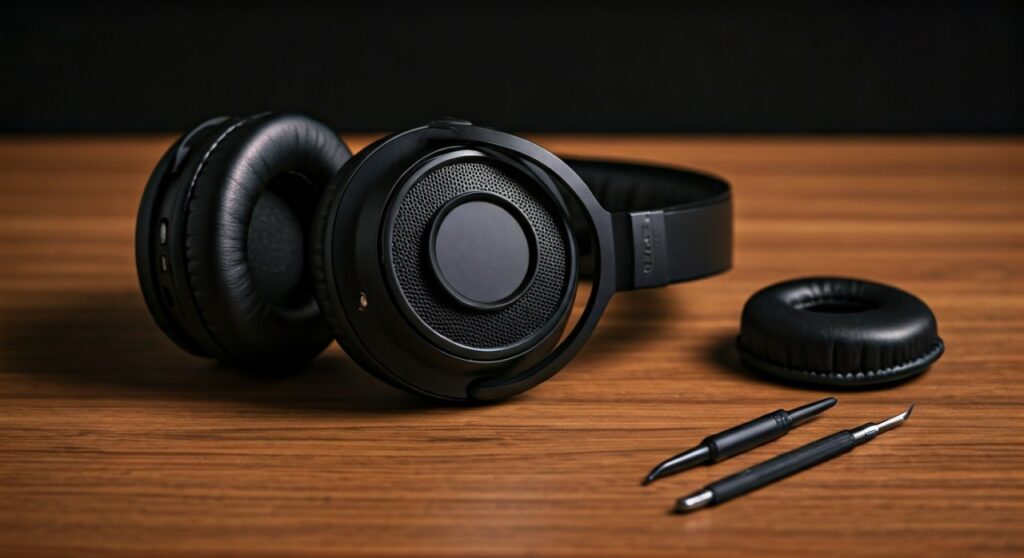
For Snap-on pads, use a plastic spudger or a guitar pick to gently pry the plastic ring away from the ear cup. Avoid using metal screwdrivers as they can scratch the housing.
For Adhesive pads, use a hairdryer on low heat for 30 seconds to soften the glue. Slowly peel the pad away. Ensure you use isopropyl alcohol to clean the remaining residue off the plastic before applying new pads.
Step 3: Align and Install
Align the notches of the new pads with the ear cup. For flange-fit pads, it’s often easiest to start at the top and work your way around, stretching the material slightly to fit the groove.
Method 2: How to Fix Skullcandy Headphones Ear Pads
Skullcandy headphones, particularly the Crusher and Hesh series, are popular for their bass-heavy profiles. However, their pads often suffer from seam splitting.
Tools Needed:
- Replacement pads (compatible with Skullcandy Crusher Evo or Hesh 3).
- Plastic prying tool.
- Alcohol wipes.
The Process:
- Pry: Insert your tool between the ear pad’s leatherette and the plastic frame. Skullcandy pads usually “click” out.
- Clean: Use the alcohol wipe to remove dust and skin oils from the driver mesh.
- Snap: Line up the tabs. You should hear 4 to 6 distinct clicks.
- Test: Give the pad a gentle tug. If it wobbles, a clip hasn’t engaged.
Expert Tip: If you want to upgrade your Skullcandy experience, look for cooling gel pads. These prevent the “sweaty ear” syndrome common with the original factory leatherette.
Method 3: Repairing Minor Tears and Peeling
If you aren’t ready to buy new pads, you can attempt a “surgery” on the existing ones.
Using Liquid Electrical Tape or Vinyl Repair
This is a “hacker” fix for small cracks. Liquid electrical tape stays flexible when dry.
- Clean the area with a damp cloth.
- Apply a very thin layer of the liquid over the crack.
- Let it cure for at least 12 hours.
- Warning: This will change the texture of the pad and may look slightly messy.
Using Ear Pad Covers
If your pads are flaking but the foam is still comfortable, silicone covers or stretchable knit covers are an excellent choice.
- Silicone covers (like those from EarFun) are great for the gym as they are waterproof.
- Knit covers are breathable and can be thrown in the washing machine.
Comparison of Repair Methods
| Method | Cost | Durability | Difficulty | Impact on Sound |
|---|---|---|---|---|
| Full Replacement | $15 – $50 | High (1-3 years) | Moderate | Restores original/Better |
| Fabric Covers | $8 – $15 | Moderate | Easy | Slight Muffling |
| Adhesive/Glue Fix | $5 – $10 | Low | Hard | No Change |
| DIY Sewing | Free | Moderate | Very Hard | No Change |
The Impact of Material Choice on Sound Quality
When fixing your ear pads, the material you choose will drastically change the acoustic signature of your headphones.
- Protein Leather: Provides the best seal. This keeps the bass tight and maximizes ANC efficiency.
- Velour/Fabric: More breathable and comfortable for long sessions. However, it “leaks” sound. You will notice a reduction in sub-bass and an increase in high-frequency airiness.
- Hybrid (Leather outside, Velour face): The “best of both worlds” often used by brands like Brainwavz. It maintains the bass seal while keeping your skin cool.
Expert Tips for Extending Ear Pad Life
As someone who has refurbished hundreds of headphones, I’ve found that preventative maintenance is 10x more effective than any repair.
- The Post-Gym Wipe: Sweat is acidic. If you use headphones for working out, wipe the pads with a chemical-free baby wipe immediately after your session.
- Avoid Direct Sunlight: UV rays accelerate the breakdown of synthetic leathers. Never leave your headphones on a car dashboard.
- Storage Matters: Use a dedicated headphone stand. Hanging headphones by the pads can cause them to misshapen over time.
- Silica Gel: Keep a small silica gel packet inside your headphone carrying case to absorb excess moisture.
Frequently Asked Questions (FAQs)
Can I wash my headphone ear pads?
You can wash removable fabric pads (like those on the AirPods Max) in warm soapy water. However, never soak leather or protein leather pads, as moisture trapped inside the foam will lead to mold and a permanent “musty” smell. Instead, use a damp cloth to wipe the surface.
Why do my new ear pads sound different?
New pads are stiffer and have a different internal volume than your old, compressed ones. It usually takes 20-40 hours of use for the foam to “break in” and for the sound signature to stabilize.
Is it worth fixing cheap headphones?
If the headphones cost under $30, the cost of high-quality replacement pads ($15+) might not be worth it. However, for any “mid-fi” or “hi-fi” gear (over $100), fixing the pads is a highly sustainable and cost-effective move.
Where can I buy replacement pads for Skullcandy?
You can find official replacements on the Skullcandy website, but third-party sellers on Amazon or eBay (like Defean or Geekria) often offer thicker, more durable options for a lower price.