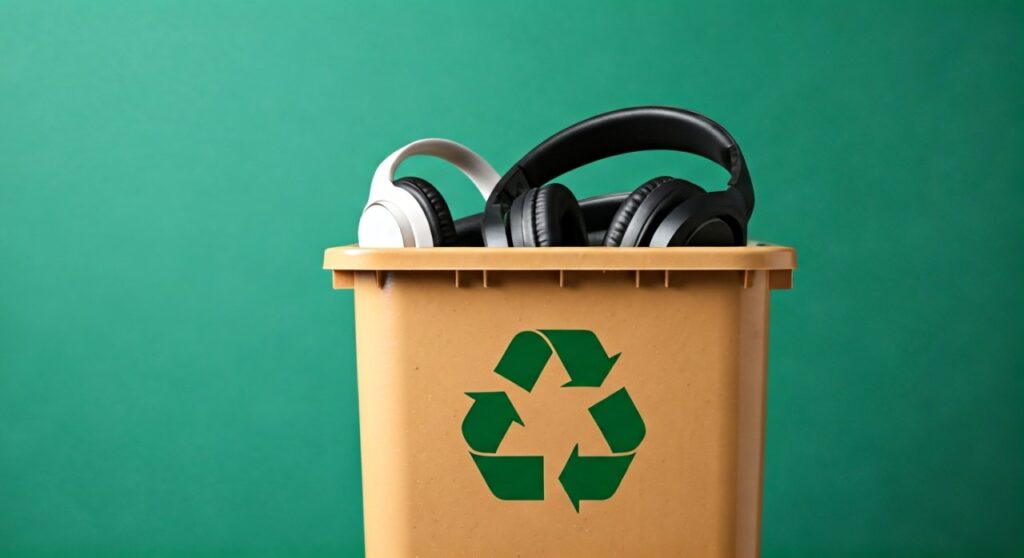
To properly dispose of headphones, you should never toss them in your regular household trash; instead, take them to a certified electronic waste (e-waste) recycling center, use a retailer trade-in program, or donate them if they still function. This ensures that toxic components like lithium-ion batteries and heavy metals are handled safely while reclaiming valuable materials like copper and gold.
Key Takeaways for Headphone Disposal
If you are in a hurry, here is the fastest way to decide what to do with your old gear:
| Condition | Best Disposal Method | Where to Go |
|---|---|---|
| Working Perfectly | Sell or Donate | eBay, Mercari, Goodwill, or local schools. |
| Slightly Damaged | Repair or Refurbish | Replace ear pads or use iFixit guides. |
| Completely Broken | E-waste Recycling | Best Buy, Staples, or municipal drop-offs. |
| High-End Brands | Trade-In Programs | Apple Trade-In, Bose, or Sony recycling. |
| Wireless/Bluetooth | Battery-Specific Recycling | Call2Recycle locations (essential for fire safety). |
Why You Should Never Simply Throw Away Headphones
Many people ask, “can you throw away headphones” in the kitchen bin? The answer is a definitive no. Headphones are not just plastic and wire; they are complex electronic devices that pose significant environmental risks.
When headphones end up in a landfill, their outer plastic casings can take hundreds of years to decompose. More importantly, the internal components like lead, cadmium, and mercury can leach into the groundwater, poisoning local ecosystems.
As a tech enthusiast who has managed hardware lifecycles for years, I have seen the “junk drawer” phenomenon. We hold onto old AirPods or Bose QuietComforts because we don’t know where they go. However, keeping them indefinitely is a fire hazard, especially as lithium-polymer batteries age and potentially swell.
Step 1: Evaluate the Condition of Your Headphones
Before you look for a bin, determine if the headphones are truly “dead.”
- Check the Ear Pads: Often, headphones look broken because the “leather” is peeling. You can buy replacement pads for $10-$20 on Amazon, making them like new.
- Test the Connection: If one side is silent, it might just be a lint-clogged jack or a frayed cable that a simple solder job can fix.
- Battery Health: For wireless models, if the battery only lasts 10 minutes, the unit is a candidate for professional recycling rather than donation.
Step 2: Prepare Your Headphones for Disposal
You cannot just drop electronics off without a little preparation.
- Factory Reset: If you are disposing of “smart” headphones (like Sony WH-1000XM5 or Apple AirPods Max), ensure you unpair them from your devices and remove them from your Find My or Google Assistant accounts.
- Remove Personal Data: While headphones don’t store much data, some high-end models store voice profiles or Wi-Fi credentials.
- Clean Them: Especially if donating, use 70% Isopropyl Alcohol to sanitize the ear cups and headband. It’s a matter of hygiene and respect for the next user.
- Manage the Battery: If the battery is removable (rare in modern headphones), take it out and tape the terminals before recycling.
Step 3: Utilize Retailer Recycling Programs (The Easiest Way)
The most accessible way to dispose of headphones is through major retailers. These companies often have massive contracts with e-waste processors.
Best Buy Recycling
Best Buy is arguably the king of e-waste in the US. They accept almost all electronics, including headphones, regardless of where you bought them. Simply walk into any store and look for the kiosks near the entrance or head to the Customer Service desk.
Staples and Office Depot
These stores focus heavily on office tech but readily accept peripherals. They are excellent for wired headphones and computer headsets.
Apple Trade-In
If you have AirPods, Beats, or any Apple-branded audio gear, use the Apple Trade-In program. Even if the device has zero value, Apple will recycle it for free. I once traded in a pair of broken Beats Solo3 and, while I didn’t get cash, I received the peace of mind that they were being stripped for raw materials properly.
Step 4: Specialized Manufacturer Programs
Many premium audio brands have committed to the Circular Economy.
- Bose: Offers a “Trade-Up” program in some regions where you can get a discount on new models by returning your old ones.
- Sennheiser: Occasionally runs recycling drives focused on professional-grade equipment.
- Sony: Partners with ERI (Electronic Recyclers International) to provide drop-off points for all their consumer electronics.
Step 5: Finding a Certified E-Waste Facility
If you don’t live near a major retailer, you need to find a local specialist. Look for facilities that carry R2 (Responsible Recycling) or e-Stewards certifications.
These certifications ensure that the facility doesn’t just ship the waste to developing nations where it is burned in open pits. Instead, they use advanced machinery to shred the headphones and use magnets/EDX sensors to separate:
- Ferrous Metals (Steel components)
- Non-Ferrous Metals (Copper, Aluminum)
- Precious Metals (Gold plating on connectors)
- Plastic Granules
The Environmental Impact: By The Numbers
To understand why we shouldn’t ask can you throw away headphones, look at the scale of the e-waste crisis.
| Material | Impact of Recycling |
|---|---|
| Copper | Recycling saves 85% of the energy used in primary production. |
| Neodymium | Rare earth magnets in drivers are difficult to mine; recycling reduces habitat destruction. |
| Plastic | Prevents microplastics from entering the ocean via landfill runoff. |
| Lithium | Reduces the need for destructive brine mining in South America. |
According to the Global E-waste Monitor, the world generated 62 million tonnes of e-waste in 2022. Only a small fraction is properly recycled. By taking ten minutes to find a drop-off point, you are directly preventing this number from growing.
Creative Ways to Repurpose Old Headphones
If your headphones still work but you just upgraded, don’t recycle them yet!
- The “Gym” Pair: Keep them in your gym bag so you never forget your good ones.
- The “Emergency” Backup: Keep a wired pair in your car’s glove box.
- Educational Tools: Local schools or “Maker Spaces” often love broken tech for students to take apart and learn about circuitry.
- DIY Projects: Use the internal speakers to create a DIY “Lo-Fi” microphone for music production.
Frequently Asked Questions (FAQs)
Can you throw away headphones in the recycle bin at home?
No, most curbside recycling programs are designed for paper, glass, and plastic bottles. Headphones contain complex circuitry and batteries that will contaminate the recycling stream and can even cause fires in the sorting trucks.
How do I dispose of headphones with built-in batteries?
Bluetooth headphones must be taken to a dedicated e-waste recycler or a store like Best Buy. The lithium-ion battery inside is highly flammable if punctured by trash compactors.
Does it cost money to recycle headphones?
Usually, no. Most major retailers and municipal e-waste events offer free recycling for small consumer electronics. Some specialized private recyclers might charge a small fee for large bulk loads, but for a single pair of headphones, it is almost always free.
Can I donate broken headphones?
No. Charities like Goodwill or The Salvation Army spend millions of dollars every year disposing of broken items that people “donate.” If they don’t work, take them to a recycler, not a charity.
What happens to headphones after I drop them off?
They are typically sent to a processing plant where they are manually dismantled or mechanically shredded. The different materials are separated and sold back to manufacturers to create new products, closing the loop of the manufacturing cycle.