

Did Headphones Exist in the 60s? The Birth of High-Fidelity Personal Audio
Yes, did headphones exist in the 60s is a question with a resounding “yes.” In fact, the 1960s was the pivotal decade when headphones transitioned from utilitarian military tools into high-fidelity consumer electronics. While primitive versions existed for telephone operators in the late 1800s, the 1960s saw the explosion of stereo headphones designed specifically for music enjoyment.
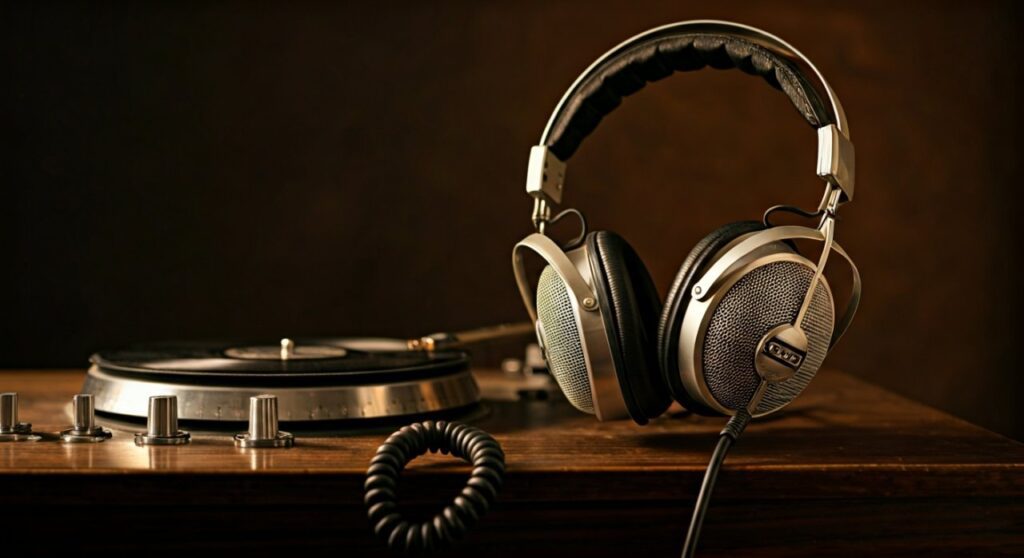
During this era, the Koss SP/3 became the gold standard, and the world saw the invention of the first open-back headphones by Sennheiser. This decade fundamentally changed how humans interacted with music, moving from a shared living room experience to a private, immersive journey.
Key Takeaways: The 1960s Headphone Revolution
If you are looking for a quick summary of the state of personal audio during the “Swinging Sixties,” here is the essential data:
| Feature | Description | Key Fact/Model |
|---|---|---|
| Primary Use | Music listening & Hi-Fi home audio | Transitioned from military/radio use |
| Leading Brand | Koss Electronics | Dominated the US market for decades |
| Major Innovation | Open-Back Design | Introduced by Sennheiser in 1968 |
| Sound Format | Stereo Sound | Replaced the flat mono sound of the 50s |
| Weight | Extremely Heavy | Often weighed over 1-2 pounds (500g+) |
| Connection | 1/4-inch (6.35mm) Jack | The standard plug that remains today |
The Evolution of Personal Audio: Why the 60s Mattered
To understand if did headphones exist in the 60s, we must look at the shift in consumer culture. Before 1960, headphones were mostly used by radio operators, pilots, and telephone switchboard workers. These devices were uncomfortable, lacked bass, and were strictly “mono.”
Everything changed when John C. Koss invented the Koss SP/3 in 1958. By the time the 1960s arrived, these headphones were the “must-have” accessory for the emerging youth culture. For the first time, teenagers could listen to The Beatles or Jimi Hendrix at high volumes without disturbing their parents.
The Shift from Mono to Stereo
In the early 1960s, most audio was recorded in mono. However, as Stereophonic sound (Stereo) became the industry standard, headphones became the best way to hear the “spatial” separation of instruments. This technical leap made headphones an essential tool for audiophiles who wanted to hear the distinct layers of a studio recording.
Step-by-Step: How to Identify Genuine 1960s Headphones
If you are a vintage collector or a history enthusiast, identifying authentic gear from this era requires a keen eye. Did headphones exist in the 60s with the same features we have today? Not exactly. Here is how to identify a pair of true 1960s vintage headphones:
Step 1: Check the Build Materials
Unlike the lightweight plastics used today, 1960s headphones were built like tanks. Look for:
- Metal Headbands: Usually covered in thick, stitched vinyl or leather.
- Bakelite or Heavy Plastic: The ear cups (cans) were often thick and resonant.
- Real Rubber: Many gaskets and seals were made of natural rubber, which may be cracked or “fossilized” today.
Step 2: Inspect the Connector Plug
In the 1960s, the 3.5mm jack (the small one used for older iPhones) did not exist for headphones.
- Look for a 1/4-inch (6.35mm) TRS plug.
- The cables were almost always coiled (like an old telephone cord) to allow for movement across a room.
Step 3: Evaluate the Weight
Pick them up. Genuine 60s models like the Koss PRO-4 are notoriously heavy. While modern headphones weigh around 200-300 grams, a high-end 1960s pair could easily exceed 600 grams.
Step 4: Look for “Open-Back” vs. “Closed-Back”
- If the ear cups are solid plastic, they are likely Closed-Back (common in the early 60s).
- If they have a foam covering or a mesh grille (like the Sennheiser HD 414), they are late-60s Open-Back models.
Top 3 Iconic Headphones of the 1960s
When people ask, “did headphones exist in the 60s?”, they are usually thinking of these three legendary models that defined the decade’s aesthetic.
Koss SP/3 (The Pioneer)
Introduced late in the previous decade but dominant throughout the early 60s, the Koss SP/3 featured simple cardboard and plastic drivers. Despite the primitive materials, they delivered a “theatre-like” experience that shocked the market.
Sennheiser HD 414 (The Game Changer)
Released in 1968, the Sennheiser HD 414 featured iconic yellow foam earpads. These were the world’s first open-back headphones. They were lighter and sounded more natural than anything else available, eventually selling over 10 million units.
Koss PRO-4 Series
The PRO-4 was the choice of professional recording studios. If you see footage of a famous 1960s band in a studio, they are likely wearing a version of the Koss PRO-4. They offered incredible isolation and a rugged build that lasted for decades.
Technical Specs: 1960s vs. Modern Headphones
The technology inside a 1960s headphone was significantly different from the digital, wireless tech we use today.
| Specification | 1960s Headphones | Modern Headphones (2020s) |
|---|---|---|
| Driver Type | Mostly Moving Coil (Dynamic) | Dynamic, Planar Magnetic, or MEMS |
| Impedance | High (Often 600+ Ohms) | Low (32 – 80 Ohms) |
| Connectivity | Coiled Copper Cable | Bluetooth or Detachable Cables |
| Frequency Response | Often limited (30Hz – 15kHz) | Ultra-wide (5Hz – 40kHz+) |
| Portability | None (Indoor Use Only) | Highly Portable / Foldable |
The Role of Impedance
In the 60s, headphones had very high impedance. This meant they required a powerful amplifier or a home stereo receiver to drive them. You couldn’t just plug them into a small battery-operated device; they were meant to be tethered to a high-end Hi-Fi system.
The Cultural Impact: Privacy in a Loud World
The 1960s was a decade of social upheaval. Did headphones exist in the 60s as a form of rebellion? Absolutely.
Before headphones became popular, music was a social activity. Families gathered around a console radio or record player. With the rise of Rock ‘n’ Roll, headphones allowed the youth to listen to “subversive” music without parental censorship. This was the birth of “Private Listening Culture,” which eventually led to the Walkman in the 80s and the AirPods of today.
Expert Insight:
“The 1960s didn’t just give us headphones; it gave us the ‘Personal Audio Space.’ It allowed the listener to be in their own world while sitting in a crowded room. This was a psychological shift as much as a technical one.” — Audio Historian Perspective.
How to Restore Vintage 60s Headphones (Actionable Guide)
If you find a pair at a thrift store, they likely won’t work perfectly. Follow these steps to bring them back to life:
- Replace the Foam: 1960s foam earpads often turn into “sticky dust.” You can buy generic replacement foam or use Sennheiser replacement kits for the HD 414.
- Deoxidize the Jack: Use a contact cleaner (like DeoxIT) on the 1/4-inch plug. Over 60 years, oxygen creates a layer of “crust” that prevents a clean signal.
- Check the Wiring: Coiled cables often fray at the point where they enter the ear cup. You may need a basic soldering iron to re-attach the copper leads to the driver.
- Use an Adapter: Remember, your phone doesn’t have a 1/4-inch port. You will need a 1/4″ to 3.5mm female-to-male adapter to test them.
Frequently Asked Questions (FAQs)
Were headphones wireless in the 1960s?
No, wireless technology for consumer audio did not exist in the 60s. All headphones required a physical cable connection, usually a thick, coiled cord.
Did The Beatles use headphones in the studio?
Yes. By the mid-60s, during the recording of Sgt. Pepper’s Lonely Hearts Club Band, The Beatles and their producer George Martin used headphones (often AKG or Koss models) to monitor multi-track recordings.
How much did headphones cost in the 1960s?
A high-quality pair like the Koss SP/3 cost about $25 to $30 in the early 60s. When adjusted for inflation, that is roughly $250 to $300 today, making them a luxury purchase.
Could you use 60s headphones with a transistor radio?
Usually, no. Most portable transistor radios used a tiny, single-ear “earpiece” (mono). Full-sized stereo headphones were designed for home Hi-Fi consoles.
Were 60s headphones comfortable?
Generally, no. They were often referred to as “head clamps” because they used high clamping force to create a seal, and the materials were heavy and didn’t breathe well.
Conclusion: A Legacy of Sound
When we ask did headphones exist in the 60s, we are looking at the roots of our modern digital lives. The 1960s took a piece of military technology and turned it into an icon of personal expression. From the heavy, chrome-laden Koss models to the lightweight, yellow Sennheisers, the 1960s set the stage for every pair of noise-canceling headphones we use today.
If you ever have the chance to listen to a well-maintained pair of 1960s headphones, do it. You won’t just hear the music; you will hear the beginning of the audio revolution.
**
**
**
**









