
Why Do Kids in the USA Need Headphones for School?
Yes, the vast majority of kids in the USA need headphones for school today because of the rapid integration of 1:1 technology programs. Most school districts now require students from Kindergarten through 12th Grade to bring their own headphones to facilitate personalized digital learning, language apps, and standardized state testing.
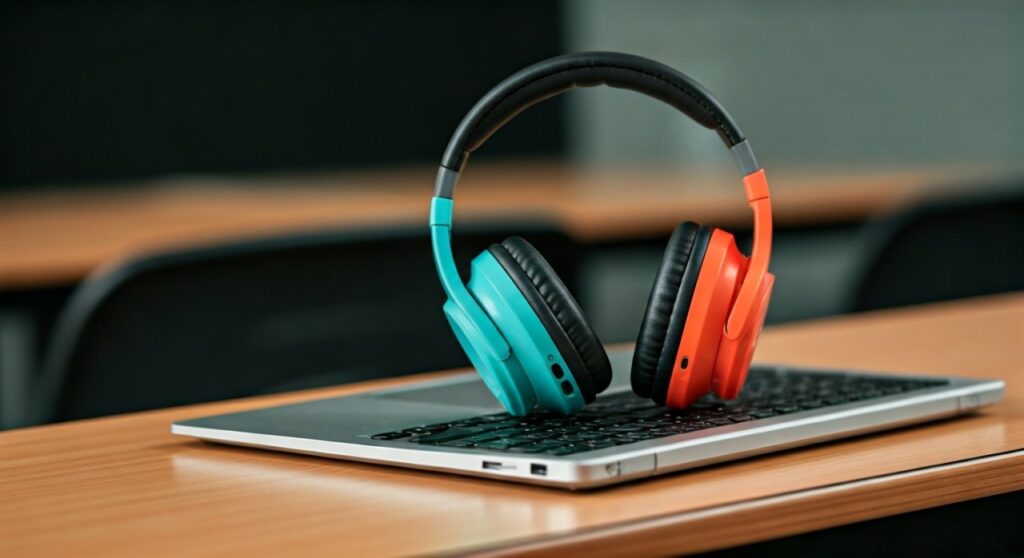
Without a reliable pair of headphones, students often struggle to hear instructional videos or participate in interactive assignments without distracting their peers. As classrooms shift toward blended learning environments, a pair of durable, volume-limited headphones has become as essential as a backpack or a notebook.
Key Takeaways for Parents and Educators
If you are in a hurry to complete your back-to-school shopping, here are the most critical points to remember:
- Mandatory Requirement: Most US school supply lists now include headphones as a non-negotiable item for Chromebook or iPad use.
- Hearing Safety: Experts recommend a volume limit of 85dB to protect children’s developing eardrums from long-term damage.
- Connectivity: Wired headphones with a 3.5mm jack are still the gold standard for school due to their “plug-and-play” simplicity and lack of battery issues.
- Testing Compliance: Many state-mandated tests (like MAP, iReady, or SBAC) require headphones for the auditory portions of the exam.
- Durability Matters: Look for tangle-free braided cords and flexible headbands to survive the daily wear and tear of a student’s backpack.
The Role of Headphones in Modern American Classrooms
The landscape of American education changed significantly after 2020. The adoption of Learning Management Systems (LMS) like Google Classroom and Canvas means that even in-person instruction frequently involves digital media.
Personalized and Differentiated Learning
Teachers use software like Lexia, DreamBox, or Duolingo to allow students to work at their own pace. Headphones allow a teacher to have 25 students working on 25 different levels of a lesson simultaneously without the room descending into sonic chaos.
In my experience working with elementary educators, the use of audio-assisted reading is a game-changer for English Language Learners (ELL). Being able to hear the pronunciation of words privately builds confidence and improves literacy rates significantly.
Focus and Sensory Management
For many students, especially those with ADHD or Sensory Processing Disorders, the classroom can be an overwhelming environment. Noise-canceling headphones or even simple over-ear models provide a physical boundary that helps students focus on their specific tasks.
Standardized Testing Requirements
In the USA, federal and state laws require periodic assessment of student progress. Tests such as the Smarter Balanced Assessment Consortium (SBAC) and the Partnership for Assessment of Readiness for College and Careers (PARCC) often include text-to-speech features.
Schools rarely have enough “loaner” sets for every student. Having a personal pair ensures that the student is comfortable and that the equipment is hygienic and functional on testing day.
Choosing the Right Type: Wired vs. Wireless
When determining if kids in the USA need headphones for school, the next question is always: “Which type?” While Bluetooth earbuds are popular for home use, they are often discouraged or even banned in many elementary and middle school classrooms.
| Feature | Wired Headphones (Recommended) | Wireless/Bluetooth Headphones |
|---|---|---|
| Reliability | No battery required; always ready. | Requires regular charging. |
| Ease of Use | Plug and play into 3.5mm jack. | Requires “pairing” which can be difficult for kids. |
| Latency | Zero lag between video and audio. | Potential for audio delay. |
| Cost | Generally more affordable ($15-$30). | Higher price point ($40-$100+). |
| Compatibility | Works with almost all school Chromebooks. | Some older school devices lack Bluetooth. |
Safety First: The 85dB Volume Limit Rule
One of the biggest concerns for parents is Noise-Induced Hearing Loss (NIHL). According to the CDC, nearly 12.5% of children and adolescents in the USA have permanent damage to their hearing caused by excessive noise exposure.
When shopping for school headphones, look for models specifically labeled as “Volume Limited.” These devices have internal circuitry that caps the sound at 85 decibels (dB). This is the maximum level recommended by the World Health Organization (WHO) for up to eight hours of listening.
Step-by-Step Guide to Buying Headphones for School
Follow these steps to ensure you buy a pair that lasts the entire school year and provides the best value.
Step 1: Check the School Supply List
Before buying, check your specific school’s website or the TeacherLists app. Some schools specify “no earbuds for grades K-3” or require a specific connector like USB-C if they use the latest iPad Pro models.
Step 2: Prioritize Comfort and Fit
For younger children (ages 5-10), on-ear or over-ear headphones are much better than earbuds. Earbuds can be uncomfortable for small ear canals and are easily lost. Look for padded ear cushions and an adjustable headband.
Step 3: Evaluate Cord Durability
The cord is usually the first part to fail. Look for braided nylon cables which are resistant to kinking and chewing. A 90-degree L-shaped plug is also beneficial as it is less likely to be snapped off while plugged into a laptop on a small desk.
Step 4: Consider a Built-in Microphone
With the rise of Flip (formerly Flipgrid) and other video response tools, students often need to record their voices. A built-in boom microphone or an in-line mic allows them to record clearly even in a noisy classroom.
Step 5: Look for Portability
Students frequently move between the classroom, the library, and home. Folding headphones that fit easily into a side pocket of a backpack are highly recommended to prevent the frame from snapping.
Top Recommended Brands for US Students
Based on durability tests and classroom feedback, these brands consistently rank high for school use:
- Noot K11: Highly affordable, foldable, and features a tangle-free cord.
- JLab JBuddies: Excellent volume-limiting technology and very comfortable for long wear.
- LilGadgets Untangled: A premium option for those who specifically need high-quality Bluetooth with a “SharePort” feature.
- Logitech Education Wired: Specifically designed for the classroom environment with high-grade plastics.
Maintenance and Hygiene Tips
Since kids in the USA need headphones for school daily, these devices can become a breeding ground for bacteria.
- Weekly Cleaning: Use a non-abrasive disinfectant wipe on the ear pads and headband.
- Labeling: Use a permanent marker or a label maker to put your child’s name on the headband. Headphones are one of the most commonly misplaced items in schools.
- Storage: Provide your child with a small mesh bag or a hard case. Tossing headphones loosely into a backpack filled with heavy textbooks is the fastest way to break them.
Frequently Asked Questions
Can my child use their gaming headset for school?
Yes, most gaming headsets with a 3.5mm jack will work perfectly with school Chromebooks. However, ensure the headset isn’t too bulky for their desk space and that the microphone isn’t overly distracting to other students.
Why do some schools ban Bluetooth headphones?
Schools often ban Bluetooth to avoid the “tech support” burden on teachers. Pairing 30 sets of headphones simultaneously can cause interference, and if a student forgets to charge them, they cannot participate in the lesson.
Are earbuds safe for middle schoolers?
While earbuds like AirPods are popular, they do not offer the same level of physical protection or volume limiting as over-ear models. If your middle schooler uses earbuds, ensure they understand the importance of keeping the volume below 60%.
Do I need to buy expensive noise-canceling headphones?
Generally, no. Passive noise isolation (the physical padding of the ear cup) is usually enough to drown out classroom chatter. Active Noise Canceling (ANC) is an expensive feature that is usually unnecessary for standard schoolwork.
What if my child loses their headphones frequently?
If your child is prone to losing items, avoid high-end brands. Stick to “bulk-style” educational headphones that cost under $15. Many parents buy a “two-pack” at the start of the year so a spare is always available in the locker.