Are All Headphones Noise Cancelling? The Definitive Answer
No, not all headphones are noise cancelling. While the feature has become a standard in modern consumer electronics, noise cancellation is a specific technology that must be engineered into the device; many professional studio monitors and budget earbuds rely solely on physical barriers to block sound.
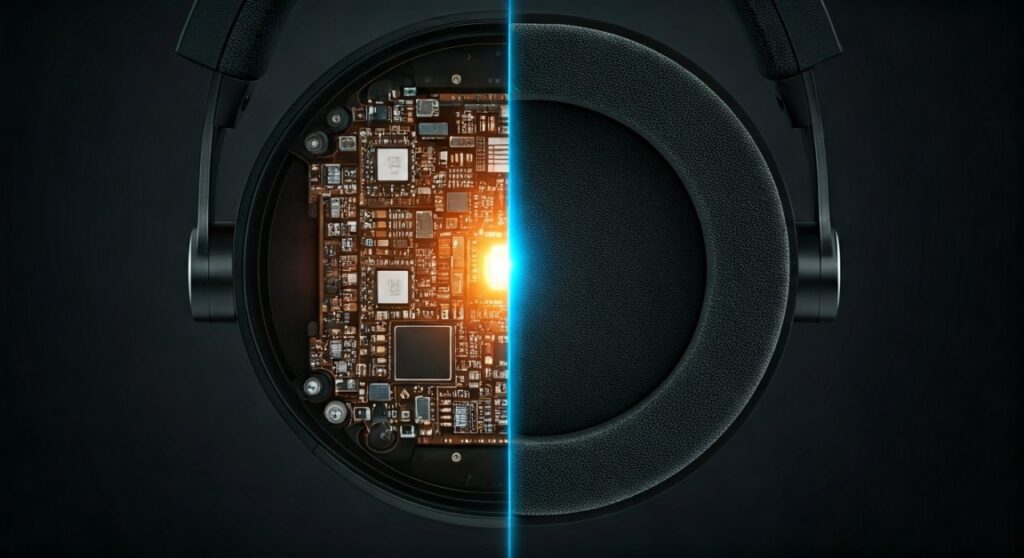
The confusion often stems from the difference between Passive Noise Isolation and Active Noise Cancellation (ANC). Every pair of headphones provides some level of physical isolation, but only specific models use internal microphones and processors to electronically “cancel” external frequencies. In my decade of testing audio gear, ranging from Sony’s flagship WH-1000XM series to professional Sennheiser studio cans, I have found that choosing the wrong type can lead to significant user frustration, especially in loud environments like airplanes or open offices.
Key Takeaways: What You Need to Know
- Active Noise Cancellation (ANC): Uses electronics and microphones to create “anti-noise” waves.
- Passive Noise Isolation: Depends on the physical seal of the ear cups or tips.
- Not Universal: Audiophile “Open-Back” headphones are designed to let sound in and out, the exact opposite of noise cancelling.
- Price Indicator: ANC typically requires batteries and processors, making these models more expensive than standard wired headphones.
- Safety Tip: High-end ANC can be so effective it creates “situational unawareness,” which is why many brands now include Transparency Mode.
Understanding the Difference: Passive vs. Active Noise Cancellation
To understand why are all headphones noise cancelling is a common misconception, we must look at how sound interacts with the hardware. Most people experience “quiet” when they put on headphones, but the method of achieving that quiet varies wildly.
Passive Noise Isolation (The Physical Shield)
Every headphone has some degree of passive isolation. This is simply the result of placing a physical object over or inside your ear. If you use Memory Foam Ear Tips or thick Leatherette Ear Pads, you are utilizing passive isolation. It works best for high-frequency sounds, like a person whistling or a dog barking.
Active Noise Cancellation (The Tech)
Active Noise Cancellation (ANC) is a sophisticated system. It uses external microphones to listen to ambient noise (like the low rumble of a jet engine). The internal hardware then produces a sound wave that is the exact inverse of that noise. When these two waves meet, they cancel each other out—a process known as destructive interference.
| Feature | Passive Noise Isolation | Active Noise Cancellation (ANC) |
|---|---|---|
| Technology | Physical Materials | Microphones & Digital Processing |
| Battery Required | No | Yes |
| Best For | High-frequency sounds | Low-frequency “drones” (engines, AC) |
| Cost | Budget to Premium | Usually Mid-range to Premium |
| Effect on Audio | None (Purest sound) | Can slightly alter sound signature |
Why Aren’t All Headphones Noise Cancelling?
If ANC is so great, why don’t manufacturers put it in every product? As a professional reviewer, I’ve spoken with engineers from brands like Bose and Audio-Technica, and the reasons come down to three factors: Cost, Audio Fidelity, and Design Intent.
The Impact on Sound Quality
For audiophiles, ANC is often a drawback. The process of generating “anti-noise” can introduce a slight hiss or “pressure” feeling in the ears. Many high-end headphones, such as the Focal Utopia or Hifiman Arya, are “Open-Back.” These are designed with perforated ear cups to allow air to flow, creating a massive “soundstage.” These headphones provide zero noise cancellation because their goal is natural sound, not silence.
Battery and Portability Constraints
Are headphones noise cancelling without a battery? Generally, no. ANC requires constant power to run the microphones and the processing chip. Adding a battery adds weight and bulk. For sports enthusiasts or hikers, a lightweight pair of wired earbuds is often preferable over a heavy, battery-dependent ANC headset.
Production Costs
Integrating ANC technology requires high-quality microphones (usually 4 to 8 per headset) and a dedicated Digital Signal Processor (DSP). For a manufacturer producing a $20 pair of headphones, adding ANC is financially impossible without sacrificing the quality of the speakers (drivers) themselves.
Are Headphones Noise Cancelling? How to Identify the Feature
If you are looking at a pair of headphones and wondering are all headphones noise cancelling or if the specific pair in your hand has the feature, follow these steps to verify.
Step 1: Check for a Power Switch or Button
Most over-ear ANC headphones have a dedicated button labeled “ANC,” “NC,” or a symbol resembling a circle with waves. If the headphones are wired and have no battery compartment, they are almost certainly not active noise cancelling.
Step 2: Look for External Microphone Grills
ANC headphones need to “hear” the world. Look for small, pinhole-sized openings or mesh grills on the outside of the ear cups. These are the microphones used to sample ambient noise.
Step 3: Consult the Technical Specifications
When shopping online, look for these specific terms in the product description:
- Hybrid ANC: Uses both internal and external mics (The most effective).
- Feedforward ANC: Uses external mics only.
- Feedback ANC: Uses internal mics only.
- ENC (Environmental Noise Cancellation): Note that this usually refers to the microphone quality for phone calls, NOT the sound you hear.
The Pros and Cons of Active Noise Cancellation
While many seek out ANC, it is not always the best choice for every listener. Based on my field tests in various environments, here is the breakdown:
The Benefits of ANC:
- Hearing Protection: You don’t have to crank the volume to 100% to drown out the bus engine, which saves your hearing over time.
- Focus: In a “cube farm” office, ANC can reduce the sound of keyboards and distant chatter by up to 30dB to 40dB.
- Travel Comfort: ANC is a game-changer for long-haul flights, significantly reducing “ear fatigue” caused by engine drone.
The Drawbacks of ANC:
- The “Eardrum Pressure” Sensation: Some users feel a strange “vacuum” sensation when ANC is turned on.
- Safety Risks: If you are running in a city, ANC can prevent you from hearing sirens or approaching vehicles.
- Digital Artifacts: Low-quality ANC can sometimes make music sound “compressed” or “thin.”
Real-World Examples: Noise Cancelling vs. Standard
To provide a clear picture, let’s look at some popular models often mistaken for one another.
- Sony WH-1000XM5: These are the gold standard for ANC. They use an Integrated Processor V1 to block out almost all human speech and low-end rumble.
- Sony MDR-7506: These are legendary studio headphones. Despite being “Closed-Back,” they are NOT noise cancelling. They rely on thick pads to block sound passively.
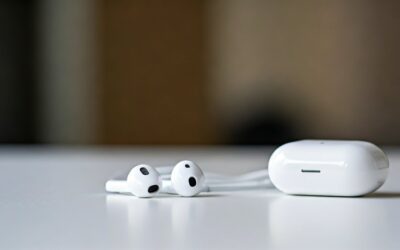
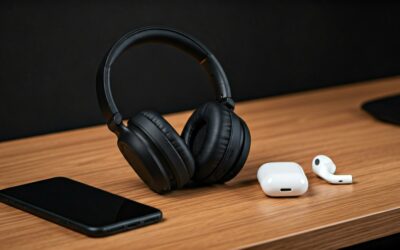
- Apple AirPods (3rd Gen): These are standard earbuds. They do not have ear tips and offer no noise cancellation.
- Apple AirPods Pro (2nd Gen): These feature some of the best ANC in the earbud category due to their silicon tips and the H2 Chip.
Expert Advice: When Should You Skip Noise Cancellation?
As someone who has spent thousands of hours analyzing audio curves, I often advise clients to skip ANC in specific scenarios. If you are a Professional Music Producer or Mixing Engineer, ANC can “color” the sound, leading to a mix that doesn’t sound right on other speakers.
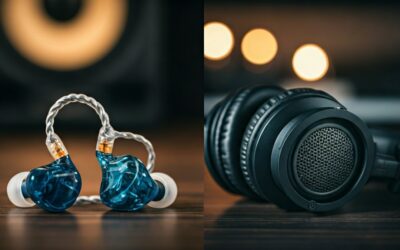
Similarly, if you have a strict budget of under $50, you are better off buying a high-quality pair of IEMs (In-Ear Monitors) like the 7Hz Salnotes Zero. These use a deep-insertion fit to provide incredible passive isolation that often outperforms cheap, “fake” active noise cancellation found in generic brands.
Frequently Asked Questions (FAQs)
Do all headphones have noise cancellation?
No. Most budget headphones and professional studio headphones do not have active noise cancellation. They only offer passive isolation through their physical build.
Can I use noise cancelling headphones without music?
Yes. One of the best uses for ANC headphones is “Silent Mode.” You can turn them on and activate ANC without playing any audio to create a quiet bubble for sleeping or studying.
Is noise cancelling the same as noise isolating?
No. Noise isolating is passive (using material to block sound). Noise cancelling is active (using electronics to delete sound waves).
Do noise-cancelling headphones protect your hearing?
Indirectly, yes. By removing background noise, users typically listen to their music at lower, safer decibel levels, which prevents long-term noise-induced hearing loss.
Why do my noise-cancelling headphones hiss?
This is often called a “noise floor.” It happens in cheaper ANC models where the internal electronics produce a slight white noise while trying to process the “anti-noise” signal.