
Understanding the Audio Signal: Are Headphone Outputs Line Level?
No, headphone outputs are not line level, although they are closely related. While both signals carry analog audio, a headphone output is designed to drive the physical drivers of a headphone (requiring power and varying impedance), whereas a line level signal is a standardized voltage intended for transfer between high-impedance inputs of audio components like mixers, interfaces, and amplifiers.
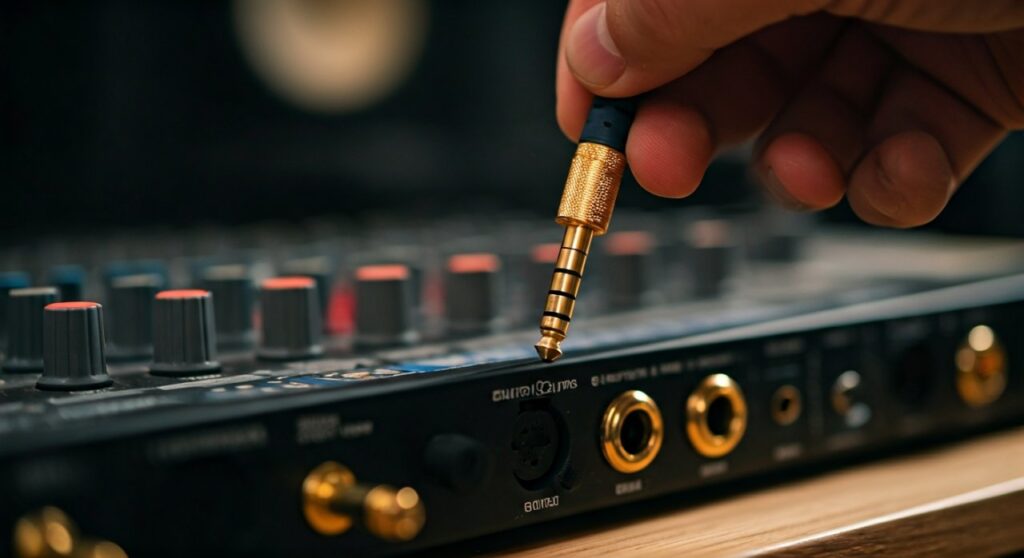
Mixing these up can lead to signal distortion, high noise floors, or even hardware damage. If you have ever plugged a pair of high-end headphones into a standard line-out jack and heard almost nothing, or plugged a headphone jack into a microphone input and heard a distorted mess, you have experienced the fundamental difference between these two signals.
Key Takeaways: TL;DR Summary
If you are in a hurry, here is the essential information regarding whether are headphone outputs line level:
- Voltage Range: Both operate in a similar voltage range (roughly 0.5V to 2V), but headphone outputs are variable, controlled by a volume knob.
- Impedance: Line level outputs have high output impedance (100-600 ohms), while headphone outputs have very low impedance (often less than 1 ohm to 10 ohms) to provide power.
- Power: Line level carries almost no current (power); headphone outputs are designed to deliver current to move a speaker diaphragm.
- Compatibility: You can often plug a line level signal into a headphone amp, but plugging a headphone output into a line input requires careful volume management to avoid “clipping.”
- Best Practice: Always use a Dedicated Line Output for recording and a Headphone Jack for monitoring.
What Exactly is Line Level?
Before we can answer “are headphone outputs line level” in depth, we must define the gold standard of audio: Line Level. In the professional and consumer audio world, line level is the “standard” strength of an audio signal.
There are two primary standards for line level:
- Professional (+4 dBu): Common in recording studios and pro-audio gear (XLR/TRS connectors). It operates at 1.228 Volts.
- Consumer (-10 dBV): Common in home hi-fi systems and PC soundcards (RCA/3.5mm connectors). It operates at 0.316 Volts.
Line level is designed to be “voltage-bridging.” This means the output sends a signal to an input with at least 10 times higher impedance. This prevents signal loss but does not provide enough “muscle” (current) to move a speaker or headphone driver.
What is Headphone Level?
Headphone level is essentially a “boosted” version of line level. Because headphones are miniature speakers, they require actual wattage to move the drivers back and forth to create sound waves.
A headphone amplifier takes a line level signal and adds current gain. While the voltage might look similar on an oscilloscope to a line level signal, the output impedance is much lower. This low impedance allows the amplifier to “grip” the headphone drivers, a concept known as Damping Factor.
Comparing Headphone Outputs vs. Line Level
The following table highlights the technical differences that define why are headphones line level questions usually result in a “no.”
| Feature | Line Level (Standard) | Headphone Level |
|---|---|---|
| Primary Goal | Signal Transfer | Driving Transducers (Speakers) |
| Output Impedance | High (100Ω – 600Ω) | Very Low (<1Ω – 30Ω) |
| Current (Amperage) | Very Low (Negligible) | High (Relatively) |
| Volume Control | Often Fixed (Unity Gain) | Always Variable |
| Standard Connector | XLR, TRS, RCA | 3.5mm, 6.35mm (1/4″) |
| Signal Type | Mono or Stereo | Usually Stereo (TRS) |
Why the Confusion? (Are Headphones Line Level?)
The confusion stems from the fact that many modern devices use the same 3.5mm (1/8″) jack for both functions. For example, a laptop’s “headphone jack” often doubles as a “line out” when you connect it to external speakers.
However, from an engineering standpoint, are headphones line level? No. When you plug a line-level device into a headphone jack, the internal amplifier of the source device is still active. This adds an extra stage of amplification, which can introduce Total Harmonic Distortion (THD) and Hiss.
Expert Insight: The Impedance Matching Secret
In my years of setting up studio signal chains, the most common mistake I see is “Double Amping.” This happens when someone takes a headphone output, cranks the volume to 100%, and plugs it into another amplifier’s line input.
Why is this bad?
- Noise Floor: You are amplifying the noise of the first amplifier’s circuitry.
- Impedance Mismatch: Headphone outputs expect a load (like 32-ohm headphones). When they see a high-impedance line input (10,000 ohms), the frequency response can shift, often resulting in “tinny” or overly “boomy” audio.
Pro Tip: If you must use a headphone jack as a line out, set the source volume to about 60-75%. This usually keeps the signal clean and close to the standard -10dBV consumer line level without clipping the output stage.
Step-by-Step: How to Connect Gear Correctly
Knowing that are headphone outputs line level is a “no” helps you make better connection choices. Follow these steps to ensure the best audio quality.
Scenario A: Connecting a Mixer to a Headphone Amp
- Identify the Line Out (usually labeled “Monitor Out” or “Main Out”) on your mixer.
- Use a balanced TRS cable if your equipment supports it.
- Plug into the Line Input of your headphone amplifier.
- Set the mixer output to Unity Gain (0dB).
Scenario B: Connecting a Smartphone/Laptop to a Pro Mixer
- Use a 3.5mm TRS to Dual 1/4″ TS cable.
- Plug the 3.5mm into the headphone jack.
- Set the device volume to roughly 70%.
- Plug the 1/4″ ends into two Line Inputs on the mixer.
- Adjust the “Gain” or “Trim” on the mixer until the levels peak at -6dB to avoid distortion.
Technical Nuances: Voltage and Current
To truly understand why are headphone outputs line level is a nuanced topic, we have to look at Ohm’s Law.
- Line Level focuses on Voltage. It’s like a pressurized water pipe with a closed tap. The pressure (voltage) is there, but no water (current) is flowing.
If you try to drive high-impedance headphones (like the Sennheiser HD600 at 300 ohms) with a standard line level signal, the volume will be incredibly low because the line level circuit lacks the current capability to push against that 300-ohm resistance.
Common Dangers of Mis-matching Levels
While you won’t usually “blow up” your gear by plugging a line level signal into a headphone jack, the reverse can be problematic.
- Clipping: Sending a “hot” headphone signal into a sensitive line input will “square off” the audio waves, creating a harsh, distorted sound.
- Component Heat: Some cheap headphone amplifiers can overheat if they are run at max volume into a load they weren’t designed for.
- Speaker Damage: If you plug a headphone output into a power amp input and the volume is at 100%, the initial “pop” could damage your tweeters.
Practical Advice for Content Creators and Musicians
As an expert who has spent thousands of hours in DAWs like Ableton Live and Logic Pro, I recommend the following for anyone questioning are headphones line level:
- Use a DI Box: If you are taking a headphone signal and running it over a long distance (more than 15 feet) to a mixer, use a Passive DI Box. This converts the low-impedance headphone signal to a mic-level balanced signal, preventing interference.
- Check Your Interface: High-end interfaces like the Universal Audio Apollo or RME Babyface have dedicated circuitry for their headphone outputs. They are not just “split” from the line outs; they have independent D/A converters and op-amps.
- Software Settings: Many modern audio interfaces allow you to “Switch” the output mode in their control software. Check if yours has a “Line Mode” for the headphone jack.
Frequently Asked Questions (FAQs)
Can I use a headphone jack as a line out?
Yes, you can, but it is not ideal. To do this safely, keep the source volume at approximately 70% to mimic consumer line level (-10dBV). This prevents the internal headphone amp from distorting the signal before it reaches your speakers or recorder.
Is a 3.5mm jack always line level?
No. A 3.5mm jack can be a mic input, a line output, or a headphone output. On most laptops and phones, it is a headphone output, which is amplified and has variable volume.
What happens if I plug line level into headphones?
The sound will likely be very quiet and lacking in bass. Headphones require current to move their drivers, and a line level output is designed only to transmit voltage to another high-impedance device, not to drive a physical speaker.
Are headphones line level in professional studio settings?
In professional settings, the distinction is strictly maintained. Engineers use Patch Bays to route line level signals between hardware and Headphone Distribution Amps to provide the necessary power to the artists’ headphones.
Why do my speakers buzz when connected to a headphone jack?
This is often due to a Ground Loop or the fact that the headphone amplifier is adding an extra layer of “self-noise” (hiss) to the signal chain. Using a dedicated line-out bypasses this unnecessary amplification stage.