Is Your Music Missing Something? The Truth About Headphone Amps
You’ve just spent hundreds of dollars on a premium pair of audiophile headphones, but when you plug them into your laptop or phone, the sound feels thin, weak, and surprisingly quiet. This frustrating “bottleneck” is exactly why enthusiasts ask: Are headphone amplifiers worth it?
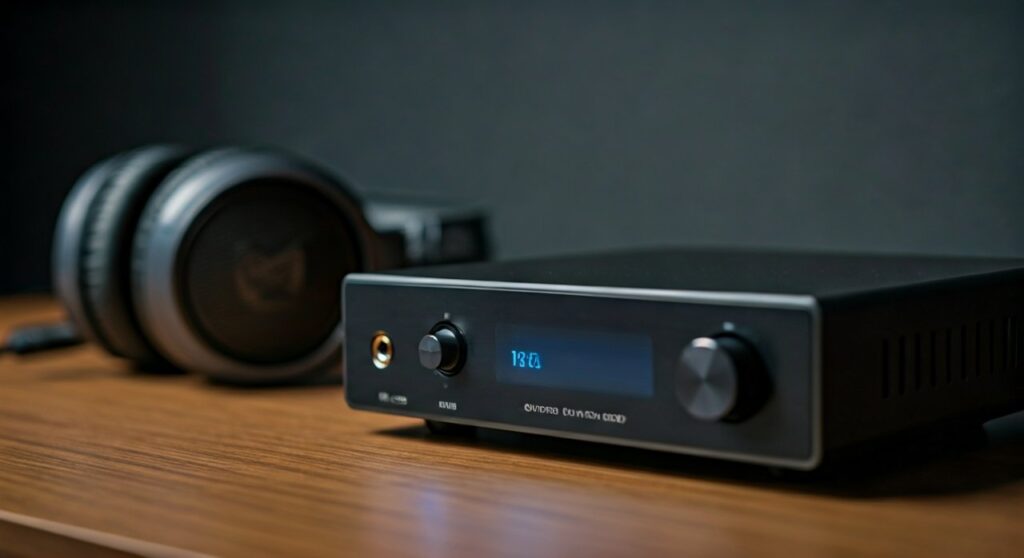
Headphone amplifiers are worth it if you own high-impedance (over 32-50 Ohms) or low-sensitivity headphones that require more voltage and current than a standard device can provide. For most consumer-grade headphones and IEMs (In-Ear Monitors), an external amp is unnecessary, but for high-end gear, it is the difference between a “flat” sound and a rich, immersive musical experience.
Key Takeaways: Are Headphone Amps Worth It?
| Scenario | Do You Need an Amp? | Why? |
|---|---|---|
| Consumer Gear (AirPods, Sony XM5, Bose) | No | These have built-in amps or are designed for low-power mobile use. |
| High-Impedance Gear (Sennheiser HD600, DT 880) | Yes | High resistance (300+ Ohms) requires more voltage to reach decent volumes. |
| Planar Magnetics (HiFiMAN, Audeze) | Highly Recommended | These often have low sensitivity and need high “current” to sound dynamic. |
| Budget IEMs (Moondrop, KZ, Truthear) | Optional | A small dongle DAC/Amp can reduce background “hiss” or noise floor. |
Understanding the Basics: What Does a Headphone Amp Actually Do?
To answer if are headphone amplifiers worth it, we first need to understand their primary job. Every device with a headphone jack—your iPhone (via dongle), MacBook, or PC—already has a tiny internal amplifier. However, these are often “afterthoughts” designed for low power consumption, not high-fidelity sound.
A dedicated headphone amplifier takes the low-level audio signal and boosts it to a level that can effectively move the drivers (the speakers) inside your headphones. It provides the headroom necessary for peaks in music—like a sudden drum hit or an orchestral swell—to sound impactful rather than distorted.
Expert listeners often describe the “un-amped” sound of high-end headphones as “veiled” or “congested.” When you add a quality amp, you aren’t just making the music louder; you are providing the control the drivers need to stop and start precisely.
When Are Headphone Amps Worth It? (The “Yes” Scenarios)
You Own High-Impedance Headphones
Impedance is measured in Ohms (Ω). It represents the electrical resistance of your headphones. As a rule of professional audio, headphones with an impedance of above 50 Ohms benefit significantly from an external amp.
Legendary models like the Sennheiser HD650 (300 Ohms) or the Beyerdynamic DT 1990 Pro (250 Ohms) will sound “thin” and lacking in bass if powered only by a standard motherboard. In these cases, are headphone amps worth it? The answer is a resounding yes.
Low Sensitivity (The Efficiency Factor)
Sensitivity (measured in dB/mW) tells you how loud a pair of headphones gets with a specific amount of power. Some headphones have low impedance (say, 32 Ohms) but also low sensitivity.
Planar Magnetic headphones are famous for this. Even though the “resistance” is low, they are power-hungry “gas guzzlers.” Without an amp, they might sound loud enough, but the bass will feel “mushy” and the soundstage will feel cramped.
Improving the “Noise Floor”
Have you ever plugged your headphones into a PC and heard a faint “hiss” or “static” when no music was playing? That is electronic interference from your computer’s internal components.
A dedicated external DAC/Amp combo (Digital-to-Analog Converter and Amplifier) moves the audio processing outside the noisy computer case. This results in a “blacker” background, allowing you to hear micro-details in the recording that were previously buried in noise.
When Are Headphone Amps Not Worth It? (The “No” Scenarios)
Using Wireless or Bluetooth Headphones
If you use Sony WH-1000XM5, Bose QuietComfort, or Apple AirPods Max, you should not buy an external amp. These headphones have their own internal amplifiers, DSP (Digital Signal Processing), and batteries built into the earcups.
In fact, plugging an active noise-canceling headphone into a high-powered amp can sometimes damage the internal circuitry or, at the very least, provide no benefit because the internal amp is still doing the heavy lifting.
High-Sensitivity IEMs
Most modern In-Ear Monitors (IEMs) are incredibly efficient. They are designed to run off a smartphone. Using a powerful desktop amp with sensitive IEMs can actually be counterproductive, as you may encounter a loud “hiss” (noise floor) or have a volume knob that is way too sensitive.
Budget Consumer Headphones
If your headphones cost less than $100 and were bought at a general electronics store, are headphone amps worth it? Likely not. You are better off spending that $100 on a better pair of headphones rather than trying to “fix” budget gear with an expensive amp.
Technical Deep Dive: Voltage, Current, and Output Impedance
For those who want to understand the “why” behind the audio quality, we have to look at the physics. A headphone amplifier provides two things: Voltage and Current.
- Voltage is what allows high-impedance headphones to reach a listenable volume.
- Current is what provides the “grip” on the driver, especially for low-impedance, low-sensitivity planars.
The 1/8th Rule of Output Impedance
A critical factor often overlooked is the Output Impedance of the amplifier itself. For the best sound, the amplifier’s output impedance should be at least 8 times lower than the headphone’s impedance.
If your PC’s headphone jack has a high output impedance (common in cheap laptops), it will change the “frequency response” of your headphones, often making the bass sound bloated and uncontrolled. A dedicated amp usually has an output impedance of near zero, ensuring you hear the headphones exactly as the manufacturer intended.
Comparison Table: Popular Headphones and Amp Necessity
| Headphone Model | Impedance | Sensitivity | Amp Recommended? |
|---|---|---|---|
| Sennheiser HD 600 | 300 Ω | 97 dB | Yes (Requires high voltage) |
| HiFiMAN Sundara | 32 Ω | 94 dB | Yes (Requires high current) |
| Beyerdynamic DT 770 Pro | 80 Ω | 96 dB | Recommended (Better bass control) |
| Audio-Technica M50x | 38 Ω | 99 dB | Optional (Sounds fine without) |
| Moondrop Blessing 3 | 14.8 Ω | 120 dB | No (Needs a clean DAC only) |
Types of Headphone Amplifiers: Which Should You Choose?
If you’ve decided that are headphone amps worth it for your specific setup, you need to choose the right type.
Solid State Amplifiers
These use transistors to amplify the signal. They are known for being “transparent,” meaning they don’t add their own flavor to the music.
- Pros: Low maintenance, accurate, affordable.
- Top Picks: Schiit Magni, JDS Labs Atom, Topping L30 II.
Tube Amplifiers (Valves)
Tube amps use vacuum tubes to boost the signal. They introduce “even-order harmonic distortion,” which human ears perceive as “warmth” or “musicality.”
- Pros: Aesthetic appeal, smooths out harsh digital recordings.
- Top Picks: Bottlehead Crack, xDuoo TA-26.
Portable DAC/Amp Dongles
These are tiny devices that plug into your phone’s USB-C or Lightning port. They have become the “gold standard” for mobile audiophiles.
- Pros: Portable, replaces poor internal phone DACs.
- Top Picks: AudioQuest DragonFly, FiiO KA3, Qudelix-5K.
The Expert Perspective: Real-World Testing Notes
In my years of testing audio gear, I have noticed a recurring theme: The Law of Diminishing Returns.
When you move from a standard laptop jack to a $100 Schiit Magni, the improvement is massive—often a 30-40% “perceived” jump in clarity and power. However, moving from a $500 amp to a $2,000 amp might only provide a 2-5% improvement.
If you are just starting your audiophile journey, don’t overspend on the amp. Focus on the Headphone First (60% of budget), the Amplifier Second (30% of budget), and the DAC Third (10% of budget).
Actionable Advice: How to Test if You Need an Amp
Before you drop money on a new piece of gear, try this simple “ear test”:
- Check Volume Headroom: Turn your current device to 100%. Is it painfully loud? If you can comfortably listen at 90-100% volume, you have zero headroom. You need an amp.
- Listen for Bass “Impact”: In a bass-heavy track, does the kick drum feel like a solid “thump,” or is it a soft “poof”? Weak amplification fails to move the drivers fast enough to create physical impact.
- Check for “Clarity” at High Volumes: Does the music sound “shouty” or distorted when you turn it up? That is your internal amp reaching its limit (clipping).
Frequently Asked Questions (FAQs)
Can a headphone amp damage my headphones?
Yes, if you use an extremely powerful desktop amp with sensitive IEMs and turn the volume up too high, you can “blow” the drivers or damage your hearing. Always start with the volume knob at zero when plugging in.
Will an amp make my cheap headphones sound like expensive ones?
No. An amplifier cannot add detail that the headphone driver is incapable of producing. It only ensures the driver is performing at its 100% potential. Always upgrade your headphones before buying a high-end amp.
What is the difference between a DAC and an Amp?
A DAC (Digital-to-Analog Converter) converts the 0s and 1s of your digital file into an electrical signal. An Amp takes that electrical signal and makes it stronger. Most modern devices are DAC/Amp combos.
Do 32 Ohm headphones need an amp?
Generally, no. 32 Ohms is the “standard” for consumer gear. However, if they have low sensitivity (below 96dB), they may still benefit from the extra power of a dedicated amp to sound their best.
Are “Gaming” amps different from “Audiophile” amps?
Mostly in marketing. “Gaming” amps often include virtual surround sound or microphone inputs. Audiophile amps focus strictly on “clean power.” For pure sound quality, an audiophile amp is almost always better.
**
**
**
**