
Yes, headphones are magnetic because they rely on permanent magnets to convert electrical signals into the sound waves you hear. Almost every pair of headphones, from tiny Apple AirPods to bulky Sennheiser studio monitors, contains magnets—typically made of Neodymium or Ferrite—to move the internal diaphragm and create audio.
Key Takeaways: Why Magnetism Matters in Audio
If you are looking for a quick summary of the relationship between magnetism and your audio gear, here are the essential facts:
- Essential Component: Magnets are a core part of the “driver” (the speaker engine) in 99% of consumer headphones.
- Neodymium vs. Ferrite: Most modern, high-quality headphones use Neodymium magnets because they are powerful yet lightweight.
- Safety: The magnetic field produced is generally too weak to damage electronics like smartphones or laptops, but users with pacemakers should exercise caution.
- Sound Quality: Stronger magnets typically allow for better control over the diaphragm, resulting in clearer sound and faster “transient response.”
- Storage: While they won’t wipe your modern SSD, keeping high-powered Planar Magnetic headphones directly on top of old credit cards is not recommended.
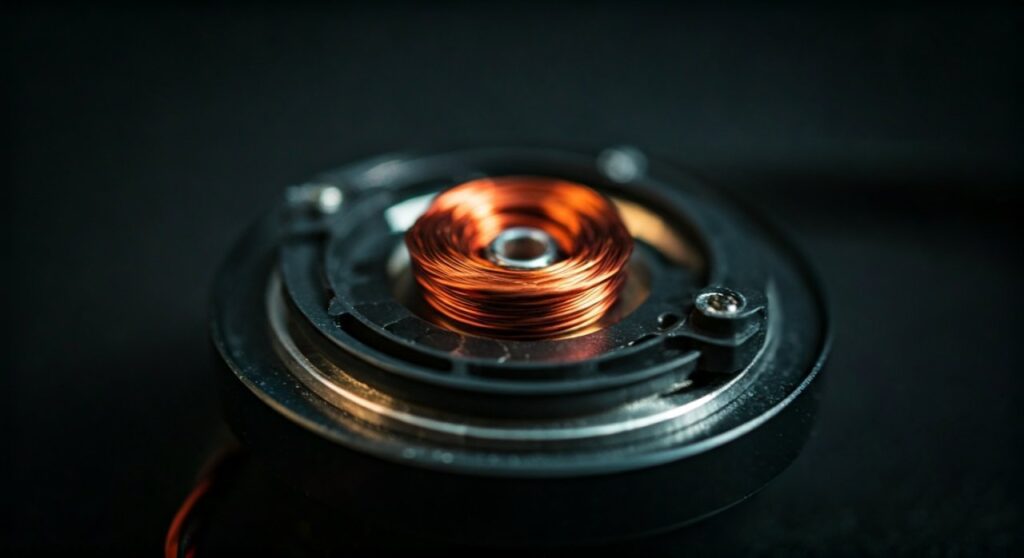
How Headphones Use Magnetism to Create Sound
To understand why headphones are magnetic, you have to look at the physics of electromagnetism. Inside the earcup, there is a stationary permanent magnet and a coil of wire (the voice coil) attached to a thin membrane called the diaphragm.
When you play music, an electrical current flows through the voice coil. This current creates a temporary magnetic field that fluctuates according to the frequency of the music. This temporary field interacts with the permanent magnet’s field, causing the coil to be pushed and pulled rapidly.
Because the coil is attached to the diaphragm, it moves the air around it. This movement creates the pressure waves that your ears perceive as high-fidelity sound. Without magnetism, the mechanical movement required to produce sound in such a small form factor would be nearly impossible.
The Different Types of Magnets in Headphones
Manufacturers choose magnetic materials based on weight, cost, and the desired sound profile. In my experience testing various audiophile setups, the material of the magnet significantly impacts the “heft” and “speed” of the audio.
Neodymium (NdFeB) Magnets
This is the “gold standard” for modern audio. Neodymium is a rare-earth metal that creates an incredibly strong magnetic field for its size.
- Pros: Extremely lightweight, allows for high sensitivity, and fits easily into small In-Ear Monitors (IEMs).
- Common in: Sony WH-1000XM5, Bose QuietComfort, and premium earbuds.
Ferrite (Ceramic) Magnets
These are older, heavier, and cheaper magnets made from iron oxide. You will mostly find these in budget-friendly over-ear headphones or vintage equipment.
- Pros: Very cost-effective and resistant to corrosion.
- Cons: Much heavier than Neodymium, which can lead to neck fatigue during long listening sessions.
Samarium Cobalt (SmCo)
Less common today, but these were popular in the 1980s (think original Walkman headphones). They are highly resistant to temperature changes but are more brittle and expensive than Neodymium.
| Feature | Neodymium Magnets | Ferrite Magnets |
|---|---|---|
| Magnetic Strength | Extremely High | Moderate |
| Weight | Very Lightweight | Heavy |
| Cost | Expensive | Cheap |
| Application | Premium & Portable Gear | Budget & Desktop Gear |
| Durability | High (with coating) | Excellent |
Planar Magnetic vs. Dynamic Drivers
While most people use Dynamic Drivers, enthusiasts often prefer Planar Magnetic headphones. These use a completely different magnetic layout.
In a Planar Magnetic setup (like those from Audeze or Hifiman), the diaphragm is a large, flat film with a circuit printed on it, sandwiched between two arrays of powerful magnets. Because the magnetic force is applied evenly across the entire surface of the diaphragm, the sound is often much more accurate and has lower distortion.
However, because these headphones require large “magnetic arrays,” they are significantly more magnetic than standard earbuds. If you place a paperclip near an Audeze LCD-2, for example, it will likely stick to the side of the earcup with surprising force.
Step-by-Step: How to Test Your Headphones’ Magnetism
If you are curious about the strength of the magnets in your specific device, you can perform these simple tests at home:
- The Paperclip Test: Take a small metal paperclip and slowly bring it toward the center of the earcup or the nozzle of your earbud. You will feel a distinct “tug” as you get closer to the driver.
- The Compass App: Open a compass app on your smartphone. Move your headphones close to the top of the phone. You will see the needle spin erratically as the headphone’s magnetic field interferes with the phone’s magnetometer.
- Magnetic Viewing Film: For a more “pro” look, use a piece of Magnetic Viewing Film. Placing this over the earcup will allow you to see the exact shape and poles of the magnets hidden inside the plastic casing.
Are Headphone Magnets Dangerous to Your Health?
A common concern is whether wearing magnets so close to the brain is harmful. According to the World Health Organization (WHO) and various independent studies, the static magnetic fields produced by headphones are non-ionizing and extremely low-intensity.
There is no scientific evidence suggesting that the magnets in headphones cause brain damage, headaches, or cellular changes. The magnetic field strength drops off sharply with distance, meaning that even a few millimeters away from the driver, the field is negligible.
Important Safety Warning: If you have an implanted medical device like a pacemaker or ICD, you should keep headphones (especially those with magnets used for “clipping” earbuds together) at least 6 inches away from your chest. Strong magnets can potentially interfere with the pacing mode of these devices.
Can Headphones Damage Your Phone or Laptop?
The short answer is no. Modern electronics are designed with magnetism in mind.
- Smartphones: Use NAND flash memory, which is not affected by magnets.
- Laptops: Most modern laptops use Solid State Drives (SSDs). Unlike old spinning hard drives (HDDs), SSDs do not store data magnetically and are safe around headphones.
Credit Cards: While old-school magnetic stripe cards can* be erased by very strong magnets, the magnets in standard headphones are rarely strong enough to do this unless you rub the card directly against the driver for an extended period.
Expert Tips for Maintaining Magnetic Headphones
As someone who has handled hundreds of audio products, I recommend following these steps to ensure your “magnetic” gear lasts:
- Avoid Ferrous Dust: If you work in a workshop with metal filings, keep your headphones in a case. The magnets will attract microscopic metal dust into the driver, which can cause a “crinkling” sound.
- Don’t Drop Them: High-powered magnets like Neodymium are surprisingly brittle. A hard drop can crack the magnet inside the driver, potentially ruining the sound balance.
- Temperature Control: Extreme heat (above 175°F or 80°C) can cause Neodymium magnets to lose their magnetism permanently. Never leave your headphones in a hot car during summer.
Common Myths About Headphone Magnets
- Myth: Bigger magnets always mean better sound.
- Fact: While a stronger magnet allows for better control, the quality of the diaphragm material and the acoustic chamber design are just as important.
- Myth: Magnets in headphones can drain your battery.
FAQs About Magnetic Headphones
Do wireless earbuds have magnets?
Yes, wireless earbuds like Apple AirPods or Samsung Galaxy Buds use magnets in two ways: inside the speakers to create sound, and in the casing to “snap” the buds into their charging case.
Can magnets in headphones cause headaches?
No. Headaches from headphones are usually caused by clamping force (the physical pressure of the headband), loud volume levels, or poor ergonomics, rather than the magnetic fields.
Why do some headphones stick together?
Many neckband-style headphones or magnetic earbuds have extra magnets specifically designed to hold the two pieces together around your neck when not in use. This is for convenience and does not affect the sound.
Are there any non-magnetic headphones?
Electrostatic headphones (like the Stax “Earspeakers”) do not use magnets. Instead, they use a high-voltage static charge to move a thin film between two perforated metal plates. These are very expensive and require a dedicated amplifier.
Will magnets in headphones affect my Wi-Fi or Bluetooth?
No. Magnetic fields from the drivers are static or low-frequency, whereas Wi-Fi and Bluetooth operate on high-frequency radio waves. They do not interfere with each other.
**
**
**
**