The Mechanics of Tactical Silence: How Do Military Headphones Work?
Military headphones, or Tactical Communication Headsets, work by utilizing advanced Digital Signal Processing (DSP) to compress high-intensity sounds (like gunfire) while simultaneously amplifying low-level ambient noises. This dual-action system allows soldiers to hear whispers and footsteps with clarity while instantly suppressing dangerous impulse noises to safe levels below 82 decibels (dB).
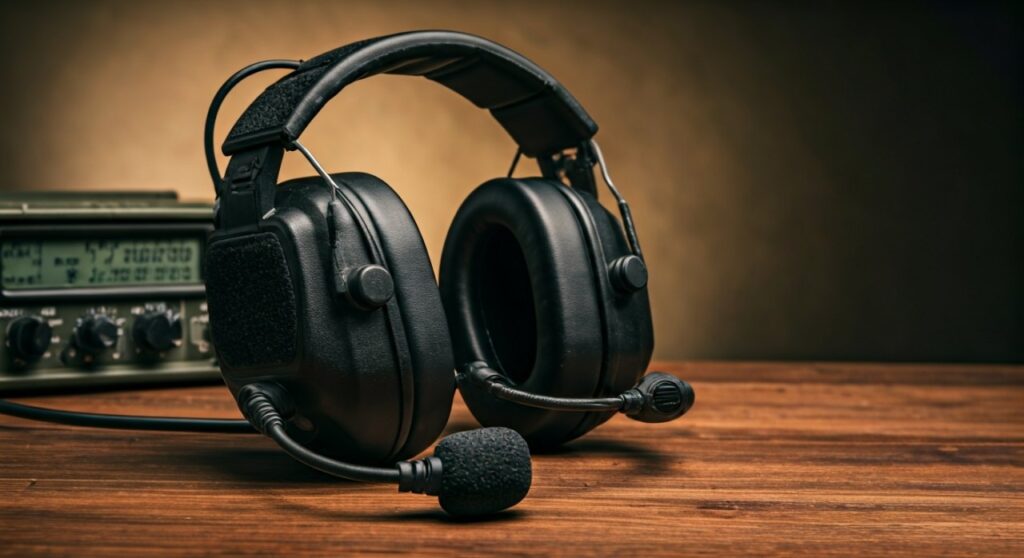
Unlike civilian noise-canceling headphones designed for music, military-grade systems focus on Situational Awareness. They use external microphones to replicate 360-degree “natural” hearing through the ear cups, ensuring the wearer is never “sonically isolated” from their environment.
Key Takeaways: TL;DR
- Active Sound Compression: Military headsets do not just block sound; they “squish” loud noises into a safe range.
- Situational Awareness: High-fidelity external microphones allow for 3D localized hearing, helping operators pinpoint the direction of a threat.
- Fail-Safe Communication: Most units, like the 3M Peltor ComTac, allow radio communication even if the batteries die (passive mode).
- Impulse Protection: They are specifically tuned to react within milliseconds to impulse noises like explosions and muzzle blasts.
- Integration: These devices connect to Push-to-Talk (PTT) units and various military radios (e.g., AN/PRC-152A).
The Dual-Core Functionality: Protection vs. Perception
To understand how do military headphones work, you must first distinguish between the two primary technologies they employ: Passive Noise Reduction and Active Ambient Listening.
Passive Noise Reduction (The Barrier)
This is the physical defense. The thick ear cups are filled with high-density foam or silicone gel. These materials create an airtight seal around the ear, physically blocking sound waves from entering the ear canal.
Most tactical headsets provide a Noise Reduction Rating (NRR) of between 20dB and 23dB. This means if a rifle shot is 150dB, the physical shell reduces it immediately to approximately 130dB before the electronics even kick in.
Active Ambient Listening (The Enhancement)
This is where the “magic” happens. Small, ruggedized microphones are mounted on the outside of the ear cups. These microphones “listen” to the environment and play that sound back through speakers inside the headset.
This ensures that even though your ears are covered by thick plastic, you can still hear the wind blowing or a teammate’s instructions as if you weren’t wearing anything at all.
Step-by-Step Breakdown: How Do Military Headphones Work to Process Sound?
When a high-energy event—like a flashbang or a 5.56mm gunshot—occurs, the headset’s internal circuitry follows a rapid, four-step sequence:
Step 1: Sound Capture
External omni-directional microphones pick up the sound waves from the environment. These microphones are often shielded by wind-resistant foam to prevent interference during high-speed movement or helicopter transport.
Step 2: Digital Analysis
The internal Digital Signal Processor (DSP) analyzes the incoming wave. It measures the sound in decibels. If the sound is below a specific threshold (usually 82dB), it is passed through. If it is a faint sound (like a distant footfall), the DSP increases the gain (volume) to make it audible.
Step 3: Dynamic Compression (The “Cut-Off”)
When the sound exceeds the safety threshold, the compression circuit engages in less than 1 millisecond. It does not “turn off” the audio. Instead, it “clips” the peak of the sound wave. You still hear the “pop” of the gun, but it is rendered at a volume that won’t damage your eardrum.
Step 4: Transduction to the Ear
The processed, safe version of the sound is played through the internal speakers. Simultaneously, any incoming radio communication is layered on top of the ambient sound, ensuring the operator can hear both their radio and their surroundings at the same time.
Comparison: Military Tactical Headsets vs. Civilian ANC Headphones
| Feature | Military Headsets (e.g., Ops-Core AMP) | Civilian ANC (e.g., Bose QC45) |
|---|---|---|
| Primary Goal | Situational Awareness & Protection | Silence & Music Fidelity |
| Noise Type | Impulse Noise (Gunfire, Explosions) | Constant Noise (Jet Engines, AC) |
| Latency | Near-zero (Critical for reaction) | Moderate (Optimized for music) |
| Communication | Multi-lead radio integration | Bluetooth/Phone calls |
| Durability | MIL-STD-810G (Water/Dust/Shock) | Lightweight plastic |
| Power Source | AAA or AA batteries | Internal Lithium-Ion |
Advanced Technologies in Modern Military Headsets
D Sound Localization
A critical aspect of how do military headphones work is their ability to preserve binaural hearing. Humans use the slight delay in sound reaching the left vs. right ear to determine direction. High-end headsets like the Invisio X5 use advanced algorithms to ensure the sound played inside the ear cup precisely matches the timing and phase of the sound outside. This allows a soldier to know exactly where a sniper is located.
Bone Conduction Technology
Some specialized headsets, like the Atlantic Signal Dominator, do not use traditional speakers. Instead, they use vibrating transducers that sit against the wearer’s cheekbones. These vibrations bypass the eardrum and go directly to the inner ear (cochlea). This is vital for maritime operations where water might clog the ear canal.
Near Field Magnetic Induction (NFMI)
Modern systems like the Ops-Core AMP use NFMI to connect to earplugs worn underneath the headset. This provides “double protection” for high-noise environments (like inside a tank or a Blackhawk helicopter) while still allowing the electronic audio to pass through both the headset and the earplug wirelessly.
Why Soldiers Rely on “Talk-Through” Features
In my experience testing tactical gear, the “Talk-Through” feature is what separates a professional tool from a toy. If you wear standard earplugs, you are effectively “deaf” to the environment. This leads to:
- Auditory Exclusion: Your brain ignores sounds because it is stressed.
- Safety Hazards: You cannot hear a vehicle approaching or a “ceasefire” command.
Tactical headsets solve this by providing active volume control. You can actually “super-power” your hearing, turning the volume up 3x to 5x higher than normal human hearing, which is a massive advantage during night-time reconnaissance.
Maintenance and Field Reliability
Military headphones are built to withstand extreme conditions. To ensure they continue working:
- Gel Cup Integrity: The gel seals must be replaced every 6-12 months. If the seal is cracked, the Passive Noise Reduction is compromised.
- IP Ratings: Most are IP68 rated, meaning they can be submerged in 2 meters of water for 30 minutes.
- EMI Shielding: Military headsets are shielded against Electromagnetic Interference, ensuring that nearby high-powered radios don’t cause buzzing or feedback.
Frequently Asked Questions (FAQs)
Do military headphones require batteries to work?
Yes and No. To use the Active Ambient Listening (the ability to hear your surroundings), you need batteries (usually AAA). However, the Radio Communication and Passive Protection usually work even without batteries, though you will feel “plugged up” as the ambient microphones will be off.
Can I use military headphones for shooting at a civilian range?
Absolutely. Many enthusiasts use Howard Leight Impact Sport or Peltor Sport Tactical headsets. They function on the same basic principle: amplifying low sounds and suppressing loud ones, though they lack the high-end radio integration of combat models.
What is the “cutoff” limit for these headsets?
Most professional military headsets are programmed to limit all sounds to 82 dB. This is the OSHA-recommended threshold for long-term hearing safety.
Why are military headsets so expensive?
A pair of Ops-Core AMPs can cost over $1,000. This price reflects the ruggedization, the near-zero latency of the DSP, the MIL-SPEC waterproofing, and the ability to integrate with multi-channel encrypted radios.
Can military headsets protect against explosions?
They protect against the sound pressure level (SPL) of the explosion. However, the physical shockwave of a nearby explosion can still cause trauma through the body or by physically dislodging the headset. They are a tool for hearing protection, not a shield against all blast effects.