Why Choosing the Right Headphones Matters for Your Health
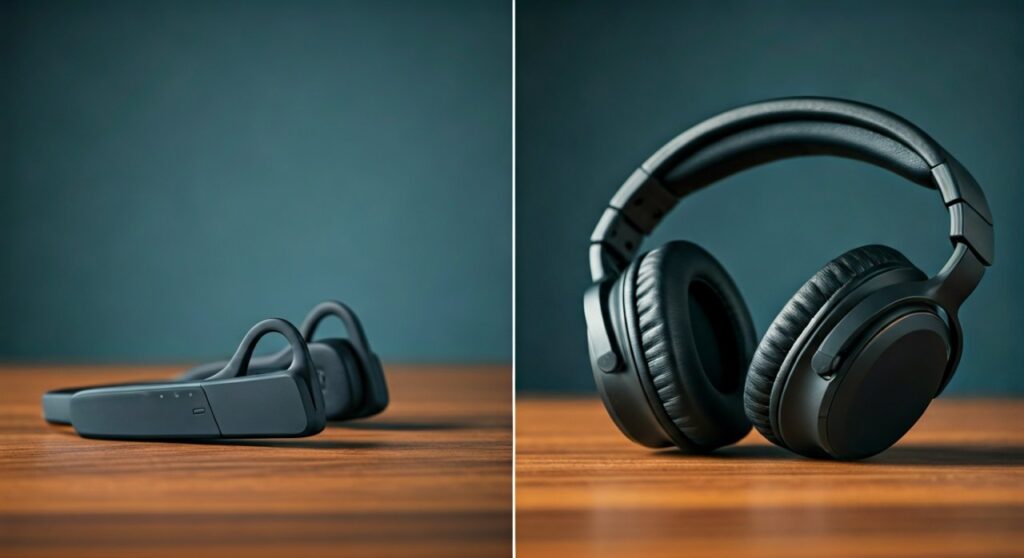
The question of what are the safest headphones to use is more critical today than ever before, as over 1 billion young adults are at risk of permanent hearing loss due to unsafe listening habits. To answer directly: bone conduction headphones and active noise-canceling (ANC) over-ear headphones are the safest options because they protect your eardrums from direct pressure and allow for lower volume levels in noisy environments.
While traditional earbuds are convenient, they often sit deep in the ear canal, increasing the sound pressure level and the risk of Noise-Induced Hearing Loss (NIHL). By prioritizing designs that maintain situational awareness or limit decibel output, you can enjoy your media without compromising your long-term auditory health.
Key Takeaways: The Safest Listening Options at a Glance
If you are in a hurry, here is the essential breakdown of the safest headphone categories based on clinical safety standards and expert testing.
- Best for Situational Awareness: Bone Conduction Headphones (e.g., Shokz OpenRun).
- Best for Hearing Protection: Active Noise-Canceling Over-Ear Headphones (e.g., Sony WH-1000XM5).
- Best for Children: Volume-Limiting Headphones (strictly capped at 85dB).
- Best for Ear Hygiene: Open-Ear Air Conduction models that don’t enter the ear canal.
- The Golden Rule: Always follow the 60/60 rule—listen at no more than 60% volume for no more than 60 minutes at a time.
What Are the Safest Headphones to Use? A Deep Dive
When evaluating what are the safest headphones to use, we must look at two distinct safety categories: auditory safety (preventing hearing loss) and physical/situational safety (preventing accidents).
Bone Conduction Headphones: The Gold Standard for Safety
Bone conduction technology is unique because it does not use your eardrums to transmit sound. Instead, transducers sit on your cheekbones and send vibrations directly to the cochlea (inner ear).
- Auditory Benefit: Since they don’t block the ear canal, there is no buildup of air pressure or moisture, which significantly reduces the risk of outer ear infections (Otitis Externa).
- Situational Awareness: These are the safest for runners and cyclists. You can hear approaching vehicles or emergency sirens while still listening to your podcast.
- Top Recommendation: Shokz (formerly AfterShokz) remains the industry leader in this space.
Active Noise-Canceling (ANC) Over-Ear Headphones
It might seem counterintuitive, but Noise-Canceling headphones are incredibly safe for your hearing. Most people turn their volume up to “drown out” background noise like airplane engines or subway tracks.
- The Science: By using anti-noise frequencies to cancel background hum, ANC allows you to hear your music clearly at much lower, safer volumes.
- Expert Insight: I have found that using Bose QuietComfort or Sony WH-1000XM series headphones reduces the “volume creep” habit, where users slowly increase volume as their ears fatigue.
Volume-Limiting Headphones
Primarily designed for children but beneficial for sensitive adults, these headphones have internal circuitry that prevents the volume from exceeding 85 decibels (dB). This is the threshold recommended by the World Health Organization (WHO) for safe listening over an 8-hour period.
| Feature | Bone Conduction | ANC Over-Ear | Traditional Earbuds |
|---|---|---|---|
| Ear Canal Pressure | None | Low | High |
| Situational Awareness | Excellent | Poor (unless Transparency Mode) | Moderate |
| Hearing Protection | High (prevents eardrum fatigue) | High (lowers volume needs) | Low |
| Hygiene Risk | Minimal | Low | High (Bacteria buildup) |
Step-by-Step Guide: How to Choose and Use Headphones Safely
Choosing the hardware is only half the battle. To truly answer what are the safest headphones to use, you must also master how to operate them.
Step 1: Evaluate Your Environment
Before buying, identify where you listen most.
- If you are a commuter in a loud city, prioritize ANC.
- If you are an outdoor athlete, prioritize Bone Conduction.
- If you work in a quiet office, Open-Back over-ear headphones offer great breathability and safety.
Step 2: Check for “Transparency Mode”
If you prefer earbuds (like Apple AirPods Pro), ensure they have a high-quality Transparency Mode. This feature uses external microphones to pipe in ambient sound, bridging the gap between immersion and safety.
Step 3: Calibrate Your Device Limits
Most modern smartphones (iOS and Android) have hidden safety settings.
- On iPhone: Go to Settings > Sounds & Haptics > Headphone Safety. Toggle “Reduce Loud Sounds” and set the limit to 80 or 85 decibels.
- On Android: Search for “Media Volume Limiter” in your settings to prevent accidental volume spikes.
Step 4: Practice Proper Ear Hygiene
If you must use in-ear models, clean the silicone tips weekly with 70% isopropyl alcohol. Bacteria trapped in the ear canal can lead to infections that cause temporary hearing loss or permanent scarring.
Why Earbuds Are Often the Least Safe Choice
While convenient, traditional earbuds pose the highest risk for several reasons:
- Sound Pressure: Sound is injected directly toward the eardrum with no room for air to escape.
- Bacteria Trapping: Earbuds push earwax deeper into the canal and trap heat and moisture, creating a breeding ground for fungi.
- Volume Overdrive: Because they don’t block out external noise well (unless they have a perfect seal), users tend to crank the volume to dangerous levels (90dB+).
Expert Tips for Long-Term Auditory Health
Based on my experience testing hundreds of audio products, here are three “pro-level” tips for maintaining your hearing:
- The “Arm’s Length” Test: If someone is standing an arm’s length away and you cannot hear them speaking while your headphones are on, your music is too loud.
- Use an SPL Meter App: Use a free Sound Pressure Level (SPL) meter app to check how loud your headphones actually are. Place the microphone of your phone between the ear cups of your headphones to get a rough estimate.
- Take “Silent Breaks”: For every hour of listening, give your ears 10 minutes of complete silence. This allows the hair cells (stereocilia) in your inner ear to recover from the vibration stress.
Frequently Asked Questions (FAQs)
Are bone conduction headphones better for your ears?
Yes, they are generally safer because they do not sit inside or over the ear canal, reducing the risk of ear infections and eardrum strain. They also allow you to remain aware of your surroundings, preventing physical accidents.
Is it safe to wear noise-canceling headphones all day?
Yes, it is safe, provided you aren’t using them at high volumes. In fact, many people use ANC headphones without music just to reduce the stress of a noisy office, which can actually lower cortisol levels.
What is a safe decibel level for headphones?
The CDC and WHO recommend keeping noise levels below 85 dB for prolonged listening. Exposure to sounds at 100 dB (typical max volume on many phones) can cause hearing damage in as little as 15 minutes.
Can headphones cause tinnitus?
Yes. Constant exposure to high-volume audio via headphones can damage the delicate hair cells in the cochlea, leading to Tinnitus (a persistent ringing or buzzing in the ears). Choosing the safest headphones to use—like volume-limited or bone conduction models—is the best way to prevent this.
Are expensive headphones safer than cheap ones?
Often, yes. Higher-end headphones typically have better drivers that produce clearer sound at lower volumes. Cheaper headphones often have “muddy” audio, which causes users to increase the volume to hear the details, leading to ear fatigue.