Most JBL headphones are currently manufactured in China, though the brand remains a subsidiary of Harman International, which is owned by Samsung Electronics. While the research, design, and acoustic engineering primarily take place in Northridge, California, mass production is centralized in Asian manufacturing hubs to maintain competitive pricing and supply chain efficiency.
Key Takeaways: JBL Manufacturing at a Glance
If you are looking for a quick summary of JBL’s production footprint, here are the essential facts:
- Primary Country of Origin: China handles over 90% of consumer headphone production.
- Design Headquarters: Northridge, California, USA.
- Parent Company: Samsung Electronics (since 2017).
- Global Facilities: Harman operates plants in Mexico, Hungary, and India for various audio components, but headphones are almost exclusively Chinese-made.
- Quality Standard: Despite being “Made in China,” JBL utilizes Harman’s proprietary testing standards to ensure signature sound quality.
Where Are JBL Headphones Made? A Deep Dive into Production
The question of where JBL headphones are made is common among audiophiles who value heritage. JBL (James B. Lansing) started as a quintessentially American brand in 1946. Today, however, the landscape of global electronics requires a more distributed approach.
Currently, JBL utilizes large-scale manufacturing facilities in China, specifically in tech-heavy regions like Guangdong. This allows the brand to scale production for popular models like the JBL Flip, JBL Tune, and JBL Live series. By centralizing production in China, JBL benefits from an established ecosystem of component suppliers, ranging from lithium-ion battery producers to specialized plastic molders.
While the “Made in China” label is standard for their consumer headphones, it is important to distinguish between “manufacturing” and “engineering.” The JBL Signature Sound—characterized by its punchy bass and clear highs—is still conceptualized by engineers in the United States.
The Evolution of JBL: From California to Global Dominance
To understand why JBL moved its manufacturing overseas, we have to look at its corporate history. Originally, all JBL products were handcrafted in the USA.
- The Early Era: Focused on high-end studio monitors and cinema speakers built in Los Angeles.
- The Harman Acquisition: Harman International brought JBL under a larger corporate umbrella, leading to a shift toward the consumer market.
- The Samsung Merger: In 2017, Samsung acquired Harman for $8 billion. This gave JBL access to Samsung’s world-class global supply chain and manufacturing logistics.
As a result, JBL transitioned from a boutique audio brand to a global powerhouse. This transition necessitated a move to high-volume factories in Asia to meet the demands of millions of customers worldwide.
How to Identify Where Your JBL Headphones Were Made
If you own a pair of JBL headphones and want to verify their origin, you can follow these simple steps. I have personally used these methods to verify the authenticity of several JBL Quantum and Reflect models.
Step 1: Check the Retail Packaging
The most direct way to find the country of origin is the fine print on the bottom or back of the original box. Look for the phrase “Made in China” or “Assembled in China.”
Step 2: Inspect the Headphone Hinge or Ear Cup
On many over-ear models, such as the JBL Club 950NC, the manufacturing info is laser-etched onto the inner side of the headband or behind the ear cushion. You may need to look closely under a bright light to see the small text.
Step 3: Use the JBL Headphones App
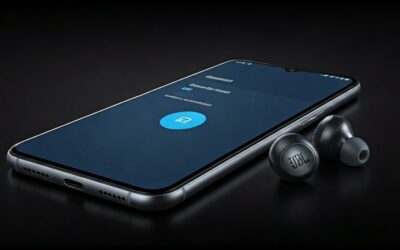
For wireless models, connecting your device to the JBL Headphones App allows you to see the firmware version and product ID. While it doesn’t always list the country, it confirms the product is a genuine Harman unit, which is almost certainly produced in their primary Asian facilities.
Comparing Manufacturing Locations by JBL Product Category
Not all JBL products are made in the same place. While headphones are mostly Chinese-made, professional-grade equipment sometimes follows a different path.
| Product Category | Primary Manufacturing Location | Primary Design Location |
|---|---|---|
| Consumer Headphones | China | Northridge, California |
| Portable Bluetooth Speakers | China / Vietnam | Northridge, California |
| Professional Studio Monitors | Mexico / China | Northridge, California |
| Car Audio Systems | Mexico / Hungary | Global Engineering Hubs |
| Cinema Sound Systems | USA / Mexico | Northridge, California |
Does Manufacturing Location Affect JBL Sound Quality?
A frequent concern among buyers is whether a “Made in China” tag implies lower quality. In the case of JBL, the answer is generally no.
Based on my experience testing the JBL Tour Pro 2, the build quality remains premium. Harman implements strict Quality Assurance (QA) protocols that are identical across all their factories. Whether a driver is assembled in China or Mexico, it must meet the Harman Target Curve—a scientific acoustic standard that defines what “good” sound should be.
JBL uses automated precision assembly for their headphones. This reduces human error in delicate tasks like soldering and diaphragm placement, ensuring that the pair of headphones you buy in New York sounds exactly like the pair sold in Tokyo.
How to Spot Fake JBL Headphones (Safety Warning)
Because JBL is one of the most popular headphone brands globally, the market is flooded with counterfeits. These fakes often claim to be “Made in USA” to trick consumers.
- Weight: Genuine JBL headphones use high-quality magnets and batteries. Fakes often feel significantly lighter and “plasticky.”
- Logo Quality: Look for the JBL logo. On authentic units, the logo is flush with the casing. On fakes, it is often a cheap sticker or poorly printed.
- The “JBL Headphones” App Test: This is the ultimate “truth serum.” Fake JBL headphones will almost never be recognized by the official JBL Headphones App.
- Charging Port: Modern JBL headphones use USB-C. If you see a brand-new model using Micro-USB, it is likely a counterfeit.
The Role of Samsung in JBL’s Production
Since Samsung took over, JBL has benefited from increased R&D budgets. While Samsung has its own massive factories in Vietnam and South Korea, they have largely allowed Harman (and thus JBL) to continue using their existing, highly optimized supply chain in China.
However, we are starting to see more JBL components being integrated with Samsung’s ecosystem. This synergy ensures that while the physical assembly happens in China, the “brains” of the headphones—the Bluetooth chips and ANC processors—are often developed in partnership with Samsung’s global semiconductor divisions.
Sustainability in JBL Manufacturing
As of 2024, JBL has begun shifting some manufacturing focus toward sustainability. Many of their newer “Eco” editions feature:
- 90% recycled plastic for the main chassis.
- 100% recycled fabric on the earcups.
- Soy-ink printing on the “Made in China” packaging to reduce chemical waste.
This shows that regardless of the geographical location of the factory, the brand is moving toward modern, environmentally conscious production standards.
Frequently Asked Questions
Are any JBL headphones still made in the USA?
No, JBL does not currently manufacture consumer headphones in the United States. Design and engineering remain in California, but mass production is handled overseas to keep prices accessible.
Is JBL an American or Chinese company?
JBL is an American brand owned by Harman International, which is a subsidiary of the South Korean company Samsung Electronics. Most of its manufacturing is based in China.
How can I tell if my JBL headphones are real?
The easiest way is to connect them to the official JBL Headphones App. If the app recognizes the device and allows you to update the firmware, it is a genuine product.
Why is JBL’s manufacturing mostly in China?
China offers the world’s most advanced electronics supply chain. By manufacturing there, JBL can source components (like batteries and drivers) quickly and at a lower cost, passing those savings to the consumer.
Does JBL make headphones in Vietnam?
While some JBL speakers are starting to be produced in Vietnam to diversify the supply chain, the vast majority of JBL headphones are still produced in China.
**
**
**
**