

Identifying the Connector: What Size Headphone Jack is Smaller Than 3.5 mm?
If you have a pair of headphones or a communication headset that doesn’t fit into your phone or laptop, you are likely looking for the 2.5 mm jack. The 2.5 mm connector, also known as a sub-miniature or sub-mini jack, is the most common standard size that is physically smaller than the ubiquitous 3.5 mm (1/8 inch) audio port. While the 3.5 mm jack is the “mini” standard for most consumer electronics, the 2.5 mm version is frequently found in older mobile phones, two-way radios, and high-end balanced audio equipment.
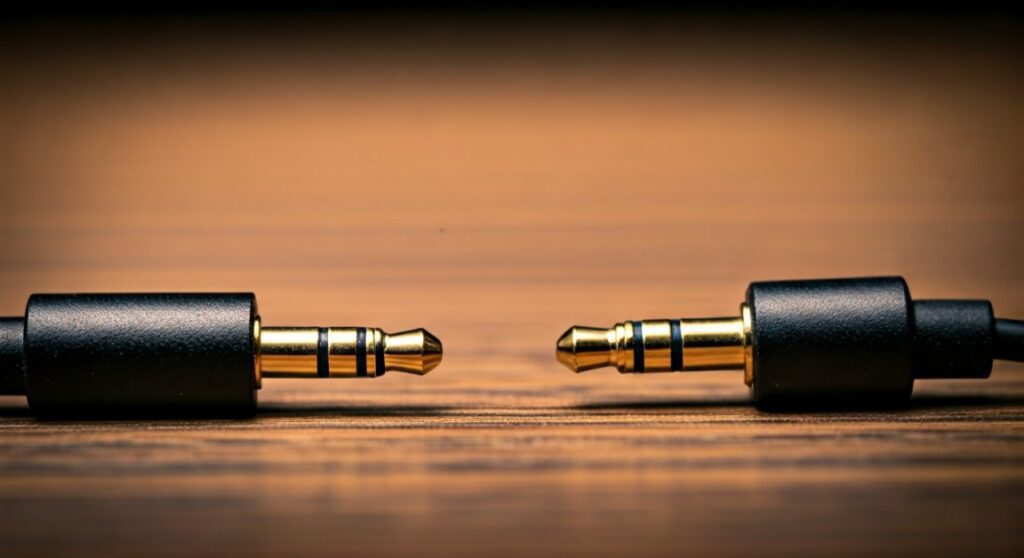 Headphone Jack is Smaller Than 3.5 mm? (Solved)” title=”What Size Headphone Jack is Smaller Than 3.5 mm? (Solved)” class=”wp-image-13465″ />
In some rarer cases, you might encounter a 2.0 mm or even smaller proprietary connectors used in niche micro-electronics, but for 99% of consumer audio scenarios, the answer is the 2.5 mm jack. Understanding this difference is crucial for purchasing the correct adapter or replacement cable for your audio setup.
Key Takeaways: Quick Summary of Audio Jack Sizes
- Primary Smaller Size: The 2.5 mm jack is the direct smaller sibling to the 3.5 mm standard.
- Common Uses: Used for balanced audio outputs, cordless home phones (DECT), and older Motorola or Nokia devices.
- The “Standard”: The 3.5 mm jack is the industry standard for smartphones (before the USB-C era), tablets, and PCs.
- The “Pro” Size: The 6.35 mm (1/4 inch) jack is much larger and used for electric guitars and amplifiers.
- Compatibility Fix: You can easily bridge the gap between these sizes using a 2.5 mm to 3.5 mm male-to-female adapter.
The Anatomy of Audio Jacks: 2.5 mm vs. 3.5 mm
To understand what size headphone jack is smaller than 3.5 mm, we must look at the evolution of the TRS (Tip-Ring-Sleeve) connector. These connectors have been around since the late 19th century, starting with the massive 6.35 mm jacks used in manual telephone switchboards.
As technology shrank, so did the connectors. The 3.5 mm jack became the “miniature” version, and the 2.5 mm jack became the “sub-miniature.” Despite looking almost identical in photos, they are not cross-compatible without hardware modifications.
Physical Dimensions and Build
The 2.5 mm connector has a diameter that is exactly 1 millimeter narrower than the standard jack. While this seems negligible, it prevents the plug from making a secure connection in a larger port. Conversely, a 3.5 mm plug will physically not fit into a 2.5 mm port.
The Number of Rings (Poles)
Both 2.5 mm and 3.5 mm jacks come in different configurations:
- TS (2-pole): Mono audio.
- TRS (3-pole): Stereo audio.
- TRRS (4-pole): Stereo audio plus a microphone channel.
In my experience testing vintage audio gear, the 2.5 mm TRRS configuration was a nightmare for compatibility because different brands (like Nokia vs. Samsung) often wired the microphone and ground segments differently.
Comparison Table: Common Audio Jack Standards
| Jack Size | Common Name | Primary Use Cases | Signal Type |
|---|---|---|---|
| 2.5 mm | Sub-miniature | Balanced audio, older cell phones, Xbox 360 controllers | Mono, Stereo, Balanced |
| 3.5 mm | Miniature (1/8″) | Smartphones, Laptops, MP3 players, Tablets | Stereo + Mic |
| 4.4 mm | Pentaconn | Modern High-End DAP (Digital Audio Players) | Balanced Only |
| 6.35 mm | 1/4 inch | Professional mixers, Electric Guitars, Studio Amps | Mono, Stereo |
Why Do We Use a 2.5 mm Jack Today?
You might wonder why a smaller, less “standard” jack still exists. While it nearly died out in the smartphone world, it has seen a massive resurgence in the Audiophile community.
The Balanced Audio Revolution
High-fidelity audio enthusiasts prefer balanced connections. A balanced circuit uses three conductors per channel to cancel out noise and interference. Because a 3.5 mm jack is traditionally unbalanced, manufacturers like Astell & Kern and Fiio adopted the 2.5 mm TRRS jack to provide a compact balanced output.
Communication and Specialty Headsets
If you work in a call center or use a landline office phone, you likely use a 2.5 mm jack. These devices prioritize weight and space, making the sub-miniature jack ideal for lightweight mono headsets.
Legacy Gaming Hardware
Retro gamers will remember that the Xbox 360 controller used a 2.5 mm jack for its chat headset. If you are trying to use a modern gaming headset with an old console, you will specifically need a 3.5 mm female to 2.5 mm male adapter.
Step-by-Step Guide: How to Identify Your Jack Size
If you are holding a cable and aren’t sure if it’s 3.5 mm or 2.5 mm, follow these expert identification steps.
Step 1: The “Visual Proportion” Test
Look at the metal plug. A 3.5 mm plug is roughly the width of a standard pencil’s lead housing. A 2.5 mm plug looks significantly thinner, almost like a thick needle or a heavy-duty toothpick.
Step 2: The Port Comparison
If you have a modern smartphone (with a headphone jack) or a laptop, try to gently insert the plug.
- If it fits snugly, it is 3.5 mm.
- If it wobbles and falls out immediately, it is 2.5 mm.
- If it won’t go in at all, the plug is likely 4.4 mm or 6.35 mm.
Step 3: Check the Device Label
Check the documentation of your device. Look for terms like:
- “Sub-mini” or “2.5mm”.
- “BAL” (Often indicates a 2.5 mm or 4.4 mm balanced port).
- “Phone” (On older cordless phones, this almost always means 2.5 mm).
Solving Compatibility: How to Use 2.5 mm Equipment with 3.5 mm Ports
The most common “pain point” for users is having a high-quality 2.5 mm headset and wanting to use it with a standard 3.5 mm laptop or phone. Here is how to fix it without losing audio quality.
Use a “Step-Up” Adapter
You need a 2.5 mm female to 3.5 mm male adapter. I recommend using a cable-style adapter rather than a solid one-piece plastic block. Solid adapters put significant leverage on the internal socket of your device, which can lead to permanent hardware damage if bumped.
Check the Pole Configuration
If your 2.5 mm headset has a microphone, ensure your adapter is TRRS (4-pole). If you use a TRS (3-pole) adapter with a microphone headset, the mic will not work, and you may even experience “hollow” sounding audio due to a shorted ground wire.
Dedicated Balanced-to-Unbalanced Converters
Warning for Audiophiles: If you are trying to plug a balanced 2.5 mm cable into an unbalanced 3.5 mm port, be careful. While most adapters work fine, some high-end amplifiers do not like their “cold” signals being shorted to ground. Always check your amp’s manual before adapting balanced headphones to unbalanced outputs.
The Future: Is the 2.5 mm Jack Disappearing?
Just as the 3.5 mm jack is being phased out in favor of USB-C and Bluetooth, the 2.5 mm jack is facing its own evolution.
In the high-end audio world, the 4.4 mm Pentaconn connector is rapidly replacing the 2.5 mm jack. The reason is simple: Durability. The 2.5 mm plug is quite thin and prone to snapping if the device is dropped. The 4.4 mm standard provides the same balanced audio benefits but with a much thicker, more robust physical profile.
However, for those asking what size headphone jack is smaller than 3.5 mm, the 2.5 mm remains the historical and most practical answer for current hardware needs.
Frequently Asked Questions (FAQs)
Can I use a 3.5 mm headphone on a 2.5 mm port?
Yes, but you will need a 3.5 mm female to 2.5 mm male adapter. These are common for connecting standard headphones to older office phones or specific high-end audio players.
Is there an audio quality difference between 2.5 mm and 3.5 mm?
Physically, no. The size of the connector does not inherently change the sound quality. However, because 2.5 mm is often used for balanced circuits, it can provide a higher signal-to-noise ratio and more power if the internal circuitry supports it.
Why did the Xbox 360 use a 2.5 mm jack?
Microsoft chose the 2.5 mm size to save space on the controller and to encourage the purchase of official Xbox licensed headsets. It was a common tactic in the mid-2000s to use sub-miniature jacks for communication devices.
Is 2.5 mm the same as 3/32 inch?
Yes. In the imperial measurement system, the 2.5 mm jack is often referred to as the 3/32 inch jack, while the 3.5 mm is known as the 1/8 inch jack.
What is the 4.4 mm jack?
The 4.4 mm jack is actually larger than the 3.5 mm. It is the new “Balanced” standard introduced by Sony and the JEITA association to provide a more durable alternative to the 2.5 mm balanced jack.