Putting a dog with headphones (specifically specialized canine hearing protection) is the most effective way to safeguard your pet’s sensitive hearing during high-decibel events like firework displays, thunderstorms, or air travel. While humans use earmuffs for comfort, for dogs, it is a medical necessity because their ears are significantly more sensitive to sound pressure and high frequencies than our own.
Key Takeaways: Protecting Your Dog’s Hearing
If you are in a hurry, here is the essential guide to managing a dog with headphones:
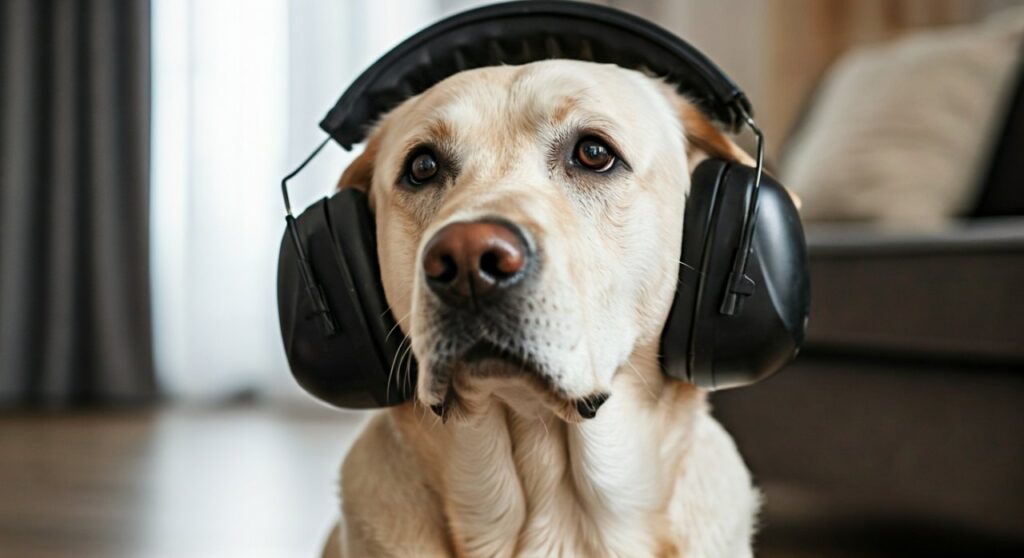
- Primary Purpose: Noise reduction for anxiety (fireworks/thunder) and physical hearing protection (hunting/aviation).
- Decibel Threshold: Dogs should wear hearing protection for any sustained noise over 85-90 dB.
- The “Mutt Muff” Standard: Most canine headphones provide an NRR (Noise Reduction Rating) of approximately 20-25 dB.
- Training is Mandatory: You cannot simply put headphones on a dog; you must use a 7-14 day desensitization process.
- Fitment Matters: Ensure the seal is tight against the skull, not just the fur, to prevent sound leakage.
Why Your Dog Needs Specialized Hearing Protection
When we see a dog with headphones, it often looks like a cute photo op for social media. However, as an expert in pet ergonomics, I can tell you that the biological need is profound. Dogs hear frequencies up to 45,000 – 65,000 Hz, whereas humans stop at roughly 20,000 Hz.
High-decibel environments don’t just “scare” dogs; they can cause physical pain. Sound waves strike the canine eardrum with more intensity due to the shape of their ear canal. Whether you are a pilot taking your dog in a Cessna or a homeowner near a construction site, specialized gear is a must.
The Science of Canine Auditory Sensitivity
| Feature | Human Hearing | Canine Hearing |
|---|---|---|
| Frequency Range | 20 Hz – 20,000 Hz | 67 Hz – 45,000+ Hz |
| Detection Distance | 1x (Baseline) | 4x farther than humans |
| Ear Muscles | 6 muscles (limited movement) | 18+ muscles (rotational) |
| Safe Noise Level | Up to 85 dB | Up to 70-75 dB (estimated) |
Choosing the Best Gear for a Dog with Headphones
Not all headphones are created equal. You should never use human headphones on a dog, as our head shapes and ear placements are fundamentally different. When shopping for a dog with headphones, look for these specific categories:
Passive Noise Reduction Muffs
These are the most common. They use high-density acoustic foam to dampen sound waves. Brands like Mutt Muffs are the industry standard for aviation and loud events.
Tactical Ear Protection
Used by military (K9) units, these are often integrated into a hood or sleeve (like Rex Specs Ear Pro). They utilize low-profile designs to ensure the dog can still move through brush or tight spaces without snagging.
Calming Caps and Wraps
While not “headphones” in the electronic sense, products like Happy Hoodies provide a compression effect. These are excellent for grooming (high-velocity dryers) but offer less decibel protection than hard-shell muffs.
Step-by-Step Guide: Training Your Dog to Wear Headphones
You cannot expect a dog with headphones to be comfortable immediately. Most dogs will instinctively try to shake them off. Follow this professional desensitization protocol:
Step 1: Positive Association (Days 1-3)
Place the headphones on the floor. Every time your dog sniffs or approaches them, give them a high-value treat (like freeze-dried liver). We want the dog to view the gear as a “treat magnet.”
Step 2: The “Touch” Phase (Days 4-5)
Pick up the headphones and gently touch them to your dog’s head without fastening the straps. Reward heavily. Do this 5-10 times a day in short 2-minute sessions.
Step 3: Short-Term Fastening (Days 6-8)
Fasten the straps for only 5 seconds. Use a “jackpot” reward (multiple treats). Gradually increase the time to 30 seconds, then 1 minute.
Step 4: Real-World Testing (Days 9-14)
Put the headphones on in a quiet environment and engage in your dog’s favorite activity, such as playing fetch or eating dinner. This associates a dog with headphones with “fun time.” Finally, introduce a low-level noise (like a vacuum in another room) to show them the benefit.
Critical Scenarios: When to Use Canine Headphones
Based on field experience and veterinary recommendations, here are the non-negotiable times to utilize hearing protection:
- Aviation: Small aircraft cockpits can exceed 100 dB. A dog with headphones is mandatory for any “pet-pilot” duo.
- Fourth of July & NYE: Firework shells exploding nearby can reach 150 dB. This causes immediate acoustic trauma.
- Thunderstorms: For dogs with noise phobia, headphones dampen the “crack” of thunder, reducing cortisol spikes.
- Motorcycling: If your dog rides in a sidecar, wind noise and engine roar can cause long-term hearing degradation.
- Hunting: Proximity to gunfire is the leading cause of “Working Dog Deafness.”
Expert Tips for a Perfect Fit
To ensure your a dog with headphones is actually protected, you must check the seal. Sound is like water; it will find the smallest gap to leak through.
- Clear the Hair: If you have a long-haired breed (like a Golden Retriever), push the hair away from the ear opening so the muff sits against the skin.
- Angle the Straps: Most canine muffs use a V-strap system. The straps should be snug but allow you to fit one finger underneath.
- Check for “Ear Fold”: Ensure the pinna (the floppy part of the ear) is folded comfortably inside the cup. It should not be crimped in a way that restricts blood flow.
Managing the “Shake-Off” Reflex
Every a dog with headphones will eventually try the “wet dog shake.” If the headphones fly off, do not scold the dog. Simply wait for them to calm down, and re-apply the gear with a lower tension setting. If the shaking persists, the muffs might be pressing on a sensitive nerve near the jaw. Readjust the cups slightly forward toward the eyes.
Frequently Asked Questions
Can dogs listen to music through headphones?
While some companies claim to make “music headphones” for dogs, there is little scientific evidence that dogs enjoy music via direct ear-cup delivery. Most dogs with headphones are wearing them for noise blocking, not audio consumption.
How long can a dog safely wear headphones?
I recommend a maximum of 2-3 hours at a time. The pressure from the elastic straps and the lack of airflow to the ear canal can lead to moisture buildup or skin irritation if worn longer.
Will headphones stop my dog from barking at noises?
Not necessarily. They reduce the volume, but the dog can still “feel” the vibrations of loud noises through their paws and fur. However, it significantly lowers the “startle” reflex that triggers barking.
What is the best brand for a dog with headphones?
For aviation, Mutt Muffs are the gold standard. For high-activity movements or tactical use, Rex Specs Ear Pro is superior due to its streamlined, elastic-sleeve design.