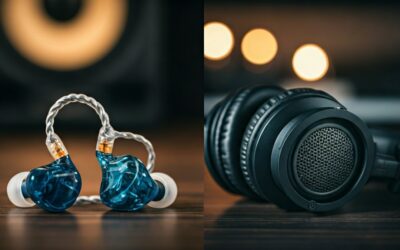
Managing a lot of headphones requires a strategic approach to organization, technical matching, and specialized maintenance to ensure every pair delivers its peak performance. To successfully handle a large collection, you must categorize your gear by use-case, invest in dedicated storage like headphone stands or pelican cases, and utilize a versatile DAC/Amp setup to accommodate varying impedance levels.
Owning a diverse collection allows you to experience different “sound signatures”—from the analytical precision of Planar Magnetics to the warm punch of Dynamic Drivers. However, without a proper management system, your investment can suffer from cable rot, dust accumulation, and physical degradation. This guide provides a professional framework for curating and caring for an extensive audio arsenal.
Key Takeaways: Managing a Large Headphone Collection
If you are looking for the “Too Long; Didn’t Read” version of this guide, here are the essential steps for handling a lot of headphones:
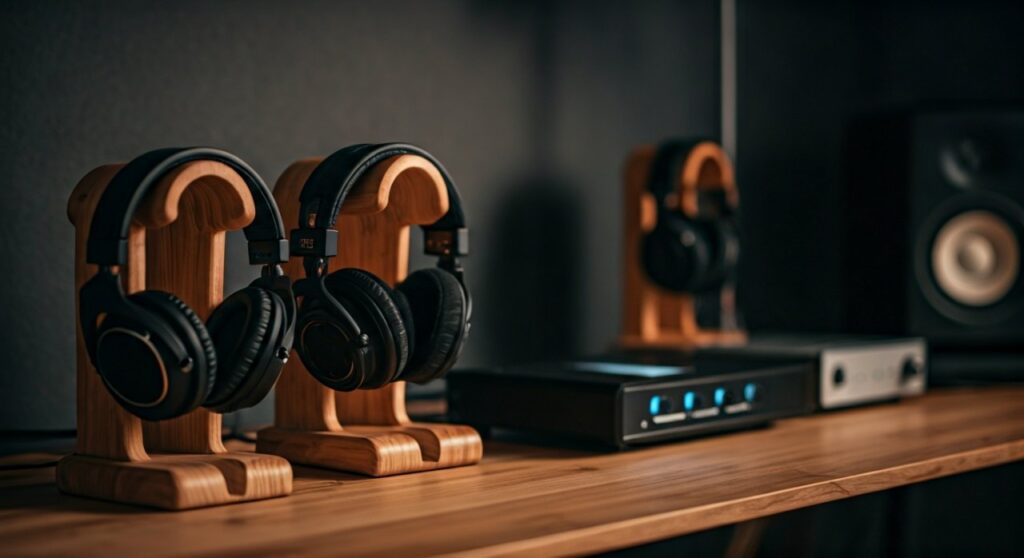
- Categorize by Purpose: Separate your collection into categories like “Critical Listening,” “Gaming/Soundstage,” “Portable/ANC,” and “Reference/Monitoring.”
- Invest in Storage: Use Omega-style stands for daily drivers and hard-shell cases for long-term storage to prevent ear pad compression.
- Centralize Your Signal Chain: Use a high-quality Desktop DAC/Amp with multiple gain stages to power everything from sensitive IEMs to high-impedance 600-ohm headphones.
- Maintenance is Mandatory: Clean ear pads weekly and store cables loosely coiled (not tightly wrapped) to prevent internal copper fractures.
- Digital Organization: Use software like Roon or Peace EQ to create specific sound profiles for every pair in your collection.
Step 1: Categorizing Your Collection by Sound Signature
When you own a lot of headphones, the first step is understanding why you have them. Each pair serves a specific sonic purpose. Professional collectors often organize their inventory based on the driver technology and the intended listening environment.
Understanding Driver Types
- Dynamic Drivers: These are the most common. They provide a familiar, punchy bass and are generally more durable. Examples include the Sennheiser HD600 series.
- Planar Magnetic Drivers: These use a thin diaphragm between magnets. They offer incredible speed and low distortion but are often heavier. Think Audeze or Hifiman.
- Electrostatic Headphones: These require specialized amplifiers (energizers). They offer the highest level of detail but are extremely sensitive to dust.
The Use-Case Matrix
To avoid redundancy, map out your collection. If you have a lot of headphones that all sound the same, you aren’t getting the most out of the hobby. Use the following table to identify gaps or overlaps in your current setup:
| Category | Best For | Typical Design | Key Model Example |
|---|---|---|---|
| Critical Listening | Audiophile sessions | Open-Back | Sennheiser HD800S |
| Commuting | Travel/Office | Closed-Back + ANC | Sony WH-1000XM5 |
| Studio Reference | Mixing/Mastering | Flat Response | Beyerdynamic DT 1990 Pro |
| Casual/Fun | Hip-Hop/EDM | V-Shaped Sound | Meze 99 Classics |
| In-Ear (IEMs) | On-the-go detail | Sealed Canal | Moondrop Blessing 3 |
Step 2: Professional Storage Solutions for Many Headphones
The biggest enemy of a large collection is gravity and environmental wear. When you have a lot of headphones, leaving them on a desk leads to “pad flattening” and dust buildup in the drivers.
Using Headphone Stands
For your “Daily Drivers” (the 2-3 pairs you use every day), use stands that support the headband without putting tension on the adjustment mechanism.
- Omega Stands: These look great but can sometimes compress ear pads. Use these for headphones with stiff pads.
- T-Stands: These hang the headphone by the headband. Ensure the “cradle” is wide enough to avoid leaving a dent in the headband padding.
- Wall Mounts: Excellent for saving desk space. Use wooden hangers to ensure no sharp metal edges contact the leather.
Long-Term Protection
For the headphones you only use once a month, do not leave them on a stand.
- Hard-Shell Cases: Every high-end pair should have a dedicated case.
- Silica Gel Packets: Toss a small desiccant packet into the case to prevent moisture from degrading the glue or oxidizing the voice coils.
- Cable Management: Never wrap cables around the headphone. This causes “memory” in the wire and eventual failure. Use the “over-under” coiling method and secure with velcro ties.
Step 3: Mastering the Signal Chain (DACs and Amps)
If you have a lot of headphones, you cannot rely on a standard PC headphone jack. Different headphones have different power requirements, measured in Impedance (Ohms) and Sensitivity (dB/mW).
The “One Amp to Rule Them All” Strategy
Instead of buying a new amp for every headphone, look for a “Master Desktop Amp” with the following features:
- Multiple Gain Switches: Low gain for sensitive In-Ear Monitors (IEMs) and High gain for power-hungry Planar Magnetics.
- Balanced and Unbalanced Outputs: Having a 4.4mm Pentaconn or 4-pin XLR output allows you to use premium balanced cables which reduce noise floor.
- Low Output Impedance: Ensure the amp has an output impedance of less than 1 Ohm to avoid altering the frequency response of low-impedance headphones.
Expert Insight: The 1/8th Rule
In my experience testing hundreds of units, always follow the 1/8th rule. The output impedance of your amplifier should be at most 1/8th of the impedance of your headphones. For example, if you are using 32-ohm headphones, your amplifier’s output impedance should be 4 ohms or lower to maintain a high damping factor.
Step 4: Maintenance and Hygiene for Collections
Maintaining a lot of headphones is a continuous process. Skin oils, sweat, and hair products are “acidic” and will eventually crack leather and stain velour pads.
Cleaning Routine
- Leather/Protein Leather: Wipe down after every use with a dry microfiber cloth. Every six months, use a tiny amount of leather conditioner.
- Velour Pads: These act like sponges for skin oils. Use a lint roller to remove hair and dust. For deep cleaning, remove the pads and hand wash with a mild, scent-free detergent.
- Driver Care: Never blow compressed air directly into an Open-Back headphone. This can rupture the delicate diaphragm. Use a soft brush to remove external dust.
Replacement Schedule
Expect to replace ear pads every 18 to 24 months if you use them regularly. Brand new pads often “restore” the original sound signature that was lost as the old pads became compressed and let in more bass leak.
Step 5: Managing the Digital Experience
When you rotate through a lot of headphones, the “sound” changes constantly. This can be jarring for your ears. Use digital tools to standardize your experience.
Unified Library Management
Software like Roon is the gold standard for collectors. It allows you to:
- Identify which headphone is currently “active.”
- Apply specific Parametric EQ curves (like the Harman Target) to make every headphone sound its best.
- Keep track of high-resolution files (FLAC/DSD) across your entire inventory.
The Role of Equalization (EQ)
Don’t be a “purist.” Using AutoEQ profiles can make a $200 pair of headphones sound like an $800 pair by correcting frequency response peaks. This is especially useful when you have a lot of headphones and want to experiment with different “flavors” of sound without buying more gear.
Frequently Asked Questions (FAQs)
How many headphones are too many?
There is no set number, but once you find you haven’t touched a specific pair in six months, it may be time to sell or trade. Most collectors find a “sweet spot” at 5-7 pairs, covering all major use cases (Mobile, Gaming, Critical, Relaxed, Studio).
Does “Burn-In” actually matter for a large collection?
While controversial, most experts agree that “mechanical” burn-in is minimal. However, “mental” burn-in is real. When switching between a lot of headphones, give your brain at least 30 minutes to adjust to a new sound signature before making a judgment on the quality.
How should I store cables for a lot of headphones?
Use a slotted cable organizer or a dedicated drawer with dividers. Label each cable with a small tag indicating which headphone it belongs to, especially since many brands use proprietary connectors (like Sennheiser’s 2-pin vs. Standard MMCX).
Can I use one DAC for all my headphones?
Yes, a high-quality DAC (Digital-to-Analog Converter) simply converts the signal. The Amplifier is what needs to be versatile. As long as your DAC provides a clean, 2V (unbalanced) or 4V (balanced) line-out signal, it can serve your entire collection.
What is the best way to prevent “Planar Crinkle”?
If you have a lot of Planar Magnetic headphones, avoid pressing them hard against your ears or slapping the cups together. This creates air pressure that can permanently crinkle the ultra-thin driver diaphragm.