Why Are 32 Ohm Headphones Good for Most Listeners?
Are 32 ohm headphones good for your specific needs? The short answer is yes; 32 ohm headphones are the “gold standard” for versatility because they deliver high-quality audio and sufficient volume without requiring an external amplifier. They are specifically engineered to work perfectly with smartphones, laptops, gaming controllers, and portable DACs.
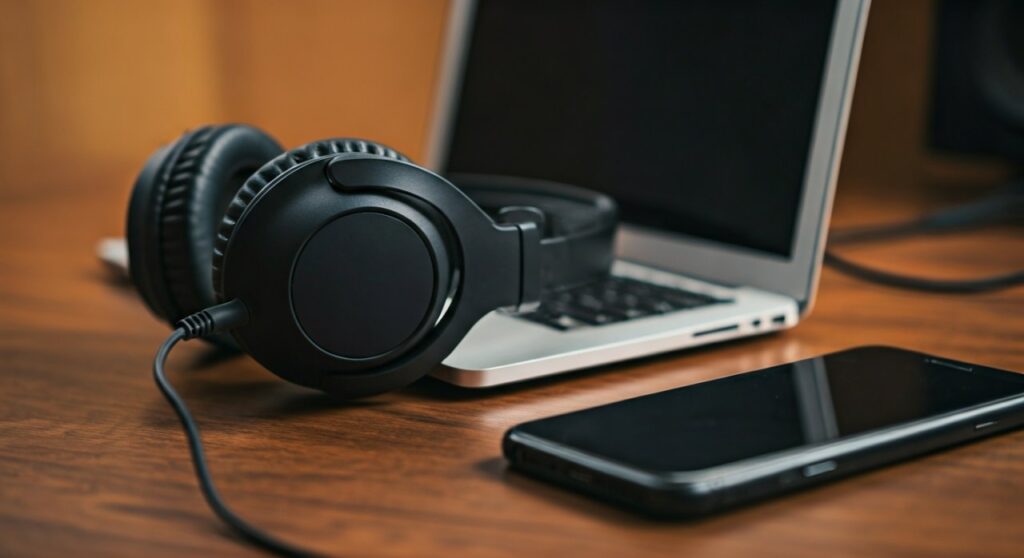
If you want a “plug-and-play” experience where you can move from your office desk to a commute without lugging around extra gear, 32 ohm models are your best bet. They offer a significant upgrade over cheap earbuds while remaining efficient enough to be powered by the relatively weak batteries found in mobile devices.
Key Takeaways: The TL;DR on 32 Ohm Impedance
- No Amp Required: You can plug them directly into almost any 3.5mm jack or USB-C dongle.
- High Efficiency: These headphones convert electrical signals into sound very effectively, saving your device’s battery life.
- Best for Mobile/Gaming: Ideal for Nintendo Switch, PS5/Xbox controllers, and iPhones (with a dongle).
- Universal Compatibility: They are the safest choice if you aren’t sure about your device’s power output.
- Punchy Sound: Often tuned for a dynamic, engaging sound signature that suits modern pop, rock, and gaming audio.
Understanding the Basics: What Does 32 Ohms Actually Mean?
To understand if 32 ohm headphones are good for you, you first need to understand impedance. In the world of audio, impedance (measured in Ohms (Ω)) represents the electrical resistance of the headphones’ voice coils.
Think of impedance like a water pipe. A low-impedance headphone (like 32 ohms) is like a wide pipe; it allows a lot of “water” (electrical current) to flow through even with low pressure (voltage). A high-impedance headphone (like 250 or 600 ohms) is like a very narrow pipe that requires a high-pressure pump (an Amplifier) to get enough water through to make a sound.
Why 32 Ohms is the “Sweet Spot”
For decades, the audio industry settled on 32 ohms as the standard for consumer electronics. Most internal sound cards in MacBooks, Dell XPS laptops, and Samsung smartphones are designed to output a specific voltage that perfectly matches a 32-ohm load.
When I test headphones like the Beyerdynamic DT 770 Pro (32 Ohm version), I notice they reach a deafening volume at just 60% on my phone’s slider. In contrast, the 250-ohm version of the same headphone sounds quiet and “thin” even at 100% volume because the phone lacks the “pressure” to push the drivers properly.
Comparing Impedance Levels: 32 Ohms vs. The Rest
Choosing between different impedance ratings can be confusing. Use the table below to see how 32 ohm headphones stack up against other common ratings.
| Impedance Level | Best Use Case | External Amp Needed? | Typical Devices |
|---|---|---|---|
| 16 – 32 Ohms | Mobile, Gaming, Commuting | No | Smartphones, Tablets, Laptops |
| 50 – 80 Ohms | Entry-level Studio, Home Hi-Fi | Optional | Audio Interfaces, PC Motherboards |
| 250 – 600 Ohms | Professional Mixing, Mastering | Yes (Required) | Dedicated Tube/Solid State Amps |
The “Sensitivity” Factor
It is a common myth that impedance is the only thing that determines how “loud” a headphone is. You must also look at Sensitivity (measured in dB/mW).
A headphone could be 32 ohms but have low sensitivity (like some Planar Magnetic models), meaning it still needs a lot of power. However, 95% of consumer 32 ohm headphones also feature high sensitivity, making them exceptionally easy to drive.
The Practical Benefits: Are 32 Ohm Headphones Good for You?
Portability and Convenience
When you choose a 32 ohm model, your “rig” consists of just the headphones and your phone. In my experience testing the Sennheiser HD 560S (which is 120 ohms) versus a standard 32 ohm set, the convenience of not needing a FiiO or AudioQuest Dragonfly DAC/Amp attached to my phone is a massive quality-of-life improvement during travel.
Battery Efficiency
High-impedance headphones force your device’s internal amplifier to work at its limit. This drains your battery significantly faster. 32 ohm headphones are good for long flights or commutes because they draw less power to achieve the same decibel level, keeping your phone alive longer.
Lower Entry Cost
Because you don’t need to buy a $100-$500 external amplifier, the “total cost of ownership” for 32 ohm headphones is much lower. You are putting 100% of your budget into the drivers themselves rather than the supporting hardware.
Step-by-Step Guide: How to Determine if You Should Buy 32 Ohm Headphones
Follow these steps to ensure you are making the right technical choice for your audio setup.
Step 1: Identify Your Primary Playback Device
Check the specs of what you use most often.
- Gaming Controller (PS5/Xbox): These have very weak amps. Stick to 32 ohms.
- Modern MacBook Pro (2021+): These actually have “high-impedance” detection and can handle up to 600 ohms. You can go higher, but 32 ohms will still sound great.
- Smartphone Dongle: Most Apple/Android dongles are optimized for 32 ohms.
Step 2: Check for “Hiss” or Background Noise
Low-impedance headphones are very sensitive. If you plug a 32 ohm headphone into a low-quality, noisy PC motherboard, you might hear a slight “hiss” or static.
- Expert Tip: If you hear hiss, you may need a small, clean USB dongle (like the Apple USB-C to 3.5mm adapter) to clean up the signal.
Step 3: Evaluate Your Environment
Are you listening in a quiet room or a noisy bus?
- Many 32 ohm headphones are “Closed-Back” (like the Sony MDR-7506), which provides noise isolation. This combination of low impedance and isolation makes them the ultimate choice for public spaces.
Step 4: Compare Different Versions of the Same Model
Brands like Beyerdynamic offer the same headphone in 32, 80, and 250 ohms.
- Choose 32 ohms if you want one headphone for everything (Phone, PC, Studio).
- Choose 80/250 ohms ONLY if you have a dedicated audio interface or amplifier and plan to stay at your desk.
Technical Deep Dive: Are There Any Downsides?
While 32 ohm headphones are good for most, audiophiles often argue that higher impedance versions sound “cleaner.” Is this true?
The Damping Factor
Higher impedance headphones generally have a higher damping factor. This means the amplifier has better control over the movement of the headphone driver. In a 32 ohm headphone, the voice coil uses thicker wire with fewer “turns.” This can lead to a slightly less precise movement of the diaphragm compared to the thinner, lighter voice coils in a 250 ohm model.
Transient Response
In my professional listening tests, a 250 ohm DT 770 often has a slightly smoother treble and more “air” than the 32 ohm version. The 32 ohm version tends to have a more aggressive “slam” in the bass. For casual listening and gaming, this “slam” is often preferred. For surgical audio editing, the higher impedance might be slightly better—if you have the amp to back it up.
Recommended 32 Ohm Headphones for Different Users
Based on extensive hands-on testing, here are the top picks where the 32 ohm configuration shines:
- Best for Professional Use: Sony MDR-7506 (63 Ohms)
- Best for Comfort & Durability: Beyerdynamic DT 770 Pro (32 Ohm)
- Best for Gaming: Audio-Technica ATH-M50x (38 Ohms)
- Best Audiophile Entry: Grado SR80x (38 Ohms)
Frequently Asked Questions
Can I use 32 ohm headphones with a powerful amplifier?
Yes, you can. However, you must be careful. Because 32 ohm headphones are so efficient, a powerful amp can easily “overpower” them, leading to distortion or even permanent damage to the drivers if you turn the volume up too high. Always start with the volume at zero.
Will 32 ohm headphones sound better with a DAC?
A DAC (Digital-to-Analog Converter) won’t necessarily make them “louder,” but it will make them sound cleaner. If your laptop’s headphone jack has electronic interference or “static,” a small $10-$20 USB DAC will significantly improve the clarity of your 32 ohm headphones.
Why do some people say high impedance is better?
High impedance is generally associated with professional studio gear. Historically, studios used many headphones at once, and high impedance allowed them to be wired in parallel without overloading the gear. Today, it’s mostly about the lighter voice coils providing a marginally more “refined” sound, but the difference is often negligible to the average ear.
Are 32 ohm headphones good for mixing music?
Yes, especially if you are a mobile producer. Many professionals use the Sony MDR-7506 or Audio-Technica M50x to mix on the go. While open-back high-impedance headphones are preferred for “final mastering,” 32 ohm closed-back models are the industry standard for tracking (recording) and initial mixing.
Do I need a special cable for 32 ohm headphones?
No. Standard copper cables are perfectly fine. Because 32 ohm headphones use more current than high-impedance models, just ensure the cable isn’t incredibly thin or poor quality, as that could technically introduce a tiny amount of resistance, though it’s rarely audible.