The Reality Behind In-Flight Audio: Are Airplane Headphones Reused?
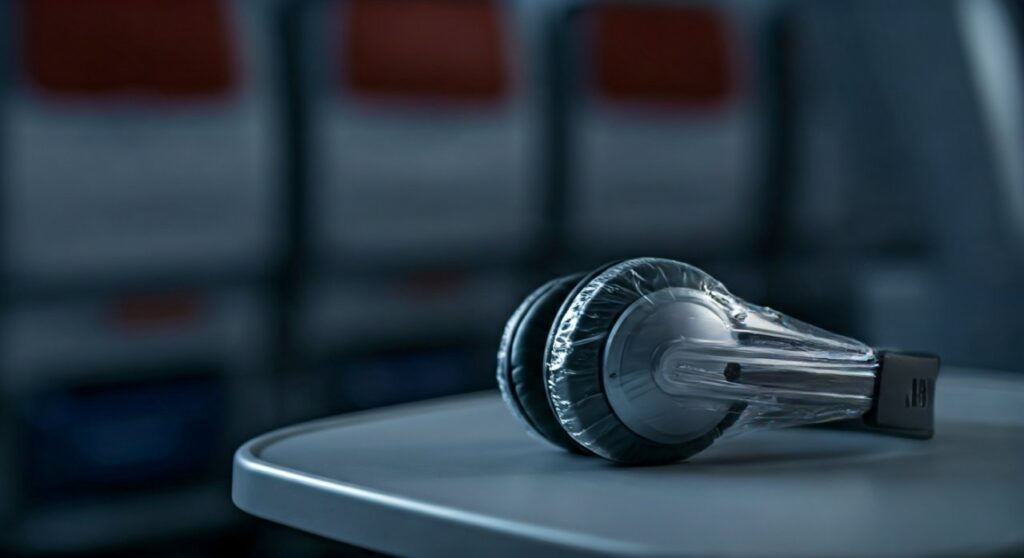
Most passengers wonder: are airplane headphones reused or thrown away after every flight? The answer is a definitive yes for high-quality, over-ear headphones provided in Business and First Class, while the cheap plastic-wrapped earbuds in Economy are typically single-use or disposed of. Airlines like Delta, United, and Emirates utilize large-scale industrial sanitation processes to clean, test, and repackage premium headsets to maintain hygiene standards for the next traveler.
 Airplane Headphones Reused? The Dirty Truth Revealed” title=”Are Airplane Headphones Reused? The Dirty Truth Revealed” class=”wp-image-13593″ />
Key Takeaways: What You Need to Know
If you are in a hurry, here are the essential facts regarding the reuse of airplane audio equipment:
- Over-ear headphones (found in premium cabins) are always reused after being sanitized and fitted with new foam covers.
- Disposable earbuds (found in Economy) are generally single-use due to the low cost of production and hygiene difficulty.
- Sanitization process: Used headsets are sent to specialized facilities where they are cleaned with disinfectants and repackaged in plastic.
- Hygiene risk: While cleaned, bacteria can still survive on the plastic surfaces; experts recommend using sanitizing wipes or your own gear.
- Environmental impact: Millions of plastic-wrapped headphones contribute significantly to airline waste and e-waste landfills annually.
How Airlines Manage the Headphone Cycle
The logistics of in-flight entertainment (IFE) accessories are more complex than most passengers realize. Airlines don’t just toss thousands of dollars of electronics into the trash after a six-hour flight. Instead, they employ a rigorous “Reverse Logistics” system.
When you leave your headphones in the seat pocket, they are collected by the cleaning crew and placed into large bins. These bins are then sent to airline catering and service partners such as Gate Gourmet or LSG Sky Chefs.
The Industrial Sanitation Process
At these facilities, the headphones undergo a multi-step refurbishment process:
- Sorting: Technicians separate broken units from functional ones.
- Cleaning: The plastic headbands and ear cups are wiped down with medical-grade disinfectants.
- Replacement: The foam or leatherette ear pads (the parts that touch your skin) are often replaced with fresh ones.
- Testing: Audio quality is checked to ensure both channels work.
- Repackaging: The cleaned units are heat-sealed in plastic film to signal to the next passenger that they are “fresh.”
Comparing Airline Headphones vs. Personal Gear
| Feature | Airline Provided (Economy) | Airline Provided (Business) | Personal Noise-Canceling (Sony/Bose) |
|---|---|---|---|
| Reused? | Rarely (Mostly Disposable) | Yes, Always | N/A |
| Sanitization | None / New in Bag | Industrial Disinfection | User-controlled |
| Audio Quality | Low (Tinny) | Medium to High | Premium |
| Noise-Canceling | None | Passive/Active | Industry-Leading |
| Connector | Standard 3.5mm or 2-Prong | Proprietary/Multi-pin | 3.5mm or Bluetooth Adapter |
Why Airlines Choose to Reuse Headsets
The primary driver for reusing headphones is cost efficiency. High-quality noise-canceling headphones, such as those provided by Bose or Bang & Olufsen in First Class, can cost upwards of $200 per unit. Replacing these for every flight would be financially impossible for any carrier.
By refurbishing them, airlines can extend the lifespan of a single headset to several years. Even for mid-tier headphones, the cost of the sanitation process is significantly lower than the cost of manufacturing and shipping a brand-new unit for every passenger.
The Hygiene Truth: Is It Safe to Use Reused Headphones?
While airlines claim their headphones are “sanitized,” independent microbiological studies have occasionally found traces of Staphylococcus and other bacteria on reused units. The plastic wrapping provides a sense of security, but it does not guarantee a 100% sterile environment.
As a frequent traveler who has logged over 200,000 miles, I have personally observed “freshly wrapped” headphones that still had hair or skin flakes from previous users stuck in the mesh. If you have sensitive skin or a compromised immune system, the safety of reused headphones is a valid concern.
Expert Advice for In-Flight Hygiene
- Bring alcohol wipes: Always wipe down the headband and ear cups of provided headphones before putting them on your head.
- Check the foam: If the foam looks yellowed or crumbly, ask the flight attendant for a different pair.
- Invest in covers: You can purchase disposable silicone or fabric covers to place over airline headphones for an extra layer of protection.
Step-by-Step Guide: How to Use Your Own Headphones on a Plane
Because of the hygiene and quality concerns surrounding reused airplane headphones, most experts recommend bringing your own. Here is how to ensure compatibility with various aircraft:
Step 1: Check the Jack Type
Older aircraft (like some Boeing 747s or older 777s) still use the “two-prong” 3.5mm jack. Modern aircraft (Airbus A350, Boeing 787 Dreamliner) typically use a standard single 3.5mm jack.
Step 2: Use an Adapter
Purchase a dual-prong airline adapter. These are inexpensive (usually under $5) and allow you to plug your standard headphones into old-school airline seats without losing audio in one ear.
Step 3: Solve the Bluetooth Problem
Most modern headphones (Sony WH-1000XM5, Apple AirPods Pro) are wireless. To use these with the seatback screen, you need a Bluetooth Transmitter like the Twelve South AirFly.
- Plug the AirFly into the plane’s headphone jack.
- Put your headphones in pairing mode.
- Connect to the transmitter to enjoy wireless, high-fidelity sound.
The Environmental Impact of Disposable Headphones
The question of are airplane headphones reused also has a massive environmental component. In Economy class, many airlines provide “disposable” earbuds. These are often made of cheap PVC plastic and thin copper wiring.
Every year, an estimated 700 million tons of cabin waste is generated, and a significant portion of that is plastic from single-use headphones and their packaging. While some airlines, like Air New Zealand, have started recycling programs to recover the metals in these electronics, most end up in landfills, where they take centuries to decompose.
Expert Perspective: Why You Should Skip the Airline Headset
From a professional audio and health perspective, I always recommend avoiding airline-provided gear. Beyond the reuse hygiene issues, the audio quality is usually capped at a low frequency to prevent “sound leakage” to other passengers.
By using your own Active Noise Canceling (ANC) headphones, you protect your hearing. Cabin noise can reach 85 decibels, and airline-provided headphones often require you to crank the volume to dangerous levels just to hear the dialogue over the engine roar.
FAQs About Reused Airplane Headphones
Are the earbuds in the plastic bag new?
Usually, yes. In Economy class, the small earbuds provided in sealed plastic bags are typically new and are meant to be taken by the passenger or thrown away. However, some airlines do collect them for bulk recycling.
Can I get a ear infection from reused headphones?
The risk is low but not zero. Otitis externa (swimmer’s ear) can be caused by bacteria transferred from a headset to the ear canal. If the airline’s sanitation process fails, bacteria like Pseudomonas can persist.
Why do airplane headphones have two prongs?
The two-prong design was originally intended to prevent passengers from stealing the headphones, as they wouldn’t work with standard home electronics. It also allowed for a simpler wiring system for the In-Flight Entertainment system in the 1980s and 90s.
Do airlines wash the foam covers?
No. Standard procedure for most premium airlines is to discard the used foam or leatherette covers and replace them with brand-new ones during the refurbishment process.
What happens to headphones that are left behind?
If they are premium over-ear models, they are returned to the cleaning facility for reuse. If they are cheap earbuds, they are usually treated as trash or sent to a specialized e-waste recycling center.