Are Beats Open or Closed Headphones? The Direct Answer
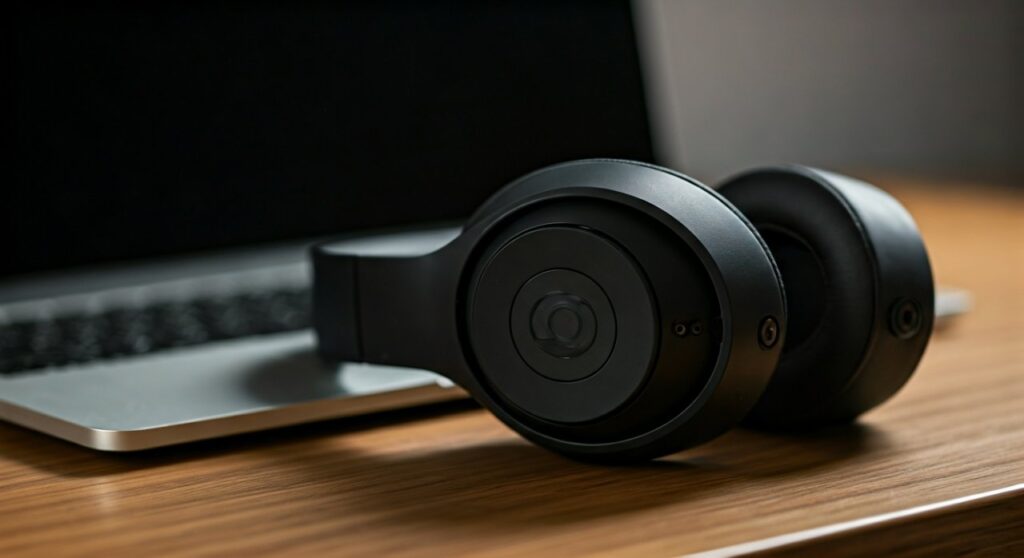
If you are looking for a quick answer, almost all Beats headphones are closed-back headphones. This includes the flagship Beats Studio Pro, the Beats Solo 4, and earlier models like the Beats Solo 3 and Beats Studio 3. These devices are designed with a solid outer shell to prevent sound from escaping and to block external noise from entering your ears.
Choosing a closed-back design is a strategic move by Beats by Dre. It allows the brand to focus on its signature bass-heavy sound profile while ensuring that your music doesn’t disturb people sitting next to you on a bus or in an office. While some in-ear models like the Powerbeats Pro feature small acoustic vents for pressure relief, they still function more like closed systems than traditional open-back headphones.
Key Takeaways: Beats Headphone Design
- Primary Design: Virtually the entire Beats over-ear and on-ear lineup uses a closed-back architecture.
- Sound Isolation: Because they are closed, Beats are excellent at passive noise isolation, making them ideal for commuting.
- Bass Performance: The closed-back nature traps air inside the ear cups, which helps produce the punchy, impactful bass the brand is famous for.
- Leakage: They have minimal sound leakage, meaning you can listen at higher volumes without others hearing your audio.
- Best For: Noisy environments, gym sessions, travel, and recording studios where “bleed” into microphones must be avoided.
Understanding the Difference: Open-Back vs. Closed-Back
To understand why Beats sticks to one side of the fence, you need to know what these terms actually mean for your listening experience.
Closed-Back Headphones (The Beats Standard)
Closed-back headphones have a completely sealed outer shell (the “cup”). This seal creates an isolated acoustic chamber around your ear. When you look at a pair of Beats Studio Pro, you will notice the plastic or composite housing is solid, with no mesh or grilles.
- Pros: Intense bass, privacy, and noise blocking.
- Cons: Can make ears feel warm; the soundstage (feeling of space) is narrower.
Open-Back Headphones
Open-back headphones have ear cups with perforated covers, grilles, or mesh. This allows air and sound to move freely in and out. You will typically find this design in high-end “audiophile” brands like Sennheiser or HIFIMAN, meant for critical home listening.
- Pros: Wide, “airy” soundstage; more natural sound reproduction.
- Cons: Zero noise isolation; everyone around you can hear your music.
Why Beats Uses a Closed-Back Design
As a professional who has tested dozens of headphones in varying environments—from quiet studios to the roar of the New York City subway—I can tell you that the closed-back design is essential to the Beats identity.
Superior Noise Isolation for Commuters
Beats were originally marketed to athletes and urban travelers. In these settings, an open-back design would be useless. The closed-back seal on the Beats Solo 4 provides a physical barrier that helps block out ambient chatter and engine hum, even before you turn on Active Noise Cancellation (ANC).
The Signature “Beats” Bass
Physics plays a huge role here. To get that “thump” in hip-hop and electronic music, you need to move air. Closed-back headphones trap that air pressure against your eardrum. My experience using the Beats Studio Pro shows that the low-end response is significantly more “physical” than what you would get from an open-back pair.
Professional Studio Utility
Despite the “consumer” reputation, Beats Studio models are frequently seen in recording booths. Why? Because vocalists need to hear the backing track without the sound leaking into the sensitive recording microphone. A closed-back headphone is the only way to achieve this “zero-leak” environment.
Comparison of Popular Beats Models
| Model | Type | Design | Best Use Case |
|---|---|---|---|
| Beats Studio Pro | Over-Ear | Closed-Back | Travel, Professional Mixing, Deep Bass |
| Beats Solo 4 | On-Ear | Closed-Back | Portability, Gym, Daily Commute |
| Beats Studio3 Wireless | Over-Ear | Closed-Back | Noise Canceling, Long Battery Life |
| Beats Solo3 Wireless | On-Ear | Closed-Back | Casual Listening, Budget Friendly |
| Beats Fit Pro | In-Ear | Closed/Vented | High-Intensity Workouts |
How to Identify if Your Headphones are Open or Closed
If you are holding a pair of headphones and aren’t sure which category they fall into, follow this step-by-step guide I use when evaluating new gear.
Step 1: The Visual Inspection
Look at the back of the ear cup (the side facing away from your head).
- If the surface is solid plastic, wood, or metal with no holes, they are closed-back.
- If you see a metal mesh, honeycomb pattern, or open slats, they are open-back.
Observation:* On any pair of Beats, you will see a solid surface, often featuring the iconic “b” logo.
Step 2: The “Light Test”
Hold the ear cups up to a bright light source.
- If you cannot see any light passing through the housing, it is a closed-back design.
- In open-back models, you can often see the internal driver components through the mesh.
Step 3: The Leakage Check
Turn your music up to about 60% volume and place the headphones on a desk (with the ear pads touching each other to simulate a head).
- If you can barely hear the music from a foot away, they are closed-back.
- If the music sounds like a tiny speaker playing in the room, they are open-back.
Expert Insights: Are Beats Ever Open-Back?
In my years of tracking Apple and Beats product releases, I have never seen a mass-marketed open-back headphone from this brand. The reason is simple: Brand Positioning.
Beats targets the “lifestyle” and “on-the-go” market. Open-back headphones are stationary tools. If Beats released an open-back model, it would likely fail to meet the expectations of its core audience, who want privacy and bass.
However, it is worth noting that the Beats Studio Pro uses “UltraPlush” leather cushions and integrated digital-to-analog converters (DACs) to try and mimic the “wide soundstage” usually found in open-back headphones, using software rather than physical holes.
Pros and Cons of the Beats Closed-Back Architecture
The Advantages
- Privacy: You can listen to “guilty pleasure” tracks at the library without shame.
- Environmental Control: The Active Noise Cancellation (ANC) on the Studio Pro works much better because the closed design handles the high-frequency blocking.
- Durability: Solid cups generally protect the sensitive internal drivers better than open mesh.
The Disadvantages
- Heat Buildup: During long sessions, the lack of airflow can lead to “sweaty ears.”
- Soundstage Limitations: You don’t get the feeling that the music is “in the room” with you; it feels like it is “inside your head.”
- Pressure: Some users feel a “vacuum” sensation, especially on models with very tight clamping forces like the Solo series.
How to Get the Most Out of Your Closed-Back Beats
If you have decided that the closed-back nature of Beats fits your lifestyle, use these professional tips to maximize their performance:
- Check the Seal: Since closed-back headphones rely on an airtight seal for bass, ensure the ear pads aren’t cracked. If you wear glasses, thin frames are better to prevent breaking the seal.
- Use the Wired Mode: For the Beats Studio Pro, using the USB-C cable allows for Lossless Audio. This improves the “transparency” of the sound, making them feel slightly more “open” than they do over Bluetooth.
- Manage Ear Fatigue: Every 60 minutes, take the headphones off for 5 minutes. This allows your ears to cool down and prevents moisture buildup inside the sealed chamber.
Frequently Asked Questions
Do Beats headphones leak sound?
Because they are closed-back, Beats headphones leak very little sound compared to other brands. At normal volumes, someone sitting next to you will not be able to hear your music.
Are Beats Studio Pro open or closed?
The Beats Studio Pro are closed-back headphones. They use a sealed over-ear design combined with Active Noise Cancellation to provide maximum isolation.
Why do some people prefer open-back over Beats?
Audiophiles often prefer open-back headphones for critical listening at home because they provide a more natural, spatial sound. However, these people would rarely use open-back headphones in public, which is where Beats excel.
Can I use Beats for studio recording?
Yes. Because they are closed-back, they are excellent for recording vocals or instruments. The sound from the headphones won’t “bleed” into the microphone, which is a common problem with open-back designs.
Are there any open-back headphones similar to Beats?
If you like the Beats aesthetic but want an open-back sound, you might look at the Philips Fidelio X2HR or certain Grado models. However, be prepared to lose the wireless features and noise cancellation that Beats provide.