Understanding Why Are DJ Headphones Different
Are DJ headphones different from standard headphones? Yes, they are specifically engineered for high-volume environments, extreme physical durability, and a frequency response that emphasizes the “thump” of a kick drum to facilitate beatmatching. While consumer headphones focus on comfort and studio headphones focus on accuracy, DJ headphones are built as high-performance tools for professional performance.
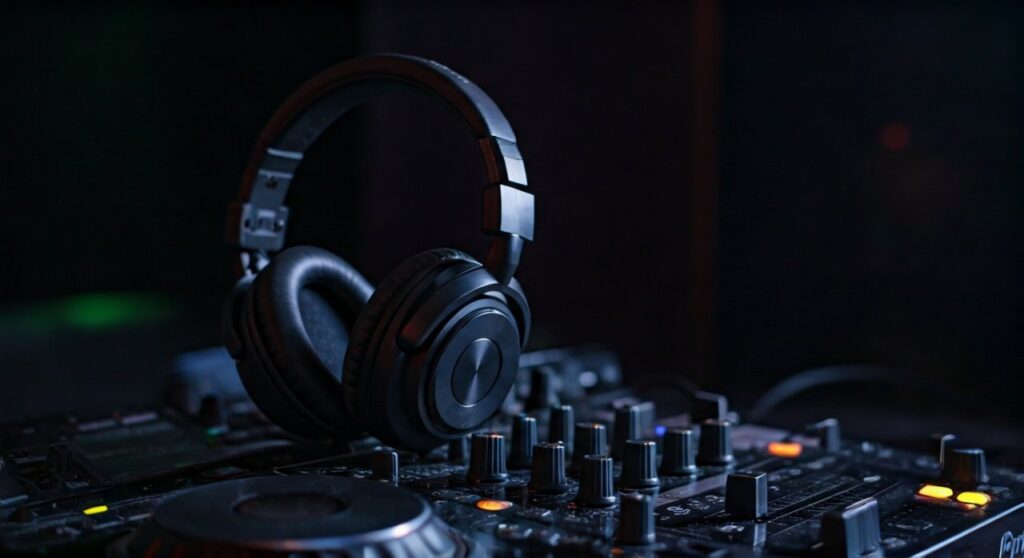
If you have ever tried to mix a track in a loud club using standard earbuds, you already know the struggle. The music from the speakers drowns out your cue signal, and the delicate plastic frames snap after just a few gigs. This guide breaks down the technical and physical specifications that set professional DJ gear apart from everything else on the market.
Key Takeaways: DJ vs. Standard Headphones
- Isolation is Priority: Professional models utilize a Closed-Back design to block out up to 30dB of external noise.
- Enhanced Low-End: The frequency curve is “V-shaped,” boosting the bass and treble so DJs can hear the beat over loud club monitors.
- Physical Flexibility: These headphones feature swivel mechanisms and 90-degree rotating earcups for single-ear monitoring.
- High SPL (Sound Pressure Level): They are designed to handle high volumes without distorting, often exceeding 100dB.
- Durability: Materials include sweat-resistant pads, detachable coiled cables, and reinforced headbands.
The Core Technical Differences in DJ Headphones
To understand why are DJ headphones different, we must look at the internal components. A DJ is not just “listening” to music; they are extracting specific data points—like the transient of a snare or the sub-frequency of a kick—to align two tracks perfectly.
High Sound Pressure Level (SPL) Handling
In a DJ booth, the ambient noise can easily reach 95-105 decibels. Standard consumer headphones often begin to distort when pushed to high volumes. DJ-specific headphones like the Sennheiser HD-25 or the Pioneer HDJ-X10 are rated for high SPL, ensuring the audio remains crisp even when the volume is cranked to compete with a massive sound system.
Tailored Frequency Response
Audiophiles look for “flat” response, meaning the headphones play back exactly what was recorded. However, DJs need a “colored” sound. The low-end (20Hz – 200Hz) is typically boosted to make the kick drum more prominent. Simultaneously, the highs are sharpened so that the “click” of the beat is easier to track.
Impedance Levels
Most DJ headphones have a relatively low impedance (usually between 32 and 70 ohms). This allows them to get very loud even when plugged into the headphone jack of a DJ controller or a professional mixer without needing an external amplifier.
Physical Design: Built for the Booth
The environment of a nightclub is hostile to electronics. There is heat, sweat, constant movement, and the risk of cables getting snagged. This is where the physical architecture of DJ headphones proves they are a different breed of equipment.
The Importance of Swivel and Rotation
A DJ rarely wears both earcups at the same time for the entire set. They often practice “one-ear monitoring,” where one ear listens to the “cue” (the next song) in the headphones, and the other ear listens to the “master” (the current song) playing through the booth monitors.
Manufacturers include multi-axis swivels so the earcup can sit comfortably against the shoulder or flip backward. If you try this with standard consumer headphones, the plastic headband will eventually suffer from stress fractures.
Coiled vs. Straight Cables
Most professional sets come with a detachable coiled cable. This is a critical feature for two reasons:
- Safety: If you move suddenly, the coil stretches instead of ripping the mixer off the table.
- Repairability: If a cable shorts out—which happens frequently in professional use—you can simply swap it for a new one rather than buying a whole new pair of headphones.
Comparison: DJ vs. Studio vs. Consumer Headphones
The following table highlights the specific trade-offs between the three most common types of over-ear headphones.
| Feature | DJ Headphones | Studio Headphones | Consumer (ANC) Headphones |
|---|---|---|---|
| Primary Goal | Beatmatching & Durability | Accuracy & Transparency | Comfort & Portability |
| Sound Profile | Bass & Treble Boosted | Flat / Neutral | Warm / Balanced |
| Isolation | High (Passive) | Moderate | High (Active/Digital) |
| Build Quality | Ultra-Rugged / Flexible | Lightweight / Static | Sleek / Foldable |
| Earcup Style | Swiveling / Rotating | Fixed or Limited Tilt | Fixed / Limited Tilt |
| Typical Models | V-Moda Crossfade, Pioneer HDJ | Beyerdynamic DT 770, Sony MDR-7506 | Bose QC45, Sony WH-1000XM5 |
Step-by-Step: How to Choose the Right Pair
If you are transitioning from a casual listener to a performer, following these steps will help you identify the right gear.
Step 1: Check the Isolation Factor
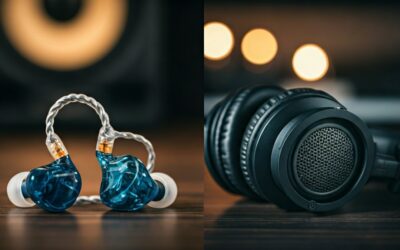
Put the headphones on and have someone speak to you at a normal volume. In DJ headphones, you should barely be able to hear them. Avoid “Open-Back” headphones entirely; while they sound great for home listening, they are useless in a loud club because the sound leaks both in and out.
Step 2: Test the “Toughness”
Pick up the headphones and gently twist the headband. Professional units like the AIAIAI TMA-2 are modular and highly flexible. If the unit feels “creaky” or utilizes thin plastic hinges, it likely won’t survive a six-month residency.
Step 3: Evaluate Earpad Materials
Look for protein leather or high-quality synthetic materials. While velour pads (common on studio gear) are comfortable, they soak up sweat and become “gross” very quickly in a hot DJ booth. You want pads that can be wiped down after a show.
Step 4: Verify the Jack Size
Standard headphones use a 3.5mm mini-jack. Professional mixers use a 6.35mm (1/4 inch) jack. Ensure your chosen pair comes with a screw-on adapter so it doesn’t get lost or pulled out mid-set.
Expert Perspective: Why You Shouldn’t Use Bluetooth
As an expert in the field, I frequently get asked: “Can I use my Bluetooth noise-canceling headphones to DJ?”
The answer is a hard No.
- Latency: There is a delay (latency) between the moment you press “play” and when the sound hits your ears via Bluetooth. Even a 50ms delay makes beatmatching impossible.
- Digital Processing: Active Noise Cancellation (ANC) can sometimes “color” the sound in a way that masks the transients you need to hear for mixing.
- Battery Life: You don’t want your headphones dying in the middle of a transition.
Always stick to a wired connection when performing.
Frequently Asked Questions
Can I use DJ headphones for everyday listening?
Yes, but be aware that they might feel “tight” on your head. Because they are designed for maximum isolation, they have a higher “clamping force” than consumer headphones. The boosted bass is great for Electronic Dance Music (EDM) and Hip-Hop, but might feel overwhelming for classical or jazz.
Why do some DJs use in-ear monitors (IEMs)?
Some high-profile DJs are switching to IEMs to protect their hearing. Since IEMs sit inside the ear canal, they provide the best possible isolation, allowing the DJ to keep the volume lower while still hearing every detail. However, they lack the “vibe” of feeling the room’s energy that over-ear headphones provide.
Are expensive DJ headphones worth the price?
Investing in a mid-to-high-range pair (between $150 and $300) is usually worth it for the build quality alone. Cheaper headphones often use thin internal wiring that fails after repeated folding and unfolding. Brands like Sennheiser, Pioneer, and V-Moda offer replacement parts, which saves you money in the long run.
Is there a difference between “Closed-Back” and “Open-Back”?
Yes. Closed-Back headphones have a solid outer shell that traps sound. This is mandatory for DJs. Open-Back headphones have a mesh or perforated shell that allows air and sound to move freely, creating a wider “soundstage” for critical listening in quiet studios, but they provide zero isolation.
Do I need a special amplifier for DJ headphones?
No. Most professional DJ gear (controllers, mixers, and interfaces) has built-in headphone amplifiers that are more than powerful enough to drive the low-impedance drivers found in these headphones.