Understanding the Core Debate: Are Earbuds as Good as Headphones?
Whether earbuds are as good as headphones depends entirely on your environment, audio fidelity requirements, and physical comfort preferences. While high-end earbuds like the Sony WF-1000XM5 offer incredible portability and noise cancellation, over-ear headphones generally provide a superior soundstage, longer battery life, and better long-term comfort. For professional studio work, headphones remain the gold standard, but for daily commuting and fitness, earbuds are often the more practical choice.
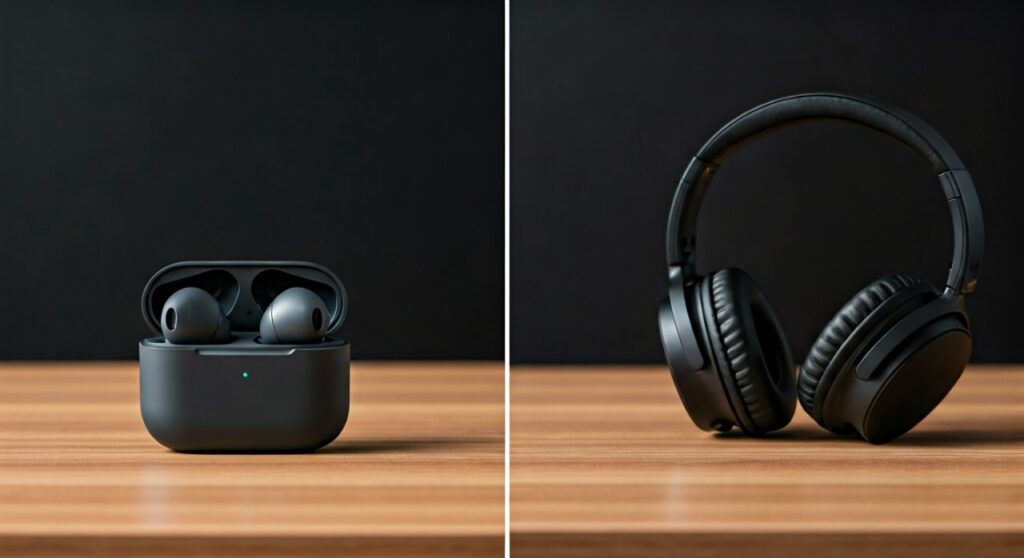
Key Takeaways: The Quick Verdict
If you are in a rush, here is the essential comparison to help you decide:
- Sound Quality: Headphones win on spatial imaging and bass depth due to larger dynamic drivers.
- Portability: Earbuds are the undisputed champions for travel and exercise.
- Noise Cancellation: Top-tier ANC (Active Noise Cancellation) is now comparable in both, but headphones offer better passive isolation.
- Health: Earbuds carry a higher risk of ear infections and wax buildup if not cleaned regularly.
- Longevity: Headphones usually last longer because their batteries are larger and they often feature replaceable ear pads and cables.
The Technical Breakdown: Drivers, Soundstage, and Imaging
To answer if are earbuds as good as headphones, we must look at the hardware. The physical size of the hardware dictates how air moves, which directly impacts what you hear.
Driver Size and Displacement
Most earbuds utilize drivers ranging from 6mm to 12mm. In contrast, standard over-ear headphones use 40mm to 50mm drivers.
Larger drivers can move more air with less effort. This results in more natural sub-bass extension and lower Total Harmonic Distortion (THD). When you listen to a bass-heavy track, headphones provide a “visceral” feel that earbuds struggle to replicate without heavy DSP (Digital Signal Processing).
Soundstage and Spatial Accuracy
Soundstage refers to the perceived 3D space of the music. Because headphones sit over your ears, they interact with your pinna (the outer ear). This mimics how we hear sounds in the real world.
Earbuds bypass the outer ear entirely, firing sound directly into the ear canal. This often results in an “in-your-head” sound feeling, whereas open-back headphones like the Sennheiser HD 600 make it feel like the band is playing in the room with you.
Comparison Table: At a Glance
| Feature | Wireless Earbuds | Over-Ear Headphones |
|---|---|---|
| Driver Size | 6mm – 12mm | 40mm – 50mm |
| Battery Life | 5-8 hours (per charge) | 30-60 hours |
| Portability | Excellent (Pocket-sized) | Fair (Requires a case/bag) |
| Best For | Gym, Commuting, Calls | Gaming, Producing, Long Flights |
| Microphone Quality | Variable (often picks up wind) | Usually superior (Boom mic options) |
Step-by-Step Guide: How to Determine Which is Better for You
Choosing between the two isn’t just about specs; it’s about your lifestyle. Follow this step-by-step evaluation to see if earbuds are as good as headphones for your specific needs.
Step 1: Evaluate Your Primary Environment
Where will you spend 80% of your listening time?
- If you are at a desk: Headphones are superior. They offer better ergonomics for 8-hour shifts and don’t cause the “occlusion effect” (the booming sound of your own voice) during meetings.
- If you are at the gym: Earbuds are the only logical choice. Most headphones will trap sweat, causing the synthetic leather pads to peel and potentially damaging the internal electronics.
Step 2: Test Your Sensitivity to Ear Pressure
Many users find that earbuds cause discomfort after an hour due to the pressure against the ear canal. If you have “small ears,” even the smallest silicone tips might feel intrusive.
- Expert Tip: If you prefer earbuds but hate the pressure, look for “semi-open” designs like the Apple AirPods (3rd Gen) or LinkBuds from Sony.
Step 3: Analyze Your Battery Requirements
True Wireless Stereo (TWS) earbuds rely on tiny batteries that degrade over time. After 2-3 years, a pair of earbuds that once lasted 6 hours might only last 3.
- Headphones have much larger physical batteries. A pair of Sony WH-1000XM5 or Bose QuietComfort Ultra can provide up to 30-40 hours of playback, meaning you only charge them once a week rather than every day.
Step 4: Consider the “Repairability” Factor
This is a critical point for the environmentally conscious listener.
- Earbuds are almost impossible to repair. Once the battery dies, the entire unit is usually discarded.
- Headphones often feature user-replaceable parts. You can swap out worn-out ear cushions or use a 3.5mm audio cable if the Bluetooth chip fails, extending the product’s life to a decade or more.
Advanced Audio Considerations: Codecs and Connectivity
When asking are earbuds as good as headphones, professionals look at the data transmission. Both devices use Bluetooth, but the implementation varies.
High-Resolution Audio
If you use streaming services like Tidal HiFi or Apple Music Lossless, you need hardware that supports high-bitrate codecs.
- LDAC and aptX Adaptive: These are more commonly found in high-end headphones.
- Earbuds often prioritize connection stability over raw bitrate to prevent dropouts in crowded areas like subways.
Passive vs. Active Noise Cancellation
Active Noise Cancellation (ANC) uses microphones to cancel out external sound. While the Apple AirPods Pro 2 have legendary ANC, they cannot compete with the passive isolation of a closed-back headphone. The thick foam of a headphone acts as a physical barrier that blocks high-frequency sounds (like a baby crying) much better than a small silicone ear tip.
Impact on Ear Health and Hygiene
An often-overlooked factor in the earbuds vs. headphones debate is biological impact. As an expert who has consulted with audiologists, I can confirm that usage patterns matter more than the device type.
- Bacteria Growth: Earbuds trap moisture in the ear canal. Research suggests that wearing earbuds for just one hour can increase the bacteria count in your ear by up to 700%.
- Volume Levels: Because earbuds are closer to the eardrum, users often unknowingly listen at higher Sound Pressure Levels (SPL) to drown out background noise. This increases the risk of Noise-Induced Hearing Loss (NIHL).
- Earwax Compaction: Frequent earbud use can push earwax deeper into the canal, leading to blockages that require professional removal.
When Are Earbuds Actually Better?
Despite the technical advantages of headphones, there are three scenarios where earbuds are better than headphones:
- Discretion: In professional or social settings where you want to listen to a podcast or take a call without looking “tucked away” from the world.
- Spatial Awareness: Many earbuds now feature “Transparency Mode.” Because they don’t cover the entire ear, they allow for a more natural blend of digital audio and ambient surroundings, which is safer for runners.
- Sleeping: For those who use white noise to sleep, “sleep buds” are the only comfortable option for side-sleepers.
FAQs: Your Questions Answered
Are earbuds as good as headphones for gaming?
For casual gaming, yes. However, for competitive FPS games, headphones are significantly better. The larger drivers provide better directional imaging, allowing you to pinpoint footsteps and reload sounds with much higher accuracy.
Do earbuds cause more hearing damage than headphones?
Not necessarily, but the risk is higher. Because earbuds don’t block out ambient noise as effectively as over-ear headphones, users tend to crank the volume higher. If kept at the same decibel level, both are equally safe.
Which one has a better microphone?
Generally, headphones have better microphones because the physical distance between the mic and the mouth is shorter, or they use boom microphones. Earbuds rely on “beamforming” technology, which can sound robotic in windy environments.
Why are high-end IEMs so expensive?
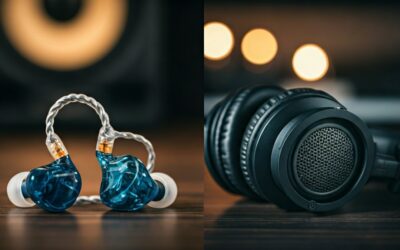
In-Ear Monitors (IEMs) used by musicians use multiple balanced armature drivers. While small, these are precision-engineered to deliver studio-grade accuracy. In this specific category, earbuds (IEMs) can be as good as, or better than, headphones for detail retrieval.