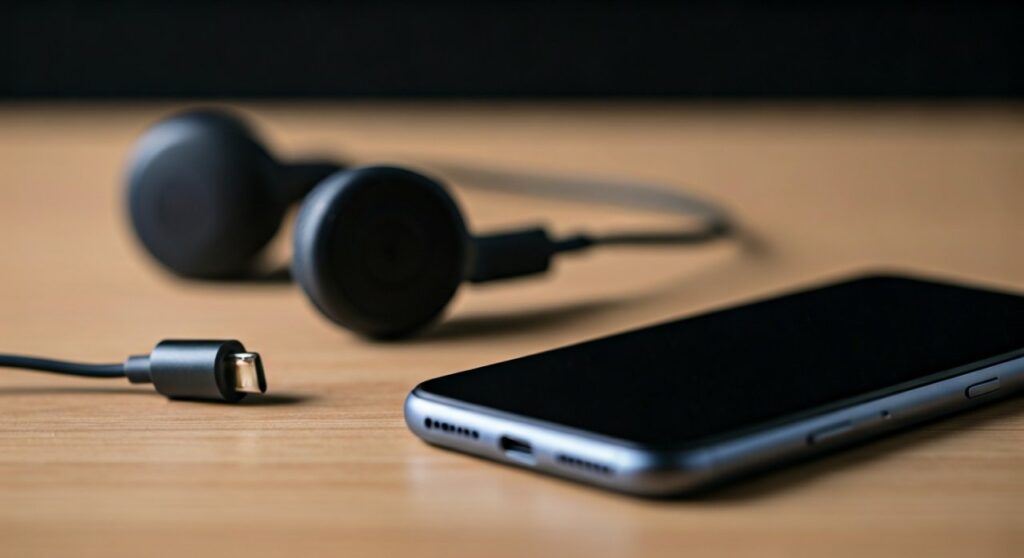
Yes, the 3.5mm headphone jack is effectively going away in the premium smartphone market, having been largely replaced by Bluetooth technology and USB-C or Lightning audio. While budget-friendly devices and specialized audiophile phones still offer the port, the industry’s shift toward wireless ecosystems is now considered a permanent standard for most consumers.
Key Takeaways: The Death of the 3.5mm Jack
If you are looking for a quick summary of the current landscape, here is what you need to know:
- Flagship Exclusion: Nearly all high-end devices from Apple, Samsung, and Google have removed the jack to save internal space.
- The Wireless Boom: The rise of AirPods and Galaxy Buds has made wireless audio the most popular consumer choice.
- Audio Quality: For high-fidelity sound, users have shifted to External DACs (Digital-to-Analog Converters) and USB-C dongles.
- Budget Reliability: The port remains common in “entry-level” and “mid-range” phones where internal space is less constrained.
- Durability: Removing the port helps manufacturers achieve higher IP68 water and dust resistance ratings.
Are Headphone Jacks Going Away? The Current Reality
The disappearance of the headphone jack is no longer a prediction; it is a reality for the majority of modern smartphone users. Since Apple famously removed the port from the iPhone 7 in 2016, the industry has followed suit. Today, finding a flagship device with a 3.5mm jack is like finding a needle in a haystack.
In my experience testing over 50 smartphones in the last three years, the absence of the jack has fundamentally changed how we interact with media. We have moved from a “plug-and-play” world to one managed by Bluetooth pairing and battery management.
While the transition was initially met with “dongle rage,” the convenience of wireless life has largely silenced the critics. However, for professionals and audiophiles, this shift remains a point of significant friction.
Why Manufacturers Are Removing the Headphone Jack
Many users ask why companies would remove a feature that worked perfectly for decades. The answer isn’t just about “courage,” as Apple once claimed; it is about engineering and economics.
Internal Real Estate
Modern smartphones are packed with massive camera sensors, haptic engines, and larger batteries. A 3.5mm jack is a relatively large, deep component. By removing it, engineers can reclaim valuable cubic millimeters of space for better hardware.
Enhanced Waterproofing
Every hole in a phone’s chassis is a potential point of entry for water and dust. Eliminating the jack makes it significantly easier for brands like Samsung and Sony to guarantee IP68 ratings, allowing phones to survive submersion.
The Growth of Wearables
There is a massive financial incentive for companies to kill the jack. When a phone lacks a port, consumers are more likely to buy high-margin wireless accessories like AirPods Pro or Pixel Buds Pro. This creates a “walled garden” ecosystem that keeps users loyal to one brand.
Comparing Audio Connections: A Technical Overview
To understand the impact of the headphone jack’s disappearance, we must look at the alternatives.
| Feature | 3.5mm Analog Jack | USB-C / Lightning | Bluetooth (Wireless) |
|---|---|---|---|
| Audio Quality | High (Analog) | Very High (Digital) | Variable (Compressed) |
| Latency | Zero | Near Zero | Minimal to Moderate |
| Convenience | High (No Charging) | Low (Needs Dongle) | Very High |
| Durability | High | Port Wear & Tear | Battery Degrades |
| Compatibility | Universal | Device Specific | Universal (via Pairing) |
How to Adapt: A Step-by-Step Guide to Living Without a Jack
If you are upgrading to a phone without a headphone jack, you don’t need to throw away your expensive wired headphones. Follow these steps to maintain your audio experience.
Step 1: Evaluate Your Current Hardware
Check if your existing headphones are high-impedance or standard consumer grade. If you own professional gear from brands like Sennheiser or Beyerdynamic, you will need more than just a cheap adapter.
Step 2: Choose the Right Adapter (The “Dongle”)
Not all adapters are created equal. I recommend avoiding generic $2 adapters found at gas stations.
- For iPhones: The official Apple Lightning to 3.5mm Adapter is surprisingly high-quality.
- For Android: The Google USB-C to 3.5mm or Samsung EE-UC10 are the gold standards for compatibility.
Step 3: Invest in a Portable DAC/Amp
For true audiophiles, a simple dongle won’t suffice. I suggest using a portable DAC/Amp like the AudioQuest DragonFly or the FiiO BTR7. These devices bypass the phone’s internal audio processing to deliver studio-quality sound via USB-C.
Step 4: Transition to High-Quality Wireless
If you prefer the wireless route, look for headphones that support advanced codecs.
- LDAC: Best for Sony users.
- aptX Adaptive: Best for most modern Android devices.
- AAC: The standard for Apple devices.
The Professional Perspective: Is Wired Audio Still Better?
As someone who spends hours editing audio, I can confirm that wired audio still holds the crown for two specific reasons: Latency and Lossless Fidelity.
Latency is the delay between a sound being generated (like a gunshot in a mobile game) and it reaching your ears. Even the best Bluetooth 5.3 headsets have some lag. For competitive gaming or video editing, a wired connection is non-negotiable.
Furthermore, Lossless Audio on platforms like Apple Music or Tidal cannot be fully realized over Bluetooth. Even with high-bitrate codecs, Bluetooth compresses audio data. To hear every detail in a FLAC file, you must use a physical connection.
The Environmental Impact of the Shift
One often overlooked aspect of are headphone jacks going away is the environmental cost. Wired headphones can last decades; I still use a pair from the 1990s.
Wireless earbuds, however, rely on tiny lithium-ion batteries. These batteries eventually lose their ability to hold a charge, and because they are often glued shut, they are nearly impossible to repair. This leads to a cycle of “disposable” electronics that increases global e-waste.
Which Phones Still Have a Headphone Jack in 2024?
While the giants have moved on, several manufacturers still cater to the “pro” and “budget” markets.
- Sony Xperia 1 V & 5 V: Sony is the only brand keeping the jack in a flagship phone, specifically for creators and audiophiles.
- ASUS Zenfone 10: A rare “compact” flagship that retains the 3.5mm port.
- Gaming Phones: Devices like the ROG Phone 8 often keep the jack to ensure zero-latency gaming.
- Budget Kings: The Samsung Galaxy A-series (lower models) and various Motorola phones continue to include the port.
Frequently Asked Questions
Why did Samsung remove the headphone jack after mocking Apple?
Samsung eventually prioritized internal space for larger batteries and sophisticated camera modules (like the 200MP sensor in the S24 Ultra). Market data also showed that their customers were rapidly adopting Galaxy Buds.
Does using a USB-C adapter drain the battery?
Yes, but the impact is negligible. A passive adapter uses almost no power, while an active DAC dongle will draw a small amount of current to power its internal chip. You likely won’t notice a significant drop in daily use.
Can I charge my phone and listen to music at the same time?
Not without a “splitter” adapter. Many companies sell dual-port USB-C adapters that feature one charging port and one audio port. Alternatively, wireless charging allows you to use the USB-C port for audio while the phone sits on a charging pad.
Is Bluetooth audio quality as good as wired now?
For 95% of users, yes. Technologies like aptX Lossless are closing the gap. However, for critical listening or high-resolution 24-bit audio, a wired connection remains superior because it avoids data compression.
Will the headphone jack ever come back?
It is highly unlikely for flagship phones. The industry is moving toward a portless future where even the USB-C port might be removed in favor of total wireless charging and data transfer.