Are headphones good for studying? Yes, they are highly effective tools for increasing focus, blocking environmental distractions, and inducing a “flow state” through controlled auditory environments. When used with the right volume levels and audio types, headphones can improve information retention and reduce the cognitive load caused by background noise.
The Verdict: Are Headphones Good for Studying?
For most students and researchers, the answer is a definitive yes. In my years of testing productivity workflows and audio gear, I have found that headphones serve as a psychological “do not disturb” sign. They create a consistent sensory environment, which is crucial when you are moving between different study spots like loud cafes, libraries, or shared dorm rooms.
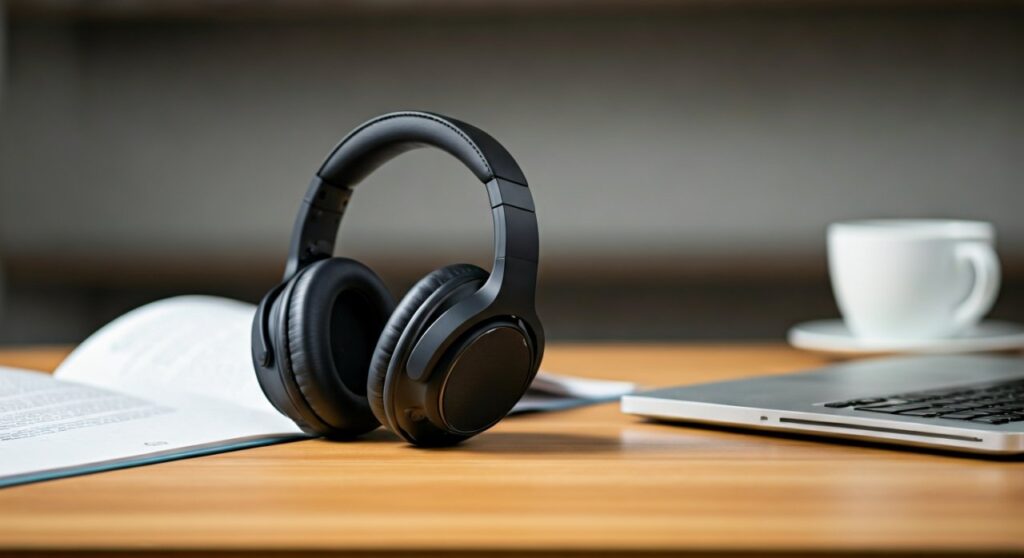
However, the effectiveness of headphones for studying depends heavily on what you are listening to and the hardware you choose. Research suggests that while Active Noise Cancellation (ANC) is a game-changer for concentration, listening to lyrical music can actually impair your reading comprehension.
Key Takeaways: Studying with Headphones
| Feature | Impact on Studying | Best Practice |
|---|---|---|
| Active Noise Cancellation (ANC) | High: Eliminates low-frequency drone (fans, traffic). | Use in high-traffic environments. |
| Binaural Beats | Medium: May help shift brainwaves to “Alpha” states. | Use for deep, creative work. |
| Instrumental/Lo-fi | High: Provides rhythm without distracting lyrics. | Best for long reading sessions. |
| Volume Level | Critical: High volume causes fatigue and ear damage. | Keep below 60% maximum volume. |
| Comfort | High: Over-ear pads prevent physical distraction. | Choose breathable materials like velour or high-quality protein leather. |
Why Headphones Improve Your Academic Performance
Using headphones for studying isn’t just about blocking noise; it’s about managing your brain’s “attentional filters.” Our brains are wired to notice sudden changes in sound, such as a door slamming or someone whispering nearby.
By using headphones, you replace these unpredictable “bottom-up” distractions with a steady, predictable “top-down” soundscape. This allows the prefrontal cortex—the part of the brain responsible for complex planning and learning—to stay engaged without constant interruption.
Eliminating Ambient Distractions
Even low-level background noise can raise cortisol levels, which impairs memory. High-quality headphones, specifically those with Passive Isolation or ANC, create a “cone of silence” that helps you maintain focus for longer durations.
The Power of “Trigger Audio”
Many elite students use a specific playlist as a Pavlovian trigger. By only wearing your noise-canceling headphones when it is time to work, your brain begins to associate the physical sensation of the headphones with intense concentration.
How to Choose the Best Headphones for Studying
Not all headphones are created equal. If you are investing in a pair specifically for university or professional exams, you need to consider the following categories:
Active Noise Cancelling (ANC) vs. Passive Isolation
ANC headphones, such as the Sony WH-1000XM5 or Bose QuietComfort Ultra, use microphones to “cancel out” incoming sound waves. These are best for blocking out the hum of an air conditioner or the chatter in a student union.
Passive Isolation refers to the physical seal of the earcups. These are often found in “Studio Monitor” headphones like the Audio-Technica ATH-M50x. They don’t require batteries for noise reduction and provide a more natural sound.
Over-Ear vs. In-Ear
- Over-ear (Circumaural): Generally the most comfortable for 4-5 hour study marathons. They distribute weight better and don’t cause ear canal irritation.
- In-ear (Earbuds): Highly portable. The Apple AirPods Pro 2 are a popular choice for students because they offer incredible ANC in a tiny package.
Step-by-Step Guide: How to Study Effectively with Headphones
To maximize the benefits of studying with headphones, follow this expert-verified workflow:
Step 1: Select the “No-Lyrics” Rule
Avoid music with vocals when reading or writing. The irrelevant sound effect proves that our brains struggle to process two streams of language at once (the words you’re reading vs. the words you’re hearing). Stick to Lo-fi beats, classical music, or ambient soundscapes.
Step 2: Implement the 60/60 Rule
To prevent “listener fatigue” and protect your hearing, never exceed 60% volume and limit your listening to 60 minutes at a time. After an hour, take the headphones off for 5 minutes to let your ears “breathe.”
Step 3: Choose Your “Environment Mode”
- For Deep Work: Use full ANC with White Noise or Brown Noise. This masks the widest range of frequencies.
- For Light Review: Use “Transparency Mode” (if available) so you stay aware of your surroundings while enjoying light background music.
Step 4: Manage the Battery Life
There is nothing more distracting than your headphones dying in the middle of a focused session. Always opt for models with at least 30 hours of battery life or keep a dedicated charging cable in your backpack.
The Science of Sound: What Should You Listen To?
Expert researchers have identified specific types of audio that optimize the brain for learning. Are headphones good for studying? Only if they are delivering the right frequencies.
- Alpha Waves (8-14 Hz): These binaural beats are associated with “relaxed focus.” They are perfect for when you are feeling stressed about an upcoming deadline.
- The Mozart Effect: While the idea that classical music makes you “smarter” is a myth, it does improve spatial-temporal reasoning, making it great for math and engineering students.
- Pink Noise: Unlike White Noise, Pink Noise has more power at lower frequencies. Many students find it more “natural” (like the sound of steady rain) and less piercing than white noise.
Potential Drawbacks: When Headphones Might Hurt Your Progress
While I highly recommend them, there are three scenarios where headphones for studying might be a disadvantage:
- Audio Fixation: If you spend 20 minutes “perfecting” your playlist instead of reading, the headphones have become a procrastination tool.
- Safety Awareness: In public spaces, high-level noise cancellation can make you unaware of your surroundings. Use “Single Bud” mode or Transparency features when walking or in unfamiliar areas.
- Physical Discomfort: “Clamp force” is a real issue. If your headphones are too tight, they can cause tension headaches, which are the enemy of productivity.
Top 3 Headphones Recommended for Students in 2024
Based on build quality, ANC performance, and long-term comfort, these are the gold standards for studying:
- Sony WH-1000XM5: Best overall for noise cancellation and “Speak-to-Chat” features.
- Sennheiser HD 600: The “Gold Standard” for home study. These are open-back, meaning they have no isolation but offer the most natural, non-fatiguing sound.
- Soundcore Space Q45: The best budget-friendly option. It offers 98% noise reduction at a fraction of the cost of premium brands.
Frequently Asked Questions
Can studying with headphones cause hearing loss?
Only if used at high volumes. The World Health Organization warns that exposure to sounds above 85 decibels for long periods can cause permanent damage. Keep your study volume at a level where you can still hear someone speaking directly to you.
Is it better to study with silence or headphones?
It depends on the environment. In a perfectly silent room, silence is often superior. However, in the real world, headphones for studying are better because they provide a “constant” sound that prevents your brain from being startled by sudden noises.
Does music help with memorization?
Music is best used for “encoding” information (learning it the first time) rather than “retrieval” (testing yourself). Use music to get through a heavy reading chapter, but try to do practice exams in silence to mimic the actual testing environment.
Which is better: Wired or Wireless?
Wireless headphones offer more freedom and are generally preferred by students moving between classes. However, wired headphones never run out of battery and often provide higher sound fidelity for a lower price point.
What is the best sound for “Deep Work”?
Most experts recommend Brown Noise. It is deeper and “softer” than white noise, effectively masking the sound of human speech, which is the most distracting sound for the human brain.