Why Headphones Are Often the Best Choice for Music Lovers
Yes, for most people, headphones are the best way to listen to music because they provide a level of detail, intimacy, and acoustic perfection that is nearly impossible to achieve with speakers in a standard room. By bypassing the “room effect” and placing the drivers directly over your ears, headphones deliver a pure, unadulterated signal that reveals the hidden layers of your favorite tracks.
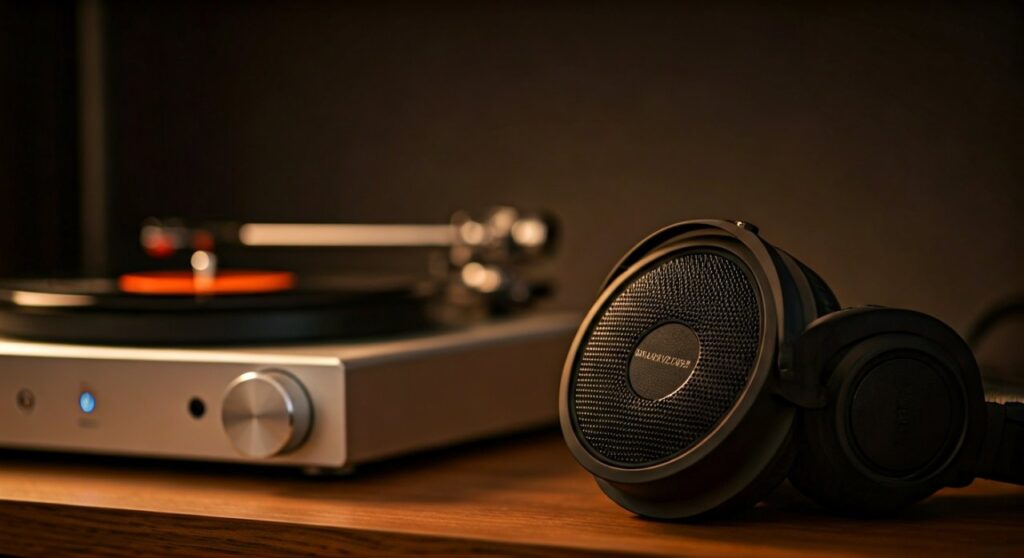
Whether you are an audiophile seeking clinical accuracy or a casual listener wanting to escape into a private world, headphones offer the highest fidelity-to-price ratio. While high-end speaker systems can cost tens of thousands of dollars to sound “perfect,” a pair of mid-range open-back headphones can provide a world-class listening experience for a fraction of that cost.
Key Takeaways: The TL;DR of Personal Audio
If you are looking for a quick summary of why headphones are the best way to listen to music, here are the essential points:
- Unmatched Detail: You hear micro-details like a singer’s breath or the slide of a finger on a guitar string that speakers often mask.
- Acoustic Independence: You don’t need to treat your room with expensive foam or panels; the “room” is built into the earcups.
- Immersive Soundstage: Modern spatial audio and binaural recordings create a 360-degree environment that feels like the band is in the room with you.
- Cost Efficiency: A $500 pair of headphones often outperforms a $2,000 speaker setup in terms of raw resolution and frequency response.
- Privacy: You can blast your music at high volumes without disturbing neighbors or family members.
Comparing the Listening Experience: Headphones vs. Speakers
To understand if headphones are the best way to listen to music for your specific needs, it helps to compare them directly against traditional loudspeakers.
| Feature | Headphones | Loudspeakers |
|---|---|---|
| Detail Retrieval | Extremely High (Micro-details) | High (Often lost in room echoes) |
| Soundstage | “Inside the head” or slightly outside | Physical, wide, and in front of you |
| Bass Impact | Heard, not felt (mostly) | Physical “thump” felt in the chest |
| Price for Entry | Affordable ($100 – $500 for Hi-Fi) | Expensive ($1,000+ for Hi-Fi) |
| Portability | High (Listen anywhere) | Low (Static setup) |
| Room Acoustics | Irrelevant | Critically Important |
Reasons Why Headphones Are the Best Way to Listen to Music
The Elimination of Room Interference
When you listen to speakers, you aren’t just hearing the music; you are hearing the music bounce off your walls, floor, and ceiling. This is known as room reflection, and it can muddy the sound, create “boomy” bass, or cancel out certain frequencies.
Headphones eliminate this variable entirely. Because the sound travels directly from the driver into your ear canal, you receive the frequency response exactly as the manufacturer intended. This is why professional engineers use headphones like the Sennheiser HD 600 or Beyerdynamic DT 1990 Pro for critical mixing.
Micro-Detail and Technical Performance
If you want to hear the “texture” of a cello or the subtle decay of a cymbal hit, headphones are king. The drivers in headphones are much smaller and lighter than speaker woofers, allowing them to react faster to electrical signals.
This speed results in better transient response. You will notice that “clutter” in complex songs—like heavy metal or orchestral pieces—suddenly resolves into individual, identifiable instruments.
The Psychology of Intimacy
There is a unique psychological component to headphone listening. It creates a “private bubble” where the barrier between you and the artist disappears.
When using Planar Magnetic headphones (like those from Audeze or Hifiman), the soundstage can feel vast yet personal. This sense of intimacy is why many enthusiasts believe that headphones are the best way to listen to music for emotional connection.
Advanced Technology: ANC and Spatial Audio
Modern technology has pushed headphones far beyond simple speakers. Active Noise Cancellation (ANC), found in the Sony WH-1000XM5 or Apple AirPods Max, allows you to enjoy music in low-volume environments like airplanes or busy offices.
Furthermore, Spatial Audio and Dolby Atmos for headphones use complex algorithms to simulate a multi-speaker theater. This makes “listening” feel more like “experiencing” a live performance.
Accessibility to High-End Audio
Entering the world of high-fidelity audio is much easier via headphones. You can purchase a legendary pair of open-back headphones and a small portable DAC/Amp (like the IFI Hip-DAC) for less than the price of one single high-end speaker stand.
Different Types of Headphones for Different Listeners
Not all headphones are created equal. To decide if headphones are the best way to listen to music for you, you must choose the right category.
Open-Back Headphones
These are the gold standard for home listening. The back of the earcups is open, allowing air and sound to move freely.
- Pros: Natural sound, wide soundstage, less ear fatigue.
- Cons: No isolation; everyone can hear your music.
- Top Pick: Sennheiser HD 650 or Hifiman Sundara.
Closed-Back Headphones
These are sealed to prevent sound leakage.
- Pros: Great bass punch, excellent isolation for travel or office use.
- Cons: Can feel “boxed in” compared to open-back models.
- Top Pick: Audio-Technica ATH-M50x or Focal Stellia.
In-Ear Monitors (IEMs)
IEMs fit directly into the ear canal. Once reserved for stage musicians, they are now a favorite for audiophiles on the go.
- Pros: Incredible detail, extreme portability, and passive noise isolation.
- Cons: Some people find the “deep fit” uncomfortable.
- Top Pick: Moondrop Blessing 3 or Campfire Audio Andromeda.
The Expert Perspective: When Speakers Might Be Better
While I firmly believe headphones are the best way to listen to music for analytical and immersive sessions, speakers have one advantage: Physicality.
You cannot “feel” a sub-bass drop in your bones through headphones the way you can with a 12-inch subwoofer. Speakers also allow for a shared social experience. If you enjoy hosting listening parties or want the music to fill your physical space, speakers remain a vital part of the ecosystem.
Actionable Tips for the Ultimate Headphone Experience
To truly prove that headphones are the best way to listen to music, you need to optimize your setup. Follow these steps:
- Ditch Compressed Audio: Stop listening to low-bitrate MP3s. Switch to lossless services like Tidal, Qobuz, or Apple Music Lossless.
- Use a Dedicated DAC: Your phone’s headphone jack (if it has one) is often noisy. A USB-C DAC like the AudioQuest DragonFly can significantly clean up the signal.
- Check the Impedance: If you buy high-end headphones, ensure your source has enough power to drive them. High-impedance headphones (300+ ohms) require a dedicated amplifier.
- Experiment with EQ: Use software like Peace EQ (for Windows) to apply the Harman Target Curve, which many experts agree is the most pleasing frequency response for the human ear.
Frequently Asked Questions (FAQs)
Are headphones better for your ears than speakers?
Not necessarily. The risk to your hearing depends on volume and duration, not the device. However, because headphones are closer to the eardrum, it is easier to accidentally listen at dangerous decibel levels. Always keep the volume at a comfortable level (under 85dB).
Why do some people say speakers sound more “realistic”?
Speakers provide a “forward” soundstage, meaning the music comes from in front of you, similar to a live concert. Headphones often create an “in-your-head” image. However, high-end open-back headphones are designed to mimic the natural soundstage of speakers.
Do I need to spend thousands of dollars on headphones?
No. The “law of diminishing returns” hits hard in audio. You can get 90% of the performance for under $500. Beyond that, you are paying for luxury materials and marginal gains in technicalities.
Are wireless headphones as good as wired ones?
For convenience, wireless is king. However, for pure audio quality, wired headphones are still superior. Bluetooth compresses audio data, though codecs like LDAC and aptX Lossless are narrowing the gap.
Can headphones damage my “spatial awareness”?
When wearing closed-back or ANC headphones, you lose awareness of your surroundings. For outdoor use or commuting, many experts recommend “Transparency Mode” or open-ear bone conduction headphones for safety.