Can a Projector Work in Daylight: The Truth Explained
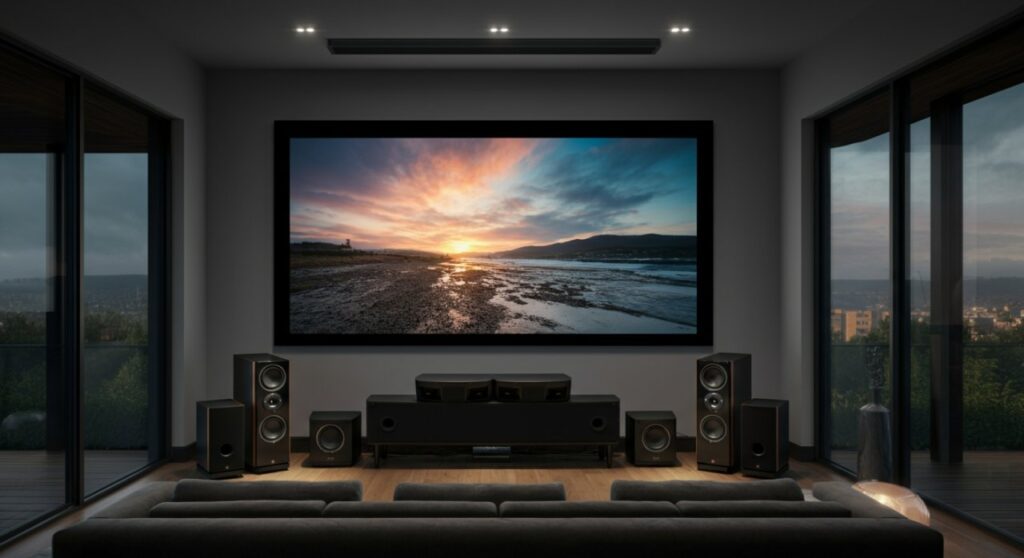
Can a projector work in daylight? The short answer is yes, but the image quality heavily depends on the lumen output of your projector, the ambient light levels in your environment, and the screen material you choose. While a standard budget home theater projector will struggle and look washed out, high-brightness models designed for professional or outdoor use can deliver a surprisingly vivid image even when sunlight is present. You do not need a completely dark room, but you do need the right equipment and setup strategy to combat the sun’s overwhelming brightness.
TL;DR: Key Takeaways for Daylight Projection
If you are looking for a quick answer, here is the essential data you need to succeed:
- Brightness is King: You need at least 3,000 to 5,000+ ANSI lumens to fight daylight effectively.
- Contrast Matters: High contrast ratios are often sacrificed for brightness; prioritize raw lumens first.
- Screen Choice: An ALR (Ambient Light Rejecting) screen is non-negotiable for high-quality daylight viewing.
- Placement: Position the projector to avoid direct sun rays and minimize the throw distance to keep the image small and bright.
- Reality Check: No projector can overcome direct, harsh sunlight hitting the screen surface without significant image degradation.
Understanding Why Daylight Impacts Projector Performance
Do projectors work in daylight? Technically, they project light onto a surface, but daylight is a much stronger light source than a projector bulb. When sunlight or bright ambient light hits your screen, it reflects back into your eyes along with the projector’s light.
Because the sunlight is brighter, it “washes out” the darker colors (blacks and grays) of your image. This leads to a flat, faded look that makes it feel like you are watching a transparent ghost of a movie. To fight this, you must increase the light output of the projector until it is significantly brighter than the ambient light in the room.
The Role of Lumens and Contrast
When shopping, you will see manufacturers touting ANSI lumens. This is the standard measure of brightness.
- Under 2,000 Lumens: Best for dark rooms only. Do not attempt daytime use.
- 2,000 – 3,000 Lumens: Manageable in a dimly lit room with heavy curtains.
- 3,000 – 5,000+ Lumens: The “sweet spot” for bright living rooms or office environments.
- 5,000+ Lumens: Necessary for outdoor daylight settings or large venue presentations.
Essential Hardware to Make Daylight Projection Work
If you are wondering can you use a projector during the day effectively, the secret isn’t just in the projector itself; it is in the ecosystem of hardware you pair with it.
Choosing the Right Projector Technology
Not all projectors are created equal. For daylight environments, DLP (Digital Light Processing) projectors often provide a crisper image and better brightness, whereas LCD projectors may offer more accurate color reproduction. Look for “High Brightness” or “Business/Education” models, as these are engineered to compete with overhead fluorescent lights or sunlight.
The Magic of ALR Screens
An Ambient Light Rejecting (ALR) screen is a specialized surface designed to reflect projector light toward the viewer while absorbing or scattering light coming from above or the sides. This is the single most effective way to improve your image. Using a standard white wall or a cheap pull-down screen in the daylight will almost always result in a disappointing experience.
| Feature | Standard White Screen | ALR Screen |
|---|---|---|
| Light Handling | Reflects all light (washes out) | Rejects off-axis light |
| Contrast | Low in daylight | High in daylight |
| Cost | Budget-friendly | Premium investment |
| Best Use | Dark home theaters | Living rooms, outdoors |
Step-by-Step: How to Use a Projector During the Day
If you want to know how to use a projector during the day without losing your mind to glare, follow these professional installation steps.
Step 1: Manage Your Environment
Control is everything. If you are indoors, use heavy blackout curtains or blinds to prevent direct sunlight from hitting the screen. Even if you don’t make the room pitch black, reducing the sheer amount of ambient light gives your projector a massive advantage.
Step 2: Minimize the Throw Distance
The further light travels from the lens to the screen, the more it spreads out and loses intensity. By moving your projector closer to the screen, you create a smaller image with a much higher pixel density and light concentration. A smaller, brighter 80-inch image is always better than a washed-out 150-inch image in daylight.
Step 3: Optimize Projector Settings
Dive into your projector’s menu settings to maximize performance:
- High Brightness Mode: Most projectors have a “Presentation” or “Bright” mode. It might make colors less accurate, but it is necessary for daylight.
- Contrast/Gamma: Adjust these settings to try and artificially deepen the blacks.
- Lamp Settings: Ensure your lamp is set to its highest power output (some units have an “Eco” mode that you should turn off).
Step 4: Angle the Screen Correctly
If you are outside, angle your screen so that the sun is behind or to the side of the audience, never hitting the front of the screen directly. If you have an ALR screen, make sure the viewing angle is perfectly aligned with the projector lens to take advantage of the screen’s specific light-refraction properties.
Can You Use a Projector Outside During the Day?
Many people ask, can you use a projector outside during the day? The harsh reality is that direct sunlight is extremely difficult to beat. While is there a projector that works in daylight outside? Yes, but you need professional-grade equipment (often costing thousands of dollars) or you must wait for the “Golden Hour” near sunset.
For backyard movies, it is highly recommended to wait until the sun has fully set. If you must use it during the day, look for shaded areas like a covered patio or under a large canopy.
Câu hỏi thường gặp (FAQs)
Will a projector work in daylight if the screen is in the shade?
Yes, placing the screen in a fully shaded area significantly improves performance. By blocking the direct sun, you remove the primary cause of image washout, allowing even a mid-range projector to produce a watchable picture.
Can you see a projector outside during the day without an ALR screen?
It is very difficult to see a clear image without an ALR screen in daylight. You will likely see a faded, washed-out version of your content that makes text unreadable and colors look muted, which is why we always recommend an ALR screen or at least a high-gain surface.
Do projectors work during the day if they have 5,000 lumens?
Yes, a 5,000-lumen projector is generally capable of producing a bright, clear image in a room with standard daylight. However, it still requires proper light management, such as using blinds or choosing an appropriate screen, to avoid reflections that decrease contrast.
Does the color of the screen affect daylight performance?
Yes, many people use “grey” or “high-contrast” screens for daylight use. These darker surfaces help absorb ambient light better than pure white screens, helping the projector’s light “pop” more effectively in bright environments.